Encephalocele: What It Is, Causes, Treatment & Types
Understanding encephalocele: A neural tube defect requiring surgical intervention and specialized care.
Understanding Encephalocele: A Comprehensive Guide
Encephalocele is a serious birth defect classified as a neural tube defect that occurs when brain tissue grows through an opening in a newborn’s skull. This condition develops during early fetal development when the neural tube, which forms the foundation of the brain and spinal cord, fails to close completely. While encephalocele can be life-threatening depending on its size and location, modern surgical interventions have significantly improved outcomes for affected infants. Understanding this condition, its causes, and available treatment options is essential for parents and healthcare providers involved in managing affected children.
What Is Encephalocele?
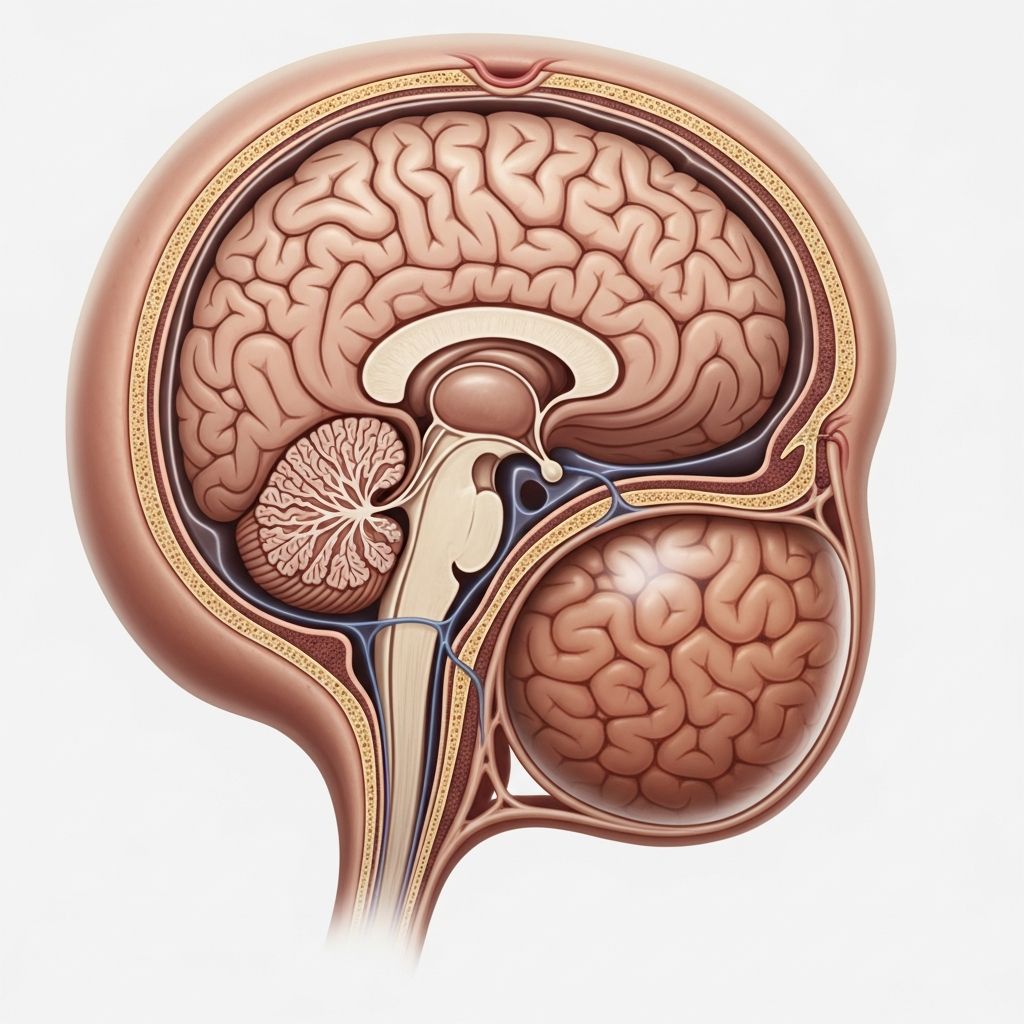
Encephalocele is fundamentally a neural tube defect where a portion of the brain tissue and the protective membranes surrounding it protrude through an abnormal opening in the skull. This creates a sac-like bulge that extends outside the cranium. The condition represents a failure of the neural tube to close properly during early embryonic development, specifically between the third and fourth weeks of pregnancy when the neural tube should fold and seal completely.
The severity and clinical significance of encephalocele vary considerably depending on several factors. When the opening is small and located in less critical areas—such as near the nose or forehead—the condition may cause minimal symptoms or complications. However, larger encephaloceles involving more vital brain regions can lead to serious neurological consequences and life-threatening complications.
How Encephalocele Develops
The neural tube is the embryonic structure that eventually develops into the brain and spinal cord. During normal fetal development, this tube forms a specific shape and should completely fold and seal during the first month of pregnancy. In cases of encephalocele, something disrupts this normal closure process, particularly at the top of the neural tube near the brain.
When the top portion of the neural tube fails to close as expected, the skull bones do not fully form and seal. This incomplete cranial closure creates an opening through which brain tissue can herniate or bulge outward. The protruding brain tissue becomes enclosed in a sac-like structure composed of brain tissue, cerebrospinal fluid, and the membranes that normally protect the brain. This herniation can occur at various locations along the skull, though certain areas are more commonly affected than others.
Types and Location of Encephaloceles
Encephaloceles are classified primarily by their anatomical location, which significantly impacts clinical presentation and treatment considerations:
Occipital Encephaloceles
Occipital encephaloceles occur at the back of the skull, near the occipital bone. This represents one of the more common locations for encephaloceles. These hernias can vary significantly in size, from small protrusions to large masses. The severity of symptoms and neurological involvement depends on how much brain tissue is displaced and which brain structures are involved.
Frontoethmoidal Encephaloceles
These encephaloceles occur in the front of the skull, typically in the area between the forehead and the nasal region. They often present as visible masses or bulges in the nasal cavity or on the forehead. Frontoethmoidal encephaloceles may be less immediately life-threatening than occipital types but can cause cosmetic concerns and functional problems related to nasal airway obstruction.
Related Stories



Temporal Encephaloceles
Temporal lobe encephaloceles are defects occurring in the side of the skull near the temporal region. These have particular clinical significance because they can be associated with seizure disorders. Research indicates that temporal encephaloceles can cause medically refractory epilepsy, where seizures do not respond adequately to standard anticonvulsant medications. Specialized surgical approaches involving tailored resection of the encephalocele while preserving critical mesial temporal structures have demonstrated effectiveness in controlling seizures in these patients.
Nasal and Forehead Encephaloceles
Small encephaloceles occurring in the nasal cavity or forehead area may go undiagnosed for extended periods because they produce minimal or no noticeable symptoms. These smaller defects frequently do not cause complications that significantly affect infants or their development as they grow. However, even small encephaloceles should be identified and monitored because they can potentially expand or cause problems over time.
Congenital versus Acquired Encephaloceles
While most encephaloceles are congenital—meaning they develop before birth—some can be acquired later in life through entirely different mechanisms. Acquired encephaloceles can result from traumatic brain injury involving skull fractures, tumors that erode through bone, or rare conditions such as idiopathic intracranial hypertension, where abnormally elevated pressure within the brain and cerebrospinal fluid can cause progressive skull erosion.
Symptoms and Clinical Presentation
The symptoms of encephalocele depend significantly on the size, location, and amount of brain tissue involved in the herniation. Small encephaloceles, particularly those in less critical locations, may be asymptomatic or cause only minor symptoms. These cases might be discovered incidentally during imaging performed for other reasons.
Larger or more strategically located encephaloceles can produce various symptoms including:
- Visible bulge or mass on the skull or face
- Head size abnormalities (microcephaly or hydrocephalus)
- Developmental delays or intellectual disability
- Seizures and epilepsy
- Movement difficulties or paralysis
- Vision or hearing problems
- Increased head circumference
- Neurological complications
Temporal lobe encephaloceles particularly warrant careful clinical attention because they frequently present with seizure disorders and may require specialized diagnostic evaluation including stereoelectroencephalography (SEEG) to properly characterize the epileptic networks involved.
Diagnosis and Evaluation
Diagnosis of encephalocele typically begins with imaging studies. Prenatal ultrasound during pregnancy may reveal evidence of encephalocele, allowing for early preparation and planning. After birth, magnetic resonance imaging (MRI) provides detailed visualization of the brain, skull defect, and the exact amount of brain tissue involved in the herniation.
For patients presenting with seizures related to encephaloceles, additional specialized testing may be warranted. Advanced electroencephalography (EEG) monitoring, including scalp EEG and invasive recording techniques, can help localize seizure onset zones. In complex cases, SEEG evaluation has proven valuable for mapping the architecture and evolution of seizure activity, particularly in temporal lobe encephaloceles where noninvasive studies may not provide sufficient localization information. However, when noninvasive studies demonstrate concordant findings regarding seizure localization, SEEG may not be necessary.
Treatment Approaches
Surgical Intervention
Surgical repair represents the primary treatment for encephalocele and is typically performed shortly after birth or during infancy, depending on the size and urgency of the situation. The surgical approach aims to accomplish several objectives: repair the skull defect, remove or reposition the herniated brain tissue, and restore normal anatomical relationships.
During surgery, neurosurgeons carefully assess whether the brain tissue herniated through the skull opening is functional or non-functional. Often, the portion of brain that has grown outside the skull is not functional and can be safely removed. When the opening is small, surgeons may be able to gently reposition functional brain tissue back into the skull before repairing the bone defect.
For temporal lobe encephaloceles associated with seizures, tailored surgical resection of the encephalocele and surrounding temporal pole while preserving critical mesial temporal structures has proven effective for seizure control. At one-year follow-up after surgery, 63% of patients with temporal lobe encephaloceles achieved Engel Class I seizure control—meaning seizure freedom or only very rare auras—while 18% achieved Engel Class II outcomes with marked seizure reduction.
Timing of Surgery
The timing of surgical intervention depends on multiple factors including the size of the defect, stability of the encephalocele, presence of cerebrospinal fluid leakage, and the overall health status of the infant. Large encephaloceles or those associated with concerning symptoms typically warrant earlier surgical intervention, while stable small encephaloceles may sometimes be managed more conservatively.
Complications and Long-Term Outcomes
Mortality and Survival Rates
The prognosis for encephalocele varies considerably based on size and location. The U.S. Centers for Disease Control and Prevention estimates the mortality rate for large encephaloceles at 45%, meaning the survival rate is 55%. This significant mortality reflects the serious nature of large defects. The risk of life-threatening complications increases substantially due to the size and location of the skull opening combined with the overall health status of the baby at birth.
Potential Complications
Some cases of encephalocele have few to no complications, particularly when the defect is small and involves non-functional brain tissue that can be safely removed. However, long-term complications can include:
- Intellectual disability or developmental delays
- Seizure disorders and epilepsy
- Vision impairments
- Hearing loss
- Movement or coordination problems
- Hydrocephalus (excess cerebrospinal fluid accumulation)
- Infection or meningitis risk
- Chronic headaches
- Learning difficulties
The likelihood and severity of these complications depend on factors including how much functional brain tissue is involved in the herniation, which specific brain regions are affected, and the success of surgical repair.
Prevention and Risk Factors
Encephalocele, like other neural tube defects, is related to several preventable and non-preventable risk factors. Maternal folic acid supplementation before and during pregnancy significantly reduces the risk of neural tube defects, including encephaloceles. The CDC recommends that women of childbearing age consume 400 micrograms of folic acid daily. Women with a family history of neural tube defects or who take certain medications affecting folic acid metabolism should discuss higher-dose supplementation with their healthcare providers.
Genetic factors also play a role in encephalocele development. While most cases appear to be sporadic, some families have genetic predispositions to neural tube defects. Additionally, maternal infections during early pregnancy, poorly controlled maternal diabetes, and exposure to certain medications have been associated with increased neural tube defect risk.
Living with Encephalocele
After successful surgical repair, many children with encephalocele can live relatively normal lives, though individual outcomes vary considerably. Follow-up care typically involves regular neurosurgical evaluations, neurological assessments, and developmental monitoring. Some children may require ongoing management of seizures if epilepsy develops, while others may need support for learning disabilities or other developmental concerns.
Multidisciplinary care teams including neurosurgeons, neurologists, pediatricians, physical therapists, occupational therapists, and educational specialists often coordinate to optimize outcomes for children with encephalocele and related complications.
Frequently Asked Questions
Q: Can encephaloceles be detected before birth?
A: Yes, prenatal ultrasound can often detect encephaloceles during pregnancy, allowing healthcare providers to prepare for appropriate management at birth. MRI may also be performed for more detailed characterization.
Q: What is the success rate of encephalocele surgery?
A: Success rates vary depending on the size, location, and complexity of the defect. For temporal lobe encephaloceles with seizures, 63% of patients achieved excellent seizure control after tailored surgical resection. Overall outcomes depend on the specific characteristics of each case.
Q: Can small encephaloceles resolve on their own without surgery?
A: Small asymptomatic encephaloceles that do not cause complications or affect brain function may sometimes be managed conservatively with careful monitoring. However, most encephaloceles eventually require surgical intervention to prevent complications and optimize neurological outcomes.
Q: Are there any genetic factors that increase encephalocele risk?
A: Yes, families with a history of neural tube defects have increased risk of encephaloceles. Maternal folic acid deficiency during pregnancy also significantly increases risk, which is why prenatal folic acid supplementation is crucial.
Q: Can encephaloceles cause seizures?
A: Yes, particularly temporal lobe encephaloceles can be associated with seizure disorders. Some patients develop medically refractory epilepsy, though surgical intervention can effectively control seizures in many cases.
Q: What should parents expect after encephalocele surgery?
A: Recovery involves a period of healing followed by regular monitoring for complications. Long-term outcomes depend on the extent of brain involvement and whether the child develops related conditions like seizures or developmental delays. Multidisciplinary follow-up care is typically recommended.
References
- Temporal lobe encephaloceles: Electro-clinical characteristics and surgical management — Epilepsy & Behavior, National Center for Biotechnology Information (NCBI). 2024-09-15. https://pubmed.ncbi.nlm.nih.gov/39393139/
- Encephalocele: What It Is, Causes, Treatment & Types — Cleveland Clinic. 2024. https://my.clevelandclinic.org/health/diseases/encephalocele
- What We’ve Learned From Our First 1000 Cases of SEEG Evaluation — Cleveland Clinic. 2024-08. https://consultqd.clevelandclinic.org/what-weve-learned-from-our-first-1000-cases-of-seeg-evaluation
- Neural Tube Defects (NTDs): What They Are, Causes & Prevention — Cleveland Clinic. 2024. https://my.clevelandclinic.org/health/diseases/22656-neural-tube-defects-ntd
- Exploration of epileptic networks in temporal lobe encephaloceles using stereotactic electroencephalography — Wiley Online Library, Epilepsia Open. 2024. https://onlinelibrary.wiley.com/doi/full/10.1002/epi4.13063
Similar Articles








Read full bio of Sneha Tete