Endocrine System: What It Is, Function, Organs & Diseases
Understanding the endocrine system: hormones, glands, functions, and common disorders explained.
Understanding Your Endocrine System
Your endocrine system is a complex network of specialized glands and tissues that creates and releases hormones to regulate countless bodily functions. Hormones are chemical messengers that coordinate different processes throughout your body by carrying signals through your bloodstream to your organs, skin, muscles, and tissues. These powerful chemicals tell your body what to do and when to do it, making the endocrine system essential for maintaining health and homeostasis.
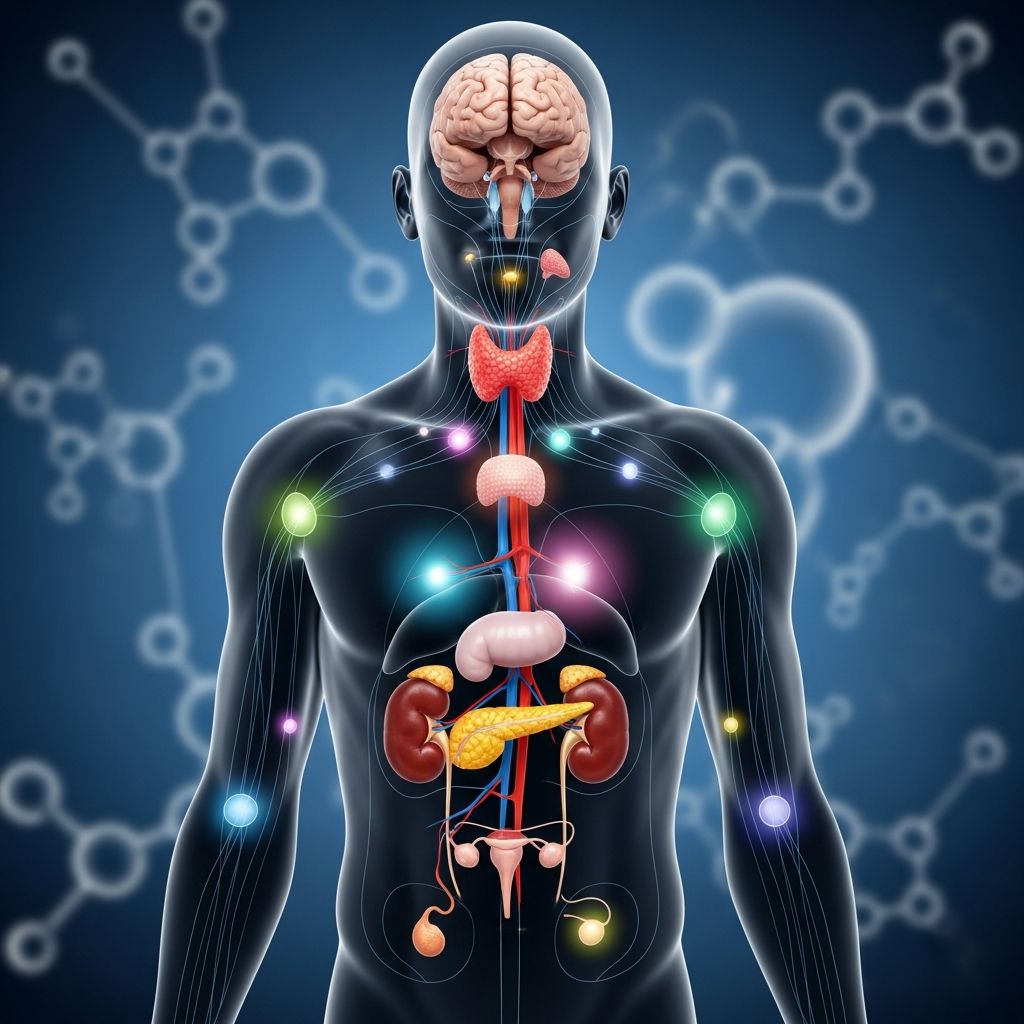
The endocrine system operates continuously to maintain balance in your body. It consists of the tissues (mainly glands) that create and release hormones directly into your bloodstream, where they travel to their target cells and organs. Very small amounts of hormones can trigger significant responses and changes in your body, demonstrating just how powerful these chemical messengers truly are. You have more than 50 different hormones in your body, and they affect nearly all aspects of your health — directly or indirectly.
What Are Hormones?
Hormones are chemical messengers that coordinate different functions in your body by carrying messages through your blood to your organs, skin, muscles and other tissues. These signals tell your body what to do and when to do it. Hormones are essential for life and your health, influencing everything from your growth and metabolism to your mood and reproduction.
The main function of your endocrine system is to release hormones into your blood while continuously monitoring the levels to maintain optimal balance. Hormones deliver their messages by locking into the cells they target so they can relay the message effectively. If your body has too little or too much of a hormone, it affects your health significantly and often causes noticeable symptoms.
Hormones regulate a wide range of bodily functions including:
- Growth and development
- Metabolism and energy production
- Body temperature regulation
- Mood and emotional responses
- Reproduction and sexual function
- Blood pressure and fluid balance
- Stress response and immune function
- Sleep and wake cycles
Major Endocrine Glands and Organs
Your endocrine system consists of three types of tissues: glands that create and release substances, endocrine glands that make and release hormones directly into your bloodstream, and other tissues that release hormones but have other primary functions. The endocrine glands in your body from head to toe include:
The Pituitary Gland
The pituitary gland is a small, pea-sized endocrine gland located at the base of your brain below your hypothalamus. Despite its tiny size, it releases several important hormones that regulate growth, reproduction, and water balance. The pituitary gland is often called the “master gland” because it controls many other endocrine glands in your body.
The Hypothalamus
The hypothalamus is a small area of your brain involved in hormonal regulation. It produces corticotropin-releasing hormone (CRH) and antidiuretic hormone (ADH, or vasopressin). These hormones work together with your pituitary gland to regulate various bodily functions.
The Thyroid Gland
Your thyroid is a butterfly-shaped gland located in your neck that produces thyroid hormones (T4 and T3). These hormones control your metabolism, energy production, and body temperature. Your body has a complex system for controlling thyroid hormone levels. Your hypothalamus secretes thyroid-releasing hormone (TRH), which stimulates your pituitary gland to secrete thyroid-stimulating hormone (TSH). TSH then stimulates your thyroid to release thyroxine and triiodothyronine if adequate iodine levels are present.
Related Stories



The Pancreas
Your pancreas functions as both an endocrine and exocrine gland. As an endocrine gland, it produces insulin and glucagon to regulate blood sugar levels. These hormones are critical for controlling how your body processes glucose and maintains energy balance.
The Adrenal Glands
Your adrenal glands are endocrine glands located on top of your kidneys that produce many important hormones, including cortisol, aldosterone, and adrenaline. These hormones help regulate several bodily functions, including metabolism, blood pressure, and your body’s response to stress. Your adrenal glands are composed of two parts: the cortex (outer region) and the medulla (inner part), each responsible for producing different hormones. Your adrenal glands are controlled in part by your hypothalamus and pituitary gland, while your sympathetic nervous system regulates the release of adrenaline and noradrenaline.
Other Endocrine Tissues
Other tissues in your body release hormones, though we don’t typically think of them as endocrine system tissues because they have other, more significant functions or roles. These include your ovaries, testes, parathyroid glands, and thymus gland.
How the Endocrine System Works
Your endocrine system operates through a sophisticated network of communication between your glands, hormones, and target organs. When your body needs certain hormones, your glands receive signals and begin producing and releasing them into your bloodstream. These hormones travel throughout your body until they reach their target cells, which have special receptors designed to receive specific hormones.
Once a hormone reaches its target cell, it locks into the cell’s receptor like a key fitting into a lock. This interaction triggers the target cell to respond in a specific way—whether that’s increasing metabolism, adjusting blood pressure, or triggering growth and development. Your body carefully monitors hormone levels through a feedback system to ensure optimal balance. When hormone levels become too high, your glands reduce production. When levels drop too low, production increases again.
Common Endocrine System Conditions
There are hundreds of conditions related to issues with your endocrine system. Hormonal imbalances make up a significant number of endocrine diseases, typically meaning there’s too much or not enough of one or more hormones. However, issues directly affecting endocrine system glands and organs, like benign and cancerous tumors, also account for endocrine diseases.
Diabetes and Metabolic Conditions
Diabetes is one of the most common endocrine disorders, occurring when your pancreas doesn’t produce enough insulin or your body can’t use insulin effectively. Type 1 diabetes develops when the immune system attacks insulin-producing cells, while Type 2 diabetes occurs when the body develops insulin resistance. Both conditions affect how your body processes glucose and maintain energy balance.
Thyroid Disorders
Thyroid conditions include hypothyroidism (too little thyroid hormone) and hyperthyroidism (too much thyroid hormone). Hypothyroidism slows your metabolism and can cause fatigue, weight gain, and cold sensitivity. Hyperthyroidism speeds up your metabolism, leading to weight loss, anxiety, and heat sensitivity.
Adrenal Disorders
Adrenal disorders occur when your adrenal glands don’t produce the right amount of cortisol or other hormones. Cushing’s syndrome develops when cortisol levels are too high, while Addison’s disease results from too little cortisol. Both conditions significantly affect how your body handles stress and maintains blood pressure.
Pituitary Disorders
Problems with your pituitary gland can affect the production of multiple hormones, since the pituitary controls many other endocrine glands. Pituitary tumors or dysfunction can lead to growth disorders, reproductive issues, or metabolic problems.
Sexual Development and Reproductive Conditions
Hormonal imbalances can affect sexual development, function, and reproduction. Conditions include polycystic ovary syndrome (PCOS), erectile dysfunction, and hormonal imbalances affecting fertility.
Calcium and Bone Conditions
Your parathyroid glands regulate calcium levels in your blood, which is essential for bone health, muscle function, and nerve transmission. Parathyroid disorders can lead to osteoporosis or other bone-related complications.
Endocrine Cancers and Tumors
Cancers and benign tumors can develop in endocrine glands, affecting hormone production and requiring specialized treatment approaches.
Symptoms of Endocrine Disorders
Since hormones affect nearly every function in your body, endocrine disorders can cause a wide variety of symptoms. Common signs of endocrine dysfunction include:
- Unexplained weight gain or loss
- Fatigue and low energy
- Changes in mood or emotional responses
- Sleep disturbances
- Irregular heartbeat
- Hot flashes or excessive sweating
- Dry skin or hair changes
- Fertility or reproductive issues
- Muscle weakness
- Changes in blood pressure
Diagnosis and Treatment
An endocrinologist is a healthcare provider who specializes in the endocrine system and conditions related to your hormones. They can diagnose endocrine conditions, develop treatment and management plans, and prescribe medication. Endocrinologists often work with other medical specialists to provide comprehensive care for complex hormonal conditions.
Diagnosis typically involves blood tests to measure hormone levels, imaging studies to examine glands and organs, and evaluation of your symptoms and medical history. Treatment depends on the specific condition and may include medications to replace deficient hormones, reduce excessive hormone production, or manage symptoms. In some cases, surgery may be necessary to remove tumors or address gland dysfunction. Pediatric endocrinologists specialize in conditions that affect children under 18, addressing growth disorders, diabetes in young people, and other developmental concerns.
Frequently Asked Questions
Q: What is the main function of the endocrine system?
A: The main function of the endocrine system is to release hormones into your blood while continuously monitoring the levels. These hormones coordinate different functions in your body by carrying messages through your blood to your organs, skin, muscles, and other tissues, telling your body what to do and when to do it.
Q: How many hormones does the human body produce?
A: You have more than 50 different hormones in your body, and they affect nearly all aspects of your health — directly or indirectly. Very small amounts of these hormones can trigger significant responses and changes in your body.
Q: What happens if hormone levels are too high or too low?
A: If your body has too little or too much of a hormone, it affects your health and often causes noticeable symptoms. This hormonal imbalance is one of the most common causes of endocrine diseases and can lead to various health problems depending on which hormone is imbalanced.
Q: What is an endocrinologist?
A: An endocrinologist is a healthcare provider who specializes in the endocrine system and conditions related to your hormones. They can diagnose endocrine conditions, develop treatment and management plans, and prescribe medication. Pediatric endocrinologists specialize in conditions that affect children under 18.
Q: Can adrenal glands be removed?
A: Although it’s rare, you can have both of your adrenal glands surgically removed (adrenalectomy) to treat certain adrenal conditions. People who have this surgery need to take certain medications for life to replace the adrenal gland hormones that would normally be produced.
Q: How does the hypothalamus control the pituitary gland?
A: The hypothalamus, a small area of your brain involved in hormonal regulation, produces corticotropin-releasing hormone (CRH) and antidiuretic hormone (ADH). These hormones trigger your pituitary gland to release corticotropin (adrenocorticotropic hormone or ACTH), which stimulates other endocrine glands to produce their hormones.
When to See a Healthcare Provider
Your endocrine system is vital to your existence. While normally your body carefully balances its hormones, having too little or too much of a certain hormone can lead to health problems. If you experience any concerning symptoms related to hormonal imbalance, such as unexplained weight changes, persistent fatigue, mood changes, or reproductive issues, it’s important to talk to your healthcare provider.
Hormonal conditions can be tricky to find and complicated to treat due to the complex interactions between different glands and hormones. However, with proper diagnosis and treatment from qualified healthcare providers, most endocrine conditions can be effectively managed. If you suspect you have an endocrine disorder or want to know if you have any risk factors for developing an endocrine condition, don’t be afraid to reach out to your healthcare provider. They’re available to help you maintain optimal hormonal health and overall well-being.
References
- Endocrine System: What It Is, Function, Organs & Diseases — Cleveland Clinic. 2024. https://my.clevelandclinic.org/health/body/21201-endocrine-system
- Adrenal Gland: What It Is, Function, Symptoms & Disorders — Cleveland Clinic. 2024. https://my.clevelandclinic.org/health/body/23005-adrenal-gland
- Thyroid: What It Is, Function & Problems — Cleveland Clinic. 2024. https://my.clevelandclinic.org/health/body/23188-thyroid
- Pituitary Gland: What It Is, Function & Anatomy — Cleveland Clinic. 2024. https://my.clevelandclinic.org/health/body/21459-pituitary-gland
- Hormones: What They Are, Function & Types — Cleveland Clinic. 2024. https://my.clevelandclinic.org/health/articles/22464-hormones
- What Is an Endocrinologist? — Cleveland Clinic. 2024. https://my.clevelandclinic.org/health/articles/22691-endocrinologist
Similar Articles








Read full bio of Sneha Tete