Endometriosis Causes: 11 Research-Backed Factors Explained
Unraveling the complex causes of endometriosis: from retrograde menstruation to genetic and environmental factors driving this painful condition.
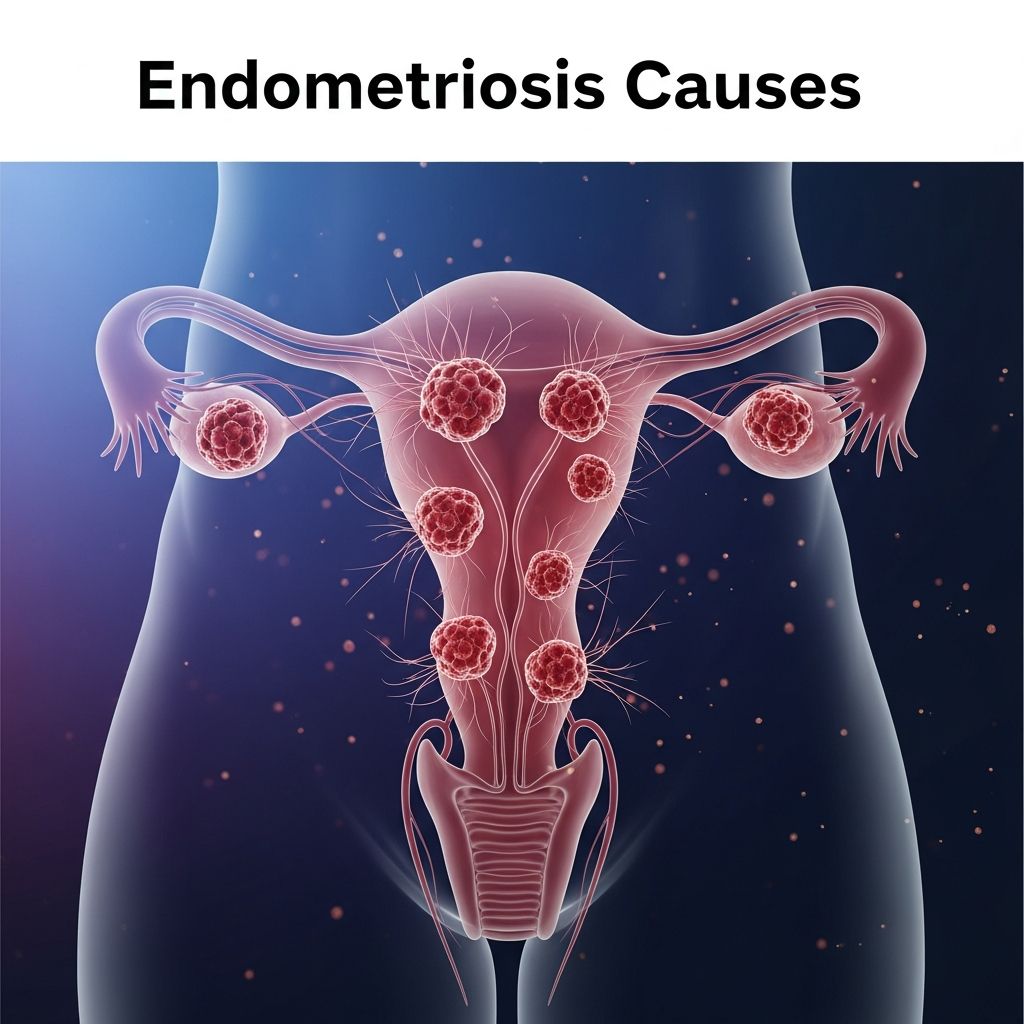
Endometriosis is a chronic condition where tissue similar to the uterine lining grows outside the uterus, causing severe pain and other symptoms. While the exact causes remain unknown, researchers have identified several leading theories and risk factors based on extensive studies.
What Is Endometriosis?
Endometriosis affects approximately 10% of reproductive-age women, leading to pelvic pain, painful periods, infertility, and more. The condition involves endometrial-like tissue implanting on ovaries, fallopian tubes, and other pelvic structures, responding to hormonal cycles with inflammation and scarring.
This tissue bleeds and sheds like normal endometrium but has no exit, causing irritation, adhesions, and cysts. Symptoms vary widely, from mild discomfort to debilitating pain impacting daily life and fertility.
Sampson’s Theory of Retrograde Menstruation
The most widely accepted theory is
Sampson’s retrograde menstruation
, proposed by John A. Sampson in 1927. It posits that during menstruation, some endometrial tissue flows backward through the fallopian tubes into the pelvic cavity instead of exiting the body.This refluxed tissue implants on peritoneal surfaces, ovaries, and other structures, proliferating under estrogen influence. Studies confirm viable endometrial cells in menstrual effluent of 90% of women, supporting this mechanism. However, retrograde menstruation occurs in most women without developing endometriosis, suggesting additional factors like immune surveillance failure enable implantation.
- Key evidence: Higher concentrations of endometrial cells in peritoneal fluid during menses in affected women.
- Implications: Explains ovarian and peritoneal lesions but not extra-pelvic sites like lungs or brain.
Metaplastic Transformation Theory
Another prominent theory involves
coelomic metaplasia
, where peritoneal or ovarian cells transform into endometrial-like tissue due to unknown triggers. Proponents argue this explains lesions in distant sites unreachable by retrograde flow.Celomic epithelium, lining the peritoneal cavity, shares embryonic origins with endometrium. Hormonal or inflammatory stimuli may induce metaplastic changes, mimicking endometrial glands and stroma. This theory gains traction for thoracic and diaphragmatic endometriosis cases.
Benign Metastatic Theory
The
benign metastasis
hypothesis suggests endometrial fragments spread via lymphatic or vascular channels to distant sites. Rare cases of endometriosis in lungs, brain, or bones support this, though vascular spread lacks direct evidence in humans.Animal models demonstrate endometrial tissue survival after intravenous injection, forming implants. This theory accounts for 1-2% of extra-pelvic cases but remains controversial for pelvic-dominant disease.
Lymphatic and Hematogenous Spread
Related to metastasis,
lymphatic dissemination
proposes endometrial cells travel through lymphatics from uterus to pelvis. Endometrial cells detected in pelvic lymph nodes bolster this idea.**Hematogenous spread** involves bloodstream transport, explaining rare distant lesions. These mechanisms likely contribute secondarily after initial peritoneal implantation.
Genetic Factors and Heredity
**Genetics play a crucial role**, with first-degree relatives of affected women facing 5-8 times higher risk. Twin studies show 50% concordance in monozygotic vs. 10% in dizygotic twins.
Over 40 genetic loci associated with endometriosis identified via GWAS, involving cell adhesion, hormonal signaling, and WNT pathways. Mutations in ARID1A and PIK3CA genes found in deep infiltrating lesions suggest monoclonal origins akin to tumors.
Related Stories



- Family history increases risk up to 10-fold.
- Ethnic variations: Higher prevalence in Asian and Caucasian populations.
Immune System Dysfunction
Women with endometriosis exhibit
altered immune responses
, failing to clear refluxed endometrial fragments. Key findings include:- Reduced natural killer (NK) cell cytotoxicity.
- Increased activated macrophages producing pro-inflammatory cytokines (IL-6, IL-8, TNF-α).
- Autoantibody production against endometrial antigens.
Peritoneal fluid shows elevated inflammatory markers like CRP and VEGF, creating a milieu favoring lesion survival and angiogenesis. Immune dysregulation may stem from genetic predispositions or environmental toxins.
Hormonal Influences
**Estrogen dependence** is central: lesions express estrogen receptors and aromatase, enabling local estrogen production. Hyperestrogenic states exacerbate growth.
Risk factors include early menarche, short cycles, low parity, and prolonged estrogen exposure. Progesterone resistance in lesions impairs decidualization, promoting survival.
Environmental and Lifestyle Factors
Emerging evidence links
endocrine disruptors
like dioxins, PCBs, and phthalates to increased risk. In utero DES exposure associates with higher incidence.Lifestyle factors: Shorter breastfeeding duration, higher BMI in adolescence, and alcohol use may contribute. No strong smoking link, unlike other gynecologic conditions.
Menstrual and Reproductive Factors
Heavy, prolonged menses increase retrograde flow volume. Nulliparity and fewer pregnancies elevate lifetime estrogen exposure. Early thelarche (breast budding before age 11) correlates with doubled risk.
Inflammation and Oxidative Stress
Chronic
inflammation
drives progression: lesions produce prostaglandins, metalloproteinases, and chemokines, fostering adhesions and fibrosis. Oxidative stress from iron-laden macrophages exacerbates tissue damage.Stem Cell Theory
**Bone marrow stem cells** may migrate to endometrium and transdifferentiate into ectopic tissue. Chimerism studies show male endometrial cells in female offspring, supporting this.
Uterine-derived stem cells could seed lesions via retrograde flow or bloodstream.
Why Do Only Some Women Develop Endometriosis?
Retrograde menstruation is ubiquitous, yet only 10% develop disease.
Multifactorial interplay
involves genetic susceptibility, immune defects, hormonal imbalance, and environmental triggers creating a ‘perfect storm’.| Theory | Key Mechanism | Strengths | Limitations |
|---|---|---|---|
| Retrograde Menstruation | Backward flow via fallopian tubes | Most supported; explains pelvic sites | Not extra-pelvic lesions |
| Metaplasia | Cell transformation | Accounts for distant sites | Lacks direct proof |
| Genetics | Inherited susceptibility | Twin/family studies | Polygenic, complex |
| Immune Dysfunction | Failed clearance | Peritoneal fluid data | Cause vs. effect unclear |
Recent Research Insights
Latest studies emphasize
microbiome alterations
in peritoneal fluid andepigenetic modifications
silencing tumor suppressors. AI-driven analyses identify novel biomarkers for early detection.Frequently Asked Questions (FAQs)
What causes endometriosis?
The exact cause is unknown, but retrograde menstruation, genetics, and immune dysfunction are primary theories.
Is endometriosis hereditary?
Yes, first-degree relatives have 5-10 times higher risk due to genetic factors.
Can endometriosis be prevented?
No guaranteed prevention, but pregnancy, breastfeeding, and low-dye diets may reduce risk.
Does retrograde menstruation cause endometriosis in everyone?
No, it occurs in 90% of women, but additional factors determine disease development.
Are environmental toxins linked to endometriosis?
Yes, dioxins and endocrine disruptors show associations in epidemiological studies.
References
- Long-term Health Consequences of Endometriosis — Harris HR et al. National Institutes of Health (PMC). 2021-02-16. https://pmc.ncbi.nlm.nih.gov/articles/PMC7864355/
- Endometriosis: Pathogenesis and Etiology — American College of Obstetricians and Gynecologists. 2023-05-01. https://www.acog.org/clinical/clinical-guidance/committee-opinion/articles/2023/05/endometriosis
- Endometriosis — World Health Organization. 2024-11-12. https://www.who.int/news-room/fact-sheets/detail/endometriosis
- Genetics of Endometriosis — Zondervan KT et al. Nature Reviews Genetics. 2020-06-15. https://doi.org/10.1038/s41576-020-0228-4
- Immune Aspects of Endometriosis — Podgaec CS et al. Frontiers in Immunology. 2022-03-10. https://doi.org/10.3389/fimmu.2022.848395
Similar Articles








Read full bio of medha deb