Endometriosis: 2025 Guide To Symptoms, Diagnosis, Treatment
Comprehensive guide to understanding endometriosis: from symptoms and causes to diagnosis, treatments, and living with this chronic condition affecting millions worldwide.
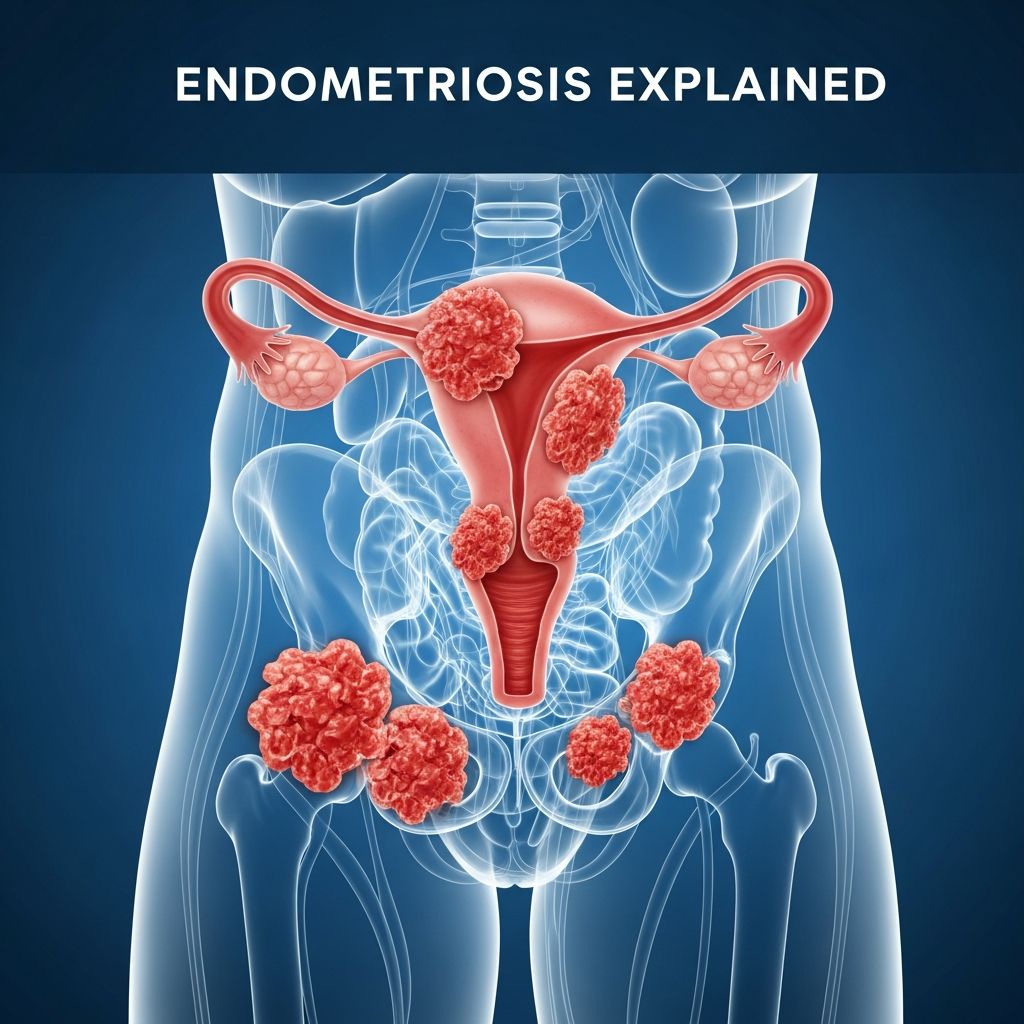
Endometriosis is a chronic inflammatory condition where tissue resembling the uterine lining develops outside the uterus, leading to pain, fertility challenges, and reduced quality of life for millions.
Understanding the Basics of Endometriosis
This estrogen-driven disorder impacts approximately 10% of women of reproductive age worldwide, equating to about 190 million individuals, and can persist from menarche through menopause. It also affects transgender men and non-binary people who menstruate. The misplaced tissue responds to hormonal cycles, causing inflammation, scarring, and adhesions similar to normal menstrual shedding but in ectopic locations.
Common sites include the ovaries, fallopian tubes, pelvic lining, and sometimes distant areas like the diaphragm or lungs. This leads to a cascade of symptoms that vary in intensity but often progressively worsen over time.
Common Symptoms and Their Impact
Pain is the hallmark symptom, often described as chronic, cyclical, and escalating. Key manifestations include:
- Severe dysmenorrhea: Intense menstrual cramps that may start days before bleeding and linger afterward.
- Dyspareunia: Painful intercourse, affecting intimacy and relationships.
- Chronic pelvic pain: Persistent discomfort not limited to cycles, sometimes radiating to the lower back.
- Dyschezia and dysuria: Pain with bowel movements or urination, especially during periods, alongside bloating, nausea, or gastrointestinal issues.
- Heavy bleeding and spotting: Excessive menstrual flow or intermenstrual bleeding.
- Infertility: Up to 50% of affected individuals face conception difficulties due to scarring or tubal blockages.
Additional effects like fatigue, abdominal bloating, and emotional distress compound the physical toll, significantly impairing daily activities and mental well-being.
How Endometriosis Develops: Key Theories
The exact origins remain elusive, but Sampson’s retrograde menstruation theory dominates: during periods, endometrial cells flow backward through fallopian tubes into the peritoneal cavity, implant, and proliferate, fueled by estrogen. Other factors include:
- Genetic predisposition and epigenetic changes.
- Immune system dysregulation, with elevated pro-inflammatory cytokines like IL-6 and IL-8 promoting lesion growth.
- Environmental influences, such as exposure to toxins.
Lesions trigger local inflammation, recruiting macrophages and fostering adhesions that distort pelvic anatomy.
Staging the Severity of Endometriosis
Clinicians use the American Society for Reproductive Medicine (ASRM) classification to stage from I (minimal) to IV (severe), based on lesion size, depth, location, and adhesions. Note that staging correlates imperfectly with symptom severity.
| Stage | Description | Typical Features |
|---|---|---|
| Stage 1 (Minimal) | Superficial implants | Few small lesions, no significant adhesions |
| Stage 2 (Mild) | More implants | Superficial peritoneal involvement |
| Stage 3 (Moderate) | Deep implants | Small endometriomas, filmy adhesions |
| Stage 4 (Severe) | Extensive disease | Large cysts, dense adhesions, organ distortion |
Severe forms like rectovaginal endometriosis involve deep infiltration, causing bowel or bladder symptoms.
Diagnostic Approaches
Diagnosis often delays 7-10 years due to nonspecific symptoms overlapping with IBS or PID. No single test confirms it; strategies include:
Related Stories



- Clinical history and exam: Assessing cyclic pain patterns.
- Imaging: Ultrasound for ovarian endometriomas (chocolate cysts), MRI for deep lesions.
- Laparoscopy: Gold standard, allowing visualization and biopsy of lesions.
Blood markers like CA-125 may elevate but lack specificity.
Treatment Options: Balancing Relief and Fertility
Management tailors to symptoms, age, and fertility goals, combining medical, surgical, and lifestyle approaches.
Medications
- Hormonal therapies: Combined oral contraceptives, progestins, or GnRH agonists to suppress estrogen and shrink lesions.
- Pain relievers: NSAIDs for inflammation.
Surgical Interventions
Laparoscopic excision or ablation removes lesions, improves pain (70-80% short-term relief), and enhances fertility odds. Hysterectomy is reserved for severe, refractory cases post-childbearing.
Emerging and Supportive Therapies
Aromatase inhibitors, physical therapy for pelvic floor dysfunction, and acupuncture show promise. Fertility options include IVF for tubal issues.
Complications and Long-Term Risks
Beyond pain and infertility, risks encompass ovarian cysts (endometriomas), bowel/bladder dysfunction, adhesions causing organ fixation, and rare malignant transformation (endometrioid carcinoma). Chronic inflammation erodes quality of life, raising anxiety and depression rates.
Lifestyle Strategies for Daily Management
While incurable, proactive steps help:
- Anti-inflammatory diet rich in omega-3s, fruits, vegetables; limit red meat, caffeine.
- Regular exercise to reduce pain and stress.
- Heat therapy, yoga, or mindfulness for symptom control.
- Support groups for emotional coping.
Track symptoms via apps to inform providers.
Frequently Asked Questions (FAQs)
Can endometriosis resolve on its own?
Rarely; it typically persists without intervention, though pregnancy or menopause may alleviate symptoms temporarily.
Does endometriosis increase cancer risk?
Slightly, particularly ovarian endometrioid types, warranting vigilant monitoring.
Is endometriosis hereditary?
Yes, first-degree relatives have 5-8 times higher risk, suggesting genetic factors.
Can I get pregnant with endometriosis?
Many do naturally or via assisted reproduction; early treatment boosts chances.
How does back pain relate to endometriosis?
Posterior cul-de-sac or ligament implants cause referred lower back pain, worsening cyclically.
Navigating Endometriosis: Outlook and Advocacy
Though challenging, multidisciplinary care improves outcomes. Awareness drives research into non-hormonal therapies and biomarkers. Patients should seek specialists for personalized plans, emphasizing fertility preservation when relevant.
References
- Endometriosis – StatPearls — NCBI Bookshelf, NIH. 2023-08-08. https://www.ncbi.nlm.nih.gov/books/NBK567777/
- Endometriosis Fact Sheet — World Health Organization (WHO). 2023-03-06. https://www.who.int/news-room/fact-sheets/detail/endometriosis
- Endometriosis: Symptoms, Treatment, Diagnosis — UCLA Health OBGYN. Accessed 2026. https://www.uclahealth.org/medical-services/obgyn/conditions-treated/endometriosis
- Endometriosis Symptoms, Treatment, and Causes — UCLA Medical School. Accessed 2026. https://medschool.ucla.edu/news-article/endometriosis-symptoms-treatment-and-causes
- Endometriosis: Causes, Symptoms, Diagnosis & Treatment — Cleveland Clinic. 2023-11-27. https://my.clevelandclinic.org/health/diseases/10857-endometriosis
- Endometriosis — MedlinePlus, NIH. Accessed 2026. https://medlineplus.gov/endometriosis.html
Similar Articles








Read full bio of Sneha Tete