Endotracheal Intubation: Procedure, Risks & Recovery
Complete guide to intubation: understanding the lifesaving procedure, risks, and recovery.
Understanding Endotracheal Intubation
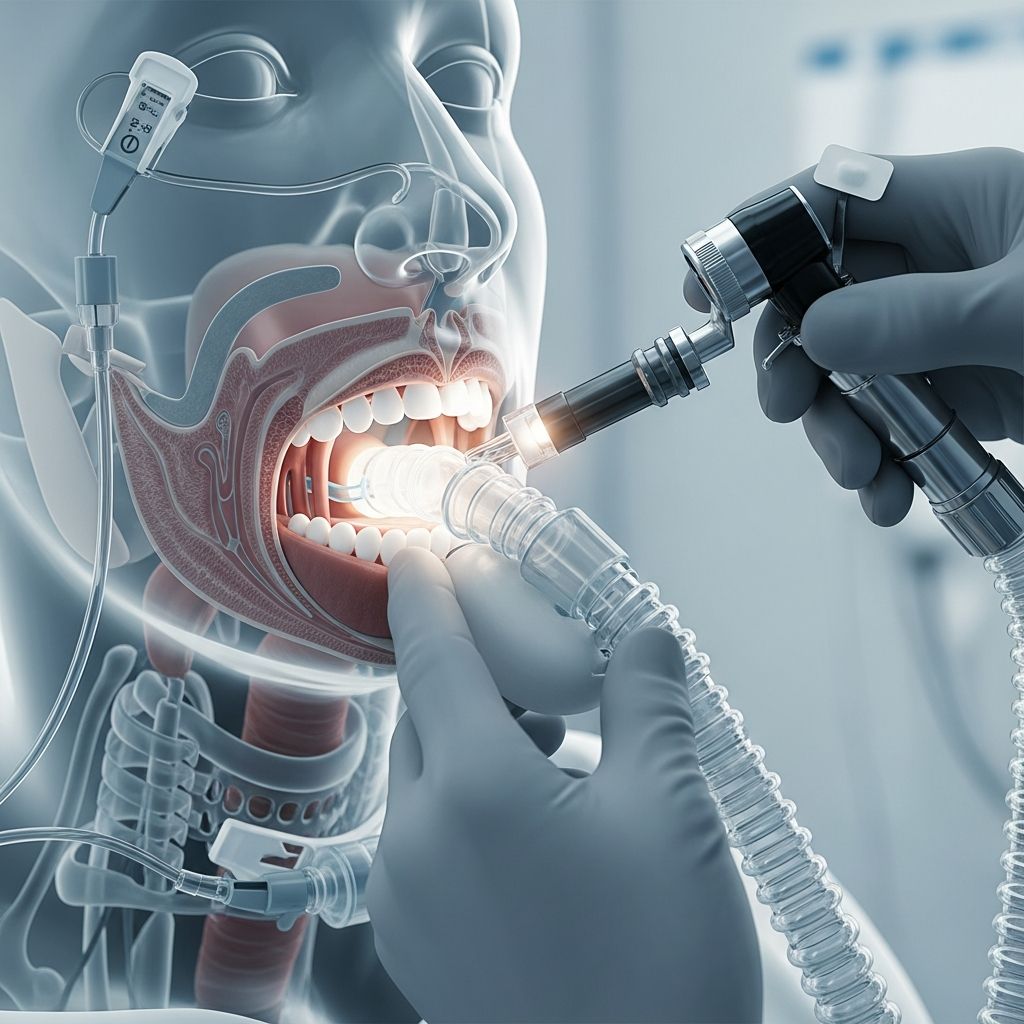
Endotracheal intubation is a lifesaving medical procedure that involves placing a hollow tube, known as an endotracheal tube, directly into the trachea (windpipe) to maintain an open airway. This procedure ensures that oxygen can reach the lungs and carbon dioxide can be expelled from the body, even when a patient cannot breathe adequately on their own. The endotracheal tube serves as a critical intervention in emergency medicine, surgery, and intensive care settings, allowing patients to receive mechanical ventilation and essential respiratory support.
The procedure is performed by trained medical professionals including anesthesiologists, critical care physicians, emergency medicine doctors, and specially trained nurses. When properly executed, intubation can be the difference between life and death for patients experiencing respiratory failure, undergoing general anesthesia, or facing acute medical emergencies.
Why Intubation Is Necessary
Intubation becomes necessary in various clinical situations where a patient’s ability to breathe spontaneously is compromised or insufficient. Understanding the indications for this procedure helps patients and families appreciate its critical role in medical care.
Emergency Situations
In emergency departments and trauma centers, intubation is performed immediately when patients experience severe respiratory distress, complete airway obstruction, or are unresponsive and at risk of aspiration. Conditions such as severe asthma attacks, anaphylaxis, or significant head trauma may necessitate emergency intubation to prevent death.
Surgical Procedures
During general anesthesia for surgical procedures, intubation protects the airway and allows anesthesiologists to control ventilation precisely. This ensures adequate oxygenation and carbon dioxide removal throughout the operation while keeping the airway protected from gastric contents.
Respiratory Failure
Patients with acute respiratory distress syndrome (ARDS), severe pneumonia, or other conditions causing respiratory failure require intubation and mechanical ventilation. This provides the lungs with rest and allows them to recover while the ventilator performs the work of breathing.
Neurological Conditions
Patients with severe neurological injuries, strokes, or loss of consciousness may lose the ability to protect their airway. Intubation prevents aspiration and maintains adequate oxygenation during the critical recovery phase.
Severe Infections
Life-threatening infections such as sepsis or severe pneumonia can compromise respiratory function, necessitating intubation and mechanical support while antibiotics and other treatments take effect.
The Intubation Procedure
The intubation procedure involves several carefully coordinated steps performed by trained anesthesia and respiratory professionals.
Pre-Procedure Assessment
Before intubation, the anesthesiologist or physician evaluates the patient’s airway anatomy, medical history, and current medications. This assessment helps determine the best technique and equipment for the individual patient.
Preparation and Positioning
The patient is positioned to optimize airway access. In elective procedures, the patient receives pre-oxygenation to fill the lungs with pure oxygen, creating an oxygen reserve. This extends the time available for intubation if the airway is difficult to access.
Medication Administration
For planned intubations, induction agents are administered to render the patient unconscious, and muscle relaxants may be used to facilitate tube placement. In emergency situations, medications are selected based on the patient’s hemodynamic stability and specific clinical circumstances.
Related Stories



Laryngoscopy
The anesthesiologist uses a laryngoscope to visualize the vocal cords. Recent research demonstrates that video laryngoscopy, which uses camera technology to visualize airway structures, significantly improves success rates. A large-scale Cleveland Clinic-led study found that video laryngoscopy decreased intubation attempts from 7.6% requiring multiple attempts to just 1.7%, making it the preferred approach in many centers.
Tube Placement
The endotracheal tube is carefully advanced through the vocal cords into the trachea. Once positioned correctly, the tube is secured with tape or special securing devices to prevent accidental displacement.
Verification
Proper tube placement is confirmed using physical examination, capnography (measuring exhaled carbon dioxide), and chest X-ray imaging to ensure the tube is positioned in the trachea, not in the esophagus or mainstem bronchus.
Types of Intubation Techniques
Different intubation techniques are selected based on patient factors, clinical urgency, and anticipated airway difficulty.
Oral Intubation
The tube is passed through the mouth into the trachea. This is the most common approach in emergency and surgical settings due to its speed and relative ease.
Nasal Intubation
The tube is placed through the nose into the trachea. This approach is sometimes preferred for patients with jaw injuries or those requiring long-term intubation, though it carries slightly higher infection risk.
Video-Assisted Intubation
Using video laryngoscopy with camera visualization provides superior visualization of the airway and significantly improves success rates, particularly in difficult airways.
Fiberoptic Intubation
A flexible fiberoptic scope guides tube placement, useful in patients with anatomical abnormalities or difficult airways that cannot be intubated using standard techniques.
Awake Intubation
In certain situations, patients remain awake during intubation with topical anesthesia and sedation. This technique preserves airway reflexes and is useful in patients with anticipated difficult airways or full stomachs.
Risks and Complications
While intubation is essential and generally safe when performed by trained professionals, potential complications can occur.
Immediate Complications
Dental trauma may occur during tube placement if care is not taken. Lip, tongue, or throat lacerations can result from laryngoscope manipulation. Aspiration of gastric contents can occur if protective measures fail. Intubation can be associated with hemodynamic compromise from induction agents, potentially causing blood pressure drops or irregular heart rhythms.
Tube-Related Complications
Tube obstruction from secretions or blood can impede gas flow. Sinusitis may develop with prolonged nasal intubation. The tube itself can cause pressure injuries to the trachea or vocal cords.
Delayed Complications
Tracheal stenosis, a narrowing of the airway, can develop after prolonged intubation. Vocal cord paralysis may result from nerve injury during intubation. Subglottic stenosis can occur below the vocal cords from pressure necrosis.
Infection Risk
Ventilator-associated pneumonia (VAP) is a significant risk for patients on prolonged mechanical ventilation, requiring careful oral care and positioning strategies to prevent.
Psychological Impact
Patients often experience anxiety or PTSD related to intubation experiences, particularly if they recall aspects of the procedure or experience difficulty with the tube in place.
Recovery and Aftercare
Recovery from intubation depends on the duration of intubation and the underlying condition requiring it.
Immediate Post-Extubation Period
After the endotracheal tube is removed, the throat may feel sore and swollen. Patients often experience a hoarse voice and difficulty swallowing. These symptoms typically resolve within days to weeks. Pain management and throat lozenges can provide comfort during this period.
Breathing Support During Recovery
Some patients receive supplemental oxygen through nasal cannula or mask after extubation while their respiratory function fully recovers. The duration depends on the underlying reason for intubation and overall health status.
Swallowing Evaluation
Patients who were intubated for extended periods may require swallowing evaluation before resuming normal diet. Speech-language pathologists assess swallowing safety and recommend appropriate diet consistencies.
Voice and Airway Recovery
Hoarseness from vocal cord irritation typically resolves naturally. Most patients regain normal voice within two to four weeks. Voicebox inflammation gradually decreases as tissues heal.
Activity Progression
Patients are encouraged to gradually increase activity as tolerated. Physical therapy and respiratory therapy may be recommended for patients recovering from prolonged critical illness associated with intubation.
Follow-Up Care
Patients who experienced complications or prolonged intubation benefit from laryngoscopic follow-up to assess vocal cord function and airway integrity. This ensures complete healing and identifies any long-term complications requiring intervention.
Comparing Intubation Methods
Recent clinical evidence has provided clear guidance on optimal intubation techniques:
| Method | Success Rate | Multiple Attempts Required | Intubation Failure Rate | Best For |
|---|---|---|---|---|
| Video Laryngoscopy | Higher visualization | 1.7% of patients | 0.27% | Most surgical patients |
| Direct Laryngoscopy | Standard visualization | 7.6% of patients | 4.0% | Emergency backup |
| Fiberoptic | Excellent visualization | Very low | Very low | Difficult airways |
The largest airway trial ever performed, conducted at Cleveland Clinic, demonstrates that video laryngoscopy significantly outperforms direct laryngoscopy. Among 8,429 surgical procedures in 7,736 patients, hyperangulated video laryngoscopy reduced the need for multiple intubation attempts by more than 75%, from 7.6% to 1.7%. Additionally, intubation failure requiring switching to alternative techniques occurred in only 0.27% of video laryngoscopy cases compared to 4.0% with direct laryngoscopy.
Patient Communication and Consent
Before elective intubation, healthcare providers should discuss the procedure, its necessity, potential risks, and expected recovery timeline. Patients should understand that while complications are possible, intubation is a well-established procedure performed thousands of times daily worldwide. For emergency intubations, informed consent may not be possible, but families are updated as soon as circumstances permit.
Preparing for Intubation
For scheduled procedures requiring intubation:
- Follow pre-operative fasting instructions precisely to reduce aspiration risk
- Remove dentures, bridges, contact lenses, and jewelry before the procedure
- Inform anesthesia team about previous intubation experiences or difficulties
- Disclose all medications, supplements, and allergies
- Arrange post-operative transportation and support
- Wear comfortable, loose-fitting clothing for easier hospital gown changes
Frequently Asked Questions
Q: Will I be awake during intubation?
A: For most surgical procedures, you receive general anesthesia before intubation, so you are asleep and unaware of the process. In emergency situations or specific medical circumstances, awake intubation with sedation and local anesthesia may be performed, though you typically have minimal awareness.
Q: How long can someone remain intubated?
A: There is no absolute time limit. Patients can remain intubated for days, weeks, or even months if necessary for respiratory support. However, longer intubation increases complications like infection and vocal cord injury, so removal is attempted as soon as possible.
Q: Is it painful to have a breathing tube?
A: During intubation under anesthesia, there is no pain. After extubation, throat soreness and discomfort are common but temporary, typically resolving within days. Pain management and throat care help minimize discomfort.
Q: What should I expect after the tube is removed?
A: Expect throat soreness, hoarseness, and difficulty swallowing for several days. Most patients experience complete resolution of these symptoms within two to four weeks. Your healthcare team provides guidance on diet, voice rest, and activity progression.
Q: Can intubation cause permanent voice changes?
A: Permanent voice changes are rare with modern intubation techniques and careful management. Most hoarseness resolves completely. Vocal cord injuries are uncommon and usually heal fully with time.
Q: Is video laryngoscopy always used now?
A: Increasingly, yes. Recent large-scale research demonstrates that video laryngoscopy significantly improves success rates and reduces complications, leading many institutions to adopt it as the standard approach for elective intubations.
Q: What happens if intubation fails?
A: Trained anesthesiologists have backup plans and alternative techniques available. If initial intubation attempts are unsuccessful, they switch to alternative methods such as fiberoptic intubation or alternative airway devices to secure the airway.
Q: Can I eat after being extubated?
A: Not immediately. Your swallowing reflex may not be fully recovered initially. Healthcare providers typically perform a swallowing evaluation before advancing diet from liquids to soft foods to regular meals.
When to Contact Your Healthcare Provider
After intubation and extubation, contact your healthcare team if you experience:
- Difficulty breathing or shortness of breath that worsens
- Stridor (high-pitched breathing sounds) developing days after extubation
- Severe throat pain not relieved by pain medication
- Signs of infection including fever, chills, or increased cough with discolored sputum
- Inability to swallow saliva or food
- Hoarseness persisting beyond four weeks
- Chest pain or irregular heartbeat
Advances in Intubation Technology
Medical technology continues advancing intubation safety and effectiveness. Video laryngoscopy represents a major advancement, providing superior visualization compared to traditional direct laryngoscopy. Additional innovations include improved endotracheal tube designs, safer securement devices, and real-time monitoring of tube position. These advances collectively reduce complications and improve outcomes for patients requiring airway management.
Conclusion
Endotracheal intubation remains one of the most important lifesaving procedures in modern medicine. Whether for emergency respiratory failure, surgical procedures, or critical illness, proper intubation technique by trained professionals ensures adequate oxygenation and ventilation when patients cannot breathe independently. While complications can occur, advances in technology and technique, particularly the adoption of video laryngoscopy, have significantly improved safety and success rates. Understanding the procedure, potential risks, and recovery process helps patients and families approach intubation with realistic expectations and appropriate preparation for successful outcomes.
References
- Cleveland Clinic-Led Research Concludes Video Laryngoscopy is Most Effective Method for Intubating Patients Undergoing Surgical Procedures — Cleveland Clinic Newsroom. 2024-03-18. https://newsroom.clevelandclinic.org/2024/03/18/cleveland-clinic-led-research-concludes-video-laryngoscopy-is-most-effective-method-for-intubating-patients-undergoing-surgical-procedures
- Hyperangulated Video Laryngoscopy vs Direct Laryngoscopy: A Cluster Randomized Clinical Trial — JAMA/NIH National Center for Biotechnology Information. 2024-03-18. https://pmc.ncbi.nlm.nih.gov/articles/PMC10949146/
- Video Laryngoscopy vs Direct Laryngoscopy for Endotracheal Intubation — JAMA Network. 2024-03-18. https://jamanetwork.com/journals/jama/fullarticle/2816267
- Airway Management Considerations in Patients with COVID-19 — Cleveland Clinic Journal of Medicine. 2020-05-13. https://www.ccjm.org/content/early/2020/05/13/ccjm.87a.ccc033
- Endotracheal Intubation: Procedure, Risks & Recovery — Cleveland Clinic Patient Education. https://my.clevelandclinic.org/health/articles/22160-intubation
- Mechanical Ventilation: Purpose, Types & Complications — Cleveland Clinic. https://my.clevelandclinic.org/health/treatments/15368-mechanical-ventilation
Similar Articles








Read full bio of Sneha Tete