Endovenous Laser Varicose Vein Surgery: 5 Steps & 96.7% Success
Learn about endovenous laser surgery, a minimally invasive treatment for varicose veins with rapid recovery.
Endovenous Laser Varicose Vein Surgery: A Minimally Invasive Treatment Option
Varicose veins are enlarged, twisted veins that typically develop in the legs and can cause pain, swelling, and cosmetic concerns. While varicose veins are generally harmless, they can become uncomfortable and may indicate underlying circulatory issues. Fortunately, modern medicine offers several treatment options, with endovenous laser varicose vein surgery representing one of the most effective and least invasive approaches available today.
Endovenous laser varicose vein surgery is a procedure that uses heat from a laser to reduce and eliminate varicose veins. This technique has revolutionized vein treatment by providing patients with a quick, office-based alternative to traditional vein stripping surgery. Unlike older surgical methods, endovenous laser ablation requires minimal incisions, produces minimal scarring, and allows patients to return to their daily activities almost immediately.
Understanding Varicose Veins
Before exploring the details of endovenous laser surgery, it’s important to understand what varicose veins are and why they develop. Varicose veins are swollen, bulging veins that most commonly appear on the thighs and calves. They develop when the valves within veins fail to function properly, allowing blood to pool and causing the veins to enlarge and become twisted. This condition affects up to 40% of adults, with higher prevalence among obese individuals and women who have been pregnant.
The symptoms of varicose veins can range from purely cosmetic concerns to significant physical discomfort, including pain, heaviness, swelling, and a burning sensation in the affected areas. In some cases, worsening varicose veins can substantially decrease quality of life and may contribute to more serious venous complications if left untreated.
What is Endovenous Laser Varicose Vein Surgery?
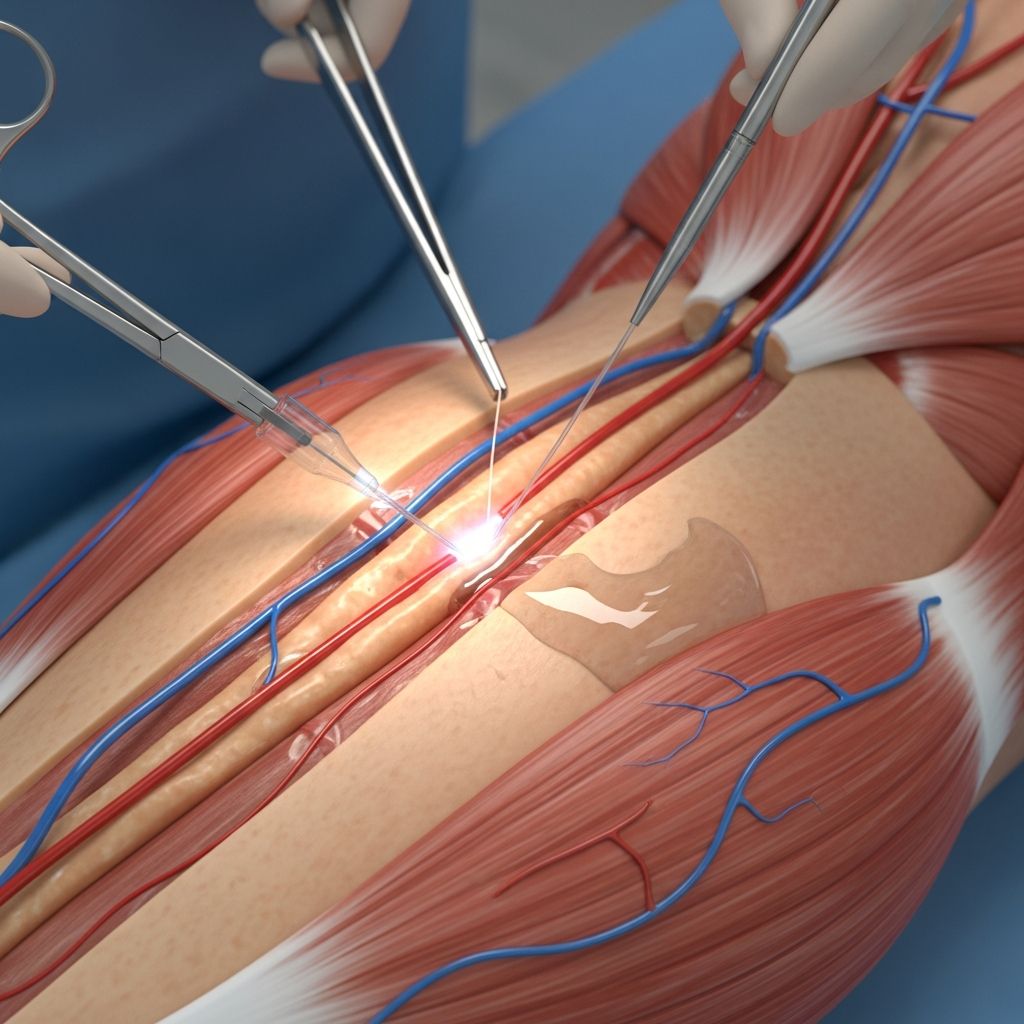
Endovenous laser varicose vein surgery, also known as endovenous laser ablation (EVLA) or endovenous laser therapy (EVLT), is a minimally invasive procedure designed to treat varicose veins by sealing them shut. The procedure works by delivering laser energy through a thin fiber positioned inside the problematic vein, causing the vein wall to collapse and eventually shrink. Once the affected vein is sealed, blood naturally reroutes through healthy veins, and the body gradually absorbs the closed vein over time.
This groundbreaking technique was developed as an alternative to traditional vein stripping surgery, which involved removing the entire vein through larger incisions. Endovenous laser ablation offers superior advantages in terms of recovery time, patient comfort, and effectiveness, making it the preferred treatment option for many patients with varicose veins.
How the Procedure Works
Understanding the step-by-step process of endovenous laser varicose vein surgery can help patients feel more confident about their treatment decision. The procedure typically involves the following stages:
Pre-Procedure Preparation
Before the procedure begins, your healthcare provider will use ultrasound imaging to map out the affected vein and identify the exact location of the faulty valve causing the problem. This mapping process ensures precise targeting and maximizes treatment effectiveness. The leg is then positioned appropriately, often in the Trendelenburg position to optimize vein access.
Related Stories



Local Anesthesia Administration
Rather than requiring general anesthesia, endovenous laser surgery uses local anesthesia to numb the treatment area. Specifically, a special type of local anesthetic called tumescent anesthesia is infiltrated around the vein. This anesthetic solution serves multiple critical functions: it decreases intravenous blood volume through venous compression, creates a protective barrier between the laser and surrounding tissue, and provides complete local pain relief during the procedure.
Catheter and Laser Fiber Insertion
Your healthcare provider will make a small incision in the skin, typically near the knee or in the thigh area where the faulty vein begins. A thin catheter (a flexible tube) is inserted through this small opening and carefully guided into the varicose vein using ultrasound guidance. A laser fiber, connected to a specialized laser machine, is then passed through the catheter and positioned precisely at the beginning of the faulty vein.
Laser Activation and Vein Sealing
Once the laser fiber is properly positioned, it is activated to deliver controlled heat energy to the vein wall. As your healthcare provider slowly withdraws the laser fiber and catheter at a carefully controlled rate (approximately 1-2 millimeters per second), the intense heat systematically seals the entire length of the vein. This thermal energy damages the collagen within the vein wall, causing fibrosis and collapse of the vessel. The process is completely painless due to the tumescent anesthesia, and ultrasound imaging continuously monitors the treatment to confirm successful ablation.
Wound Closure
After the laser treatment is complete, the tiny incision made for catheter insertion requires only a small bandage or may need just one or two stitches at most. The wound is so minimal that significant scarring is rarely a concern, and many patients experience virtually no visible marks from the procedure.
Procedure Duration and Setting
One of the major advantages of endovenous laser varicose vein surgery is its brevity and convenience. The entire procedure typically takes less than one hour to complete, with most treatments finished in 20 to 40 minutes. Because it requires only local anesthesia and minimal incisions, the procedure can be performed in an office-based setting or outpatient clinic rather than requiring hospitalization. This means patients can avoid the inconvenience and expense of hospital admission while still receiving highly effective treatment.
Recovery and Aftercare
Perhaps the most appealing aspect of endovenous laser varicose vein surgery for many patients is the rapid recovery period. Unlike traditional vein stripping surgery, which can require several weeks of downtime, endovenous laser ablation allows for immediate return to light activity.
Immediate Post-Procedure Period
Patients are encouraged to walk within 15 minutes of completing the procedure and can resume normal daily activities right away. This immediate mobilization helps prevent blood clots and promotes proper healing. Most patients experience only minimal soreness and minor bruising at the treatment site, which can typically be managed with over-the-counter, non-steroidal anti-inflammatory medications taken after consultation with the treating physician.
Activity Restrictions
While normal daily activities can resume immediately, patients should avoid rigorous activities such as intense gym workouts and heavy exercise for a short period following treatment. Most patients can return to work the following day, with average return-to-work time being just one day after the procedure. This makes endovenous laser ablation an attractive option for working professionals who cannot afford extended time away from their jobs.
Follow-Up Assessment
Approximately two weeks after the procedure, patients should return for an ultrasound follow-up appointment to assess the treatment outcomes and ensure proper healing. This ultrasound examination confirms that the vein has been successfully sealed and checks for any rare complications such as deep vein occlusion. Most patients can expect complete symptom relief and cosmetic improvement within a few weeks as the body gradually absorbs the sealed vein.
Advantages of Endovenous Laser Ablation
Endovenous laser varicose vein surgery offers numerous advantages compared to traditional surgical approaches and other treatment methods:
Minimally Invasive Nature
The procedure requires only a tiny puncture wound rather than large surgical incisions, resulting in minimal scarring, reduced trauma to surrounding tissue, and faster healing compared to traditional vein stripping.
Office-Based Setting
Since only local anesthesia is required, the procedure can be performed in an outpatient clinic without the need for hospitalization, reducing costs and improving convenience for patients.
Rapid Recovery
With return to normal activities on the same day and return to work typically the next day, patients face minimal disruption to their lives.
Excellent Long-Term Results
Endovenous laser ablation maintains vein obliteration rates of 96.7% at both three and five years post-procedure, demonstrating outstanding long-term effectiveness.
Effective Root Cause Treatment
The procedure treats the source of the problem—the faulty valve—rather than just surface symptoms, which means that secondary varicose veins in the lower leg often shrink and disappear after treatment of the primary vein.
Success Rates and Effectiveness
Endovenous laser ablation has demonstrated remarkable success rates in clinical practice. The procedure successfully eliminates varicose veins with a sustained obliteration rate of 96.7% maintained at three and five years following treatment. This means that the vast majority of patients experience permanent resolution of their treated varicose veins. Additionally, complications are quite rare, and when they do occur, they are typically minor and easily managed. Experienced practitioners report very few treatment failures, demonstrating the procedure’s high level of reliability.
Potential Risks and Complications
While endovenous laser varicose vein surgery is generally very safe, as with any medical procedure, there are potential risks and side effects that patients should understand:
Common Side Effects
Most patients experience minimal discomfort, with occasional minor bruising and soreness at the treatment site being the most common side effects. These typically resolve within a few days to a week.
Rare Complications
More serious complications are uncommon but can include nerve injury, skin burn, or deep vein thrombosis (blood clot in a deeper vein). However, with proper technique, ultrasound guidance, and tumescent anesthesia, the risk of these complications is minimized significantly.
Treatment Failure
In rare instances, the treated vein may not completely close or may reopen over time. Should this occur, the procedure can typically be repeated.
Who is a Good Candidate?
Endovenous laser varicose vein surgery is suitable for many patients with varicose veins, but your healthcare provider will evaluate whether you are a good candidate based on several factors including the size and location of the affected veins, your overall health status, and any previous vein treatments you may have undergone. Patients with significant varicose veins causing symptoms or cosmetic concerns are typically excellent candidates for this procedure.
Comparison with Other Treatment Options
| Treatment Option | Procedure Time | Anesthesia | Recovery Time | Scarring | Long-term Success Rate |
|---|---|---|---|---|---|
| Endovenous Laser Ablation | 20-60 minutes | Local | Same day | Minimal | 96.7% |
| Radiofrequency Ablation | 30-45 minutes | Local | Same day | Minimal | 95%+ |
| Traditional Vein Stripping | 60+ minutes | General | 2-3 weeks | Moderate to significant | 90-95% |
| Sclerotherapy | 15-30 minutes | None | Same day | None | 80-90% |
Frequently Asked Questions
Q: Is endovenous laser varicose vein surgery painful?
A: No, the procedure is not painful. Local anesthesia, particularly tumescent anesthesia, numbs the treatment area completely during the procedure. Patients may experience minor soreness or bruising afterward, which can be managed with over-the-counter pain relievers.
Q: How long will the results last?
A: Endovenous laser ablation provides excellent long-term results, with 96.7% of treated veins remaining closed at both three and five years post-procedure. While new varicose veins can develop in different areas over time (as they may in any person), the treated vein typically remains permanently sealed.
Q: Can I return to work after the procedure?
A: Yes, most patients return to work the next day. You can resume normal daily activities immediately after the procedure, though you should avoid strenuous exercise and gym workouts for a short period.
Q: Will my varicose veins return?
A: The treated vein will not return, but new varicose veins may develop in other areas over time, depending on your genetic predisposition and venous health. This is why following preventive measures such as wearing compression stockings and staying active is recommended.
Q: Are there any restrictions after the procedure?
A: You should avoid intense exercise and gym workouts for a short period, but normal daily activities can resume immediately. Walking is actually encouraged to promote healing.
Q: How does the laser know to treat only the varicose vein?
A: The laser fiber is precisely positioned inside the affected vein using ultrasound guidance, ensuring that the laser energy targets only that specific vein without damaging surrounding tissue.
References
- Endovenous Laser Varicose Vein Surgery — University of Rochester Medical Center. https://www.urmc.rochester.edu/encyclopedia/content?contenttypeid=135&contentid=28
- Endovenous Laser Ablation – Laser Treatment for Varicose Veins — Vein Health Australia. https://www.veinhealth.com.au/endovenous-laser-ablation/
- Laser Treatment for Varicose Veins — OSD Healthcare. https://onestophospital.co.uk/treatments/laser-treatment-for-varicose-veins/
- Varicose Vein Treatment: Endovenous Laser Therapy — National Center for Biotechnology Information (NCBI), National Institutes of Health. https://www.ncbi.nlm.nih.gov/books/NBK557719/
- Endovenous Laser Therapy – Spider Vein Treatment — Canada Vein Clinics. https://www.canadaveinclinics.ca/vein-procedures/endovenous-laser-therapy-evlt/
Similar Articles








Read full bio of medha deb