Enhancing Clinical Efficiency: Workflow Strategies
Discover proven methods to streamline clinical operations, cut waste, and boost patient care in medical practices through smart workflow enhancements.
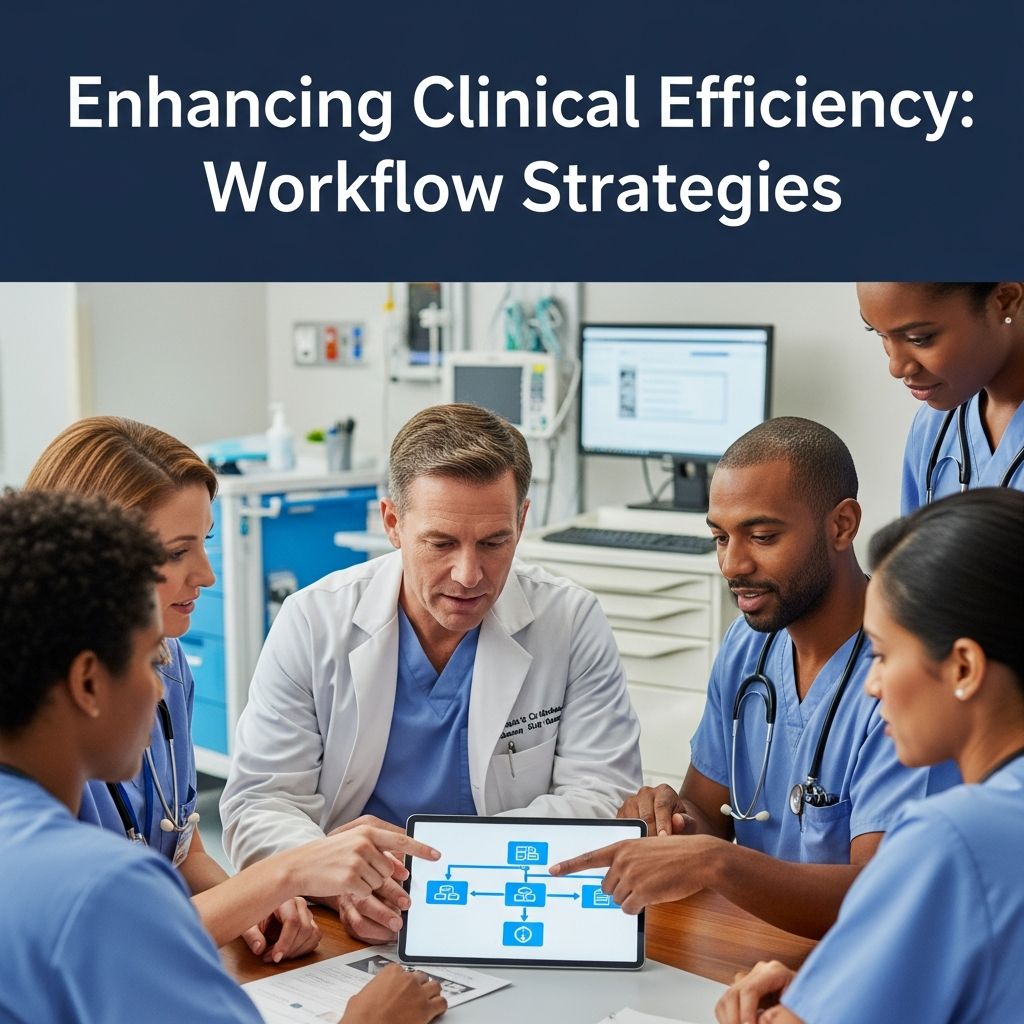
In today’s fast-paced healthcare environment,
clinical workflow optimization
stands as a cornerstone for delivering high-quality patient care while managing rising operational demands. Efficient workflows minimize delays, reduce errors, and alleviate clinician burnout, ultimately leading to better patient outcomes and practice sustainability. This comprehensive guide delves into practical approaches to refine processes in medical settings, drawing on established methodologies to transform routine operations into seamless systems.Understanding the Foundations of Clinical Workflow
Clinical workflows encompass the sequence of tasks involved in patient care, from intake to follow-up. Inefficient processes, such as redundant documentation or poor handoffs, contribute to significant waste—estimated at up to 40% of clinical office work. Optimization involves mapping these processes to identify bottlenecks, standardizing steps, and integrating technology for smoother execution.
Key benefits include faster service delivery, improved resource allocation, and enhanced team coordination. For instance, streamlined workflows enable clinicians to focus more on direct patient interaction rather than administrative burdens.
Mapping Your Practice’s Current Processes
The first step in optimization is a thorough
process audit
. Begin by documenting high-impact areas like patient admissions, consultations, diagnostic reviews, and discharge planning. Use value-stream mapping—a lean methodology originating from manufacturing—to visualize each step, handoff points, and potential failure modes.- Identify core flows: Focus on patient handoffs (e.g., nurse-to-physician), prescription management, and result dissemination.
- Document pain points: Note delays like unacknowledged lab results or refill requests stalled by missing data.
- Engage the team: Involve staff from all levels to capture real-world insights and foster buy-in.
This mapping reveals redundancies, such as multiple data entries across systems, allowing for targeted improvements.
Standardizing Protocols for Consistency
Once mapped,
standardize protocols
to eliminate variability. Develop clear guidelines for common tasks, such as SBAR (Situation, Background, Assessment, Recommendation) for handoffs, which ensures complete information transfer.| Process | Standard Protocol | Expected Outcome |
|---|---|---|
| Patient Handoffs | SBAR template in EHR | Reduced miscommunication errors by 30% |
| Prescription Refills | Triage ladder: acute vs. chronic | Faster approvals, fewer denials |
| Lab Results | Routing rules: normal/auto-archive, abnormal/task creation | Timely follow-ups within 24 hours |
Implement these via training sessions and integrate into electronic health records (EHRs) for automatic prompts. Standardization not only boosts efficiency but also enhances patient safety.
Leveraging Technology and Automation
Technology integration is pivotal for modern workflows. EHRs, when properly configured, can automate routine tasks like generating refill requests or flagging abnormal results.
- EHR Optimization: Customize dashboards for quick data access, reducing screen navigation time.
- Automation Tools: Use AI-driven triage for refills or voice recognition for documentation to cut cognitive load.
- Interoperability: Ensure seamless data flow between patient management systems and collaboration platforms.
Mobile integration allows bedside documentation, minimizing errors from manual transcription. According to healthcare leaders, such optimizations align with the Quadruple Aim: better care, lower costs, improved population health, and provider satisfaction.
Related Stories



Building Effective Team Communication
Workflows thrive on robust communication. Poor handoffs contribute to adverse events; structured tools mitigate this. Adopt protocols like closed-loop communication, where the receiver confirms understanding.
Train teams on role clarity: define responsibilities for triage nurses, providers, and billing staff. Regular huddles—short daily meetings—address upcoming high-risk cases and workflow hiccups[10].
Optimized communication reduces phone tag and ensures accountability, making patients feel informed and clinicians empowered.
Measuring Success and Continuous Improvement
Optimization requires metrics. Track key performance indicators (KPIs) like patient throughput, task completion time, error rates, and staff satisfaction scores.
| KPI | Target | Measurement Tool |
|---|---|---|
| Average Handoff Time | <2 minutes | EHR timestamps |
| Lab Result Acknowledgment | 100% within 24h | Automated reports |
| Clinician Documentation Time | Reduced by 20% | Pre/post audits |
Use lean methodologies for iterative refinements: post-implementation audits reveal further gains. Quality improvement cycles, like Plan-Do-Study-Act (PDSA), ensure sustained progress.
Addressing Common Challenges in Implementation
Resistance to change is common; counter it with transparent communication and pilot programs. Start small—optimize one workflow, like refills—before scaling.
- Staff Training: Provide hands-on sessions to build confidence.
- Resource Allocation: Dedicate time for audits without disrupting care.
- Vendor Support: Partner with EHR providers for customization.
Clinician burnout, exacerbated by inefficient processes, improves with these changes, as 60% of CIOs note automation as a top fix.
Real-World Applications in Specialty Practices
In ophthalmology or similar specialties, workflows involve unique elements like visual field testing or imaging reviews. Customize mappings for device integration and result routing. For private practices, focus on high-volume tasks like follow-up scheduling to maximize revenue.
Case example: A practice implementing refill triage reduced processing time by 50%, freeing staff for patient-facing roles.
Future Trends in Workflow Optimization
Emerging technologies like AI predictive analytics and telehealth integration promise further gains. AI can prioritize tasks based on urgency, while cloud-based tools enhance remote access. Prioritize data security and interoperability standards for long-term success.
Frequently Asked Questions (FAQs)
What is clinical workflow optimization?
It involves analyzing and refining processes to eliminate waste, automate tasks, and improve care delivery efficiency.
How long does workflow optimization take?
Initial mapping takes 2-4 weeks; full implementation 3-6 months, with ongoing tweaks.
Does optimization require new software?
Not always—leverage existing EHRs via configuration; advanced automation may need add-ons.
How can small practices afford this?
Start with free tools like value-stream mapping and staff-driven audits for quick wins.
What metrics show success?
Track throughput, error reduction, and satisfaction via pre/post surveys.
References
- A Practical Guide to Optimize Clinical Workflows in Your Practice — Curogram. 2023. https://curogram.com/blog/clinical-workflow-optimization-for-private-practices
- Workflow Optimization — Healthcare Integrations. 2024. https://healthcareintegrations.com/glossary/workflow-optimization/
- Clinical Workflow Optimization Creates Better Patient Outcomes — CDW. 2023. https://www.cdw.com/content/cdw/en/articles/digitalworkspace/how-clinical-workflow-optimization-creates-better-patient-outcomes.html
- Solutions to Optimize Clinical Workflows — Wolters Kluwer. 2024. https://www.wolterskluwer.com/en/know/healthcare-challenges/optimizing-clinical-workflows
- How to improve clinical workflow 30 expert tips — Rhapsody Health. 2023. https://rhapsody.health/blog/how-to-improve-clinical-workflow-30-expert-tips/
- Implementing Best Practices to Redesign Workflow and Optimize… — PMC (National Library of Medicine). 2022-07-01. https://pmc.ncbi.nlm.nih.gov/articles/PMC9300261/
- Improving Clinical Workflow — HIPAA Journal. 2023. https://www.hipaajournal.com/improving-clinical-workflow/
Similar Articles








Read full bio of medha deb