Entecavir For Hepatitis B: Complete Guide To Use, Dosing, Risks
Comprehensive guide to Entecavir (Baraclude) for treating chronic hepatitis B: uses, dosage, side effects, and patient advice.
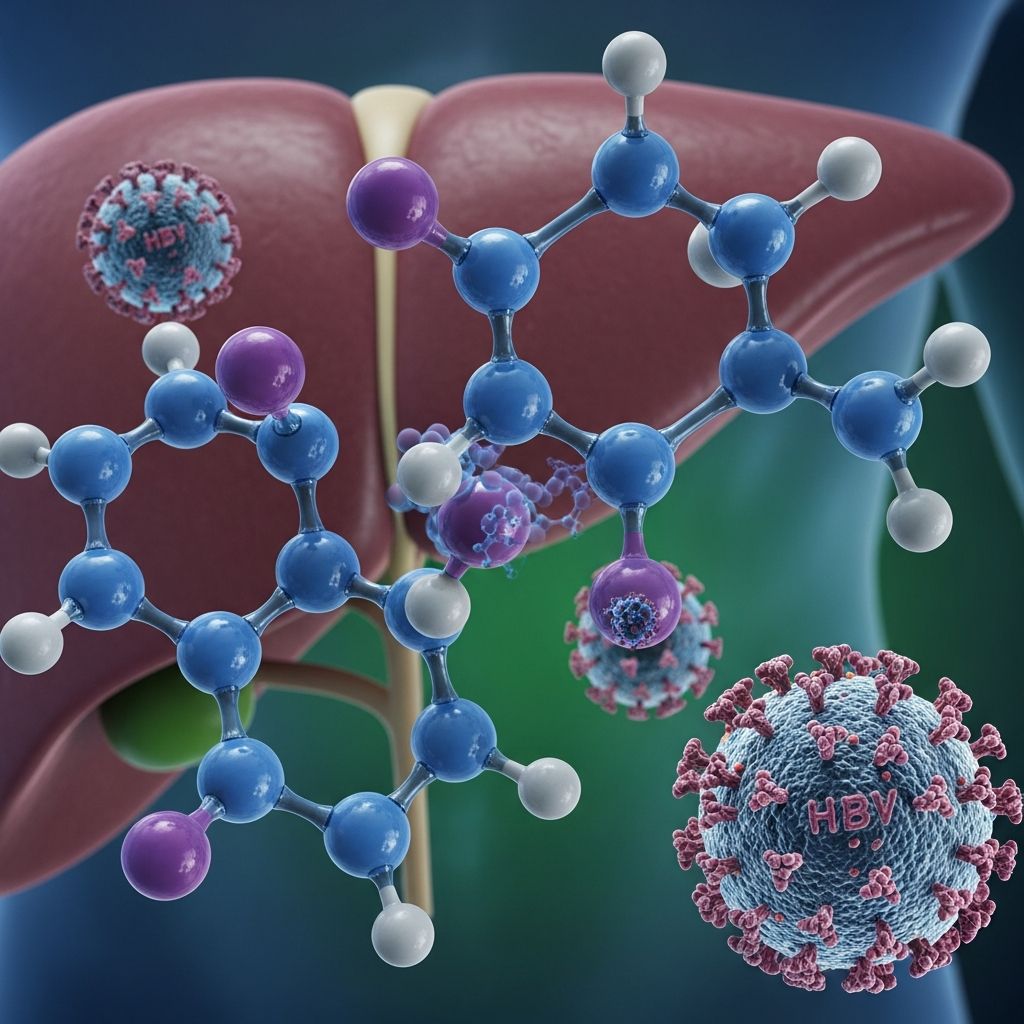
Entecavir, marketed as Baraclude, is a nucleoside analogue antiviral medication specifically designed to treat chronic hepatitis B virus (HBV) infection. It works by inhibiting HBV DNA polymerase, thereby suppressing viral replication and reducing liver damage in patients with active disease.
About entecavir tablets
Entecavir tablets, available as Baraclude in 0.5 mg and 1 mg strengths, represent a cornerstone therapy for managing chronic HBV. Approved by the FDA in 2005, this oral medication has demonstrated superior efficacy over lamivudine in clinical trials, achieving higher rates of viral suppression and histological improvement in the liver. The European Medicines Agency (EMA) also authorizes its use in both compensated and decompensated liver disease, underscoring its broad applicability.
Unlike broader-spectrum antivirals, entecavir targets HBV with high potency and a low barrier to resistance, making it a first-line option for nucleoside-naive patients and those with lamivudine resistance. Administered once daily on an empty stomach, it offers convenience for long-term use, though treatment duration is often indefinite to prevent viral rebound.
Pediatric formulations include an oral solution (0.05 mg/mL) for children aged 2 years and older, ensuring accessibility across age groups. High-quality manufacturing standards ensure bioavailability remains consistent, even in patients with hepatic impairment, where no dose adjustment is needed.
Key facts about entecavir tablets
- Entecavir is a
guanine nucleoside analogue
that interferes with all three steps of HBV replication: priming, reverse transcription, and DNA synthesis. - Affects
1 in 100 people
with common side effects like headache or fatigue; severe lactic acidosis is rare (less than 1 in 1,000). - Treatment is typically
long-term
; stopping can cause hepatitis flares in up to 20% of cases. - **Not a cure** but suppresses virus to undetectable levels in 80%+ of naive patients after 48 weeks.
- Pregnancy category
B
(no evidence of harm in animal studies); monitoring recommended. - Available as
tablets (0.5 mg, 1 mg)
andoral solution
for precise pediatric dosing.
About chronic hepatitis B
Chronic hepatitis B is a liver infection caused by the HBV, affecting over 250 million people worldwide. It leads to ongoing viral replication, elevated liver enzymes (ALT/AST), inflammation, and fibrosis, progressing to cirrhosis or hepatocellular carcinoma in 15-25% of untreated cases.
Symptoms may be absent initially but include fatigue, jaundice, abdominal pain, and dark urine in active disease. Diagnosis involves HBsAg positivity for >6 months, high HBV DNA, and biopsy-proven inflammation. Without intervention, it causes 887,000 deaths annually from complications, emphasizing the need for suppressive therapy like entecavir.
Risk factors include perinatal transmission, unsafe injections, and endemic regions in Asia and Africa. Vaccination prevents acute infection, but chronic carriers require lifelong management to halt progression.
When to take entecavir
How and when to take it
Take entecavir
once daily
on an empty stomach—at least 2 hours after eating and 2 hours before the next meal—to maximize absorption. Swallow tablets whole with water; do not chew or crush. For the oral solution, use the provided syringe for accurate measurement.Timing consistency aids adherence; evening dosing suits many routines. If a dose is missed by <12 hours, take it promptly; otherwise, skip and resume normally—never double up.
Dosage
| Patient Group | Dose | Notes |
|---|---|---|
| Nucleoside-naive adults/adolescents (≥16 years) | 0.5 mg once daily | Compensated liver disease with active replication. |
| Lamivudine-refractory or resistant | 1 mg once daily | No washout needed when switching. |
| Decompensated liver disease | 1 mg once daily | Monitor closely for flares. |
| Pediatrics (2-15 years) | Weight-based: 0.015 mg/kg (solution) | Up to 0.5 mg max; HBeAg-positive/negative. |
| Renal impairment (CrCl <50 mL/min) | Adjust: e.g., 0.25 mg every 48h (CrCl 30-49) | Hemodialysis/CAPD: 0.5 mg after dialysis. |
Related Stories



No adjustment for hepatic impairment (Child-Pugh B/C). In HIV/HBV co-infection, use 1 mg if prior lamivudine exposure.
Missed a dose?
If <12 hours late, take immediately. Beyond that, skip and continue schedule. Consistent use is critical to prevent resistance.
Common questions about entecavir tablets
How long do you take entecavir for?
Indefinite in most cases; optimal duration unknown. Phase 3 trials showed response at 48-52 weeks (HBV DNA <300 copies/mL, ALT normalization, HBeAg loss), but flares occur post-stopping in 1-20%. Seroconversion (HBsAg loss) is rare (1-3%/year); continue until sustained response.
Are there any alternatives?
First-line: Tenofovir disoproxil fumarate (TDF) or tenofovir alafenamide (TAF)—similar efficacy, low resistance. Alternatives: Pegylated interferon (finite course, immunogenic); adefovir/pegasys for specific cases. Choice depends on resistance, kidney function, bone health.
| Drug | Efficacy (Viral Suppression @48w) | Resistance Risk | Key Considerations |
|---|---|---|---|
| Entecavir | 81% naive pts | Low (<1% @48w) | Empty stomach; renal adjust. |
| Tenofovir (TDF/TAF) | ~80% | Very low | Kidney/bone monitoring. |
| Lamivudine | 40-60% | High (20% @1y) | Not first-line. |
Can you take entecavir on a full stomach?
No—food reduces absorption by 44-72%; always empty stomach.
Who can and cannot take entecavir tablets
Who can take entecavir
Suitable for adults/adolescents with compensated/decompensated chronic HBV (HBeAg+/-/naive/resistant), evidence of replication (HBV DNA+), elevated ALT, or active histology. Pediatrics ≥2 years; HIV/HBV co-infection.
Who may not be able to take it
- Hypersensitive to entecavir (rash, anaphylaxis rare).
- Pregnant/breastfeeding: Category B; benefits vs. risks—monitor infant HBV.
- Severe renal failure without adjustment.
- Decompensated cirrhosis: Use cautiously, monitor lactic acidosis.
Pregnancy and breastfeeding
Limited data; animal studies show no teratogenicity. Registry data suggest no increased birth defects. Breastfeeding: HBV not transmitted via breast milk, but entecavir excretion unknown—avoid or pump/discard. Vaccinate newborns.
Taking with other medicines and herbal supplements
**Drug interactions:** Minimal CYP involvement. Caution with nephrotoxics (aminoglycosides, cyclosporine)—monitor CrCl. No significant food/herb conflicts beyond absorption timing.
- Avoid: Multivitamins with minerals 2h before/after (reduced Cmax).
Common side effects
Generally well-tolerated; most mild.
| Side Effect | Frequency | Management |
|---|---|---|
| Headache | Common (>1/10) | Analgesics; resolves. |
| Fatigue | Common | Rest. |
| Nausea | 1-10% | With food if tolerated (but suboptimal). |
| **Lactic acidosis** (rare, severe) | <1/1,000 | Stop drug; ER if dyspnea, abdominal pain. |
| Hepatic flares | Post-discontinuation | Monitor ALT/DNA. |
Serious side effects
**Exacerbations:** ALT flares >10x ULN in 2-3%; monitor q3-6mo.
Resistance:
<1% at 48w naive; higher in lam-refractory (monitor DNA).Rare:
Hepatocellular carcinoma risk unchanged—screen q6mo.Side effects: Reporting
Report to prescriber or FDA MedWatch. Yellow Card Scheme (UK) for herbs/vaccines.
How and when to take entecavir tablets
(See ‘When to take entecavir’ section above for detailed dosing and administration.) Ongoing monitoring: HBV DNA q3-6mo, ALT q3mo, creatinine annually, AFP/ultrasound q6-12mo. Resistance testing if virologic failure.
Follow-up and monitoring
Regular labs essential:
- Baseline: HBV DNA, HBeAg, ALT, CrCl, HBV genotype if resistant.
- Ongoing: Viral load suppression goal <20-60 IU/mL; ALT normalization.
- Annual: Renal function, bone density if risk factors.
- HCC surveillance: Ultrasound/AFP in cirrhotics.
Clinical trials (AI463022/027) showed 81% undetectable HBV DNA at 48w vs. lamivudine; histologic improvement in 72% vs. 62%.
Frequently asked questions (FAQs)
Does entecavir cure hepatitis B?
No, it suppresses but rarely eliminates HBV (HBsAg loss <1%/year). Lifelong therapy often needed.
Can entecavir be used in children?
Yes, ≥2 years with compensated disease; weight-based dosing via solution.
What if I develop resistance?
Switch to tenofovir; low risk in naive patients (<1% @5y).
Is entecavir safe long-term?
Yes, up to 10+ years data; monitor for flares on cessation.
Can I drink alcohol on entecavir?
Avoid—exacerbates liver damage.
References
- FDA Approves New Treatment Baraclude (entecavir) for Chronic Hepatitis B — NATAP. 2005-03-31. https://www.natap.org/2005/HBV/033105_01.htm
- Entecavir (Baraclude) – Treatment — Hepatitis B Online, University of Washington. 2023 (updated). https://www.hepatitisb.uw.edu/page/treatment/drugs/entecavir
- Baraclude | European Medicines Agency (EMA) — EMA. 2024-01-15. https://www.ema.europa.eu/en/medicines/human/EPAR/baraclude
- Baraclude (entecavir) Label — FDA. 2010-06-30. https://www.accessdata.fda.gov/drugsatfda_docs/label/2010/021797s011lbl.pdf
- Entecavir (Baraclude): Uses, Side Effects, Alternatives — GoodRx (citing clinical data). 2025 (updated). https://www.goodrx.com/entecavir/what-is
- Severe Acute Hepatitis B Treated With Entecavir — PMC/NIH. 2011-04-28. https://pmc.ncbi.nlm.nih.gov/articles/PMC3103261/
- Entecavir: Uses, Interactions, Mechanism of Action — DrugBank. 2024 (updated). https://go.drugbank.com/drugs/DB00442
Similar Articles








Read full bio of Sneha Tete