Enteroviral Infections: Symptoms, Diagnosis, and Treatment
Comprehensive guide to enteroviral infections: causes, symptoms, diagnosis, and management of these common viral illnesses.
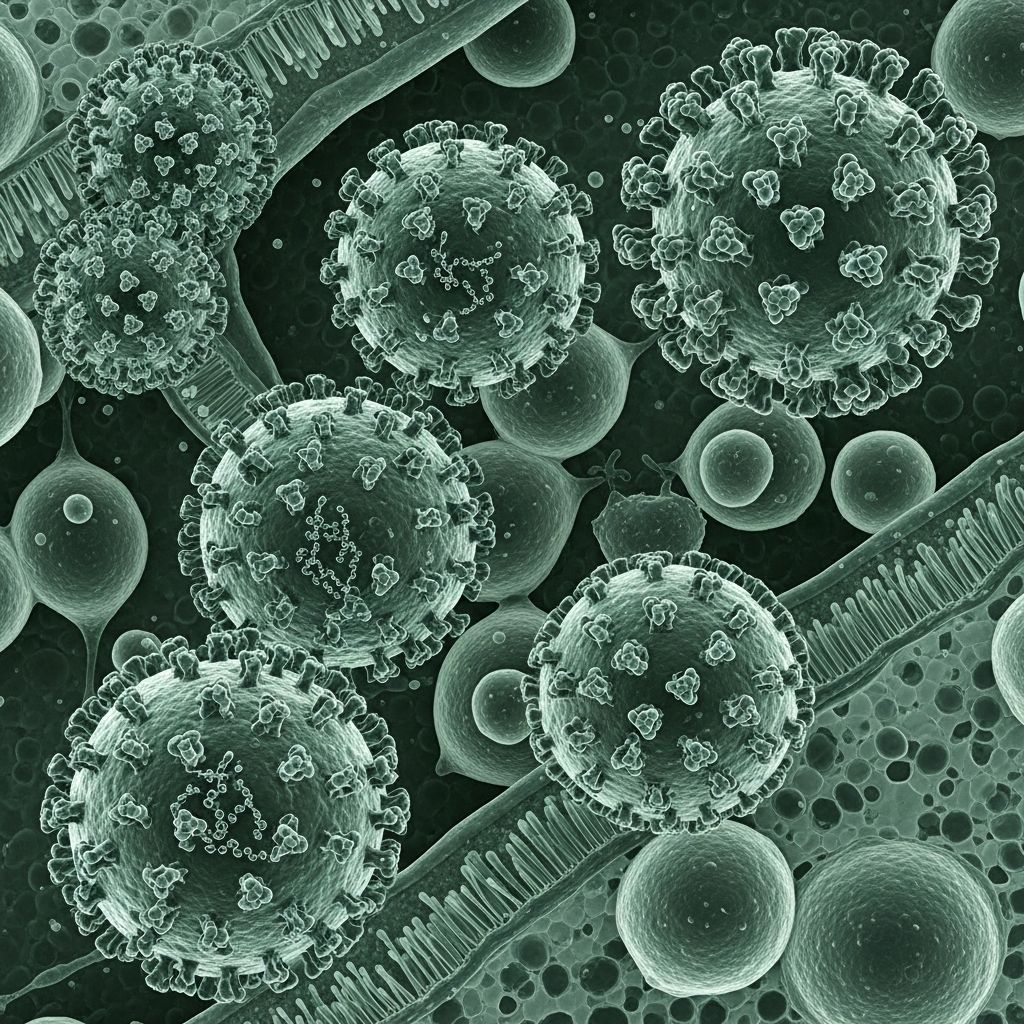
Enteroviruses belong to the Picornaviridae family and are small, non-enveloped, positive-sense single-stranded RNA viruses measuring 22–30 nm in diameter. Who is affected by enteroviral infections? Enteroviral infections are common worldwide and affect people of all ages and races. They occur year-round in the tropics but mainly in summer and early autumn in temperate climates. Children are most often affected, with infections more common under age 10 years. Epidemics occur in communities, childcare centres, schools and institutions.
What causes enteroviral infections?
There are numerous enterovirus serotypes, including coxsackievirus A and B, echovirus and numbered enteroviruses such as EV71 and D68. Coxsackieviruses were named after the town of Coxsackie, New York, where they were first isolated. Echoviruses stands for enteric cytopathic human orphan (‘orphan’ because they were unknown pathogens when first isolated).
- Coxsackie A viruses (Cox A) are classified into 23 types
- Coxsackie B viruses (Cox B) into 6 types
- Echoviruses into 28 types (even numbers 1–34, excluding 10, 22, 23, 28 and 32)
- New enteroviruses are numbered sequentially (eg, enterovirus 71)
Human enteroviruses also include parechovirus, polio virus (types 1–3) and rhinovirus (over 100 serotypes).
What are the clinical features of enteroviral infections?
Most enterovirus infections are asymptomatic. Symptomatic infection ranges from mild to severe.
Summer flu
Symptoms of non-specific summer flu or undifferentiated enteroviral illness include fever, headache, sore throat, viral exanthem, mouth ulcers, anorexia, myalgia, abdominal pain, nausea, vomiting and diarrhoea.
Hand foot and mouth disease
Hand foot and mouth disease (HFMD) mainly affects children under 10 years of age. Initial symptoms include fever, sore throat, mouth ulcers and malaise. A rash follows within 24–48 hours. The rash starts as tiny red spots that blanch on pressure. The spots become papules then vesicles on an erythematous base. Vesicles rupture easily to form erosions. The rash occurs on the hands, feet and in the mouth. Occasionally, lesions are present on the buttocks, genitals and knees. Nail shedding may occur 3–4 weeks later.
- Coxsackie A16 causes typical HFMD
- EV71 causes more severe HFMD with a higher risk of complications
Herpangina
Herpangina affects children under 5 years of age. There is sudden onset of fever, headache and sore throat. Multiple 1–2 mm vesicles and ulcers develop on the soft palate, tonsillar pillars and uvula after 24–48 hours. The rash resolves within 4–7 days.
Acute haemorrhagic conjunctivitis
Acute haemorrhagic conjunctivitis (AHC) is highly contagious. Both eyes are affected with oedema, injection, epiphora and subconjunctival haemorrhage. Enterovirus 70 and coxsackievirus A24 cause epidemics of AHC. Recovery is usually within 1–2 weeks.
Other exanthems
Enteroviral exanthems include:
- Non-specific maculopapular rash: trunk and face
- Unilateral laterothoracic exanthem: single side of trunk
- Atypical HFMD: eczematous, vesicular, petechial or purpuric
Related Stories



Bornholm disease
Epidemic pleurodynia (Bornholm disease) causes severe paroxysmal chest or abdominal pain due to focal myositis. Fever, headache and malaise precede the muscle pain by 1 day. Pain lasts 1–3 days.
Neurological syndromes
Enteroviruses rarely cause aseptic meningitis, encephalitis, acute flaccid paralysis (poliomyelitis-like syndrome) and myopericarditis.
- Aseptic meningitis: fever, headache, vomiting, photophobia and neck stiffness
- Encephalitis: altered mental state, seizures and focal neurology
- Acute flaccid myelitis: limb weakness, bulbar palsy and respiratory failure
How is the diagnosis of enteroviral infections made?
Diagnosis is clinical in typical presentations such as HFMD and herpangina. PCR testing of vesicle fluid, throat swabs, stool or CSF confirms enterovirus. Serology is rarely used.
What is the differential diagnosis for enteroviral infections?
- HFMD: aphthous ulcers, erythema multiforme, varicella
- Herpangina: streptococcal tonsillitis, primary herpetic gingivostomatitis
- Exanthems: measles, rubella, scarlet fever
What is the treatment for enteroviral infections?
Treatment is supportive. Analgesia, hydration and rest are recommended. IVIG may be used in immunocompromised patients or severe neurological disease.
What is the outcome for enteroviral infections?
Most infections resolve within 7–10 days without sequelae. Neurological complications may cause permanent disability. Onchocerciasis (river blindness) is a chronic infection.
How can enteroviral infections be prevented?
Prevention includes hand washing, avoiding close contact with infected persons, disinfection of surfaces and isolation of cases. No vaccine is available except for polio.
Frequently asked questions
What causes enteroviral infections?
Enteroviruses including coxsackie A/B, echovirus and enterovirus 71.
Who gets enteroviral infections?
Primarily children under 10 years in summer/autumn.
What are the complications of enteroviral infections?
Aseptic meningitis, encephalitis, myocarditis and dehydration.
Is hand foot and mouth disease contagious?
Yes, via faecal-oral and respiratory routes for weeks.
Does enterovirus cause nail loss?
Yes, onychomadesis 3–4 weeks after HFMD.
Related topics
- Hand foot and mouth disease
- Herpangina
- Viral exanthems
References
- Overview of Enterovirus Infections — Merck Manuals. 2023. https://www.merckmanuals.com/home/infections/enteroviruses/overview-of-enterovirus-infections
- Overview of Enterovirus Infections – Infectious Diseases — MSD Manuals Professional Edition. 2024. https://www.msdmanuals.com/professional/infectious-diseases/enteroviruses/overview-of-enterovirus-infections
- Enterovirus – StatPearls — NCBI Bookshelf. 2023-10-01. https://www.ncbi.nlm.nih.gov/books/NBK562330/
Similar Articles








Read full bio of medha deb