Environmental Racism: Health Impacts, History, And Solutions
How systemic racism leads to disproportionate environmental hazards and health risks in communities of color.
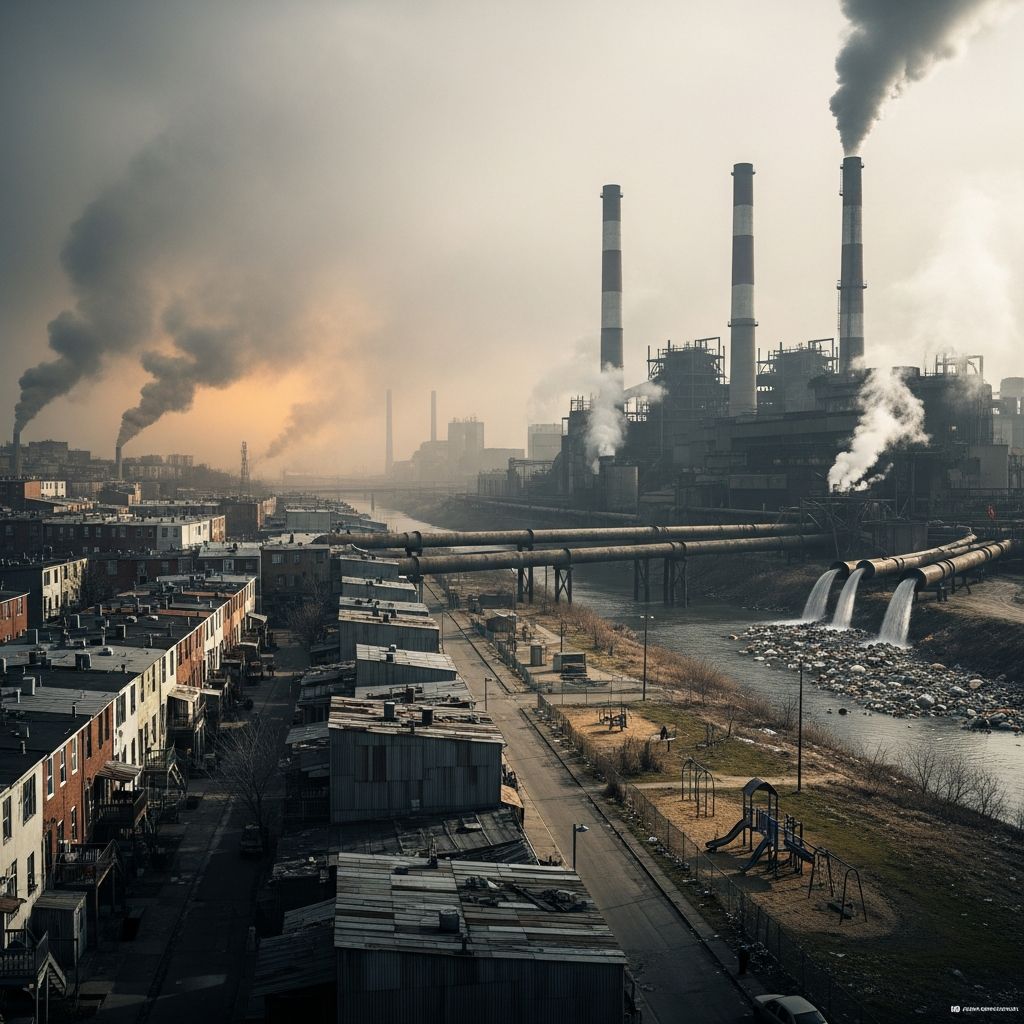
Environmental racism refers to the disproportionate exposure of communities of color and low-income groups to environmental hazards, stemming from discriminatory policies and practices that site polluting facilities in these areas. This systemic issue results in elevated health risks, including cancer, respiratory diseases, and developmental disorders, perpetuating cycles of inequality.
What Is Environmental Racism?
Environmental racism involves racist and discriminatory practices that determine which communities receive health-harming infrastructure, such as toxic waste sites, industrial plants, and highways. Racial and ethnic minorities face higher burdens from harmful exposures in homes, workplaces, and neighborhoods, driven by systemic racism as a fundamental cause. Unlike general environmental injustice, this is explicitly tied to racial discrimination, where race predicts proximity to hazards more strongly than income.
Key characteristics include:
- Intentional siting of polluting facilities in predominantly Black, Latino, Indigenous, or low-wealth neighborhoods.
- Lack of infrastructure like clean water and sanitation in these areas.
- Compounding factors like historical segregation and limited community resources to oppose developments.
The term gained prominence in the 1980s through protests against waste facility placements, with a 1983 U.S. General Accounting Office report revealing that 75% of communities near hazardous landfills were predominantly Black.
History of Environmental Racism
Environmental racism traces back to policies like redlining, which segregated neighborhoods and directed industrial development to minority areas. Post-World War II urban planning often placed highways and factories near communities of color, displacing residents and increasing pollution exposure.
Milestones include:
- 1982 Warren County Protests: Demonstrations against a PCB landfill in a Black North Carolina community sparked the environmental justice movement.
- 1983 GAO Report: Documented racial disparities in hazardous waste site locations.
- 1990s Federal Recognition: President Clinton’s Executive Order 12898 mandated environmental justice in federal actions.
Today, these historical patterns persist, with pollution following segregated housing lines: “America is segregated, and so is pollution. Race has been the most potent factor in deciding where toxic facilities are located.”
Examples of Environmental Racism
Real-world cases illustrate the crisis:
- Cancer Alley, Louisiana: A corridor with over 150 petrochemical plants, home to mostly African American residents, faces cancer rates far above national averages. The proposed Sunshine Project could emit more CO2 than 113 countries combined.
- Flint Water Crisis, Michigan: Majority-Black Flint switched to contaminated water sources in 2014, exposing residents to lead and causing Legionnaires’ disease outbreaks.
- North Carolina CAFOs: Concentrated animal feeding operations in Black, low-wealth areas pollute air and water, linked to asthma and kidney disease, worsened by hurricanes.
- Centreville, Illinois: Predominantly Black community suffers raw sewage backups due to failing infrastructure.
- Indigenous Lands: Mining and pollution on Native lands contribute to asthma rates double the national average.
In Detroit, the racially segregated metro area sees Black and Latino communities bearing the brunt of air pollution from industries and railroads.
Health Impacts of Environmental Racism
Disproportionate exposures lead to severe health outcomes:
| Hazard | Affected Groups | Health Effects |
|---|---|---|
| Air pollution from CAFOs/industries | Black, Latino communities | Asthma, lung decline, mental health issues |
| Water contamination (lead, sewage) | Low-income POC areas | Neurological damage, kidney disease, infections |
| Hazardous waste proximity | Communities of color | Cancer, respiratory illnesses |
| Poor school environments | Urban/rural POC students | Absenteeism from asthma, neurodevelopmental issues |
Latino immigrant workers face added risks from toxic cleaning chemicals, compounded by job insecurity and housing instability. Native communities suffer from reliance on polluted natural resources. Overall, these exposures drive broader disparities in life expectancy and chronic disease.
Related Stories



Environmental Justice Movement
The environmental justice (EJ) movement seeks equity in environmental protections, led by affected communities. Efforts include community-academic partnerships, like North Carolina workshops addressing CAFOs and urban pollution.
Key strategies:
- Community Mapping: Tools like Detroit’s CAPHE project quantify pollution inequities and propose action plans.
- Policy Advocacy: Pushing for stricter siting regulations and infrastructure investments.
- Federal Initiatives: NIEHS workshops unite leaders to combat disparities.
APHA emphasizes addressing psychosocial stressors and historical traumas alongside hazards.
How to Combat Environmental Racism
Solutions require multi-level action:
- Policy Changes: Enforce anti-discrimination in facility permitting; invest in green infrastructure for POC areas.
- Community Empowerment: Fund local monitoring and legal challenges.
- Research & Data: Include marginalized voices in studies; track long-term health impacts.
- Corporate Accountability: Oppose projects like Cancer Alley’s expansions through global advocacy.
Individuals can support by joining EJ organizations, contacting officials, and amplifying affected voices.
Frequently Asked Questions (FAQs)
What is environmental racism?
It’s the systemic placement of environmental hazards in communities of color, leading to disproportionate health burdens.
Which communities are most affected?
Predominantly Black, Latino, Indigenous, and low-income groups near industrial sites, CAFOs, and poor infrastructure.
What are some health effects?
Cancer, asthma, respiratory diseases, neurological issues, and mental health problems from pollution exposure.
How does it differ from class-based inequality?
Race is a stronger predictor of hazard proximity than income.
What can be done about it?
Advocate for equitable policies, support EJ groups, and demand accountability from industries and governments.
This crisis demands urgent action to dismantle systemic barriers and ensure clean environments for all.
References
- Racism as a public health issue in environmental health disparities — National Institute of Environmental Health Sciences (NIEHS)/PMC. 2023-12-15. https://pmc.ncbi.nlm.nih.gov/articles/PMC10802013/
- Environmental racism: Research, current events, and global impact — Medical News Today. 2023-08-01. https://www.medicalnewstoday.com/articles/environmental-racism
- Racial Disparities in Urban City Planning: “Environmental Racism” — Brown University Public Health Journal. 2024-04-04. https://sites.brown.edu/publichealthjournal/2024/04/04/racial-disparities-in-urban-city-planning-environmental-racism/
- Environmental Justice — American Public Health Association (APHA). 2024-01-01. https://www.apha.org/topics-and-issues/environmental-health/environmental-justice
- Interactive web series explores environmental racism — Harvard T.H. Chan School of Public Health. 2023-05-10. https://hsph.harvard.edu/news/interactive-web-series-explores-environmental-racism/
Similar Articles








Read full bio of medha deb