Eosinophilic Granulomatosis with Polyangiitis
Comprehensive guide to EGPA (Churg-Strauss syndrome): symptoms, diagnosis, skin manifestations, and treatment strategies for this rare vasculitis.
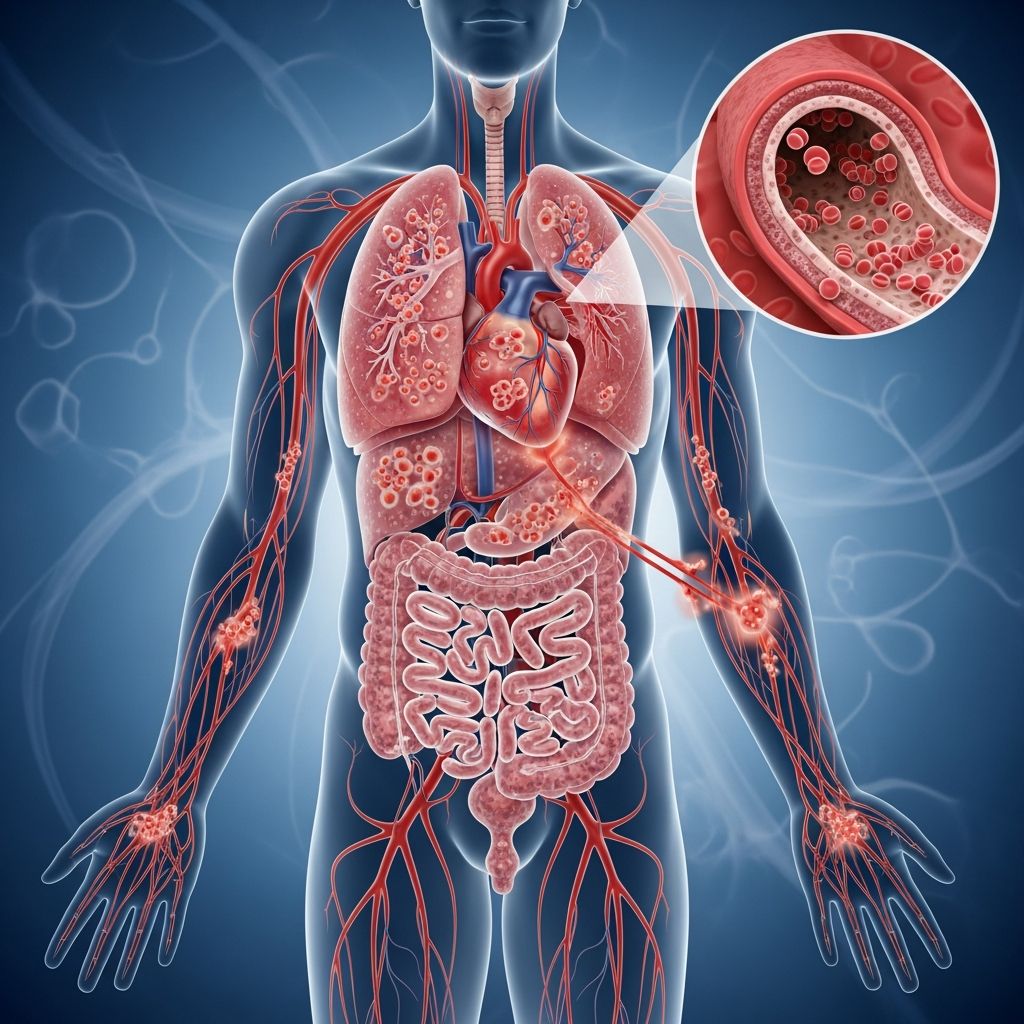
Eosinophilic granulomatosis with polyangiitis (EGPA), formerly known as Churg-Strauss syndrome, is a rare systemic vasculitis characterized by asthma, eosinophilia, and granulomatous inflammation affecting small to medium-sized blood vessels. It progresses through three phases: prodromal allergic, eosinophilic, and vasculitic. Skin involvement occurs in up to 50% of cases, presenting as palpable purpura, nodules, and urticaria.
What is eosinophilic granulomatosis with polyangiitis?
EGPA is an antineutrophil cytoplasmic antibody (ANCA)-associated vasculitis (AAV) that predominantly affects the respiratory tract and peripheral nerves. It was first described in 1951 by Churg and Strauss, featuring necrotizing vasculitis, extravascular granulomas, and eosinophilic infiltrates. The disease has an incidence of 2-3 per million, typically onset in adults aged 30-50, with a slight female predominance.
The hallmark is adult-onset asthma, often severe and corticosteroid-dependent, accompanied by allergic rhinitis and sinusitis. Unlike other vasculitides, EGPA uniquely combines asthma with eosinophilia (>10% or >1500/μL) and multisystem involvement. ANCA, particularly anti-myeloperoxidase (MPO), is positive in 40-60% of cases, correlating with vasculitis severity.
Who gets eosinophilic granulomatosis with polyangiitis?
EGPA affects individuals aged 30-60 years, with equal male-female distribution in some cohorts. Risk factors include atopy, asthma history, and possibly leukotriene antagonists (controversial trigger). Genetic associations with HLA-DRB1 alleles exist but are not definitive.
- Asthma patients with unexplained eosinophilia
- Those with chronic rhinosinusitis and nasal polyps
- Individuals developing neuropathy or skin lesions amid eosinophilic asthma
What causes eosinophilic granulomatosis with polyangiitis?
The aetiology is unknown but involves genetic susceptibility, environmental triggers, and dysregulated immune response. Eosinophils play a central role, releasing toxic proteins damaging vessels. T-helper 2 (Th2) cytokines (IL-4, IL-5, IL-13) drive eosinophil activation. ANCA may contribute to neutrophil activation in vasculitic phase.
Potential triggers include infections, drugs (montelukast debated), and allergens, but no single cause identified. Pathology shows eosinophilic granulomas, necrotizing vasculitis, and extravascular eosinophils in tissues.
What are the clinical features of eosinophilic granulomatosis with polyangiitis?
EGPA evolves in three overlapping phases, though not all patients experience all.
Prodromal phase (asthma/allergic)
Duration: months to years. Features adult-onset asthma (90-100%), allergic rhinitis (75%), chronic rhinosinusitis (47-93%), nasal polyps (62-77%). Asthma is severe, often requiring steroids.
Eosinophilic phase
Marked by peripheral eosinophilia >10%. Symptoms: fever, weight loss, myalgias (37-57%), infiltrates on chest imaging. Lung involvement in 70-75%: infiltrates, nodules.
Vasculitic phase
Affects multiple organs:
- Lungs: Infiltrates (transient), alveolar hemorrhage (rare)
- Nerves: Mononeuritis multiplex (60-70%), axonal damage
- Skin: 40-70%; palpable purpura, nodules, urticaria, livedo
- Heart: Myocarditis, pericarditis (15-50%, poor prognosis)
- GI: Pain, bleeding (30-50%)
- Kidney: Glomerulonephritis (25%)
Skin features of eosinophilic granulomatosis with polyangiitis
Dermatological manifestations in 40-70%, often early. Common lesions:
Related Stories



- Palpable purpura: Lower limbs, leukocytoclastic vasculitis
- Subcutaneous nodules: Elbows, pressure sites; granulomatous
- Urticaria: Eosinophil-rich, persistent
- Livedo reticularis, petechiae, ulcers
Histology: dermal vasculitis, eosinophilic infiltrates, granulomas. Skin biopsy confirms diagnosis in 40%.
How is eosinophilic granulomatosis with polyangiitis diagnosed?
No single test; diagnosis clinical using ACR 1990 (4/6 criteria: asthma, >10% eosinophils, neuropathy, pulmonary infiltrates, sinusitis, biopsy vasculitis/eosinophils) or 2022 ACR-EULAR score.
| Investigation | Findings |
|---|---|
| Blood | Eosinophilia (>1500/μL), ↑ESR/CRP, ↑IgE, ANCA (MPO+ 40-60%) |
| Imaging | Chest CT: ground-glass, nodules; sinus CT: opacification |
| Biopsy | Nerve/skin/lung: vasculitis, eosinophils, granulomas |
| Other | Echo/MRI heart, nerve conduction |
Differential: hypereosinophilic syndrome, parasitic infection, other AAV.
How is eosinophilic granulomatosis with polyangiitis treated?
Treatment per phase/severity. Five-Factor Score (FFS) assesses prognosis.
Mild (FFS=0)
- Corticosteroids: prednisone 0.5-1 mg/kg/day, taper
- HSN/HSM: hydroxychloroquine
Severe (FFS≥1)
- Induction: high-dose steroids + cyclophosphamide/rituximab
- Maintenance: azathioprine/methotrexate, biologics (mepolizumab IL-5 inhibitor)
Mepolizumab reduces relapses, steroid use. Cardiac monitoring essential.
Complications of eosinophilic granulomatosis with polyangiitis
- Cardiac: myocarditis, heart failure (leading cause mortality)
- Neurologic: permanent neuropathy
- Renal failure
- Relapses (FFS predicts)
5-year survival >80% with treatment.
Prognosis of eosinophilic granulomatosis with polyangiitis
Excellent with early therapy; ANCA+ worse prognosis. Monitor FFS, cardiac function. Remission in 80%, but relapses common.
Frequently asked questions (FAQs)
What is the difference between EGPA and other vasculitides?
EGPA uniquely features asthma + eosinophilia; GPA lacks eosinophils, MPA more renal.
Is EGPA curable?
Not curative but manageable; many achieve long-term remission.
Can EGPA affect the skin?
Yes, purpura/nodules in 50%.
What is the role of biologics in EGPA?
Mepolizumab targets IL-5, approved for relapsing EGPA.
Does EGPA always have three phases?
Phases overlap; not all progress to vasculitis.
References
- Churg-Strauss Syndrome Symptoms, Diagnosis, Treatment — American Academy of Allergy, Asthma & Immunology. 2023. https://www.aaaai.org/conditions-treatments/related-conditions/churg-strauss-syndrome
- Churg-Strauss syndrome — University of Michigan Health-Sparrow. 2024. https://www.uofmhealthsparrow.org/departments-conditions/conditions/churg-strauss-syndrome
- Eosinophilic Granulomatosis with Polyangiitis — Johns Hopkins Vasculitis Center. 2023. https://www.hopkinsvasculitis.org/types-vasculitis/churgstrauss-syndrome-css/
- Churg-Strauss syndrome | Circulatory System and Disease — Khan Academy Medicine (YouTube). 2014-04-30. https://www.youtube.com/watch?v=dE7aS-HPwKo
- EGPA (Formerly Churg-Strauss Syndrome): Symptoms & Treatment — Cleveland Clinic. 2024. https://my.clevelandclinic.org/health/diseases/churg-strauss-syndrome-eosinophilic-granulomatosis-with-polyangiitis-egpa
- Eosinophilic Granulomatosis With Polyangiitis (Churg-Strauss Syndrome) — NCBI Bookshelf (StatPearls). 2023-07-17. https://www.ncbi.nlm.nih.gov/books/NBK537099/
- Churg-Strauss Syndrome: What Is It, Causes, Diagnosis, Treatment — Osmosis. 2024. https://www.osmosis.org/answers/Churg-Strauss-syndrome
Similar Articles








Read full bio of Sneha Tete