Eosinophilic Ulcer Of The Oral Mucosa: Diagnosis And Treatment
Understanding the causes, clinical features, diagnosis, and management of this benign yet alarming oral lesion.
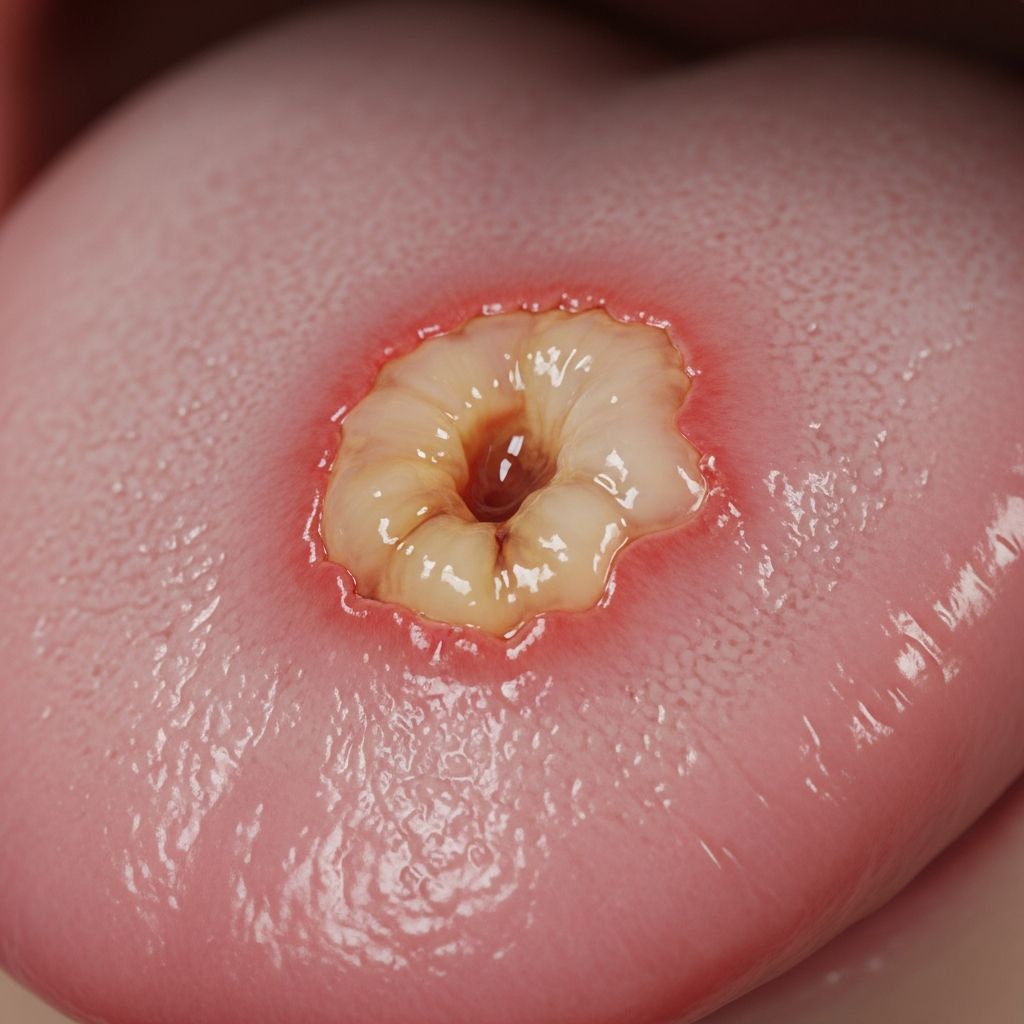
Eosinophilic ulcer of the oral mucosa (EUOM), also known as traumatic eosinophilic granuloma or traumatic ulcerative granuloma with stromal eosinophilia (TUGSE), is a benign, self-limiting inflammatory condition characterized by a painful ulcer with indurated, elevated borders. It predominantly affects the tongue but can occur on any oral mucosal site, often mimicking malignancy due to its rapid growth and persistence, necessitating biopsy for confirmation.
What is Eosinophilic Ulcer of the Oral Mucosa?
Eosinophilic ulcer of the oral mucosa represents a reactive process involving dense eosinophilic infiltration in the submucosa and underlying tissues, leading to ulceration. The lesion typically presents as a solitary, rapidly enlarging ulcer with a yellow-white fibrinopurulent base and rolled, indurated margins that give it a clinically aggressive appearance. Despite its alarming presentation, EUOM is idiopathic or trauma-related in most cases and resolves spontaneously or post-biopsy within weeks to months.
Histopathologically, it features a polymorphic inflammatory infiltrate rich in eosinophils extending deeply into muscle and connective tissue, often with large histiocytic cells and pseudoepitheliomatous hyperplasia. This deep penetration distinguishes it from superficial ulcers and contributes to its persistence. The condition is most common in adults aged 30-60 years, with equal gender distribution, though pediatric cases with CD30+ lymphoproliferation have been reported.
Who Gets Eosinophilic Ulcer of the Oral Mucosa?
EUOM occurs across all age groups but peaks in the 5th to 6th decades of life. It affects males and females equally, with no strong racial or geographic predisposition noted in the literature. Rare cases in children and young adults highlight its occurrence beyond typical demographics, sometimes associated with underlying immune dysregulation.
- Adults (30-60 years): Most common demographic, often linked to accidental trauma from teeth, dentures, or habits.
- Young adults and children: Less frequent; one case report describes a child with CD30+ cells, suggesting a lymphoproliferative component.
- Recurrent cases: Unusual but documented, as in a 31-year-old woman with multiple episodes over 30 months affecting tongue and palate.
Patients may report no trauma history, challenging the traumatic etiology hypothesis.
Clinical Features
The hallmark of EUOM is a painful, solitary ulcer that develops rapidly over days to weeks. Common sites include the tongue (lateral or ventral surface, dorsal in some cases), buccal mucosa, lips, palate, gingiva, and floor of mouth.
| Feature | Description |
|---|---|
| Appearance | Ulcer with elevated, indurated borders; yellow-white base with fibrin; 1-2 cm diameter. |
| Symptoms | Painful, interfering with eating/speaking; may have mild lymphadenopathy. |
| Progression | Grows quickly; persists 2-8 weeks; heals spontaneously or post-biopsy. |
| Sites | Tongue (70%), buccal mucosa, palate, lips, gingiva, floor of mouth. |
In recurrent cases, lesions appear in varied sites, self-resolving in 20 days on average, starting as erythematous plaques progressing to deep ulcers. Systemic symptoms are absent unless associated with parasitic infections, which some sources link to gastrointestinal precursors like diarrhea or reflux.
Diagnosis
Diagnosis relies on incisional biopsy due to clinical resemblance to squamous cell carcinoma. Routine histology reveals ulceration covered by fibrin/neutrophils, with dense chronic inflammatory infiltrate (lymphocytes, plasma cells, prominent eosinophils) invading deep into muscle.
Related Stories



- Key Histopathology: Eosinophil-rich infiltrate; large histiocytes with mitoses; no atypia; pseudo-lymphomatous pattern possible.
- Immunohistochemistry: CD30+ cells in some pediatric cases; rules out lymphoma.
- Biopsy Effect: Often accelerates healing, supporting reactive nature.
Differential Diagnosis
EUOM must be differentiated from malignant and infectious mimics.
| Condition | Key Distinguishing Features |
|---|---|
| Squamous Cell Carcinoma | Persistent >4 weeks; atypical cells on biopsy; risk factors (smoking, alcohol). |
| Recurrent Aphthous Stomatitis (RAS) | Smaller, round ulcers on non-keratinized mucosa; no eosinophils; multiple lesions. |
| Pyogenic Granuloma | Vascular, pedunculated; surface strawberry-like; less indurated. |
| Herpes Simplex | Vesicles first; immunocompromised; viral inclusions on biopsy. |
| Granulomatous Diseases (e.g., TB, syphilis) | Granulomas on biopsy; systemic symptoms. |
| Lymphoma/CD30+ Disorders | Atypia, monoclonality; immunohistochemistry. |
| Parasitic Infection | GI symptoms precede; not visible on oral biopsy. |
What’s the Cause?
The etiology remains obscure, with trauma hypothesized as primary but unsupported by recurrent cases in non-trauma-prone sites. Other factors include:
- Trauma: Dental edges, bites; initiates but doesn’t explain recurrences.
- Immune Reaction: Hypersensitivity to food, drugs, or microbes.
- Infection: Parasitic (alimentary canal) with prodromal GI symptoms; burning mouth as precursor.
- Lymphoproliferative: CD30+ in rare cases.
- Idiopathic: Most cases lack clear trigger.
Pathogenesis involves eosinophil degranulation causing tissue damage and fibrosis.
Treatment
EUOM is self-limiting, but biopsy is therapeutic and diagnostic.
- Conservative: Monitoring; resolves in weeks-months.
- Surgical: Excision biopsy; intralesional steroids if persistent.
- Systemic: Corticosteroids for recurrences; antimicrobials if infected.
- Recurrent Cases: Address underlying factors; conservative management post-recurrence.
Follow-up ensures no malignancy; recurrence rate low but possible.
Prevention
Limited strategies exist due to unclear etiology:
- Avoid oral trauma (smooth dentures, careful eating).
- Manage dental issues promptly.
- Monitor for GI symptoms suggesting parasitic links.
Further Reading & References
For deeper insights, consult peer-reviewed pathology texts on oral reactive lesions.
Frequently Asked Questions
Q: Is eosinophilic ulcer cancerous?
No, it is a benign reactive lesion, but biopsy is essential to exclude malignancy like squamous cell carcinoma.
Q: How long does it take to heal?
Typically 2-8 weeks spontaneously; biopsy often hastens resolution.
Q: Can it recur?
Rarely, as in cases with multiple episodes over years, possibly idiopathic.
Q: What does it look like?
Painful ulcer with raised, firm borders on tongue or mucosa; yellow base.
Q: Is trauma always the cause?
Suspected but not proven; recurrences in varied sites argue against.
References
- Eosinophilic ulcer of the oral mucosa — Wikipedia. 2023. https://en.wikipedia.org/wiki/Eosinophilic_ulcer_of_the_oral_mucosa
- Recurrent Oral Eosinophilic Ulcers of the Oral Mucosa. A Case Report — PMC (The Open Dentistry Journal). 2018-01-30. https://pmc.ncbi.nlm.nih.gov/articles/PMC5806200/
- Eosinophilic Ulcer of Oral Mucosa: A Case Report — Annals of Clinical Case Reports. 2014. https://www.anncaserep.com/full-text/accr-v1-id1066.php
- Eosinophilic esophagitis – Symptoms and causes — Mayo Clinic. 2024-07-02. https://www.mayoclinic.org/diseases-conditions/eosinophilic-esophagitis/symptoms-causes/syc-20372197
- Eosinophilic ulcer of the oral mucosa: Report of a child with CD30 — Medical Science Monitor. 2010. https://medscimonit.com/abstract/index/idArt/881090
Similar Articles








Read full bio of Sneha Tete