Epidermis: Skin’s Outer Layer Structure and Function
Understanding the epidermis: Your skin's protective outer layer and its vital roles.
What is the Epidermis?
The epidermis is the outermost layer of your skin, serving as your body’s first line of defense against the external environment. This thin but crucial layer is composed primarily of specialized cells called keratinocytes, which are packed with keratin—a fibrous protein that provides structural support and protection. The epidermis is visible to the naked eye and includes the pores and hair follicles you can see on your skin’s surface.
While the epidermis may appear simple, it is actually a sophisticated barrier system composed of multiple sublayers working in harmony. Each sublayer has distinct characteristics and functions that contribute to your skin’s overall health, resilience, and ability to protect your body from harm. Understanding the structure and function of the epidermis is essential for maintaining healthy skin and recognizing potential dermatological issues.
Primary Functions of the Epidermis
The epidermis performs several critical functions that are vital to your overall health and well-being:
Protection from Environmental Damage
The epidermis acts as a protective barrier against bacteria, germs, and harmful pathogens that could otherwise enter your body and cause infections. This barrier prevents harmful substances from penetrating deeper skin layers and reaching your bloodstream. The tightly packed keratinocytes, held together by fatty acids and water, create a wall of protection that shields internal tissues from environmental aggressors, including pollution, chemicals, and microorganisms.
Water Regulation and Hydration
The epidermis plays a crucial role in maintaining your body’s hydration by functioning as a natural barrier to water loss. The stratum corneum, the outermost sublayer, prevents water from leaving your body while simultaneously blocking excess water from entering. This sophisticated moisture management system helps keep your skin supple and prevents dehydration of deeper tissues.
Production of New Skin Cells
The epidermis is responsible for continuously producing new skin cells throughout your life. This process ensures that your skin remains resilient and can repair itself from minor damage. As keratinocytes move from the bottom of the epidermis toward the surface, they mature and eventually shed naturally, supporting your skin’s constant renewal process.
Melanin Production and Color
The epidermis contains melanocytes, specialized cells that produce melanin—the pigment responsible for your skin’s color and natural sun defense. Through a process called melanogenesis, your skin responds to UV radiation by producing additional melanin, which helps protect deeper skin layers from sun damage. The amount of melanin your body produces determines your skin tone and influences your natural level of sun protection.
The Five Layers of the Epidermis
The epidermis is composed of five distinct sublayers, each with unique characteristics and functions. These layers work together to provide comprehensive protection while facilitating continuous skin renewal.
Stratum Corneum (The Visible Layer)
Related Stories



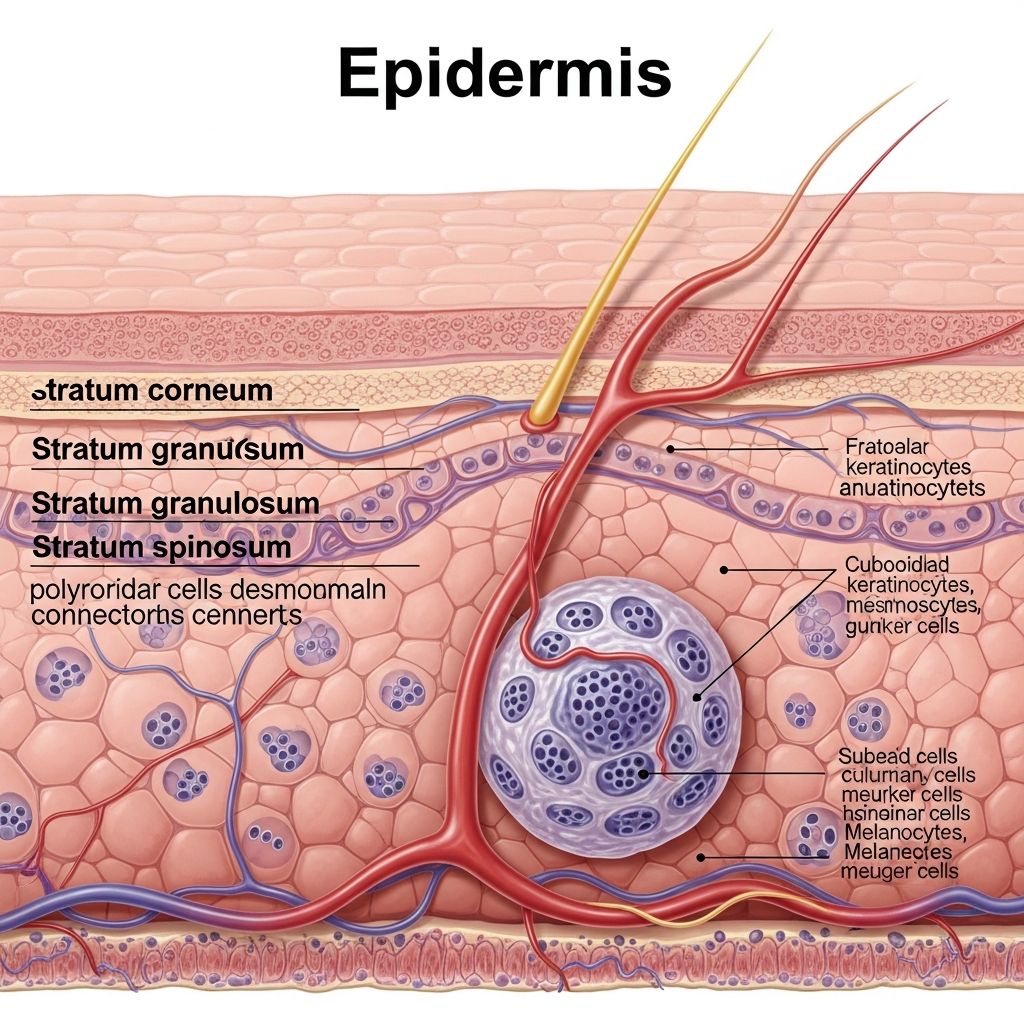
The stratum corneum is the outermost, visible layer of skin that you can see and touch. This layer consists of keratinocytes and fats that form a waterproof barrier, preventing water from entering or leaving the body. The cells in this layer are flattened and constantly shed, being replaced by newer cells from deeper layers. This natural shedding process, known as desquamation, typically occurs every 2-4 weeks. The stratum corneum’s effectiveness as a barrier depends on maintaining proper hydration and lipid balance.
Stratum Lucidum
The stratum lucidum is a thin, translucent layer of skin cells located beneath the stratum corneum. This layer is particularly prominent in areas of thick skin, such as the palms and soles of your feet. The stratum lucidum contains eleidin, a clear protein derivative that helps transmit light and contributes to the layer’s translucent appearance. While thin, this layer plays an important role in the skin’s overall barrier function.
Stratum Granulosum (The Granular Layer)
The stratum granulosum is another thin layer of skin cells positioned beneath the stratum lucidum. This layer gets its name from the granular appearance of the cells it contains. In this layer, cells begin to flatten and lose their nuclei, marking the transition from living cells below to the dead, keratinized cells of the outer layers. The stratum granulosum is also where lipids are secreted, which are crucial for maintaining the skin barrier.
Stratum Spinosum (The Spiny or Prickle Cell Layer)
The stratum spinosum is the fourth layer of the epidermis, comprised of skin cells and specialized proteins called desmosomes that hold the cells together and enable flexibility in skin. This layer contains more keratinocytes than the layers above it, and these cells begin to flatten as they move upward. The desmosomes in this layer are crucial for maintaining skin elasticity and preventing the skin from tearing or cracking during movement.
Stratum Basale (The Basal Layer)
The stratum basale is the deepest layer of the epidermis, serving as the foundation for all layers above. This layer contains columnar keratinocytes that continuously divide and produce new skin cells, along with the keratin proteins that grow hair and nails. The stratum basale is also where melanin is produced by melanocytes, determining your skin’s color. This crucial layer is attached to the dermis below through a specialized structure called the dermal-epidermal junction, which provides stability and support to the entire epidermis.
Comparison of Skin Layers
| Skin Layer | Primary Function | Key Characteristics |
|---|---|---|
| Epidermis | Protection, hydration, cell production | Thinnest layer, constantly renews, contains melanin |
| Dermis | Support, strength, sensation | Thickest layer, contains collagen and elastin, 10x thicker than epidermis |
| Hypodermis | Insulation, energy storage, cushioning | Deepest layer, contains fat and connective tissue, provides volume |
How the Epidermis Maintains Skin Barrier Function
The epidermis maintains skin barrier function through a sophisticated system known as the brick-and-mortar model. The keratinocytes are like bricks stacked tightly together, while the fatty acids and water between them act as mortar. This structure creates an impermeable barrier that prevents water loss while blocking harmful substances from entering. The lipids in the stratum corneum are particularly important, as they comprise approximately 15-20% of the layer’s composition and are essential for barrier integrity.
When the skin barrier is compromised—due to harsh weather, excessive cleansing, or dermatological conditions—water loss increases and irritants can penetrate more easily. This can lead to dryness, sensitivity, and increased susceptibility to infection. Maintaining healthy barrier function is therefore crucial for overall skin health and requires proper hydration, moisturization, and protection from environmental stressors.
Age-Related Changes in the Epidermis
As you age, your epidermis undergoes several changes that affect skin appearance and function. The epidermal cell turnover rate slows down, meaning new skin cells are produced more slowly, and dead cells accumulate on the surface more readily. This can result in a dull, rough complexion and reduced skin radiance. Additionally, the epidermis typically becomes thinner with age, reducing its protective capacity and making skin more vulnerable to damage.
The production of melanin also becomes less uniform with age, leading to the development of age spots and uneven skin tone. Furthermore, the connection between the epidermis and dermis weakens over time, which can contribute to increased wrinkling and sagging. Understanding these natural changes can help you implement appropriate skincare strategies to maintain healthy, resilient skin throughout your life.
Common Epidermal Conditions
Various conditions and disorders can affect the epidermis, causing discomfort, cosmetic concerns, or more serious health issues. These include:
- Eczema: Chronic inflammation causing itching, redness, and compromised barrier function
- Psoriasis: Autoimmune condition causing rapid skin cell turnover and thick, scaly patches
- Acne: Blockage of hair follicles and sebaceous glands leading to inflammation and infection
- Melanoma: Serious skin cancer originating in melanocytes within the basal layer
- Vitiligo: Loss of melanin production resulting in depigmented patches
- Contact Dermatitis: Allergic or irritant reaction to external substances
- Warts: Viral infection of the epidermis causing benign growths
Tips for Maintaining Healthy Epidermal Function
To support optimal epidermal health and function, consider implementing these evidence-based strategies:
- Stay Hydrated: Drink adequate water to support internal hydration, which reflects in healthier skin
- Use Sunscreen: Protect your epidermis from UV damage by applying broad-spectrum SPF 30+ daily
- Moisturize Regularly: Use hydrating creams and serums to maintain the skin barrier and prevent water loss
- Avoid Harsh Products: Use gentle, pH-balanced cleansers to avoid stripping the skin of natural oils
- Get Adequate Sleep: Sleep supports skin cell renewal and regeneration processes
- Eat a Balanced Diet: Consume foods rich in antioxidants, vitamins, and omega-3 fatty acids to support skin health
- Manage Stress: High stress can trigger inflammatory skin conditions, so practice stress-reduction techniques
- Avoid Smoking: Smoking impairs skin cell renewal and accelerates aging
Frequently Asked Questions
Q: How thick is the epidermis?
A: The epidermis is the thinnest layer of skin, typically measuring between 0.05 to 1.5 millimeters thick, depending on body location. It is thinnest on the eyelids and thickest on the palms and soles of the feet.
Q: How often does the epidermis renew itself?
A: The epidermis completely renews itself approximately every 2-4 weeks. This means the entire layer of visible skin cells on your body is replaced roughly 13 times per year.
Q: What is the role of melanin in the epidermis?
A: Melanin is produced by melanocytes in the stratum basale and provides your skin’s natural color. It also absorbs UV radiation and protects deeper skin layers from sun damage. More melanin production occurs in response to sun exposure as a protective mechanism.
Q: Can the epidermis repair itself?
A: Yes, the epidermis has remarkable regenerative capacity. Minor damage to the epidermis typically heals within a few weeks as new skin cells are continuously produced from the stratum basale. However, severe burns or injuries may result in scarring if they extend into the dermis.
Q: How does sun exposure affect the epidermis?
A: UV radiation damages epidermal DNA and stimulates excessive melanin production, leading to sunburn, age spots, and increased skin cancer risk. Chronic sun exposure accelerates skin aging and can weaken the epidermal barrier.
Q: What is the epidermis made of?
A: The epidermis is primarily composed of keratinocytes (about 95%), along with melanocytes, Langerhans cells, and Merkel cells. These cells are bound together by fatty acids and water, creating the skin barrier.
References
- Skin Structure & Functions – Skincare Basics — Harben House. 2024. https://harbenhouse.com/blogs/skin-care-tips/skin-structure-functions-skincare-basics
- Under Your Skin: Layers and Functions of Skin — ISDIN. 2024. https://www.isdin.com/us/blog/skincare/layers-and-functions-of-skin/
- Hypodermis (Subcutaneous Tissue): Function & Structure — Cleveland Clinic. 2024. https://my.clevelandclinic.org/health/body/21902-hypodermis-subcutaneous-tissue
- Dermis (Middle Layer of Skin) – Cleveland Clinic — Cleveland Clinic. 2024. https://my.clevelandclinic.org/health/body/22357-dermis
- Skin: Layers, Structure and Function — Cleveland Clinic. 2024. https://my.clevelandclinic.org/health/body/10978-skin
- Integumentary System: What It Is, Function & Organs — Cleveland Clinic. 2024. https://my.clevelandclinic.org/health/body/22827-integumentary-system
Similar Articles








Read full bio of medha deb