Epidural Hematoma: Causes, Symptoms, and Treatment
Understanding epidural hematoma: A serious brain condition requiring emergency care and immediate medical attention.
Understanding Epidural Hematoma
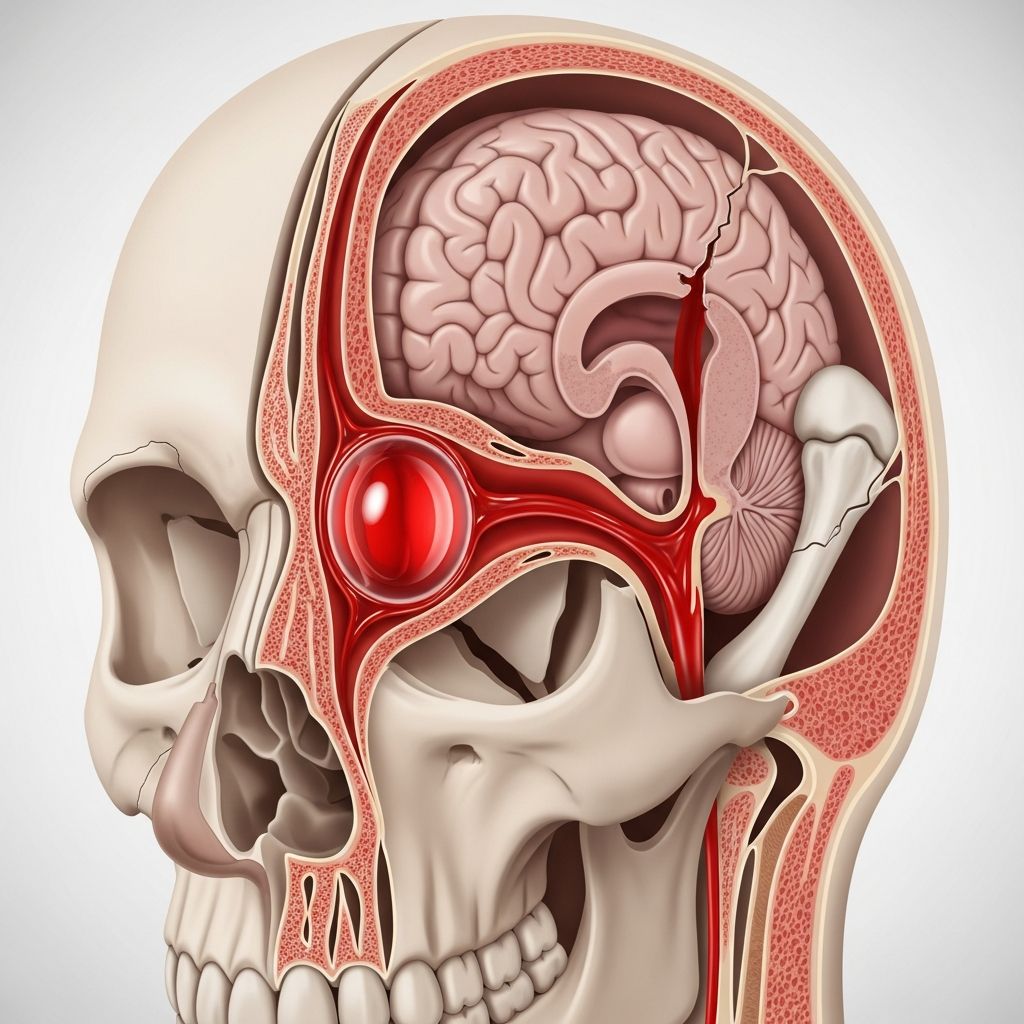
An epidural hematoma is a serious medical condition in which blood pools and clots between the outer layer of the brain and the skull. This condition represents a medical emergency that requires immediate professional intervention. Understanding what an epidural hematoma is, how it develops, and what warning signs to watch for can be lifesaving.
What Is an Epidural Hematoma?
The brain is protected by several layers, including the dura mater, a thick membrane that acts like a protective bag surrounding the brain. When blood accumulates in the space between this membrane and the skull itself, an epidural hematoma forms. This pooled blood begins to clot and can create dangerous pressure on the brain tissue beneath it, potentially causing serious neurological complications.
Causes of Epidural Hematoma
Epidural hematomas are typically the result of significant head trauma. The injury must be forceful enough to rupture blood vessels in this space, usually from tears in the middle meningeal artery, which runs through the area between the skull and dura mater.
Common Causes Include:
- Car accidents and motor vehicle collisions
- Sports-related injuries and head trauma
- Falls from height or significant falls
- Acts of violence and assault
- Workplace accidents
- Motorcycle or bicycle accidents
The key factor is the force of the impact to the head. Epidural hematomas typically occur in younger individuals whose brains are more likely to move away from the skull during impact, creating space for blood to accumulate. Individuals taking blood thinners or with clotting disorders may be at higher risk of developing larger hematomas following head injury.
Symptoms and Warning Signs
One of the most distinctive characteristics of epidural hematomas is their symptom presentation pattern. Many people experience what is often called a “lucid interval,” where they feel relatively fine immediately after the injury, only to develop severe symptoms later as pressure builds within the skull.
Classic Presentation
The typical pattern involves an initial head injury, followed by a period where the person appears awake and alert. However, this deceptive calm can suddenly change as the bleeding continues and pressure increases. Symptoms may develop within hours of the initial injury.
Early Symptoms May Include:
- Severe headache or worsening headache
- Dizziness or vertigo
- Nausea and vomiting
- Confusion or difficulty concentrating
- Drowsiness or difficulty staying awake
- Sensitivity to light
- Slurred speech
Severe Symptoms (Medical Emergency):
- Loss of consciousness or unresponsiveness
- Seizures or convulsions
- Severe weakness or paralysis on one side of the body
- Pupil dilation or unequal pupil size
- Difficulty breathing
- Extremely elevated blood pressure
Related Stories



If any of these symptoms develop following a head injury, emergency medical care should be sought immediately by calling 911 or contacting emergency services.
Diagnosis of Epidural Hematoma
Diagnosing an epidural hematoma involves imaging studies that allow medical professionals to visualize the brain and identify blood accumulation.
Diagnostic Methods
CT Scan (Computed Tomography): This is the primary imaging tool for identifying epidural hematomas. CT scans provide detailed cross-sectional images of the brain and can quickly show the location, size, and extent of bleeding. A CT scan can be performed rapidly in emergency settings, making it ideal for initial assessment.
MRI (Magnetic Resonance Imaging): While CT scans are typically used first due to their speed, MRI may be used for follow-up imaging or in specific cases. MRI provides more detailed soft tissue images but takes longer to perform.
Clinical Assessment: Physicians will also perform a neurological examination, checking reflexes, pupil response, strength, sensation, and mental status. The Glasgow Coma Scale may be used to assess the severity of brain injury. Additional tests may include blood work to check for clotting disorders or anemia.
Risks and Complications
Epidural hematomas are particularly dangerous because they can progress very rapidly. The accumulating blood increases intracranial pressure, which can cause serious complications.
Potential Complications Include:
- Brain herniation, where brain tissue is pushed out of normal position
- Permanent brain damage or disability
- Coma or vegetative state
- Death if untreated
- Post-traumatic seizure disorder
- Cognitive impairment or memory problems
- Physical disability or paralysis
Mortality rates for epidural hematoma are significant, with fatality rates reaching up to 15 percent in some cases, particularly when treatment is delayed. However, prompt recognition and emergency treatment can substantially improve outcomes. In about 75 percent of epidural hematoma cases, a skull fracture is present, which may be identified on imaging studies.
Treatment Options
Treatment for epidural hematoma depends on the size of the hematoma, the patient’s symptoms, and how quickly the condition is progressing. Most epidural hematomas require emergency surgical intervention.
Surgical Treatment
Craniotomy: The most common surgical procedure for epidural hematoma is a craniotomy. During this procedure, a neurosurgeon removes a section of the skull bone to access the area between the skull and dura mater. The blood clot is then carefully removed using specialized instruments, including suction devices. Once the clot is removed, any bleeding sources are identified and stopped through cauterization or other hemostasis techniques. The bone flap is typically replaced and secured with small screws or plates.
Burr Hole Drainage: In emergency situations where neurosurgical facilities are not immediately available, a burr hole may be created to provide temporary decompression. This involves making a small hole in the skull to allow blood to drain. While this is not definitive treatment, it can be lifesaving until the patient can be transferred to a facility where definitive surgical care can be provided.
Emergency Decompression: In rare cases where neurosurgery is not available and the patient’s life is in immediate danger, emergency personnel may use alternative methods for temporary decompression while arranging transfer to appropriate medical facilities.
Post-Operative Care
After surgical treatment, patients require intensive monitoring in a hospital intensive care unit. Vital signs are continuously monitored, and repeat imaging studies may be performed to ensure complete blood clot removal. Additional CT scans may be necessary if the patient’s condition worsens or does not improve as expected. Recovery can be variable, with some patients making complete neurological recovery while others may experience lasting effects depending on the extent of brain injury that occurred before treatment.
Why Immediate Treatment Is Critical
Epidural hematomas are treated as neurosurgical emergencies because they can progress with devastating speed. Unlike some other types of brain bleeding, epidural hematomas often worsen rapidly as pressure builds. The combination of the pooling blood, the enclosed space of the skull, and the delicate nature of brain tissue means that even small delays in treatment can result in severe brain damage or death.
The “lucid interval” that often characterizes epidural hematomas can be particularly dangerous because patients and family members may not realize the severity of the situation. Someone who seems relatively fine after a head injury may deteriorate suddenly, which is why any head injury should be taken seriously and evaluated by medical professionals.
Prevention of Epidural Hematoma
While not all head injuries can be prevented, several measures can reduce risk:
- Always wear a properly fitted helmet when playing contact sports, cycling, or motorcycling
- Use seat belts and follow traffic safety rules
- Avoid driving under the influence of alcohol or drugs
- Remove home hazards that could cause falls
- Use proper safety equipment at work
- Avoid risky behaviors and dangerous activities
Frequently Asked Questions
Q: How quickly do epidural hematoma symptoms develop?
A: Symptoms can develop anywhere from minutes to hours after the initial head injury. The classic presentation includes a lucid interval where the person feels relatively fine, followed by sudden deterioration. However, this pattern is not universal, and some people may experience immediate symptoms.
Q: Is an epidural hematoma always fatal?
A: No, but it is a serious condition requiring emergency treatment. With prompt diagnosis and surgical intervention, many patients survive. Mortality rates vary depending on the size of the hematoma, how quickly treatment is obtained, and the patient’s age and overall health. Early recognition and rapid treatment significantly improve survival rates.
Q: Can an epidural hematoma heal on its own?
A: Small epidural hematomas may occasionally be managed conservatively with close monitoring in a hospital setting. However, most epidural hematomas require surgical evacuation because of the risk of rapid deterioration and brain damage. Your medical team will determine the appropriate treatment based on the size and location of the hematoma and your symptoms.
Q: What is the recovery process after epidural hematoma surgery?
A: Recovery varies widely depending on the extent of the initial brain injury. Some patients make complete neurological recovery, while others may experience lasting cognitive or physical effects. Hospital stay typically lasts several days to weeks, followed by rehabilitation and follow-up appointments. Physical therapy, occupational therapy, or speech therapy may be recommended.
Q: How is an epidural hematoma different from a subdural hematoma?
A: The location of the bleeding determines the type. An epidural hematoma occurs between the skull and the dura mater (the outermost membrane). A subdural hematoma occurs beneath the dura mater. Epidural hematomas typically result from head trauma and often present with a lucid interval. Subdural hematomas can result from trauma but can also occur from natural changes in the brain, particularly in older adults, and may present more insidiously.
Q: When should I seek emergency care after a head injury?
A: Seek emergency care immediately if you experience severe headache, loss of consciousness, vomiting, confusion, seizures, difficulty speaking, weakness on one side of the body, or any other concerning symptoms following a head injury. Even if you feel fine initially, it is wise to be evaluated by a healthcare professional after significant head trauma.
References
- Epidural vs. Subdural Hematomas: What Are They? — Cleveland Clinic. 2024. https://health.clevelandclinic.org/epidural-vs-subdural-hematoma
- Complete Neurological Recovery After Emergency Burr Hole Placement Utilizing EZ-IO® for Epidural Hematoma — Journal of Emergency Medicine, National Center for Biotechnology Information (NCBI/PubMed). October 2022. https://pubmed.ncbi.nlm.nih.gov/36229321/
- Case Report on Craniotomy for Bilateral Epidural Hematoma — Journal of Clinical Images and Medical Case Reports (JCIMCR). https://jcimcr.org/pdfs/JCIMCR-v6-3570.pdf
- Post-Operative Case of a 55 Year Old Female with CT Documented Epidural Hematoma Following Fall from Height with Aspiration — International Organization of Medical Care and Medical Science (IOMCS World). https://www.iomcworld.org/open-access/postoperative-case-of-a-55-year-old-female-with-ct-documented-epidural-hematoma-following-fall-from-height-with-aspiration-1102102.html
- Spontaneous Cervical Epidural Hematoma Following COVID-19 — National Center for Biotechnology Information (NCBI/PubMed). https://pubmed.ncbi.nlm.nih.gov/36620842/
Similar Articles








Read full bio of Sneha Tete