Epidural: What It Is, Side Effects, Risks & Procedure
Complete guide to epidural injections: understanding procedure, benefits, risks, and side effects.
Understanding Epidural Injections: A Complete Guide
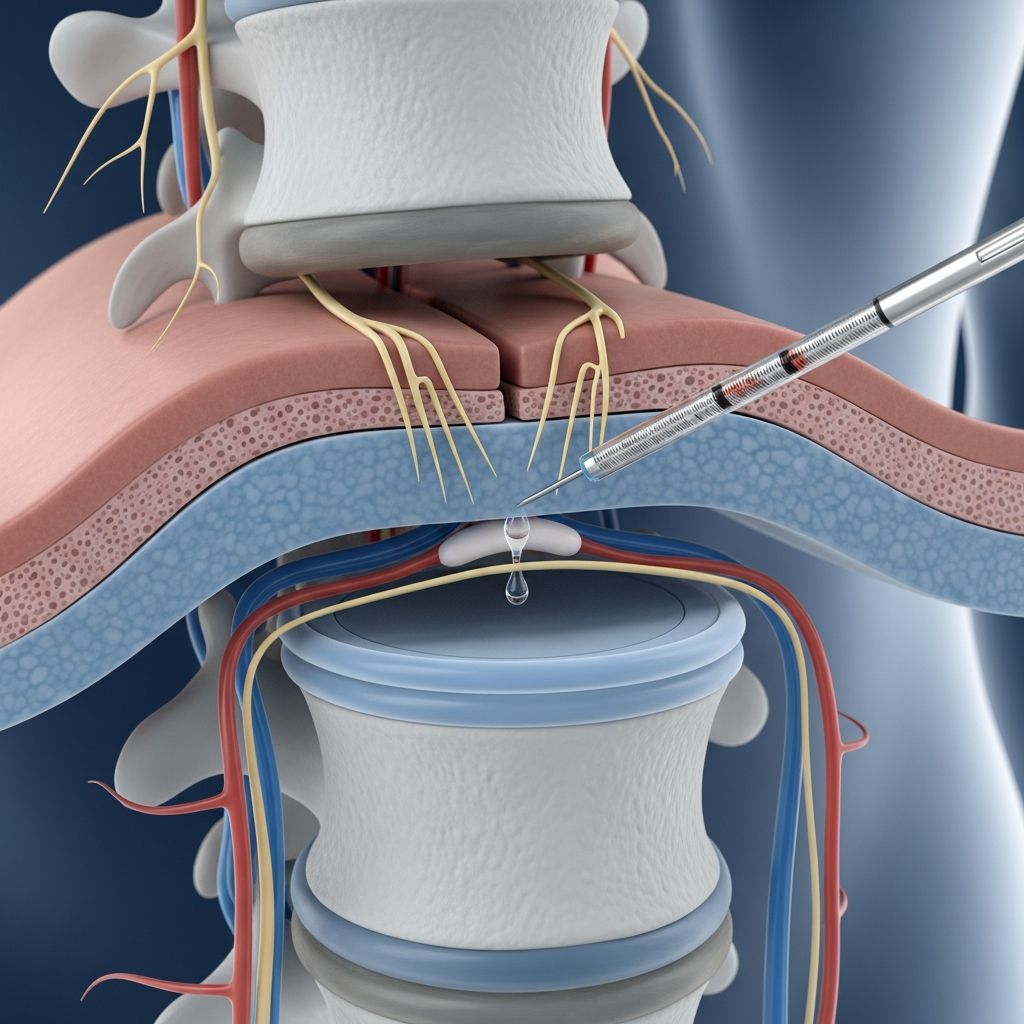
An epidural injection is a medical procedure in which anti-inflammatory medication, typically a steroid or corticosteroid, is injected into the epidural space—the area surrounding your spinal cord and spinal nerves. Healthcare providers use epidural injections primarily as a chronic pain management tool to help relieve pain caused by irritation and inflammation of spinal nerve roots. This procedure can provide relief from various types of pain, including neck, arm, back, and leg pain caused by inflamed spinal nerves due to certain conditions or injuries.
Epidural injections are among the most commonly performed procedures in pain management clinics worldwide. They offer a minimally invasive option for patients seeking relief from chronic pain who have not found adequate relief through physical therapy, oral medications, or other nonsurgical therapies. When performed by a skilled healthcare provider, epidural steroid injections are generally considered both safe and effective for managing certain types of chronic pain.
How the Epidural Procedure Works
Understanding the mechanics of an epidural injection helps demystify the procedure and can reduce anxiety about undergoing treatment. The epidural space is a narrow area located between the outer covering of your spinal cord (the dura mater) and the inner surface of the vertebral canal. This space contains cerebrospinal fluid, blood vessels, and nerve roots that branch off from the spinal cord.
During the procedure, your healthcare provider carefully injects a combination of medications—typically a local anesthetic and a corticosteroid—into this epidural space. The steroid works by coating the irritated nerves and reducing swelling and pressure on them. This anti-inflammatory action gives the inflamed nerves time to heal, potentially providing significant pain relief. The local anesthetic helps numb the area and provides immediate comfort during the injection.
The procedure is usually performed under real-time imaging guidance, most commonly using X-ray fluoroscopy. This imaging technique allows your provider to visualize the exact location of the needle and ensure precise medication placement. The use of imaging significantly improves the accuracy of the injection and reduces the risk of complications.
Types of Epidural Injections
Epidural injections can be classified in two ways: by their location along the spine and by the specific approach used to reach the epidural space.
Classification by Spinal Location
Epidural injections are categorized based on which region of the spine is being treated:
Cervical Epidural Injections: These injections target the upper spine in the neck region. Cervical epidural steroid injections (ESIs) are used to treat chronic neck pain and radiculopathy—pain that radiates from the neck down to the shoulders, arms, and hands. Research shows that approximately 40% to 84% of people who receive cervical ESIs experience temporary pain relief.
Thoracic Epidural Injections: These injections are performed in the mid-back region and are used to treat pain in the upper back and chest area. This location is less commonly injected compared to cervical and lumbar regions.
Lumbar Epidural Injections: These injections target the lower back and are among the most frequently performed epidural procedures. They are used to treat lower back pain, leg pain, and sciatica caused by various spinal conditions.
Classification by Needle Approach
Healthcare providers use three main approaches to access the epidural space:
Transforaminal Approach: In this method, the needle passes through the foramina—the openings in the vertebrae through which nerve roots exit the spine. This approach allows the medication to be delivered directly to the area where the nerve root exits, making it particularly useful for treating specific nerve root pain.
Related Stories



Interlaminar Approach: This technique involves inserting the needle between the laminae, which are the flat bony plates that form part of each vertebra. The needle passes between these plates to reach the epidural space. This approach is often preferred for bilateral pain (pain on both sides of the body).
Caudal Approach: This method involves accessing the epidural space through the sacral hiatus—an opening at the base of the spine. This approach is often used for lower back and leg pain management.
Conditions Treated with Epidural Injections
Epidural steroid injections may help alleviate pain caused by various spinal conditions and injuries. These conditions typically involve inflammation of the spinal nerve roots and include:
– Herniated or bulging discs that compress nerve roots
– Spinal stenosis (narrowing of the spinal canal)
– Degenerative disc disease
– Sciatica and radiculopathy
– Spondylolysis and spondylolisthesis
– Post-surgical scar tissue compression
– Facet joint syndrome
– Piriformis syndrome
Your healthcare provider will determine whether an epidural injection is appropriate for your specific condition. Typically, epidural injections are recommended only after other conservative treatments, such as physical therapy and oral medications, have not provided adequate relief.
The Epidural Procedure: Step-by-Step
Before the Procedure
Preparation is important for a successful epidural injection. Your healthcare provider will discuss the procedure with you, review your medical history, and explain what to expect. You should inform your provider about any medications you are taking, especially blood thinners, and about any allergies. You may be instructed to fast for several hours before the procedure.
During the Procedure
The procedure typically takes approximately 10 to 30 minutes from start to finish. Here is what typically happens:
You will be positioned on an X-ray table, usually lying face down. Your healthcare provider will clean the injection site with an antiseptic solution. Before the actual epidural injection, your provider will inject a local anesthetic to numb the skin and tissues at the insertion site. You may feel a minor pinch or slight burning sensation during this numbing injection.
Once the area is adequately numbed, your provider may offer intravenous sedation to increase your comfort level. If you choose sedation, it will make you feel relaxed and sleepy, though you will remain awake and able to communicate with your healthcare provider during the procedure.
Using real-time X-ray guidance, your provider carefully advances the needle to the epidural space. You may feel pressure or mild discomfort as the needle is advanced, but this should not be painful due to the local anesthetic. Once the needle is properly positioned, the steroid and local anesthetic medication is slowly injected into the epidural space.
If you experience intense, sharp pain during or after the injection, inform your provider immediately, as this may indicate improper needle placement.
After the Procedure
After the injection is complete, you will rest in a recovery room for 15 to 30 minutes. A nurse will monitor your blood pressure and pulse during this time. A bandage may be placed over the injection site, and you should apply ice to the area to help decrease discomfort.
You may experience numbness or heaviness in the area around the injection site, which is normal and typically resolves quickly. Your provider may recommend that you take it easy and minimize your activity level for the remainder of the day to allow the medication to work effectively.
Pain Relief Timeline and Duration
Understanding the timeline for pain relief can help you set realistic expectations for the procedure. Pain relief from an epidural injection does not always occur immediately. The medication typically begins to work within two to seven days of the injection. During this initial period, you may actually experience a brief recurrence of your former pain before the anti-inflammatory medication takes full effect.
Once pain relief begins, it can last for several days to a few months or even longer. In some cases, people experience more extended relief. One study revealed that patients who had cervical interlaminar epidural steroid injections experienced pain relief lasting 12 to 24 months. However, it is important to note that epidural steroid injections very rarely lead to permanent pain relief. The goal of the procedure is to provide temporary relief that allows you to return to normal activities and participate in physical therapy.
If an epidural injection works effectively for you and provides pain relief, your healthcare provider may recommend additional injections at a later time. However, most providers limit patients to two to three epidural steroid injections per year to minimize potential risks associated with repeated steroid exposure.
Benefits of Epidural Injections
Epidural steroid injections offer several significant benefits as a pain management option:
Minimally Invasive: Unlike surgical procedures, epidural injections are minimally invasive and do not require incisions or extended recovery periods.
Quick Procedure: The entire procedure typically takes only 10 to 30 minutes, making it a convenient option for busy patients.
Effective Pain Relief: For many patients, epidural injections provide significant temporary pain relief, allowing them to resume normal activities and participate in rehabilitation.
Diagnostic Value: Epidural injections can sometimes help identify which nerve is causing your pain, providing valuable diagnostic information.
Enables Physical Therapy: By providing pain relief, epidural injections allow patients to participate more effectively in physical therapy, which may lead to long-term improvement.
Delays Surgery: For some patients, epidural injections may delay or prevent the need for surgical intervention.
Potential Risks and Side Effects
Common Side Effects
Most side effects associated with epidural injections are mild and temporary. Common side effects include:
– Numbness or heaviness at the injection site
– Mild discomfort or soreness at the injection site
– Temporary increase in pain for two to three days before improvement occurs
– Mild bruising or swelling at the injection site
Potential Complications
While epidural steroid injections are generally safe when performed by skilled healthcare providers, potential complications can occur, though they are rare. These may include:
– Infection at the injection site
– Bleeding or hematoma formation
– Allergic reaction to medications
– Nerve damage
– Dural puncture (puncture of the membrane surrounding the spinal cord)
– Temporary leg weakness or loss of bladder control
– Systemic effects from steroid absorption
The risk of serious complications is significantly reduced when the procedure is performed by experienced providers using proper imaging guidance and sterile technique.
Is an Epidural Right for You?
Epidural steroid injections are typically recommended when conservative treatments have not provided adequate relief. Your healthcare provider will evaluate your specific condition, medical history, and treatment goals to determine whether an epidural injection is appropriate for you. It is important to have realistic expectations: an epidural injection will most likely not cure your underlying condition but rather provide temporary pain relief that allows you to resume normal activities and engage in rehabilitation.
When performed by a skilled healthcare provider, epidural steroid injections represent an often effective and generally safe therapy option for managing chronic pain caused by certain spinal conditions. If you are feeling anxious about receiving an epidural injection, do not hesitate to discuss your concerns with your healthcare provider. They can answer any questions you may have and help you make an informed decision about your treatment options.
Frequently Asked Questions
Q: How long does pain relief from an epidural injection last?
A: Pain relief can last from several days to a few months or longer. Some patients experience relief lasting 12 to 24 months, though this is less common. Most epidural injections provide temporary pain relief rather than permanent relief.
Q: How many epidural injections can I receive per year?
A: Most healthcare providers limit patients to two to three epidural steroid injections per year to minimize the risks associated with repeated steroid exposure.
Q: Does an epidural injection cure back pain?
A: No, epidural injections do not cure back pain. They provide temporary pain relief that allows you to return to normal activities and participate in physical therapy. The goal is pain management rather than permanent cure.
Q: Is the epidural procedure painful?
A: You will receive local anesthesia to numb the area before the injection, so the procedure should not be painful. You may feel slight pressure or a minor pinch during the anesthetic injection, but the actual epidural injection should be painless.
Q: How long does the epidural procedure take?
A: The entire epidural injection procedure typically takes approximately 10 to 30 minutes, making it a relatively quick outpatient procedure.
Q: What conditions can epidural injections treat?
A: Epidural injections can help treat pain caused by herniated discs, spinal stenosis, degenerative disc disease, sciatica, radiculopathy, and other spinal conditions that involve nerve root inflammation.
References
- Cervical Epidural Steroid Injections: What It Is, Benefits, Risks & Side Effects — Cleveland Clinic. 2024. https://my.clevelandclinic.org/health/treatments/22293-cervical-epidural-steroid-injection
- Epidural Steroid Injection (ESI): What It Is, Benefits, Risks & Results — Cleveland Clinic. 2024. https://my.clevelandclinic.org/health/treatments/22301-epidural-steroid-injection-esi
- Lumbar Epidural Steroid Injection — Cleveland Clinic. 2016. https://my.clevelandclinic.org/-/scassets/files/org/neurological/spine/lumbar-epidural-steroid-injection-2016.pdf
- Transforaminal Epidural Steroid Injection: Types & Side Effects — Cleveland Clinic. 2024. https://my.clevelandclinic.org/health/treatments/17572-transforaminal-injections
- Epidural steroids for back and leg pain — Cleveland Clinic Journal of Medicine, Vol. 71, No. 12. 2004. https://www.ccjm.org/content/ccjom/71/12/961.full.pdf
- Lumbar Epidural Steroid Injections: What It Is, Benefits, Risks & Side Effects — Cleveland Clinic. 2024. https://my.clevelandclinic.org/health/treatments/22091-lumbar-epidural-steroid-injection
- Caudal Epidural Steroid Injection: What It Is & Procedure — Cleveland Clinic. 2024. https://my.clevelandclinic.org/health/procedures/caudal-epidural-steroid-injection
Similar Articles








Read full bio of medha deb