Epiglottis: Anatomy, Function & Conditions
Understanding the epiglottis: Your body's protective flap that prevents choking and enables safe swallowing.
What Is the Epiglottis?
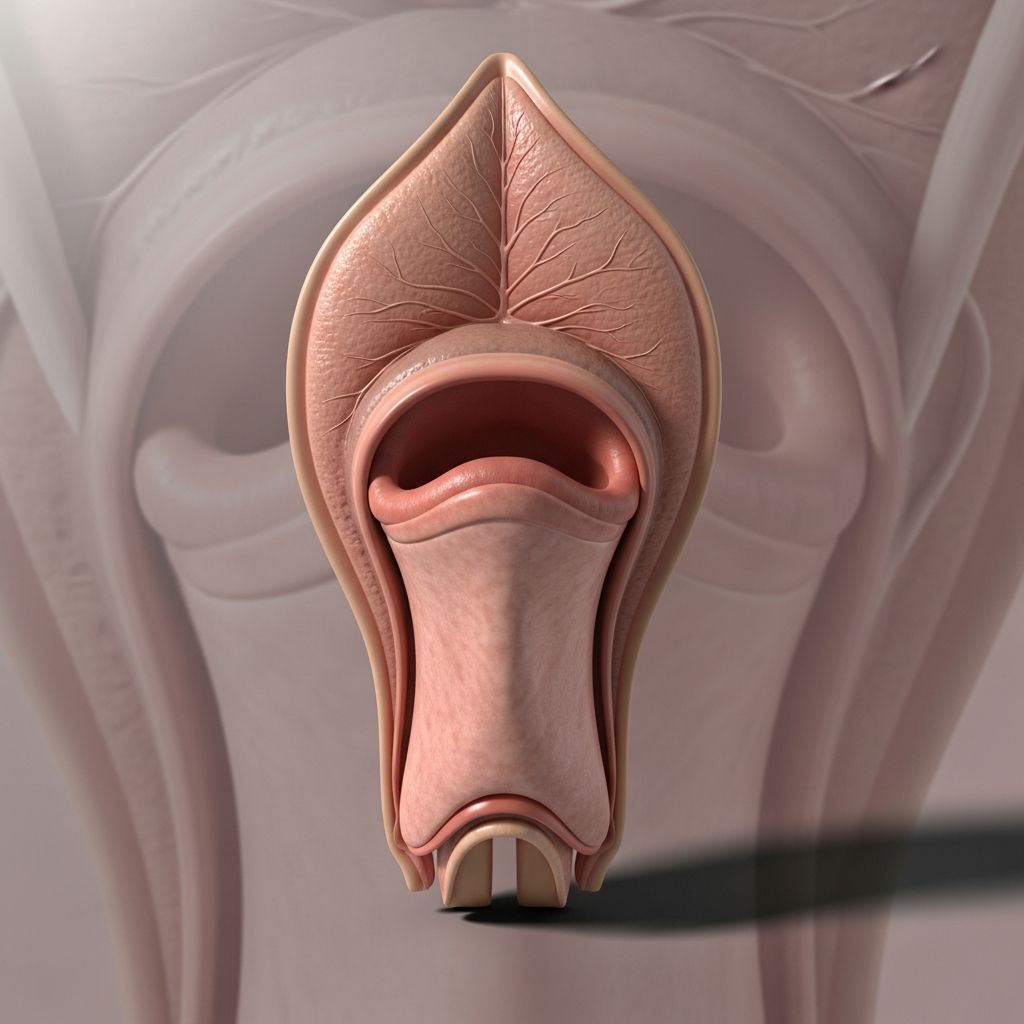
The epiglottis is a small, leaf-shaped flap of cartilage located at the base of your tongue. This thin, yet remarkably important structure serves as a protective valve that prevents food, liquids, and saliva from entering your windpipe (trachea) when you swallow. Think of it as a one-way door for your throat—it allows air to pass freely when you’re breathing, but instantly closes during swallowing to redirect food and beverages safely into your esophagus instead.
Anatomically, the epiglottis is made primarily of hyaline cartilage covered with mucous membrane. It’s positioned strategically at the entrance to your larynx, just above your vocal cords, and extends downward from the hyoid bone. The word “epiglottis” literally means “upon the glottis,” referring to its location directly above the glottis, the space between your vocal cords.
Anatomy and Location
The epiglottis is positioned in a highly strategic location within your throat complex. It sits at the base of your tongue, just above and behind the thyroid cartilage (also known as your Adam’s apple in males). The structure is suspended by several ligaments and connective tissues that allow it to move with precision and timing.
Understanding the anatomical relationships of the epiglottis helps explain its function. The epiglottis is part of the larger laryngeal framework, which includes the thyroid cartilage, cricoid cartilage, and arytenoid cartilages. These cartilages work together to form the larynx or voice box. The epiglottis connects to these structures through various ligaments, including the hyoepiglottic ligament that attaches it to the hyoid bone above.
The surface of the epiglottis facing your tongue is smooth, while the side facing your larynx is more textured. This textured surface helps facilitate the movement of food away from the airway during swallowing. Tiny blood vessels run throughout the epiglottis, providing it with a rich blood supply that aids in healing and maintaining tissue health.
Primary Functions of the Epiglottis
Airway Protection During Swallowing
The most critical function of the epiglottis is protecting your airway during the swallowing process. When you swallow, your epiglottis tilts backward and downward like a trap door, covering the entrance to your larynx and trachea. This reflex action prevents food, liquids, and other materials from entering your respiratory system. The timing of this protective mechanism is remarkable—it occurs in milliseconds as part of the complex swallowing reflex.
Directing Food to the Esophagus
By closing over your airway, the epiglottis actively directs swallowed materials into the esophagus, the tube that carries food to your stomach. This directional function ensures that what you consume follows the correct digestive pathway rather than attempting to go “down the wrong pipe.”
Assisting in Breathing
When you’re not swallowing, your epiglottis remains in an upright position, allowing air to flow freely from your nose and mouth through your larynx and into your trachea. This allows normal breathing without obstruction. The epiglottis essentially gets out of the way during respiration, creating an open passageway for air.
Related Stories



Supporting Phonation
While your vocal cords generate the fundamental sounds of your voice, the epiglottis plays a supporting role in sound production. It helps shape the resonance of sounds produced by your larynx as they travel upward through your pharynx and into your oral cavity.
How the Swallowing Reflex Works
The swallowing process involves a complex series of coordinated muscular actions, and the epiglottis plays a central role in this sequence. Swallowing can be divided into three phases: oral, pharyngeal, and esophageal phases.
During the oral phase, you voluntarily chew and manipulate food with your tongue. As food is prepared, sensory receptors in your mouth and throat begin signaling your brain about the upcoming swallow. Once food is adequately formed into a bolus (a round mass), the pharyngeal phase begins. This phase involves involuntary muscular contractions that you cannot consciously control.
As the bolus moves toward the back of your throat, your soft palate rises to block the nasopharynx, preventing food from going up into your nose. Simultaneously, your epiglottis receives neural signals that trigger it to fold downward and backward, sealing your airway entrance. Your vocal cords also tighten during this moment for additional protection. These protective mechanisms work in concert to ensure that the bolus travels safely into your esophagus.
Once food enters your esophagus, the epiglottis returns to its upright resting position, reopening your airway. This entire process happens in just one or two seconds, yet the coordination is so precise that millions of swallows occur daily without any conscious effort or complications.
Common Conditions Affecting the Epiglottis
Epiglottitis
Epiglottitis is an acute inflammation and swelling of the epiglottis. This condition is considered a medical emergency because the swelling can rapidly obstruct the airway, making breathing difficult or impossible. The most common cause of epiglottitis is bacterial infection, historically caused by Haemophilus influenzae type B (Hib). However, since the introduction of the Hib vaccine, the incidence of epiglottitis has decreased significantly.
Symptoms of epiglottitis include severe sore throat, pain when swallowing, difficulty breathing, drooling, and a muffled voice that may sound like “hot potato” speech. Some patients experience fever and may assume they have a simple sore throat initially. However, epiglottitis progresses rapidly and requires emergency medical attention.
Treatment typically involves hospitalization, where patients may require airway management with a breathing tube or tracheostomy if swelling is severe. Antibiotics are administered to treat the underlying infection. Although epiglottitis is a serious condition, most people recover fully with prompt medical intervention.
Epiglottic Dysfunction
Some individuals experience epiglottic dysfunction, where the epiglottis doesn’t close completely or promptly during swallowing. This can lead to aspiration—when food or liquid enters the trachea instead of the esophagus. Aspiration can cause coughing, choking sensations, and recurrent respiratory infections. This condition may result from neurological disorders, muscular weakness, or damage to the nerves controlling the epiglottis.
Epiglottic Trauma
Direct injury to the epiglottis can occur from accidents, sports injuries, or procedures involving the throat. Trauma to the epiglottis may cause swelling, pain, or temporary dysfunction of the swallowing mechanism.
Signs and Symptoms of Epiglottis Problems
Several warning signs may indicate problems with your epiglottis or the swallowing mechanism it protects:
- Difficulty swallowing (dysphagia)
- Chronic coughing, especially after eating or drinking
- Choking or gagging sensations
- Recurrent sore throat
- Muffled or hoarse voice
- Sensation of food getting stuck in your throat
- Drooling or inability to swallow saliva
- Breathing difficulties or stridor (unusual breathing sounds)
- Pain in the throat or neck area
If you experience any of these symptoms, particularly if they are severe or persist for more than a few weeks, consult with your healthcare provider for proper evaluation.
How Healthcare Providers Examine the Epiglottis
Healthcare providers use several diagnostic methods to examine the epiglottis and assess its function:
Indirect Laryngoscopy: A healthcare provider uses a small mirror or flexible endoscope to view the epiglottis. This allows direct visualization of the structure to identify inflammation, swelling, or other abnormalities.
Flexible Fiberoptic Laryngoscopy: A thin, flexible tube with a camera and light is passed through the nose or mouth to visualize the epiglottis and surrounding structures in detail.
Video Fluoroscopic Swallow Study: This specialized imaging test evaluates the swallowing mechanism in real-time, showing how the epiglottis functions during swallowing and whether aspiration is occurring.
Barium Swallow Study: A patient swallows barium-containing liquid while X-ray images are taken, allowing visualization of the swallowing process and epiglottic movement.
The Epiglottis in Children vs. Adults
The anatomy and function of the epiglottis varies somewhat between children and adults. In infants and young children, the epiglottis is positioned higher in the neck and is larger relative to the surrounding structures. This high position allows infants to breathe and swallow simultaneously, an adaptation that facilitates nursing.
As children grow, the larynx gradually descends in the neck, and the epiglottis moves to a lower position. By around age two, the epiglottis has reached approximately the adult position. This anatomical change is one reason why epiglottitis presentations and severity can differ between pediatric and adult populations.
Protecting Your Epiglottis and Throat Health
While you cannot consciously control your epiglottis, several habits promote throat and airway health:
- Eat slowly and chew thoroughly: This allows your swallowing mechanism to work optimally.
- Stay hydrated: Adequate fluids keep throat tissues moist and healthy.
- Avoid irritants: Minimize exposure to smoke, harsh chemicals, and excessive heat.
- Maintain good oral hygiene: Regular brushing and flossing reduce bacterial growth that could lead to infections.
- Get vaccinated: The Hib vaccine provides protection against bacterial epiglottitis.
- Manage reflux: If you have acid reflux, treatment can reduce irritation to throat tissues.
- Avoid choking hazards: Be cautious with foods that pose aspiration risks, particularly if you have swallowing difficulties.
Frequently Asked Questions
Q: Can you live without an epiglottis?
A: While the epiglottis is critically important, people who have had their epiglottis removed (epiglottectomy) can survive. However, they face significantly increased risk of aspiration and must be very careful when eating and drinking. They may need to modify their diet and adopt special swallowing techniques.
Q: How common is epiglottitis?
A: Epiglottitis is relatively rare in vaccinated populations, with only a handful of cases per 100,000 people annually. The Hib vaccine has dramatically reduced the incidence of this once-common condition.
Q: What should I do if I think I’m choking?
A: If you’re conscious, try to cough forcefully to dislodge the object. If that doesn’t work, have someone perform the Heimlich maneuver. Call emergency services immediately if breathing becomes severely compromised.
Q: Can allergies affect the epiglottis?
A: Yes, severe allergic reactions can cause swelling of the epiglottis and other throat structures. This is a medical emergency requiring immediate treatment with epinephrine and emergency care.
Q: How is epiglottitis treated?
A: Treatment includes hospitalization for airway management, antibiotics to treat bacterial infection, corticosteroids to reduce swelling, and supportive care. Most people recover fully with prompt medical intervention.
References
- Esophagus: Anatomy, Function & Conditions — Cleveland Clinic. 2024. https://my.clevelandclinic.org/health/body/21728-esophagus
- Pharynx: Function, Anatomy & Definition — EBSCO Research Starters. 2024. https://www.ebsco.com/research-starters/anatomy-and-physiology/pharynx
- Epiglottitis: Symptoms, Causes & Treatment — Cleveland Clinic. 2024. https://my.clevelandclinic.org/health/diseases/17844-epiglottitis
- Larynx (Voice Box): Anatomy & Function — Cleveland Clinic. 2024. https://my.clevelandclinic.org/health/body/21872-larynx
- Glottis: Function, Anatomy & Definition — Cleveland Clinic. 2024. https://my.clevelandclinic.org/health/body/glottis
- Hyoid Bone: Function, Location & Anatomy — Cleveland Clinic. 2024. https://my.clevelandclinic.org/health/body/hyoid-bone
Similar Articles








Read full bio of Sneha Tete