Epilepsy Overview: Key Insights On Symptoms, Causes & Treatment
Comprehensive guide to epilepsy: symptoms, causes, diagnosis, treatments, and living strategies for better management.
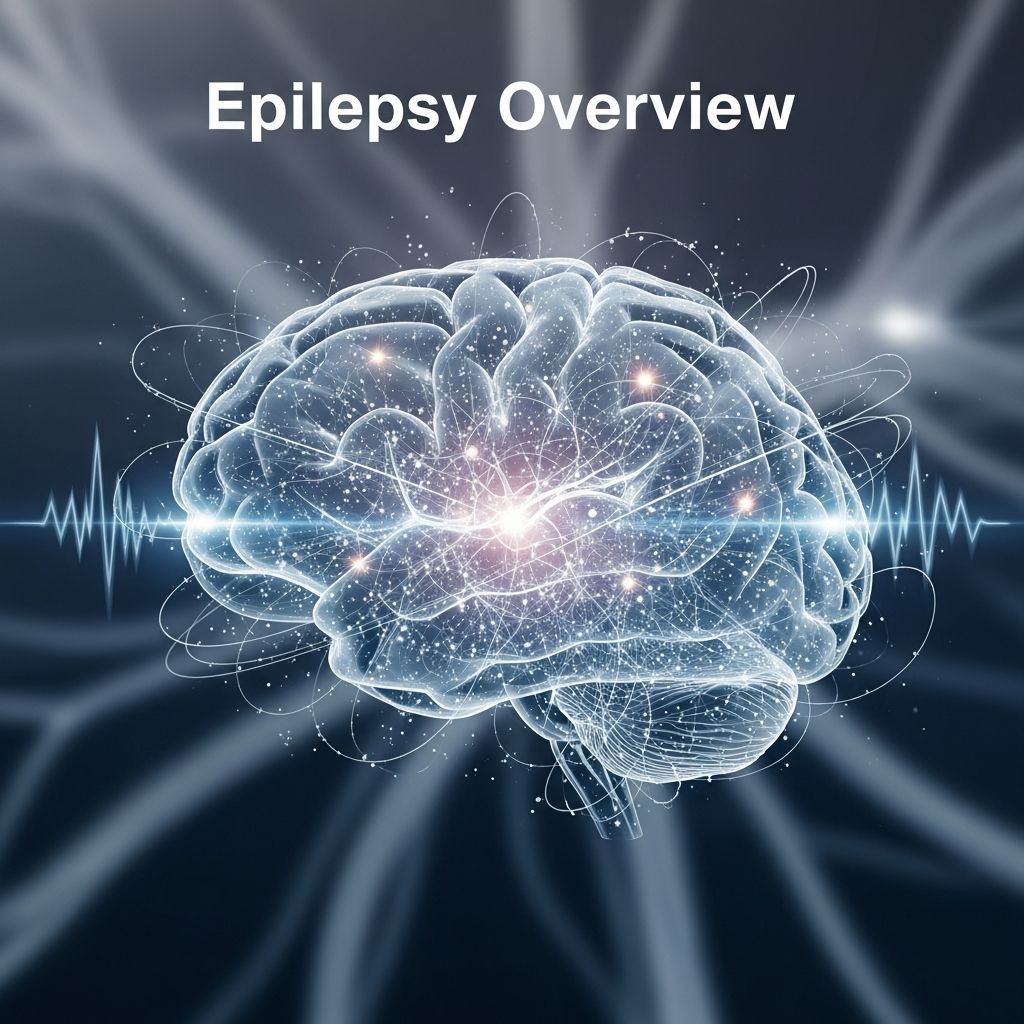
Epilepsy is a chronic neurological disorder characterized by recurrent, unprovoked seizures resulting from sudden, excessive electrical discharges in the brain. Affecting millions worldwide, it manifests through various seizure types and can significantly impact daily life, though many achieve seizure control with proper management.
What Is Epilepsy?
Epilepsy occurs when parts of the brain become overactive, sending too many electrical signals that disrupt normal function. These bursts lead to seizures, ranging from subtle twitching to full-body convulsions and loss of consciousness. Diagnosis requires at least two unprovoked seizures, distinguishing it from isolated events caused by fever, alcohol withdrawal, or trauma. Unlike one-off seizures, epilepsy implies a predisposition to recurrent episodes, often without identifiable triggers.
The condition affects people of all ages, with onset possible in childhood, adolescence, or later adulthood. Globally, about 50 million individuals live with epilepsy, per World Health Organization estimates, though exact prevalence varies. Importantly, seizures do not cause long-term brain damage or intellectual disability, but frequent uncontrolled episodes can impair memory and concentration over time.
Symptoms of Epilepsy
Epileptic seizures vary widely in presentation, duration (seconds to minutes), and impact. Some are imperceptible, while others cause dramatic physical changes. Key symptoms include:
- Muscle twitching, jerking, or stiffening in specific body parts or the whole body.
- Loss of consciousness, staring spells, or brief mental absence.
- Unusual sensations, emotions, or hallucinations (auras).
- Automatic behaviors like lip-smacking, fumbling, or wandering.
- Falls due to sudden muscle weakness (drop attacks).
Between seizures, individuals typically experience no symptoms, maintaining normal function. Prolonged seizures exceeding five minutes, termed status epilepticus, constitute a medical emergency requiring immediate intervention to prevent brain oxygen deprivation.
Types of Seizures
Seizures classify into two primary categories: generalized (involving both brain hemispheres from onset) and focal (partial, starting in one area, potentially spreading). Understanding types aids diagnosis and treatment.
Generalized Seizures
- Tonic seizures: Muscles suddenly stiffen, often in limbs, lasting seconds; consciousness may remain intact.
- Atonic seizures (drop attacks): Abrupt muscle limpness causes falls or head drops; high injury risk.
- Clonic seizures: Rhythmic jerking of major muscle groups, typically with unconsciousness.
- Myoclonic seizures: Quick, shock-like twitches, often in arms/legs; awareness usually preserved.
- Tonic-clonic (grand mal): Initial stiffening followed by convulsions, biting tongue, incontinence; always unconscious, lasting 1-3 minutes.
Focal (Partial) Seizures
Originating in one brain region, these may cause localized symptoms or spread to generalized seizures. Subtypes include:
- Simple partial: Consciousness preserved; symptoms like odd smells, déjà vu, fear, or limb twitching.
- Complex partial: Impaired awareness; repetitive actions like hand-rubbing or mumbling.
Focal seizures often precede auras—warning sensory disturbances—and can evolve into bilateral tonic-clonic events.
Causes of Epilepsy
Epilepsy arises from diverse etiologies, categorized as symptomatic (known cause) or cryptogenic/idiopathic (unknown). Common causes include:
- Brain injuries from trauma, strokes, or infections (e.g., meningitis).
- Genetic factors or developmental disorders like cortical dysplasia.
- Tumors, vascular malformations, or neurodegenerative diseases.
- Perinatal issues such as birth asphyxia or febrile seizures in infancy.
Related Stories



In about 50-70% of cases, no clear cause is identified, termed idiopathic epilepsy, often linked to genetic predispositions. Risk factors encompass family history, head injuries, and central nervous system infections. Contrary to myths, epilepsy is not contagious nor primarily caused by poor parenting or lifestyle.
Diagnosis
Diagnosing epilepsy involves clinical history, witness accounts, and tests to confirm recurrent unprovoked seizures and exclude mimics like syncope or migraines. Essential steps:
- Medical history: Detailed seizure descriptions, frequency, triggers, family history.
- Electroencephalogram (EEG): Records brain electrical activity; ambulatory or video-EEG for capture during events.
- Neuroimaging: MRI/CT scans detect structural abnormalities like tumors or scars.
- Blood tests: Rule out metabolic causes (e.g., electrolyte imbalances).
Classification per International League Against Epilepsy (ILAE) guidelines refines prognosis and therapy. Differential diagnosis excludes psychogenic non-epileptic seizures.
Treatment
Over 70% achieve seizure freedom with treatment, primarily anti-seizure medications (ASMs). Approaches include:
Medications
First-line ASMs like levetiracetam, lamotrigine, or valproate target neuronal excitability. Monotherapy preferred; polytherapy if needed. Side effects vary (drowsiness, weight changes), monitored via blood levels. About 30% are drug-resistant, prompting alternatives.
Surgery
For focal epilepsy with identifiable seizure focus, resection (e.g., temporal lobectomy) offers 60-80% seizure freedom. Laser ablation or responsive neurostimulation for others.
Devices and Diets
- Vagus nerve stimulation (VNS): Implanted device reduces seizures by 50% in many.
- Ketogenic diet: High-fat, low-carb; effective in children, some adults.
Emerging therapies include deep brain stimulation. Treatment tailors to seizure type, cause, age, and comorbidities.
First Aid for Seizures
Most seizures self-resolve safely; helpers prioritize safety:
- Stay calm; time the seizure.
- Clear area of hazards; cushion head.
- Position on side if possible post-seizure.
- Never restrain or insert objects in mouth.
Call emergency services if: seizure >5 minutes, repeated seizures, injury/pregnancy, first-time seizure, or post-seizure breathing difficulty. Rescue medications like intranasal midazolam available for prolonged events.
Living with Epilepsy
With management, most lead fulfilling lives. Key strategies:
- Lifestyle: Regular sleep, stress reduction, avoid triggers (alcohol, flashing lights).
- Safety: No driving until seizure-free (varies by law); swim/supervise baths; helmets for activities.
- Education/Employment: Disclose as needed; accommodations available.
- Women’s Health: ASMs may affect contraception; folic acid preconception.
- Mental Health: Screen for anxiety/depression, common comorbidities.
SUDEP risk (1:1000 annually in refractory cases) minimized by seizure control, supervision, seizure diaries. Support groups foster coping.
Prognosis
Prognosis excels in childhood-onset idiopathic cases (70-90% remission). Adults with symptomatic epilepsy face challenges, but 50-60% control seizures. Mortality slightly elevated due to underlying causes, accidents, status epilepticus, or SUDEP, though absolute risk low.
Frequently Asked Questions (FAQs)
What triggers seizures?
Common triggers: sleep deprivation, stress, alcohol, illness, hormonal changes. Individualized tracking via diaries helps avoidance.
Can epilepsy be cured?
Not always curable, but 70% achieve long-term remission with treatment; some outgrow it in childhood.
Is epilepsy hereditary?
Genetic forms exist (10-20%), but most cases sporadic; family history raises risk modestly.
Can I live normally with epilepsy?
Yes, with control—work, drive (post-freedom period), relationships, sports feasible safely.
What if medications fail?
Explore surgery, devices, diets; epilepsy centers offer specialized evaluation.
References
- Overview: Epilepsy – InformedHealth.org — NCBI Bookshelf / InformedHealth.org. 2023-05-10. https://www.ncbi.nlm.nih.gov/books/NBK343313/
- Epilepsy — World Health Organization. 2023-11-09. https://www.who.int/news-room/fact-sheets/detail/epilepsy
- Epilepsy: Overview and Diagnosis — Centers for Disease Control and Prevention. 2024-06-12. https://www.cdc.gov/epilepsy/about/index.html
- Seizure Types and Classification — Epilepsy Foundation. 2024-02-20. https://www.epilepsy.com/what-is-epilepsy/seizure-types
- Guidelines for Epilepsies Diagnosis — National Institute for Health and Care Excellence (NICE). 2022-12-01. https://www.nice.org.uk/guidance/ng217
Similar Articles








Read full bio of Sneha Tete