Episcleritis: What It Is, Causes & Treatment
Understanding episcleritis: Learn about symptoms, causes, diagnosis, and effective treatment options.
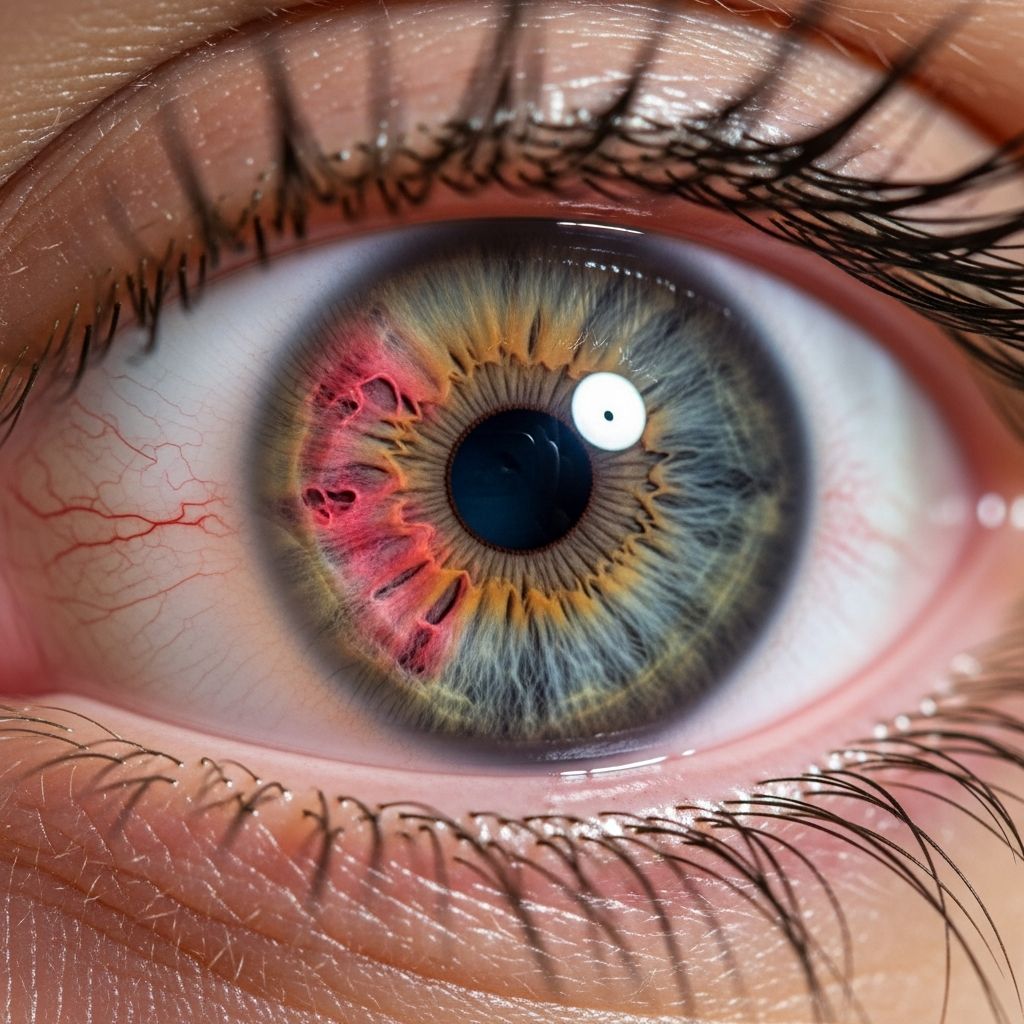
Understanding Episcleritis
Episcleritis is a condition characterized by inflammation and swelling of the episclera, which is a clear, thin layer of tissue that sits between the conjunctiva (the outer membrane covering the white part of your eye) and the sclera (the white of your eye). This relatively common eye condition presents as redness and can cause mild to moderate discomfort, though it typically does not affect your vision. Understanding what episcleritis is, how it develops, and available treatment options can help you manage the condition effectively and know when to seek professional eye care.
What Is the Episclera?
The episclera is a delicate vascular connective tissue layer composed of loose connective tissue that plays an important role in eye health. This thin tissue receives its blood supply from the anterior ciliary arteries, which are branches of the ophthalmic artery. The episclera lies directly between two other important eye structures: the conjunctiva on the outside and the sclera underneath. Understanding the anatomy of the episclera is crucial for distinguishing episcleritis from other eye conditions that may present with similar symptoms but require different treatment approaches.
Types of Episcleritis
Episcleritis can present in three different forms, each with slightly different characteristics and appearance. Healthcare providers classify the condition based on the pattern and distribution of inflammation in the episcleral tissue.
– Diffuse episcleritis: This type involves widespread inflammation across a large area of the episclera, causing generalized redness and discomfort.- Sectoral episcleritis: In this form, inflammation is limited to a specific sector or region of the episclera, creating a localized area of redness.- Nodular episcleritis: This type features one or more small, raised nodules on the episclera that are freely mobile over the underlying scleral tissue.
Causes and Risk Factors
While most cases of episcleritis are idiopathic, meaning the exact cause cannot be identified, approximately one in three cases are associated with underlying systemic disorders. Identifying potential causes is important because it helps determine whether additional evaluation and treatment are necessary.
Idiopathic Episcleritis
The majority of episcleritis cases occur without any identifiable underlying cause. In these instances, the inflammation appears to develop spontaneously and typically resolves on its own within a few weeks without requiring extensive investigation or aggressive treatment.
Associated Systemic Conditions
When episcleritis recurs or develops in patients with existing health conditions, it may be associated with various systemic diseases. Common associations include autoimmune and inflammatory disorders such as rheumatoid arthritis, systemic lupus erythematosus, Crohn disease, ulcerative colitis, and psoriatic arthritis. Additional conditions that may be linked to episcleritis include ankylosing spondylitis, reactive arthritis, relapsing polychondritis, polyarteritis nodosa, Behcet disease, and Cogan syndrome. In rare cases, episcleritis can result from systemic vasculitis conditions such as granulomatosis with polyangiitis, which require prompt treatment. Infectious associations are also possible, including Lyme disease, tuberculosis, syphilis, and herpes zoster.
Symptoms and Clinical Presentation
Recognizing the symptoms of episcleritis can help you determine when to contact an eye care provider. The condition typically presents with characteristic signs that distinguish it from more serious eye conditions.
– Localized redness or hyperemia of the affected eye- Mild ocular discomfort or aching sensation- Tenderness around the affected area- Mild irritation or tenderness- Generally normal vision (vision is not affected)
Important symptoms that are typically absent in episcleritis include significant discharge, photophobia (light sensitivity), and severe pain. The absence of these features helps differentiate episcleritis from other eye conditions like conjunctivitis or scleritis. Most patients report that symptoms begin suddenly without warning and generally persist for one to three weeks before resolving.
Related Stories



Pathophysiology: How Episcleritis Develops
Episcleritis involves a non-granulomatous inflammatory process of the episcleral vascular network. When the condition develops, resident immune cells including lymphocytes and macrophages become activated. These activated immune cells release inflammatory mediators that cause vasodilation (widening of blood vessels) and increased vascular permeability. This allows more white blood cells and macrophages to migrate into the episcleral tissue, perpetuating the inflammatory response. The good news is that this acute inflammatory process is self-limited and typically lasts between two and twenty-one days, after which the inflammation naturally resolves.
Diagnosis of Episcleritis
Eye care providers diagnose episcleritis primarily through clinical examination rather than laboratory tests. A comprehensive diagnostic approach involves several components.
Clinical Examination
Your eye care provider will perform a detailed external examination and slit lamp examination to assess the pattern and distribution of the episcleral inflammation. During the slit lamp examination, your provider may use a narrow, bright slit beam to distinguish between different types of episcleritis. In nodular episcleritis, the nodule remains freely mobile over the underlying scleral tissue, and only the outer light reflection is displaced forward. This distinguishes it from scleritis, where both light reflections would be displaced.
Differential Diagnosis
To confirm the diagnosis and rule out more serious conditions, your provider may use 2.5% phenylephrine drops. One drop is instilled in the affected eye, and the vasculature is evaluated after ten to fifteen minutes. This test helps determine the depth of congested vessels and distinguishes episcleritis from scleritis. Patients with scleritis typically present with much more severe symptoms including radiating pain, photophobia, tearing, and possibly reduced visual acuity—features absent in uncomplicated episcleritis.
Health History Assessment
Your eye care provider will ask detailed questions about your medical history, particularly regarding any immune system disorders, autoimmune diseases, or inflammatory conditions. This information helps determine whether systemic evaluation is warranted. A thorough review of systems is essential to identify potential underlying conditions associated with recurrent episcleritis.
Laboratory and Imaging Tests
Single episodes of episcleritis typically do not require extensive laboratory workup. However, patients experiencing recurrent attacks without known associated diseases may benefit from systemic evaluation. Potential tests include rheumatoid factor, antinuclear antibody, serum uric acid, erythrocyte sedimentation rate (ESR), complete blood cell count with differential, venereal disease laboratory/fluorescent treponemal antibody absorption (VDRL/FTA-ABS) testing, urinalysis, purified protein derivative (PPD) testing, and chest X-ray. HLA-B27 testing may also be considered in certain clinical contexts.
Tissue Biopsy
If episcleral inflammation persists and does not respond to standard treatment, tissue biopsy may be considered to rule out underlying systemic conditions, particularly rare but serious vasculitic conditions that can have significant health consequences if untreated.
Treatment and Management Options
The good news about episcleritis is that most cases are mild, transient, and resolve without intervention within two to twenty-one days. Treatment focuses on providing comfort and managing symptoms rather than aggressive intervention.
Supportive Care
For many patients, supportive measures are sufficient to manage episcleritis effectively. Recommended approaches include using refrigerated artificial tears at least four times daily and applying cool compresses to the affected eye. These measures provide comfort and help reduce irritation without the need for medication. Reassurance from your eye care provider that the condition is benign and will resolve on its own is also an important part of management.
Topical Corticosteroids
For patients who require medication due to significant symptoms or cosmetic concerns, topical corticosteroids are often prescribed. Mild corticosteroids such as fluorometholone 0.1% or loteprednol etabonate 0.5% are typically recommended and applied four times daily. These medications are usually prescribed for one to two weeks and then gradually tapered down as symptoms improve. Topical corticosteroids help reduce inflammation and provide symptom relief more rapidly than supportive care alone.
Oral Nonsteroidal Anti-inflammatory Drugs
In some cases, oral nonsteroidal anti-inflammatory drugs (NSAIDs) may be recommended to help manage pain and inflammation, particularly when symptoms are more pronounced. These systemic medications can complement topical therapy for enhanced symptom control.
Complications and When to Seek Care
While episcleritis is generally benign and does not threaten vision, recurrent disease can occasionally lead to complications. Reported complications include anterior and intermediate uveitis, corneal dellen (a depression in the cornea adjacent to an episcleral nodule), and peripheral corneal infiltrates adjacent to episcleral inflammation. In rare instances, declining vision associated with episcleritis may be attributable to advancing cataracts or glaucoma, both of which can be related to corticosteroid use during treatment. It is important to note that uncomplicated episcleritis itself does not cause vision loss or permanent eye damage.
Recurrence and Long-term Outlook
One notable characteristic of episcleritis is that it often recurs. Some patients experience multiple episodes throughout their lifetime. However, each episode typically follows the same benign course as the initial presentation, lasting one to three weeks before resolving. Patients with recurrent episcleritis should maintain regular follow-up with their eye care provider, particularly if they develop systemic symptoms or if the pattern of recurrence changes.
Key Differences: Episcleritis vs. Scleritis
Understanding the differences between episcleritis and scleritis is crucial because scleritis is a more serious condition requiring different management. Scleritis involves inflammation of the sclera itself (the white of the eye) and presents with more severe symptoms including intense pain, photophobia, tearing, and potentially reduced visual acuity. Patients with scleritis often appear significantly more symptomatic than those with episcleritis. Additionally, scleritis can threaten vision and may be associated with serious systemic diseases. In contrast, episcleritis is mild, self-limited, and does not affect vision in uncomplicated cases.
Frequently Asked Questions
Q: How long does episcleritis typically last?
A: Most cases of episcleritis resolve within two to three weeks without treatment. However, the duration can vary, and some cases may persist longer. Supportive care and topical medications can help manage symptoms during this time.
Q: Does episcleritis affect vision?
A: No, uncomplicated episcleritis does not affect vision. Visual acuity remains normal during an episode. If you experience vision changes, contact your eye care provider to rule out other conditions.
Q: Is episcleritis contagious?
A: Episcleritis is not contagious. Unlike infectious conjunctivitis, you cannot transmit episcleritis to other people through contact or close proximity.
Q: Can episcleritis be prevented?
A: There is no specific primary prevention for idiopathic episcleritis. However, managing any associated systemic conditions effectively may help reduce the frequency of recurrent episodes.
Q: When should I see an eye doctor about eye redness?
A: Contact an eye care provider if you experience persistent eye redness lasting more than a few days, significant pain, vision changes, discharge, or light sensitivity. Your provider can determine whether the redness is due to episcleritis or another condition requiring different treatment.
Q: Can episcleritis come back?
A: Yes, episcleritis often recurs. Some patients experience multiple episodes throughout their lives. Each episode typically follows a similar course and resolves within a few weeks.
References
- Episcleritis — National Center for Biotechnology Information, StatPearls Publishing. 2024. https://www.ncbi.nlm.nih.gov/books/NBK534796/
- Episcleritis: Clinical Management Guideline — College of Optometrists UK. 2024. https://www.college-optometrists.org/clinical-guidance/clinical-management-guidelines/episcleritis
- Episcleritis — EyeWiki, American Academy of Ophthalmology. 2024. https://eyewiki.org/Episcleritis
- Episcleritis — Merck Manual Professional Edition. 2024. https://www.merckmanuals.com/professional/eye-disorders/conjunctival-and-scleral-disorders/episcleritis
- Episcleritis: What It Is, Causes & Treatment — Cleveland Clinic. 2024. https://my.clevelandclinic.org/health/diseases/24974-episcleritis
- Ocular Manifestations of Systemic Disease — American Academy of Ophthalmology. 2023. https://www.aao.org/
Similar Articles








Read full bio of medha deb