Episiotomy: Procedure, Advantages, Complications & Healing
Comprehensive guide to episiotomy during childbirth: what it is, when it's needed, and recovery.
What Is an Episiotomy?
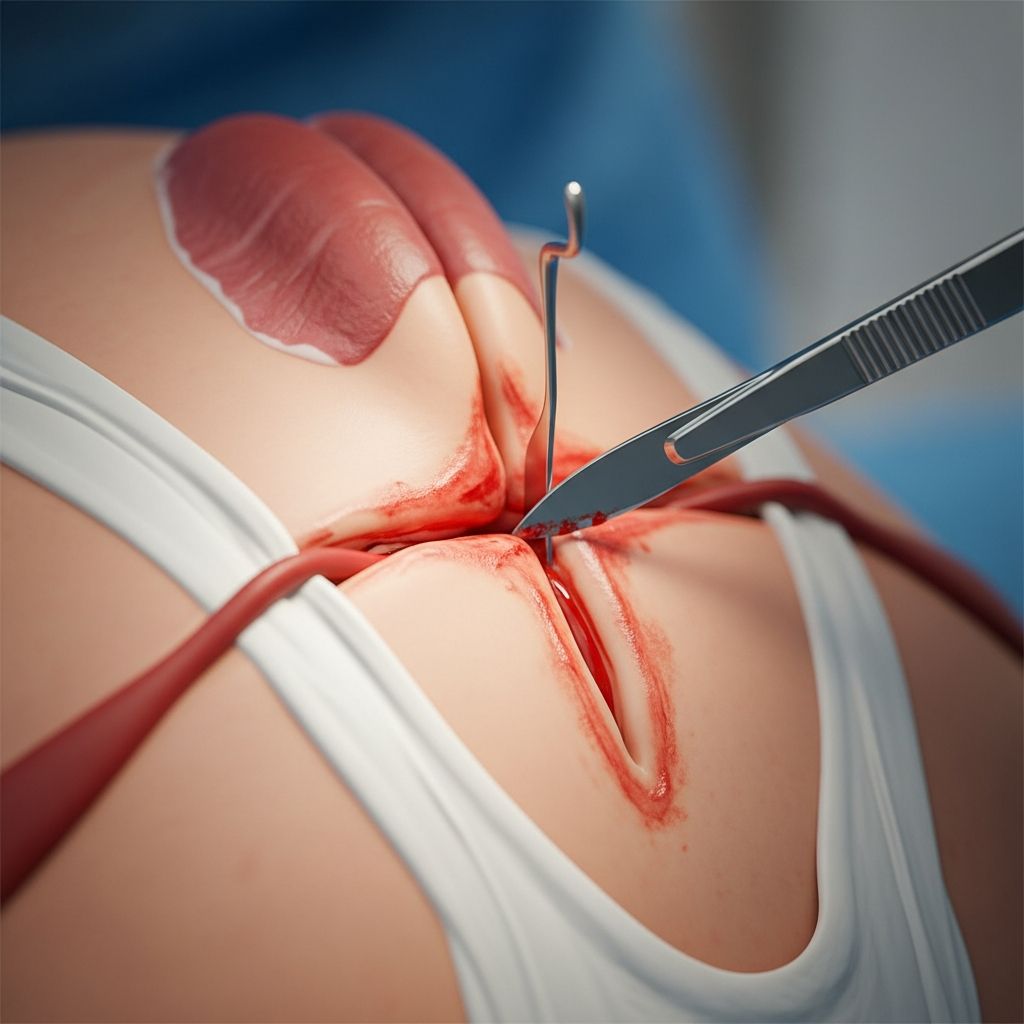
An episiotomy is a surgical procedure in which an obstetrician makes a small incision in the perineum—the area of tissue between the vaginal opening and the anus—during childbirth. This incision is designed to widen the vaginal opening to allow your baby to pass through more easily during delivery. While episiotomies were once considered a routine part of childbirth, they are no longer performed on a regular basis and are now reserved for specific medical situations where they offer clear benefits to both mother and baby.
The procedure creates additional space in the birth canal, which can sometimes prevent more extensive natural tearing that might occur as the baby’s head emerges. However, it’s important to understand that most women can deliver vaginally without requiring an episiotomy, and many healthcare providers now prefer to allow natural perineal stretching whenever possible.
Historical Context and Current Practice
For many decades, episiotomy was considered a standard preventive measure during vaginal delivery. Healthcare providers believed that making a controlled surgical incision would be preferable to allowing the perineum to tear naturally, as they assumed surgical cuts would heal better and help preserve pelvic floor muscles and connective tissue. This practice became so widespread that episiotomy was performed routinely during most vaginal deliveries.
However, modern medical research has fundamentally changed this approach. In 2006, the American College of Obstetricians and Gynecologists (ACOG) issued a formal recommendation against routine episiotomy after multiple studies demonstrated that the procedure does not prevent severe lacerations and may actually cause more extensive tearing than would occur naturally. Research also showed that episiotomy provides no additional protection against complications such as urinary or bowel incontinence or painful intercourse compared to natural perineal tears.
When Is an Episiotomy Recommended?
Although routine episiotomies are no longer recommended, healthcare providers still perform this procedure in specific circumstances where it becomes necessary for the safety and wellbeing of both mother and baby. Your obstetrician might recommend an episiotomy when:
- Your baby needs to be delivered quickly due to an emergency situation
- The baby’s shoulder is stuck behind your pelvic bone (shoulder dystocia)
- The baby has an abnormal heart rate pattern during delivery
- Forceps or vacuum extraction is needed to assist with vaginal delivery
- There is anticipation of a severe natural tear, particularly one affecting the anal sphincter
- Fetal macrosomia (a larger than average baby) makes delivery more challenging
If your healthcare provider determines that an episiotomy may be necessary, they will discuss this with you beforehand whenever possible and explain the specific reasons why the procedure is recommended for your particular situation.
The Episiotomy Procedure
How the Procedure Works
An episiotomy is performed during active labor when your cervix is fully dilated and you’re ready to push. The specific process may vary depending on your obstetrician and your individual circumstances, but the basic procedure follows these steps:
- Your healthcare provider assesses whether an episiotomy is necessary at that moment
- A local anesthetic is typically injected into the perineal area to numb the tissue
- The incision is made using surgical scissors during a contraction
- Your baby is delivered through the widened opening
- The incision is repaired with dissolvable stitches after delivery is complete
Related Stories



Pain Management During the Procedure
You should not feel pain during an episiotomy itself. Your obstetrician will use a local anesthetic—typically an injection into the perineal area—to numb the tissue before making the incision. In many cases, if you’ve already received an epidural for labor pain management, you won’t feel anything from the waist down, which means the episiotomy and its repair will be completely painless. Your healthcare provider can discuss different comfort techniques to help you manage any sensation during the procedure.
Types of Episiotomy Incisions
There are two main types of episiotomy incisions, classified by their direction and angle. Your healthcare provider will choose the most appropriate type based on your specific situation and anatomy.
| Incision Type | Direction | Advantages | Disadvantages |
|---|---|---|---|
| Midline (Median) Incision | Made vertically directly downward toward the rectum | Easier to repair; less painful during healing | Higher risk of extending into the anal area; greater risk of fourth-degree laceration affecting the anal sphincter |
| Mediolateral Incision | Made at a 45 to 60-degree angle, slanting away from the anus | Provides better protection against extension into the anal area; lower risk of anal sphincter injury | More difficult to repair; often causes more pain during the healing process |
The mediolateral incision offers superior protection against severe perineal trauma and anal sphincter injury, making it the preferred choice in many clinical situations. However, the midline incision is simpler to repair and typically causes less discomfort during recovery. Your healthcare provider will select the technique that offers the best balance of protection and ease of repair for your specific circumstances.
Degrees of Episiotomy
Healthcare providers describe episiotomies using a classification system based on how deeply the incision extends and which tissues are involved. This grading system helps assess the severity and potential complications:
- First-degree: The incision extends through the vaginal mucosa and perineal skin only
- Second-degree: The incision extends through the vaginal mucosa, perineal skin, and underlying perineal muscles
- Third-degree: The incision extends through all of the above plus involves the anal sphincter
- Fourth-degree: The incision extends completely through the anal sphincter and into the mucous membrane lining the rectum
Complications and Risks Associated with Episiotomy
While episiotomy can be beneficial in certain situations, the procedure does carry potential risks and complications that you should understand before delivery.
Common Complications
Complications that can occur due to an episiotomy include:
- Bleeding and blood loss
- Infection of the incision site
- Poor or abnormal wound healing
- Repeat perineal injury during subsequent deliveries
- Pelvic floor dysfunction
- Dyspareunia (pain during sexual intercourse)
- Extension of the incision as a laceration into the anal sphincter or rectum
- Fistula formation (abnormal connections between tissues)
- Fecal incontinence (loss of bowel control)
Sexual Dysfunction After Episiotomy
One significant concern for many women is the potential for sexual dysfunction following episiotomy. Research indicates that approximately 35 percent of women experience dyspareunia (painful intercourse) after episiotomy, which can persist for months after delivery. This complication can significantly impact quality of life and intimate relationships during the postpartum period.
Fourth-Degree Lacerations
A particular concern with midline episiotomies is the increased risk of fourth-degree vaginal tearing, which extends through the anal sphincter and into the mucous membrane lining the rectum. This severe type of injury can potentially result in fecal incontinence and requires careful surgical repair to restore normal bowel function. This is why mediolateral incisions are often preferred when there is concern about severe tearing.
It’s important to note that many of these complications can also occur with natural perineal tears, and the presence of an episiotomy doesn’t necessarily guarantee that complications will be prevented.
Recovery and Healing After Episiotomy
What to Expect Immediately After
You can expect some pain and soreness once the anesthesia wears off after your episiotomy. The perineal area will be tender and sensitive, particularly if you had a mediolateral incision. Pain management strategies typically include:
- Over-the-counter pain relievers as recommended by your healthcare provider
- Sitting on ice packs to reduce swelling and discomfort
- Warm baths or sitz baths a few days after delivery
- Topical anesthetic sprays or ointments
- Proper perineal hygiene and keeping the area clean and dry
Healing Timeline
Most episiotomy incisions heal within 2 to 3 weeks, though complete healing of deeper tissues may take several weeks longer. The dissolvable stitches used to close the incision will typically dissolve on their own within 2 to 3 weeks as the tissues heal. However, some residual discomfort and sensitivity may persist for several months, particularly during sexual intercourse.
When to Contact Your Healthcare Provider
Following your episiotomy, you should contact your obstetrician if you experience:
- Excessive bleeding or soaking through pads
- Signs of infection such as fever, increasing pain, redness, or discharge with a foul odor
- Difficulty with bowel movements or signs of bowel dysfunction
- Inability to control urine or stool
- Severe pain that doesn’t improve with pain management strategies
- Separation or opening of the incision
- Persistent pain during sexual intercourse months after delivery
Prompt reporting of any concerns allows your healthcare provider to identify and treat complications early, preventing more serious problems from developing.
Preparing for Episiotomy Discussion
Since episiotomies are no longer routine, your healthcare provider will likely not recommend one unless it becomes medically necessary during delivery. However, it’s valuable to discuss episiotomy during your prenatal visits. Consider:
- Sharing your preferences and concerns about the procedure with your healthcare provider
- Asking about your individual risk factors for needing an episiotomy
- Understanding the circumstances where your provider might recommend one
- Discussing pain management and recovery options
- Expressing your desire to avoid episiotomy when possible
Remember to enter labor with an open mind, understanding that while your preferences are important, your healthcare provider’s primary concern is the safe delivery of your baby and your wellbeing. It takes time for your baby to stretch your vaginal tissues to allow delivery, but sometimes circumstances arise where your baby needs to be delivered before the tissues can stretch sufficiently on their own.
Frequently Asked Questions
Q: Is episiotomy still recommended during routine childbirth?
A: No. In 2006, the American College of Obstetricians and Gynecologists (ACOG) recommended against routine episiotomy. Research showed that the procedure does not prevent severe lacerations and may cause worse tearing than natural tears. Episiotomy is now performed only when medically necessary.
Q: Will I feel pain during an episiotomy?
A: You should not feel pain during the procedure. Your healthcare provider will inject a local anesthetic to numb the area, or you may have already received an epidural for labor pain, which numbs the area from your waist down.
Q: How long does it take to recover from an episiotomy?
A: Most episiotomy incisions heal within 2 to 3 weeks, though complete healing of deeper tissues may take longer. Some residual discomfort and sensitivity may persist for several months, particularly during sexual intercourse.
Q: Which type of episiotomy incision is better?
A: The mediolateral incision provides better protection against severe tearing and anal sphincter injury but is more painful and difficult to repair. The midline incision is easier to repair but carries a higher risk of fourth-degree tearing. Your healthcare provider will choose based on your specific situation.
Q: Can I prevent needing an episiotomy?
A: Many women deliver vaginally without requiring an episiotomy. Allowing your tissues to stretch naturally is often possible. However, certain emergency situations or delivery complications may make episiotomy necessary for your safety and your baby’s safety.
References
- Episiotomy: When it’s needed, when it’s not — Mayo Clinic. Updated 2024. https://www.mayoclinic.org/healthy-lifestyle/labor-and-delivery/in-depth/episiotomy/art-20047282
- Management of Spontaneous Vaginal Delivery — Merck Manuals Professional Edition. Updated 2024. https://www.merckmanuals.com/professional/gynecology-and-obstetrics/labor-and-delivery/management-of-spontaneous-vaginal-delivery
- Episiotomy: Procedure, Advantages, Complications & Healing — Cleveland Clinic. Updated 2024. https://my.clevelandclinic.org/health/treatments/22904-episiotomy
- American College of Obstetricians and Gynecologists (ACOG) Committee Opinion — ACOG. 2006. https://www.acog.org
Similar Articles








Read full bio of Sneha Tete