Epithelial Sheath Neuroma: Key Facts, Diagnosis & Treatment
Rare benign skin tumour with nerve fibres sheathed by squamous epithelium, often on the upper back.
Authoritative facts about the epithelial sheath neuroma from DermNet New Zealand.
What is epithelial sheath neuroma?
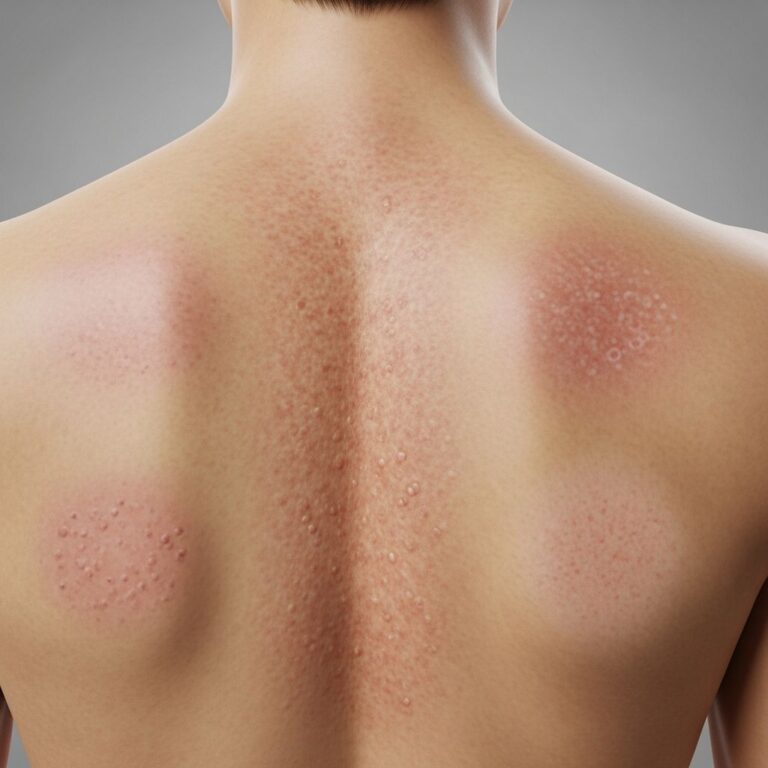
Epithelial sheath neuroma (ESN) is a rare benign cutaneous tumour first described in 2000 by Requena et al. It is characterized by enlarged peripheral nerve bundles in the dermis that are surrounded by sheaths of mature squamous epithelium. This unique combination of neural and epithelial elements distinguishes ESN from other skin lesions. The lesion typically presents as a small, firm, erythematous papule or nodule, most commonly on the upper back of adults over 40 years, with a female predominance.
ESN is not associated with malignancy but can mimic aggressive conditions like squamous cell carcinoma (SCC) with perineural invasion due to its histological appearance. Accurate diagnosis relies on histopathological examination, as clinical features alone are nonspecific. Fewer than 20 cases have been reported in the literature, highlighting its rarity.
Who gets epithelial sheath neuroma?
ESN predominantly affects individuals older than 40 years, with a marked female preponderance (approximately 3:1 ratio). All documented cases have occurred on the skin of the back, particularly the upper or mid-back region. Patients may report a history of chronic back pain or minor trauma at the site, though this is not universal.
- Age: >40 years (reported cases range from 50s to 70s)
- Sex: Predominantly women
- Location: Exclusively upper or mid-back
- Associations: Possible link to localized inflammation, trauma, or rubbing
In one case series, three additional patients (two women, one man, aged 60-74) presented with ESN on the upper back, expanding the known demographics slightly but confirming the trend. No familial patterns or syndromic associations have been identified.
What causes epithelial sheath neuroma?
The exact pathogenesis of ESN remains unknown, but several hypotheses have been proposed based on histological and clinical observations:
- Reactive hyperplasia: ESN may arise from abnormal reactive proliferation of peripheral nerves and epithelium in response to external stimuli like rubbing, minor trauma, or chronic irritation. This could entrap infundibular or epidermal squamous epithelium within the perineurium.
- Squamous metaplasia: Perineural cells may undergo squamous metaplasia due to localized inflammation, forming epithelial sheaths around enlarged nerve bundles.
- Cytokine-mediated: Localized inflammation or trauma might induce interleukin-6 production, leading to nerve hyperplasia and keratinocyte proliferation.
- Embryonic remnants: The lesion could originate from neural crest remnants that differentiate into both neural and squamous epithelial components post-embryonic development.
No definitive aetiological factor has been established, and ESN is considered a hamartomatous or reactive process rather than a true neoplasm in some views. Absence of prior biopsy or trauma helps differentiate it from re-excision perineural invasion.
What are the clinical features of epithelial sheath neuroma?
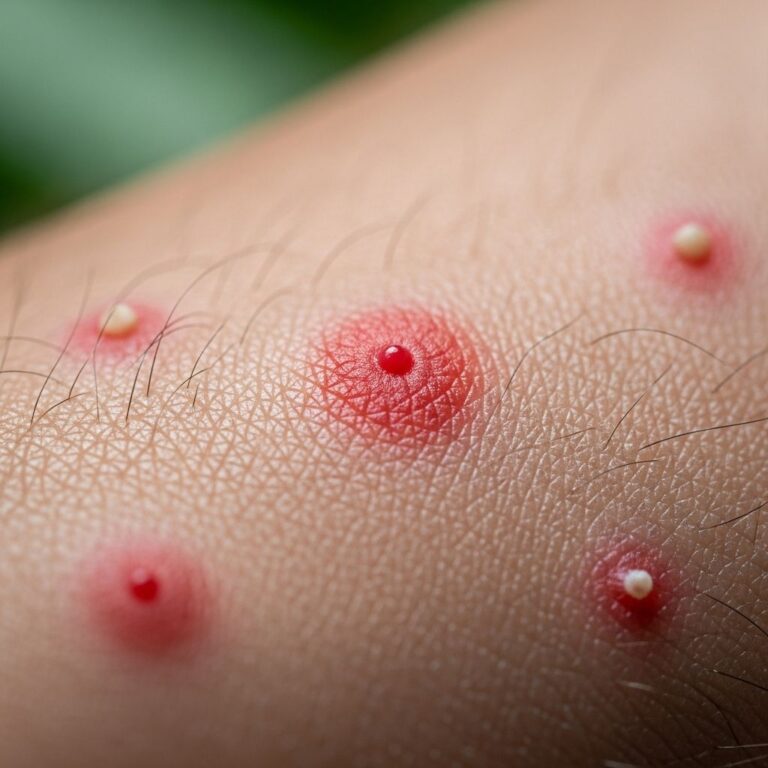
Clinically, ESN manifests as a solitary, firm, erythematous papule or nodule, typically 3-7 mm in diameter. The lesion is often asymptomatic but may be tender or painful, especially in cases associated with nerve irritation. Common features include:
- Appearance: Dome-shaped or slightly verrucous papule, red to pink
- Size: Small (4-10 mm)
- Symptoms: Painful in up to 50% of cases (8/14 reported), possibly due to cytokine release from Schwann cells
- Surface: Smooth or subtly keratotic
- Site: Upper back (100% of cases)
Related Stories



In a reported case, a 74-year-old woman presented with a painful 7 mm growth on the right upper central back during a routine skin exam. No epidermal connection was visible clinically. Initial biopsies in multiple cases were misinterpreted as SCC, underscoring the need for complete excision.
How is epithelial sheath neuroma diagnosed?
Diagnosis is histological, as clinical presentation is nonspecific and overlaps with basal cell carcinoma, irritated naevus, cyst, or SCC. Punch or excisional biopsy is required.
Histology
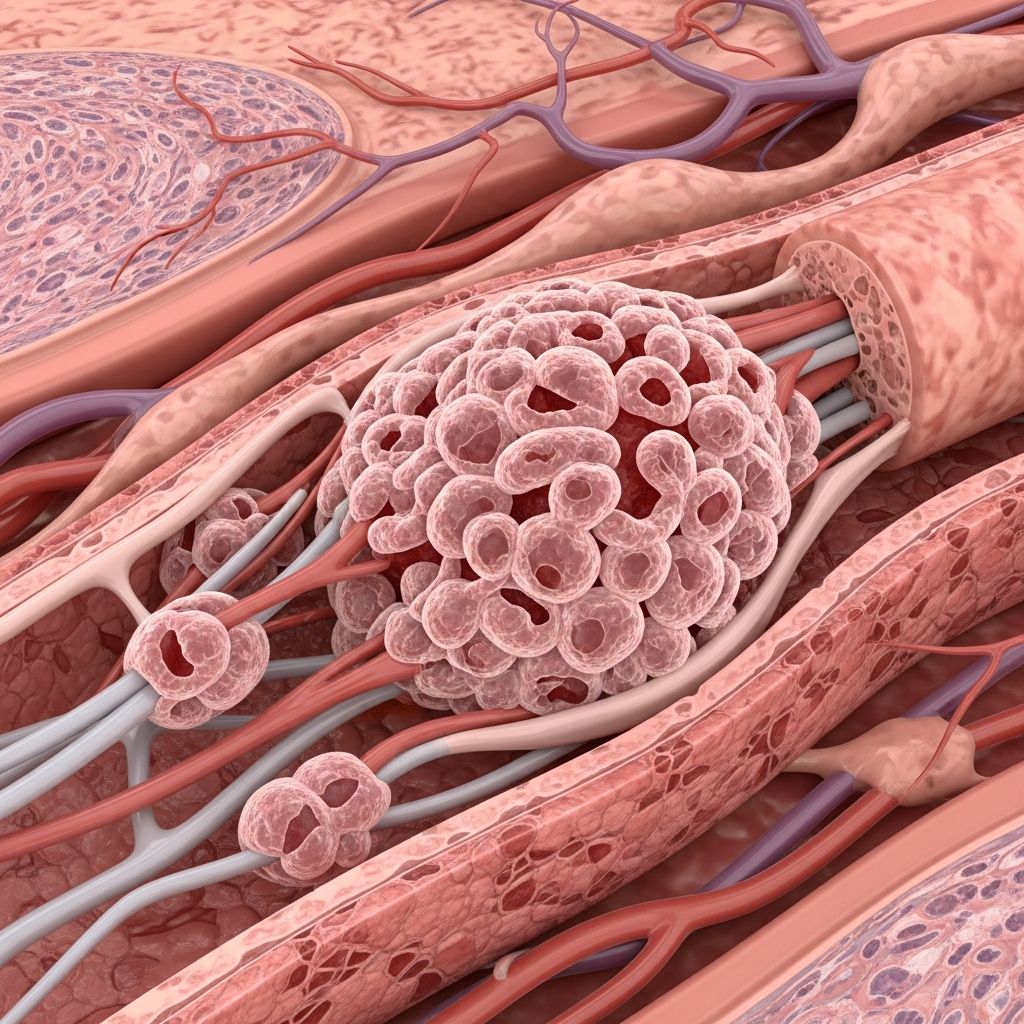
Key features include multiple enlarged peripheral nerve bundles (axons, Schwann cells, perineural cells) in the superficial to mid-dermis, each sheathed by irregular islands of mature keratinizing squamous epithelium. The epithelium shows orthokeratotic keratin, dyskeratotic cells, and no atypia or connection to the epidermis. Mild chronic inflammatory infiltrate and myxoid stroma may be present.
- Nerve bundles: Hypertrophied, S-100, neurofilament, CD57, NGF receptor positive
- Epithelial sheaths: Cytokeratin positive, benign squamous cells
- No atypia, mitoses, or necrosis
Immunohistochemistry confirms neural (S-100+) and epithelial (cytokeratin+) components. Initial biopsies may suggest well-differentiated SCC, but excision reveals diagnostic features.
Differential diagnosis
| Condition | Key Distinguishing Features |
|---|---|
| Squamous cell carcinoma with perineural invasion | Cytologic atypia, epidermal connection, residual tumour cells, prior malignancy history |
| Re-excision perineural invasion (RPI) | History of recent biopsy, scar/trauma, limited to biopsy site, no enlarged nerves |
| Reactive neuroepithelial aggregates | Fewer aggregates (1-2), no enlarged nerves, facial location |
| Basal cell carcinoma (micronodular/squamous variants) | Basaloid cells, mucin, retraction artefact |
| Irritated melanocytic naevus or inflamed cyst | Melanocytes, cystic spaces, inflammation without nerves |
ESN lacks prior excision history, shows enlarged nerves without atypia, distinguishing it from malignant mimics.
What is the treatment for epithelial sheath neuroma?
Simple excision is curative, with no reported recurrences. Conservative excision with clear margins suffices, as ESN is benign. Patients should be followed for symptom resolution; pain typically abates post-excision. In the 74-year-old case, excision led to no regrowth at 19-day and subsequent follow-ups. No adjuvant therapy is needed.
Epithelial sheath neuroma FAQs
What is epithelial sheath neuroma?
A rare benign skin tumour with nerve fibres sheathed by squamous epithelium, mainly on the upper back.
Is epithelial sheath neuroma cancerous?
No, it is entirely benign with no malignant potential.
How is epithelial sheath neuroma diagnosed?
By histopathology of an excisional biopsy showing enlarged nerves ensheathed by benign squamous epithelium.
Does epithelial sheath neuroma cause pain?
Yes, in about half of cases, due to nerve involvement and cytokine release.
What is the treatment for epithelial sheath neuroma?
Simple surgical excision, which is curative.
Can epithelial sheath neuroma recur?
No recurrences reported after complete excision.
Who is at risk for epithelial sheath neuroma?
Older adults (>40 years), especially women, on the upper back.
References
- Epithelial sheath neuroma: A case series — PubMed Central. 2020-02-28. https://pmc.ncbi.nlm.nih.gov/articles/PMC7044657/
- Epithelial Sheath Neuroma: A New Entity — PubMed. 2000-02. https://pubmed.ncbi.nlm.nih.gov/10680886/
- An unusual epithelial sheath neuroma in a 74-year-old woman — Dermatology Online Journal. 2025-04. https://doj.dermsquared.com/index.php/doj/article/view/209
Similar Articles








Read full bio of medha deb