Epithelium: Structure, Function & Diseases
Understand epithelial tissue: the protective barriers that line your body's organs and surfaces.
What Is the Epithelium?
The epithelium is a thin layer of cells that forms protective barriers throughout your body, serving as the boundary between your internal organs and the external environment. These specialized tissues line the surfaces of most organs, internal passageways, and cavities within your body. The epithelium acts as a gatekeeper, controlling what substances can pass through while protecting the delicate tissues beneath from harmful pathogens, irritants, and physical damage.
Epithelial tissue is one of the four primary tissue types in your body, alongside connective tissue, muscle tissue, and nervous tissue. What makes epithelial tissue unique is its arrangement in tightly packed layers of cells that work together to create continuous protective surfaces. From your skin’s outer layer to the lining of your digestive tract, epithelial tissues are everywhere, performing critical functions that keep you healthy.
Structure and Characteristics of Epithelial Tissue
Epithelial tissues have distinctive structural features that make them ideally suited for their protective role. These tissues are characterized by several key properties that define their organization and function.
Cell Arrangement and Organization
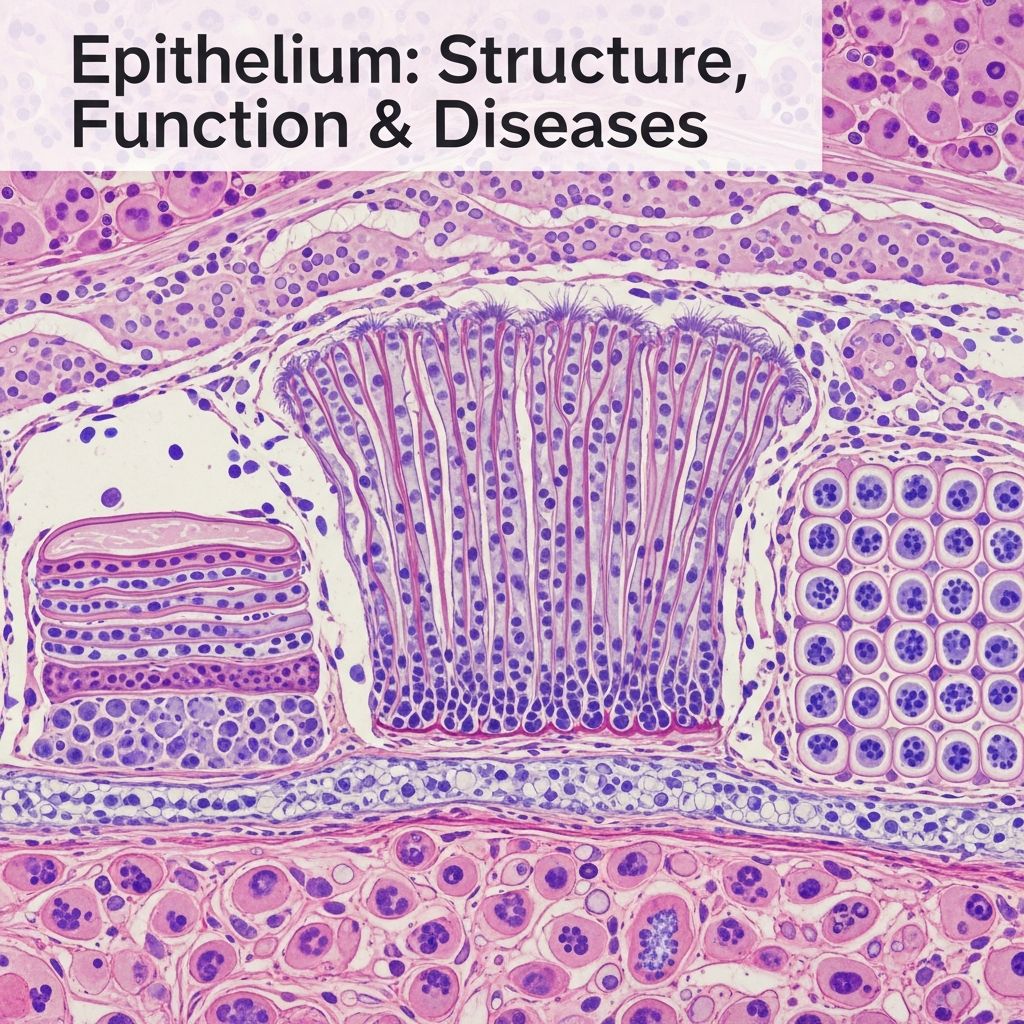
Epithelial cells arrange themselves in highly organized, tightly packed layers with minimal space between cells. This tight arrangement creates a continuous barrier that prevents unwanted substances from penetrating. The cells connect to each other through specialized junction proteins that seal the gaps between them, creating what scientists call a “tight junction.” This structural design is fundamental to the epithelium’s ability to act as an effective barrier against pathogens and environmental toxins.
The cells are attached to a basement membrane, a thin layer of specialized material that provides structural support and anchors the epithelial layer to the tissues beneath. This foundation is essential for maintaining the integrity and function of epithelial tissues.
High Cell Turnover Rate
One of the most remarkable characteristics of epithelial tissue is its rapid cell replacement rate. Epithelial cells are constantly being shed and replaced with new cells, sometimes as frequently as every few days depending on the location in your body. This high turnover rate serves several purposes: it removes damaged or aging cells, eliminates cells that have captured bacteria or foreign particles, and maintains the tissue’s protective function over time. This continuous renewal process is particularly important in areas exposed to significant wear and tear, such as your skin and the lining of your digestive tract.
Types of Epithelial Tissue
Epithelial tissues are classified based on their structure and arrangement. Understanding these different types helps explain how epithelial tissue adapts to perform various functions throughout your body.
Simple Epithelium
Simple epithelial tissue consists of a single layer of cells. This thin configuration allows for efficient transport of substances, making simple epithelium ideal for areas where absorption and diffusion are important functions. Simple epithelium is typically found in areas like the lining of blood vessels, the walls of the lungs (alveoli), and the lining of the digestive tract where nutrient absorption occurs. The thinness of simple epithelium makes these areas particularly efficient at their transport functions, though they sacrifice some protective capability compared to thicker layers.
Related Stories



Stratified Epithelium
Stratified epithelial tissue consists of multiple layers of cells stacked on top of each other, creating a much thicker protective barrier. This multi-layered structure provides superior protection against physical damage, chemical irritation, and pathogenic invasion. Stratified epithelium is found in areas that experience significant friction or exposure to harsh environments, such as your skin (epidermis), your mouth, and your esophagus. The thickness of stratified epithelium comes at the cost of reduced transport capability, but this trade-off is worthwhile in areas where protection is the primary concern.
Specialized Epithelial Features
Some epithelial tissues possess specialized structures that enhance their function. Many epithelial cells contain microscopic hair-like projections called cilia that help remove foreign substances and move materials across the surface. These cilia are particularly important in your respiratory tract, where they work to clear mucus and trapped particles. Other epithelial cells secrete thick, gel-like mucus that provides additional protection and lubrication, particularly in your digestive and respiratory systems.
Functions of Epithelial Tissue
Epithelial tissue performs multiple critical functions that are essential for maintaining your health and well-being.
Protection and Barrier Function
The primary function of epithelial tissue is to protect your body from the external environment and from harmful invading organisms. Your skin’s epidermis shields your internal organs from physical trauma, ultraviolet radiation, and chemical exposure. The epithelium lining your respiratory tract prevents pathogens and irritants from reaching your lungs. The epithelium of your cornea protects your eyes from environmental hazards. This protective barrier is your body’s first line of defense against countless potential threats.
Selective Permeability
Beyond simple protection, epithelial tissue acts as an intelligent gatekeeper, selectively controlling which substances can pass through and which must be blocked. This selective permeability is crucial for maintaining the proper balance of nutrients, water, and waste products. In your small intestine, epithelial cells absorb nutrients from food while preventing harmful bacteria from entering your bloodstream. In your kidneys, epithelial tissue filters waste products from your blood while retaining essential substances your body needs to function.
Secretion and Absorption
Many epithelial tissues have specialized cells that secrete important substances. Epithelial cells in your stomach secrete gastric juices containing acids and enzymes that digest food. Epithelial cells throughout your digestive tract secrete protective mucus. Simultaneously, epithelial tissues in your small intestine absorb nutrients from digested food, and epithelial tissues in your kidney tubules reabsorb essential substances like glucose and water. These secretory and absorptive functions are vital for nutrition and maintaining your body’s internal chemistry.
Sensation
Epithelial tissue also plays a role in sensation, as many epithelial cells contain receptors that detect sensory information. Your skin’s epithelium contains receptors for touch, temperature, and pain that alert your nervous system to environmental changes and potential threats. This sensory function helps you respond appropriately to your surroundings and avoid injury.
Where Is Epithelial Tissue Found?
Epithelial tissue is distributed throughout your body, lining virtually every surface and cavity. Understanding where epithelial tissue is located helps explain the diverse functions it performs:
- Skin: The epidermis is composed of stratified epithelial tissue that provides robust protection against environmental exposure
- Digestive tract: Epithelium lines your mouth, esophagus, stomach, and intestines, where it protects tissues and facilitates nutrient absorption
- Respiratory system: Epithelium lines your nasal passages, trachea, and lungs, where it removes foreign particles and facilitates gas exchange
- Urinary system: Epithelium lines your bladder and urethra, and specialized epithelial tissue in your kidneys filters waste
- Reproductive system: Epithelium lines the internal structures of both male and female reproductive organs
- Circulatory system: A thin layer of simple epithelium called endothelium lines your blood vessels, facilitating the exchange of materials with surrounding tissues
- Eyes: The corneal epithelium protects your eyes from environmental damage
- Glands: Epithelial tissue forms the ducts and secreting portions of sweat glands, oil glands, and other glandular structures
Common Diseases Affecting Epithelial Tissue
Because epithelial tissue is so widespread throughout your body, diseases affecting epithelial cells can have significant health consequences. Several important conditions involve epithelial tissue dysfunction or damage.
Carcinoma
Carcinoma is a type of cancer that originates in epithelial tissue. Because epithelial cells are among the most frequently dividing cells in your body due to their high turnover rate, they are particularly susceptible to becoming cancerous. Common types of carcinoma include lung cancer (arising from respiratory epithelium), colorectal cancer (arising from digestive tract epithelium), and skin cancer (arising from skin epithelium). Understanding the cellular changes that lead to carcinoma is an important focus of cancer research.
Inflammatory Bowel Disease
Conditions like Crohn’s disease and ulcerative colitis involve dysregulation and inflammation of the intestinal epithelium, which normally serves as a protective barrier against harmful bacteria. When this barrier is compromised, inflammatory processes develop that damage the tissue and cause symptoms like abdominal pain and diarrhea. Research into how to restore and maintain healthy intestinal epithelium is ongoing.
Corneal Conditions
Various conditions can affect the corneal epithelium, including keratoconus, where the cornea progressively thins and changes shape, and corneal dystrophies, where epithelial cells deteriorate. Researchers are investigating advanced treatments like corneal cross-linking, which uses riboflavin and ultraviolet light to strengthen corneal tissue and slow disease progression.
Wound Healing and Epithelial Regeneration
When epithelial tissue is damaged through injury or surgery, the body’s ability to regenerate epithelial cells is crucial for recovery. Understanding the mechanisms of epithelial cell regeneration and differentiation has led to improved treatments for wounds and injuries. Researchers are exploring growth factors and other interventions to promote faster and more complete epithelial healing.
The Mucosa: A Specialized Epithelial Structure
The mucosa is a specialized epithelial structure found throughout your body that combines epithelial tissue with underlying connective tissue to create a protective and secretory surface. The mucosal epithelium secretes thick, gel-like mucus that provides lubrication and protection. Mucosal surfaces line your digestive tract, respiratory tract, urinary system, and reproductive organs. The epithelial cells in mucosal tissues are often arranged in different patterns depending on their location—sometimes in single layers, sometimes in multiple layers, and sometimes in columnar or brick-like arrangements. Many mucosal epithelial cells contain cilia that help clear foreign substances and move materials across the surface.
Epithelial Tissue and Host Defense
Beyond their structural role as barriers, epithelial tissues actively participate in defending your body against infection and disease. The intestinal epithelium plays a particularly critical role in host defense against pathogens acquired through food and drink. Specialized epithelial cells produce antimicrobial substances and immune factors that help neutralize threats before they can cause infection. When epithelial barrier function is compromised, the risk of gastrointestinal infection increases significantly, particularly in infants whose immune systems are still developing. Recent research has demonstrated that certain compounds, such as hyaluronan, can enhance the protective function of epithelial tissues and reduce susceptibility to infection by harmful bacteria like Salmonella.
Research and Future Directions
Scientists continue to make important discoveries about epithelial tissue structure and function. Researchers are developing novel methods to study epithelial cells under various conditions, investigating how diet and microbiome composition affect epithelial health, and exploring how genetic and environmental factors influence epithelial function. At leading research institutions, scientists have discovered new cell types produced by intestinal epithelial stem cells that provide structural support to damaged tissue and facilitate healing. These advances in understanding epithelial biology are leading to better treatments for diseases ranging from inflammatory bowel disease to cancer to wound healing complications.
Frequently Asked Questions
Q: What is the main function of epithelial tissue?
A: The main function of epithelial tissue is to form protective barriers that separate your body from the external environment while controlling what substances can pass through. Epithelial tissue also facilitates absorption of nutrients, secretion of protective substances, and sensation of environmental stimuli.
Q: Why do epithelial cells have such a high turnover rate?
A: Epithelial cells have a high turnover rate because they are constantly exposed to wear, damage, and foreign particles. By rapidly replacing old cells with new ones, epithelial tissue maintains its protective function and removes cells that have captured bacteria or been damaged. This continuous renewal is particularly important in areas like your skin and digestive tract that experience significant friction and exposure.
Q: What is the difference between simple and stratified epithelium?
A: Simple epithelium consists of a single layer of cells and is found in areas where transport and absorption are important, such as your lungs and small intestine. Stratified epithelium consists of multiple layers of cells and is found in areas where protection is paramount, such as your skin and mouth. The multiple layers of stratified epithelium provide superior protection but are less efficient at transport.
Q: How does epithelial tissue protect against infection?
A: Epithelial tissue protects against infection through several mechanisms: its tight barrier prevents pathogens from entering your body, specialized cells secrete antimicrobial substances, ciliated epithelial cells physically remove foreign particles, and epithelial cells produce immune factors that neutralize threats. Additionally, the high cell turnover rate removes cells that have been infected or damaged.
Q: What types of cancer arise from epithelial tissue?
A: Carcinomas are cancers that arise from epithelial tissue and represent the majority of human cancers. Common types include lung cancer (respiratory epithelium), colorectal cancer (digestive tract epithelium), skin cancer (skin epithelium), and breast cancer (mammary gland epithelium). Because epithelial cells divide rapidly, they are particularly susceptible to malignant transformation.
References
- Body Tissue Types, Structure & Function — Cleveland Clinic. 2024. https://my.clevelandclinic.org/health/body/body-tissue
- Mucosa: Function, Anatomy & Definition — Cleveland Clinic. 2024. https://my.clevelandclinic.org/health/body/23930-mucosa
- Carcinoma: Types, Treatment & What it Is — Cleveland Clinic. 2024. https://my.clevelandclinic.org/health/diseases/23180-carcinoma
- Multifunctional Role of 35 Kilodalton Hyaluronan in Promoting Host Defense — National Institutes of Health. Published 2018. https://pmc.ncbi.nlm.nih.gov/articles/PMC5958379/
- Biological and Biomechanical Responses to Traditional Epithelium-off Riboflavin-UVA CXL — National Institutes of Health. Published 2018. https://pmc.ncbi.nlm.nih.gov/articles/PMC6028182/
- Thaddeus Stappenbeck Lab: Intestinal Epithelium and Inflammatory Bowel Disease Research — Cleveland Clinic. 2024. https://www.lerner.ccf.org/inflammation-immunity/stappenbeck/
Similar Articles








Read full bio of medha deb