Epstein-Barr Virus: Causes, Symptoms, Rashes, Diagnosis
Comprehensive overview of Epstein-Barr virus, its cutaneous manifestations, clinical features, and associated complications in dermatology.
Author: Reviewed by Dr. Amanda Oakley, Dermatologist, Hamilton, New Zealand. Updated: January 2026.
What is Epstein-Barr virus?
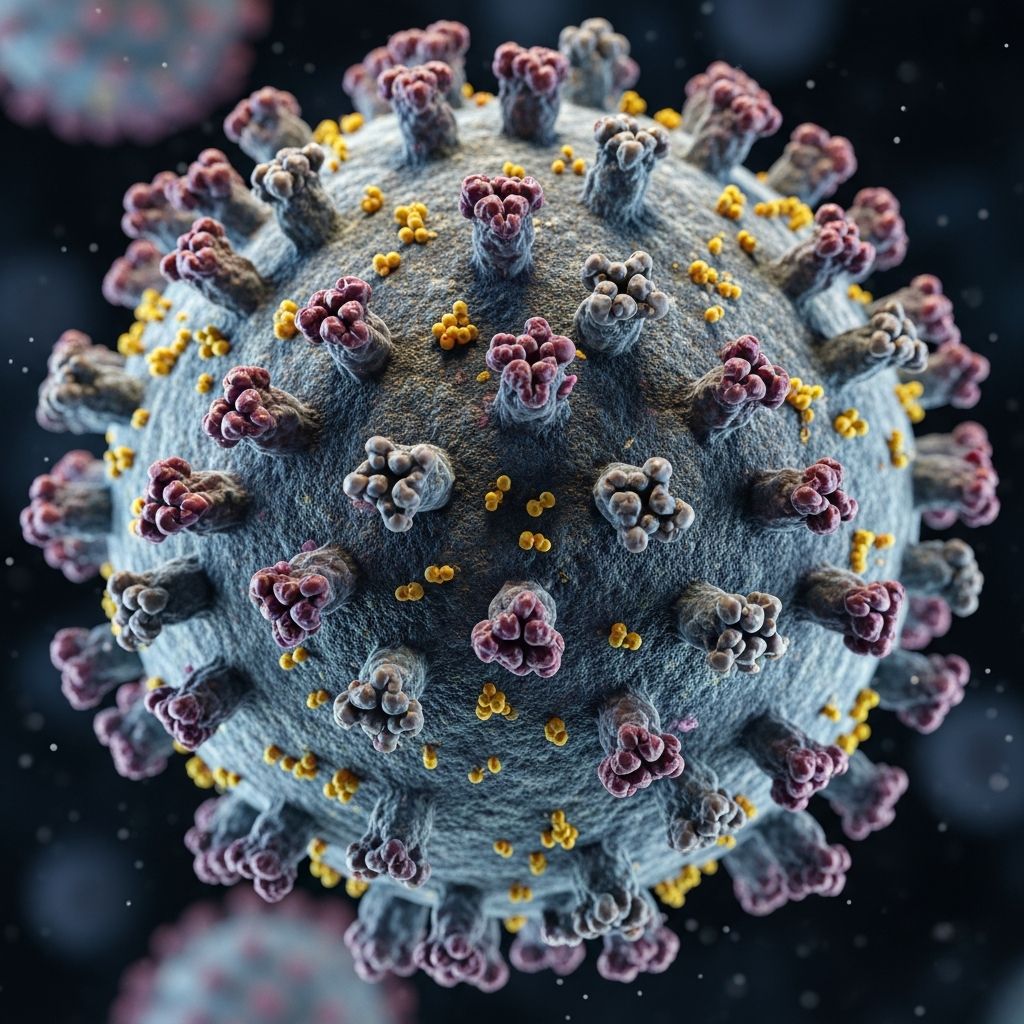
Epstein-Barr virus (**EBV**), also known as human herpesvirus 4 (**HHV-4**), is a ubiquitous member of the herpesvirus family that infects over 90% of the global population by adulthood. Transmission occurs primarily through saliva, earning it the nickname ‘kissing disease,’ though it can also spread via contaminated objects or respiratory droplets. After primary infection, EBV establishes lifelong latency in B lymphocytes, with potential for reactivation under immunosuppression.
Primary infection is often asymptomatic in children (up to 10% of cases), but in adolescents and young adults, it manifests as
infectious mononucleosis
(IM), or glandular fever, characterized by fever, pharyngitis, lymphadenopathy, and fatigue. EBV has been implicated in diverse pathologies beyond IM, including dermatological manifestations, lymphoproliferative disorders, and malignancies.Who gets Epstein-Barr virus?
EBV infection transcends demographics, with seroprevalence reaching 50-80% by age 20 and nearly 100% by middle age worldwide. Children under 5 years typically experience mild or subclinical infection, while adolescents (15-24 years) face higher IM risk due to lack of prior exposure. Risk factors include close contact in households, schools, or military settings, and immunosuppression (e.g., HIV, transplant recipients). No gender or ethnic predisposition exists for primary infection, though chronic active EBV (CAEBV) shows higher incidence in Asia.
What causes Epstein-Barr virus?
EBV is a double-stranded DNA virus from the Gammaherpesvirinae subfamily, targeting B cells and epithelial cells. It enters via CD21 receptor on B lymphocytes, replicates lytically in oropharyngeal epithelium, then persists latently. Key proteins like viral capsid antigen (VCA), early antigen (EA), and Epstein-Barr nuclear antigen (EBNA) drive immune response and oncogenesis. Genetically, EBV strains vary minimally, but type 1 predominates in Western populations.
What are the clinical features of Epstein-Barr virus infection?
Clinical spectrum ranges from asymptomatic to severe. Infectious mononucleosis presents with:
- Fever (80-90%)
- Exudative pharyngitis (50-70%)
- Cervical lymphadenopathy (90%)
- Fatigue and malaise (lasting weeks to months)
- Hepatosplenomegaly (10-15%)
Cutaneous involvement occurs in 3-15% of IM cases.
Cutaneous features of infectious mononucleosis
Skin manifestations include:
- Maculopapular rash: Faint erythematous eruption on trunk/extremities (5-15%), resolves in 24-48 hours.
- Ampicillin/amoxicillin rash: Pruritic widespread maculopapular rash in 70-100% of IM patients receiving beta-lactams, due to non-IgE mechanism.
- Palatal petechiae: Small haemorrhages on soft palate (25-50%).
- Eyelid/periorbital oedema: Transient swelling.
- Oral hairy leukoplakia: White corrugated plaques on lateral tongue in immunocompromised.
Mucocutaneous features
| Feature | Description |
|---|---|
| Genital ulcers | Painful punched-out ulcers on genitalia. |
| Forsheimer spots | Petechiae on soft palate/mucosa. |
| Jaundice | In 5-10% with hepatitis. |
Rashes associated with acute EBV infection
- Gianotti-Crosti syndrome (GCS): Symmetrical papules on cheeks, buttocks, extremities in children.
- Unilateral laterothoracic exanthem: Pink papules from axilla/groin spreading unilaterally.
- Erythema multiforme/Stevens-Johnson syndrome: Target lesions, rare.
- Erythema nodosum: Painful leg nodules.
Related Stories



Chronic active EBV infection (CAEBV)
CAEBV features persistent/recurrent IM-like symptoms >6 months, unexplained by other causes. Cutaneous signs: erythroderma, ulcers, papulovesicles healing with scars; mimics dermatomyositis with facial oedema, Gottron-like papules. Systemic: fever, hepatosplenomegaly, cytopenias, progressing to lymphoma.
Diagnosis of Epstein-Barr virus
Diagnosis combines serology, haematology, and PCR:
- Monospot/Heterophile Ab: Positive in 85% IM cases by week 2.
- Serology: IgM VCA (acute), IgG VCA/EBNA (past/convalescent).
- PCR: EBV DNA >10^4 copies/µg for CAEBV.
- Haematology: Lymphocytosis (>50%) with atypical Downey cells.
- Biopsy: EBER in situ hybridization for tissue involvement.
Differentiate from CMV, HIV, toxoplasmosis.
What is the treatment for Epstein-Barr virus?
Supportive for IM: rest, hydration, analgesics. Avoid contact sports during splenomegaly. Corticosteroids for complications (airway obstruction, haemolysis). Acyclovir ineffective for IM but used in OHL. CAEBV: immunosuppressants (transient benefit), chemotherapy, HSCT; poor prognosis.
What is the outcome for Epstein-Barr virus?
IM resolves in 2-4 weeks, fatigue lingers months. Complications: splenic rupture (0.1%), Guillain-Barré, lymphoma. CAEBV fatal in 50% within 5 years. Post-viral chronic fatigue debated. Lifelong carrier state with shedding.
Prevention of Epstein-Barr virus
No vaccine available. Hygiene: avoid sharing utensils, handwashing. Screen donors.
Related topics
- Infectious mononucleosis
- Gianotti-Crosti syndrome
- Hydroa vacciniforme
- Oral hairy leucoplakia
Frequently asked questions
What does Epstein-Barr virus look like?
EBV rashes vary: faint pink maculopapules on trunk, widespread pruritic eruption post-ampicillin, palatal petechiae, or chronic ulcers/nodules.
How common is Epstein-Barr virus?
95% lifetime infection rate; IM in 30-50% adolescents.
Is Epstein-Barr virus dangerous?
Usually self-limiting; rare severe complications in immunocompromised.
Can Epstein-Barr virus be cured?
No cure; lifelong latency. Symptomatic management only.
What does Epstein-Barr virus rash look like?
Diffuse erythematous maculopapular, often trunk/extremities; ampicillin rash coalesces.
How long does Epstein-Barr virus rash last?
24-48 hours for spontaneous; 5-10 days for drug-induced.
References
- Dermatological manifestations of Epstein-Barr virus systemic infection — International Journal of Dermatology. 2020-04-29. https://onlinelibrary.wiley.com/doi/10.1111/ijd.14887
- Chronic active Epstein-Barr virus infection mimicking dermatomyositis — Indian Journal of Dermatology, Venereology and Leprology. 2020. https://ijdvl.com/chronic-active-epstein-barr-virus-infection-mimicking-dermatomyositis/
- Epstein-Barr virus — DermNet NZ. 2023. https://dermnetnz.org/topics/epstein-barr-virus
- Dermatological manifestations of Epstein-Barr virus systemic infection — PubMed. 2020-05-01. https://pubmed.ncbi.nlm.nih.gov/32346863/
- About Epstein-Barr Virus (EBV) — Centers for Disease Control and Prevention (CDC). 2024. https://www.cdc.gov/epstein-barr/about/index.html
- Epstein-Barr Virus — Infectious Disease Advisor. 2023. https://www.infectiousdiseaseadvisor.com/ddi/epstein-barr-virus/
Similar Articles








Read full bio of medha deb