Epstein Pearls in Newborns: Causes, Symptoms & Care
Understanding Epstein pearls: benign white bumps on baby's mouth that disappear naturally.
Understanding Epstein Pearls: A Common Newborn Condition
Epstein pearls are small, harmless white or yellowish cysts that commonly appear on newborn babies’ gums and the roof of their mouth. These benign lesions are a normal part of infant development and occur in a significant percentage of newborns. Understanding what Epstein pearls are, how they form, and what to expect can help parents feel reassured about their baby’s oral health and avoid unnecessary medical interventions or worry.
What Are Epstein Pearls?
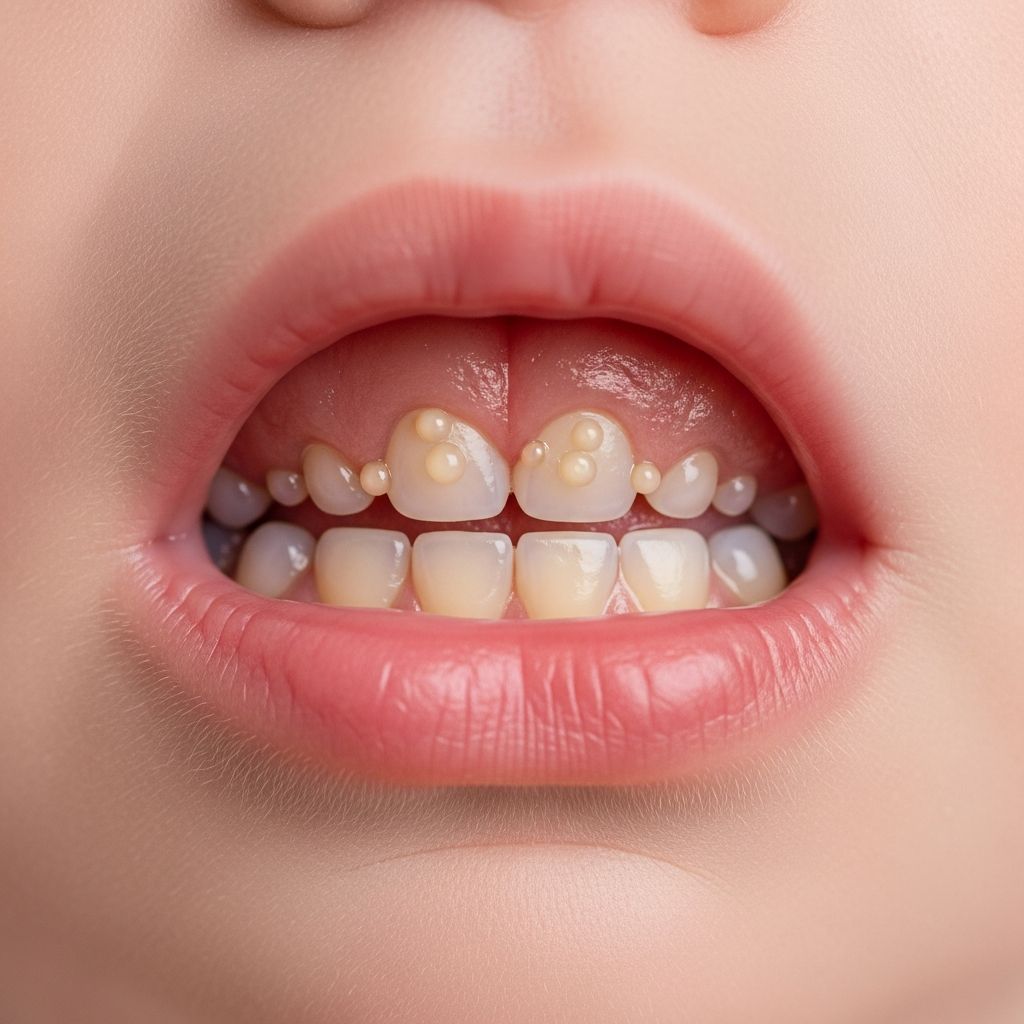
Epstein pearls are tiny, pearly white to yellowish nodules that develop on the soft tissues inside a baby’s mouth. They typically appear along the midline of the palate (roof of the mouth) or along the gumline. These cysts are filled with keratin, a protein naturally found in skin, hair, and nails. Despite their appearance, which might resemble emerging teeth or signs of infection, Epstein pearls are completely benign and pose no threat to your baby’s health or development.
The condition is named after the distinctive appearance of these small bumps, which resemble tiny pearls. They are different from other oral conditions such as natal teeth, thrush, or Bohn’s nodules, though parents sometimes confuse them with these other phenomena. A healthcare provider can easily distinguish Epstein pearls from other conditions through a simple visual examination.
How Common Are Epstein Pearls?
Epstein pearls are remarkably common in newborns, affecting up to 80% of babies. This high prevalence means that most parents will encounter this condition at some point during their baby’s early months. The condition occurs equally in male and female infants and is not linked to any genetic factors, maternal health conditions, or lifestyle choices. Because they are so prevalent, pediatricians and healthcare providers are well-familiar with Epstein pearls and recognize them as a normal developmental occurrence.
What Causes Epstein Pearls?
Epstein pearls form during fetal development when keratin and epithelial cells become trapped within the oral tissue. As a baby’s mouth develops in the womb, small pockets can form where these cells accumulate. The exact mechanism involves the plugging of pilosebaceous or eccrine ducts, which leads to the formation of these small, cyst-like bumps. This is a natural part of oral development and does not indicate any underlying problem with the baby’s health or development.
The trapped epithelial cells contain keratin, the same protein that makes up the outer layer of skin. When these cells become enclosed within the soft tissues of the mouth during development, they cannot be naturally shed like skin cells on the surface of the body. Instead, they remain in place as small, visible bumps. Over time, as the baby feeds, sucks, and uses their tongue and gums, these cysts naturally break down and disappear.
Recognizing Epstein Pearls: Symptoms and Appearance
Identifying Epstein pearls is relatively straightforward, as they have a distinctive appearance. The key characteristics include:
- Small, pearly white to yellowish bumps
- Located on the roof of the mouth (palate) or gumline
- Typically multiple lesions rather than a single bump
- Firm to the touch and non-moveable
- No associated redness, swelling, or inflammation
Most importantly, Epstein pearls do not cause any pain or discomfort to the baby. They do not interfere with feeding, sucking, or swallowing. Babies remain completely unaware of their presence and continue to eat and drink normally. Parents often discover Epstein pearls during routine feedings or while cleaning their baby’s mouth, rather than the baby showing any signs of distress or difficulty.
Related Stories



Unlike oral thrush, which causes white patches that can be wiped away and leaves a red, irritated appearance underneath, Epstein pearls cannot be removed by rubbing. They also do not cause the feeding difficulties, fussiness, or diaper rash that sometimes accompanies thrush. This distinction is important for accurate identification and avoiding unnecessary treatment for a fungal infection that is not present.
Diagnosis and Differentiation from Other Conditions
Healthcare providers can diagnose Epstein pearls through clinical examination alone. No special tests or procedures are needed. A pediatrician or pediatric dentist can visually confirm that the bumps are Epstein pearls and not other oral conditions such as:
- Natal teeth: Actual teeth that have erupted early, which are moveable and have a different appearance
- Oral thrush: A fungal infection that causes white patches, redness, and feeding difficulties
- Bohn’s nodules: Similar benign cysts that appear on the gums away from the midline
- Milia: Similar skin cysts that can appear on the baby’s face and other parts of the body
If parents have any concerns about their baby’s oral health, a simple examination by a pediatric healthcare provider can provide definitive reassurance and peace of mind.
Treatment and Management of Epstein Pearls
The most important aspect of managing Epstein pearls is understanding that no medical treatment is necessary. These cysts are self-resolving and will disappear on their own without any intervention. No medications, ointments, special rinses, or other treatments are recommended or needed. Pediatricians and dentists consistently advise against any attempts to remove or manipulate these bumps.
Parents should never attempt to pop, rub, scrape, or otherwise remove Epstein pearls, as this could potentially cause:
- Irritation to delicate oral tissues
- Bleeding or minor trauma
- Risk of infection
- Unnecessary discomfort to the baby
The bumps will naturally exfoliate and disappear as the baby feeds, sucks, and uses their tongue and gums. This natural process typically takes one to two weeks, though in some cases it may take up to three months. Attempting to speed up this process or interfere with natural healing is unnecessary and potentially harmful.
Timeline for Resolution
Most Epstein pearls resolve within one to two weeks of birth. However, the timeline can vary from baby to baby. Some infants may see complete resolution within the first few weeks, while others may take up to three months for all the bumps to fully disappear. This variation is completely normal and does not indicate any problem. Parents should not be concerned if resolution takes longer than expected, as there are no complications associated with prolonged presence of Epstein pearls.
As the baby continues normal feeding and oral development, the keratin-filled cysts gradually break down. The bumps typically become less noticeable over time before disappearing entirely. Parents may notice that some bumps disappear while others remain, creating an uneven appearance during the resolution period. This is normal and requires no action.
Oral Care and Home Management
While Epstein pearls require no special treatment, maintaining good oral hygiene practices is still important for overall baby health. Parents can:
- Gently wipe the baby’s gums and mouth with a soft, clean cloth after feeding
- Avoid unnecessary touching or manipulation of the bumps
- Continue regular feeding without any modifications
- Monitor the baby’s mouth as the cysts naturally resolve
- Seek professional evaluation if concerned about other oral symptoms
Good oral hygiene habits established early set the foundation for lifelong dental health, separate from the presence of Epstein pearls.
When to Contact a Healthcare Provider
Although Epstein pearls require no medical intervention, parents should contact their pediatrician if:
- The bumps appear to be causing the baby pain or discomfort
- There are signs of infection, such as increased redness, swelling, or drainage
- The baby has difficulty feeding or swallowing
- The baby develops fever or other signs of illness alongside the oral bumps
- There is any doubt about the diagnosis
- The bumps persist beyond three months
However, it is important to note that these scenarios are extremely rare with true Epstein pearls. Most cases resolve without any complications or need for professional intervention beyond initial reassurance.
Parental Reassurance and Avoiding Unnecessary Anxiety
One of the most important aspects of managing Epstein pearls is providing reassurance to parents. Healthcare providers should clearly explain that this condition is benign, self-resolving, and requires no treatment. Misinformed providers or anxious parents sometimes pursue unnecessary investigations, antibiotics, or other interventions that are not indicated and may cause unnecessary stress or harm.
Parents should feel confident in their baby’s health when Epstein pearls are identified. Understanding that 80% of newborns experience this condition can help normalize the experience and reduce worry. Proper counseling about the self-resolving nature of Epstein pearls helps families avoid unnecessary medical visits or procedures.
Comparison with Similar Conditions
| Condition | Appearance | Location | Symptoms | Treatment |
|---|---|---|---|---|
| Epstein Pearls | White to yellowish pearly bumps | Palate midline or gumline | None; completely painless | None; self-resolving |
| Bohn’s Nodules | Similar white bumps | Gums away from midline | None; painless | None; self-resolving |
| Oral Thrush | White patches | Throughout mouth | Feeding difficulty, fussiness | Antifungal medication required |
| Natal Teeth | Actual teeth | Gumline | May cause discomfort | May require extraction |
Frequently Asked Questions About Epstein Pearls
Q: Are Epstein pearls dangerous or a sign of illness?
A: No. Epstein pearls are completely harmless and benign. They are not linked to any genetic conditions, infections, or medical concerns. They are a normal part of fetal development and do not indicate any underlying health problem.
Q: Can Epstein pearls affect my baby’s feeding?
A: No. Epstein pearls do not interfere with feeding, sucking, or swallowing. Babies can feed normally and experience no discomfort or difficulty related to these bumps.
Q: How long do Epstein pearls last?
A: Most Epstein pearls disappear within one to two weeks of birth, though some may take up to three months. The timeline varies from baby to baby but does not indicate any problem.
Q: Should I try to remove Epstein pearls?
A: No. You should never attempt to pop, rub, or scrape Epstein pearls. They will disappear naturally, and attempting to remove them could cause irritation, bleeding, or infection.
Q: Do Epstein pearls require medication or special care?
A: No. Epstein pearls require no medical treatment, medication, or special care. Routine oral hygiene is appropriate, but no specific intervention is needed for the pearls themselves.
Q: Could Epstein pearls be confused with thrush?
A: Possibly, but they are different conditions. Thrush causes white patches that can be wiped away, redness, and feeding difficulties. Epstein pearls are firm bumps with no associated symptoms or redness.
Q: When should I contact my pediatrician about Epstein pearls?
A: Contact your pediatrician if you are unsure about the diagnosis, if the bumps appear to cause pain, if there are signs of infection, or if they persist beyond three months. However, most cases require only confirmation and reassurance.
References
- Prepucial Epstein pearls on the tip of penis — Kumar, G. & Roberts, D., BMJ Case Reports. 2020-12-13. https://doi.org/10.1136/bcr-2020-240522
- Epstein Pearls – Symptoms and Treatment — Desert Kids Dental. Accessed 2025. https://www.desertkidsdental.com/post/children-cepstein-pearls-symptoms-treatment
- Epstein Pearls: What the White Spots on Your Baby’s Gums Are — Glow. Accessed 2025. https://glowing.com/resources/1st-year-baby/epstein-pearls
- Epstein pearls — MedlinePlus Medical Encyclopedia, U.S. National Library of Medicine. https://medlineplus.gov/ency/article/001603.htm
Similar Articles








Read full bio of medha deb