Epulis: Causes, Types, and Treatment Options
Complete guide to epulis: understanding gingival growths, their causes, and modern treatment approaches.
What is Epulis?
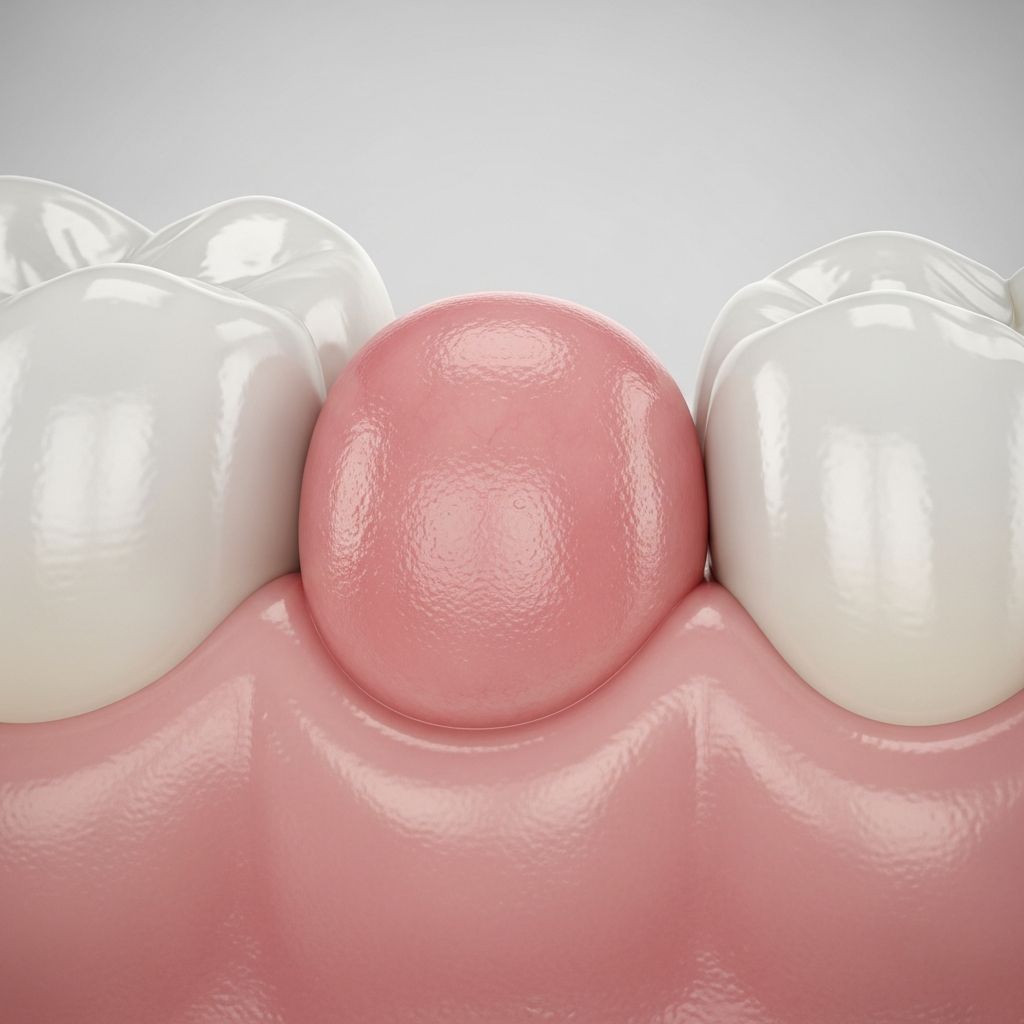
Epulis is a non-specific clinical term used to describe any tumor-like enlargement or mass located on the gingiva (gums) or alveolar mucosa. The word literally means “growth on the gingiva” and is derived from Greek terminology. Importantly, epulis represents a group of reactive hyperplastic lesions rather than true neoplasms, meaning these growths result from tissue proliferation in response to irritation rather than representing genuine tumors. These lesions are benign in nature and do not possess malignant potential, though they can cause significant clinical challenges in terms of diagnosis, management, and recurrence prevention.
Epulides (the plural form) are distinguished from other gingival conditions because they represent localized swellings that develop as reactive responses to specific irritative factors or systemic conditions. Understanding epulis is essential for dental professionals and patients alike, as these lesions are relatively common in the oral cavity and can affect function, aesthetics, and overall oral health if left untreated.
Epidemiology and Demographics
Epulis demonstrates a clear gender predilection, occurring significantly more frequently in females than in males. Research indicates that epulis primarily affects young and middle-aged adults, though it can occur across all age groups depending on the specific type. The female predominance is particularly pronounced in certain variants, such as congenital epulis, which shows an 8:1 female-to-male ratio. This gender difference may be attributed to hormonal factors, particularly the influence of estrogen and progesterone on gingival tissues, as well as differences in oral hygiene practices and dental care seeking behavior between genders.
The prevalence of epulis varies depending on the specific type and the population studied. Fibrous epulis and peripheral giant cell epulis are among the most common variants encountered in clinical practice, while congenital epulis remains rare, occurring as a condition present at birth.
Etiology and Causes
The development of epulis is multifactorial, involving complex interactions between local irritative factors and systemic influences. The pathogenesis of epulis involves tissue proliferation through several proposed mechanisms:
- Chronic Irritation: Cells of the mucoperiosteum respond to irritative stimuli by forming specific granulation tissue, which then progresses to hyperplastic lesions.
- Local Traumatic Factors: Poor oral hygiene, subgingival plaque and calculus, residual tooth roots, unfitting prosthetics, rough margins of carious cavities or restorations, and direct trauma all serve as potential triggers.
- Hormonal Influences: Hormonal changes related to puberty, pregnancy, oral contraceptive use, and conditions such as hyperparathyroidism can contribute to epulis development and progression.
- Periodontal Conditions: Existing periodontal disease and inflammatory states create an environment conducive to epulis formation.
The molecular pathogenesis involves complex signaling pathways, particularly including aryl hydrocarbon receptor (AhR) and RAS-PI3K-AKT-NF-κB activation. These pathways mediate the inflammatory and proliferative responses of gingival tissues to chronic irritation. In pregnancy-associated epulis, elevated levels of estrogen and progesterone significantly contribute to lesion development and progression, which is why some epulides may regress following delivery.
Types of Epulis
Epulis manifests in several distinct clinical and histopathological variants, each with unique characteristics and treatment considerations:
Fibrous Epulis
Fibrous epulis, also known as peripheral fibroma or fibromatous epulis, is the most common type. This lesion develops as a reaction to chronic irritation from sources such as dental calculus, rough margins of restorations, or poor oral hygiene. It typically appears as a firm, non-mobile mass and can range from light red to darker red in color depending on the degree of vascularity. Fibrous epulis most commonly affects middle-aged and older patients and may occur in both dentate and edentulous individuals.
Related Stories



Epulis Fissuratum
Epulis fissuratum, also referred to as inflammatory fibrous hyperplasia, denture epulis, or denture-induced fibrous hyperplasia, is a specific type caused by chronic irritation from ill-fitting dentures. This condition develops when the denture flange (edge) chronically irritates the alveolar vestibular mucosa (the area where the gums meet the inner cheek). Because bone resorption continuously occurs beneath dentures, the bony support becomes progressively unstable, resulting in ill-fitting dentures that move excessively during function. Over time, repeated trauma from the denture margin causes an initial ulcer to develop, which may subsequently evolve into an elongated fibro-epithelial enlargement. Multiple leaflets may develop, creating a characteristic appearance. The clinical presentation can vary from erythematous (red) mucosa prone to bleeding to more pale, firm lesions composed of dense connective tissue. Management typically begins with denture adjustment or trimming of the problematic flange areas. If the lesion does not regress within two to three weeks following denture modification, biopsy and histological examination are recommended to rule out other pathology.
Peripheral Giant Cell Epulis
This variant is a reactive vascular lesion that typically appears as a red-purple nodular swelling and bleeds easily upon minimal trauma. It is more common in younger people and females, and is believed to result from recurrent trauma or response to non-specific infection. Small lesions may measure only a few millimeters, while larger lesions can reach two to three centimeters or more. These lesions may penetrate interdentally and present as bilobular manifestations, appearing both buccally (on the cheek side) and lingually (on the tongue side). Giant cell epulis follows a distinct aetiology involving inflammatory responses and multinucleated giant cell formation.
Ossifying Fibroid Epulis
Ossifying fibroid epulis represents a long-standing fibrous epulis in which bone formation has begun to occur. It is believed that ongoing irritants and trauma cause this progression. Potential causative factors include dental appliances, poor restorations, and subgingival plaque and calculus. This variant is seen most commonly in young adults and teenagers, though it can occur at any age, with a predominance in females. The presence of bone formation within the lesion may be detected on radiographic examination.
Vascular Epulis
Vascular epulis, also known as a pyogenic granuloma (though this term is technically a misnomer as the lesion is neither infectious nor granulomatous), lobular capillary hemangioma, or telangiectatic granuloma, is a reactive vascular lesion rather than a true granuloma. It is primarily caused by trauma or repeated irritation and is strongly associated with hormonal changes during puberty, pregnancy, or oral contraceptive use. Histopathologically, this variant is primarily composed of granulation tissue containing inflammatory cells such as neutrophils, lymphocytes, and plasma cells, accompanied by endothelial cell proliferation, capillary hyperplasia, and minimal fibrous tissue, covered by a thin layer of ulcerated squamous epithelium.
Congenital Epulis
Congenital epulis, also called granular cell tumor, congenital gingival granular cell tumor, or Neumann’s tumor, is a rare condition that presents at birth and is not acquired in nature, unlike most other epulides which are reactive lesions. This condition occurs much more commonly in females than males, with a female-to-male ratio of approximately 8:1. Infants are typically born with a mass protruding from their mouth. The lesion is almost exclusively found on the anterior alveolar ridges of the newborn, though in rare cases it may occur elsewhere in the oral cavity or even on the tongue. The lesion usually presents as a soft, pedunculated (attached by a stalk), and sometimes lobulated nodule. While congenital epulis typically occurs as a single lesion, approximately 10% of cases present with multiple lesions. Lesion size typically ranges from 0.5 to 2 centimeters, though in rare cases may reach up to 9 centimeters. In some cases, the growth may be so large that it obstructs the infant’s breathing and feeding, necessitating prompt intervention. Histologically, congenital epuli are benign and thought to have a mesenchymal origin. Microscopic examination reveals cells with abundant granular eosinophilic cytoplasm and small eccentric nuclei, with a delicate fibrovascular network between the cells. The lesion has an unusual resemblance to granular cell myoblastoma and occurs more frequently in the maxilla than the mandible. Although some cases may regress spontaneously without intervention, surgical removal is usually recommended, particularly when the lesion interferes with breathing or feeding.
Clinical Features and Presentation
Epulis typically presents as a usually painless pedunculated or sessile (broad-based) mass on the gingiva or alveolar mucosa. The color may vary from light red to dark red, and in appearance from non-ulcerated flat lesions to ulcerated nodular masses. Despite being generally painless, epulis can cause significant clinical effects including:
- Bleeding from the lesion surface
- Discomfort or pain during chewing
- Speech dysfunction
- Aesthetic concerns, particularly when occurring in the anterior dental region
- Psychological issues related to appearance
- Food retention and impaction around the lesion
When epulis occurs in the anterior region of the mouth, it may affect dental aesthetics significantly and cause psychological distress to affected individuals. The size, location, surface characteristics, and vascularity of the lesion all influence its clinical presentation and the symptoms experienced by the patient.
Diagnosis and Differential Diagnosis
Definitive diagnosis of epulis requires histopathological examination, though clinical features may provide initial clues. The diagnosis should be differentiated from medication-induced gingival enlargements caused by anticonvulsants (such as phenytoin), immunosuppressants (such as cyclosporine), and calcium channel blockers (such as nifedipine). Additionally, pregnancy-associated epulis must be distinguished from other causes of gingival swelling. Generalized gingival swelling, as opposed to the localized nature of epulis, may indicate chronic gingivitis or systemic conditions. Other localized swellings on the gingiva may result from neoplasms or systemic disease manifestations, necessitating careful differential diagnosis.
Treatment and Management
Surgical excision remains the primary and most definitive treatment for epulis. Excision should be performed with adequate margins to minimize recurrence risk. However, emerging evidence supports additional therapeutic approaches:
- Laser Therapy: Laser-based treatment modalities show promise in managing epulis with potential benefits for hemostasis and reduced healing time.
- Sclerotherapy: Injection-based approaches may be considered in selected cases, particularly for vascular variants.
- Combination Approaches: Integration of multiple treatment modalities may enhance outcomes in complex cases.
Preventing recurrence is essential and necessitates complete elimination of local irritants. For epulis fissuratum specifically, denture adjustment or replacement is crucial. Following any treatment, regular periodontal maintenance, improved oral hygiene practices, and patient education regarding oral care are vital. Awareness of patient-specific risk factors, including hormonal status and predisposing conditions, helps guide long-term management strategies.
Prognosis and Recurrence
Although epulis is benign and does not have malignant potential, recurrence is common if causative factors are not adequately addressed. The recurrence rate varies depending on the lesion type, completeness of excision, and whether underlying irritative factors have been eliminated. Complete removal of irritants—including improved oral hygiene, elimination of subgingival calculus, correction of ill-fitting prosthetics, and smoothing of rough restoration margins—significantly reduces recurrence risk. In congenital epulis, spontaneous regression without recurrence has been documented in some cases, though surgical removal remains the standard recommendation when the lesion interferes with vital functions.
Frequently Asked Questions
Q: Is epulis cancerous?
A: No, epulis is benign and non-cancerous. It represents reactive hyperplastic tissue growth rather than a true neoplasm and does not have malignant potential.
Q: Can epulis disappear on its own?
A: In some cases, particularly congenital epulis or pregnancy-associated epulis, spontaneous regression may occur. However, surgical removal is usually recommended, especially if the lesion interferes with function or causes symptoms.
Q: What causes epulis in denture wearers?
A: Epulis fissuratum in denture wearers results from chronic irritation caused by ill-fitting dentures. As the underlying bone resorbs, denture fit becomes progressively unstable, leading to repeated trauma to the gingival tissues.
Q: Can epulis recur after treatment?
A: Yes, recurrence is common if the underlying causative factors are not adequately addressed. Eliminating irritants, maintaining good oral hygiene, and ensuring proper fit of prosthetics significantly reduce recurrence risk.
Q: Does pregnancy cause epulis?
A: Pregnancy does not directly cause epulis, but hormonal changes during pregnancy (elevated estrogen and progesterone) can contribute to the development and progression of epulis in susceptible individuals.
Q: Who is at highest risk for epulis?
A: Females are at higher risk than males, particularly during reproductive years. Individuals with poor oral hygiene, dental appliances, periodontal disease, and those experiencing hormonal changes are also at increased risk.
Key Takeaways
Epulis represents an important category of oral lesions that dental professionals must recognize and manage appropriately. These benign, reactive hyperplastic lesions develop in response to various irritative factors and systemic influences, with females showing significantly higher prevalence than males. While epulis is not dangerous in terms of malignant transformation, it can cause functional and aesthetic problems requiring professional intervention. The primary treatment modality remains surgical excision, though emerging therapies and preventive strategies continue to evolve. Success in managing epulis depends not only on appropriate excision technique but equally on identifying and eliminating underlying causative factors and implementing comprehensive long-term preventive care including improved oral hygiene, regular dental maintenance, and appropriate management of predisposing conditions.
References
- Epulis – DermNet — DermNet NZ. Accessed January 2026. https://dermnetnz.org/topics/epulis
- Epulis: A Narrative Review of Epidemiology, Clinical Features, Pathogenic Mechanisms, and Treatment Approaches — National Center for Biotechnology Information (NCBI/PMC). 2024. https://pmc.ncbi.nlm.nih.gov/articles/PMC12427101/
- Epulis – Knowledge and References — Taylor & Francis Online. Accessed January 2026. https://taylorandfrancis.com/knowledge/Medicine_and_healthcare/Oral_medicine/Epulis/
- Epulis – Wikipedia — Wikipedia. Accessed January 2026. https://en.wikipedia.org/wiki/Epulis
- Epulis: All You Need to Know — Dental Channel. Author: Dr Aparna Pandya. Accessed January 2026. https://dentistchannel.online/epulis-all-you-need-to-know/article?for=dentist
Similar Articles








Read full bio of medha deb