Equity Vs Equality In Health: 4 Key Differences Explained
Understand the critical differences between health equity and equality to address disparities and promote fair outcomes for all.
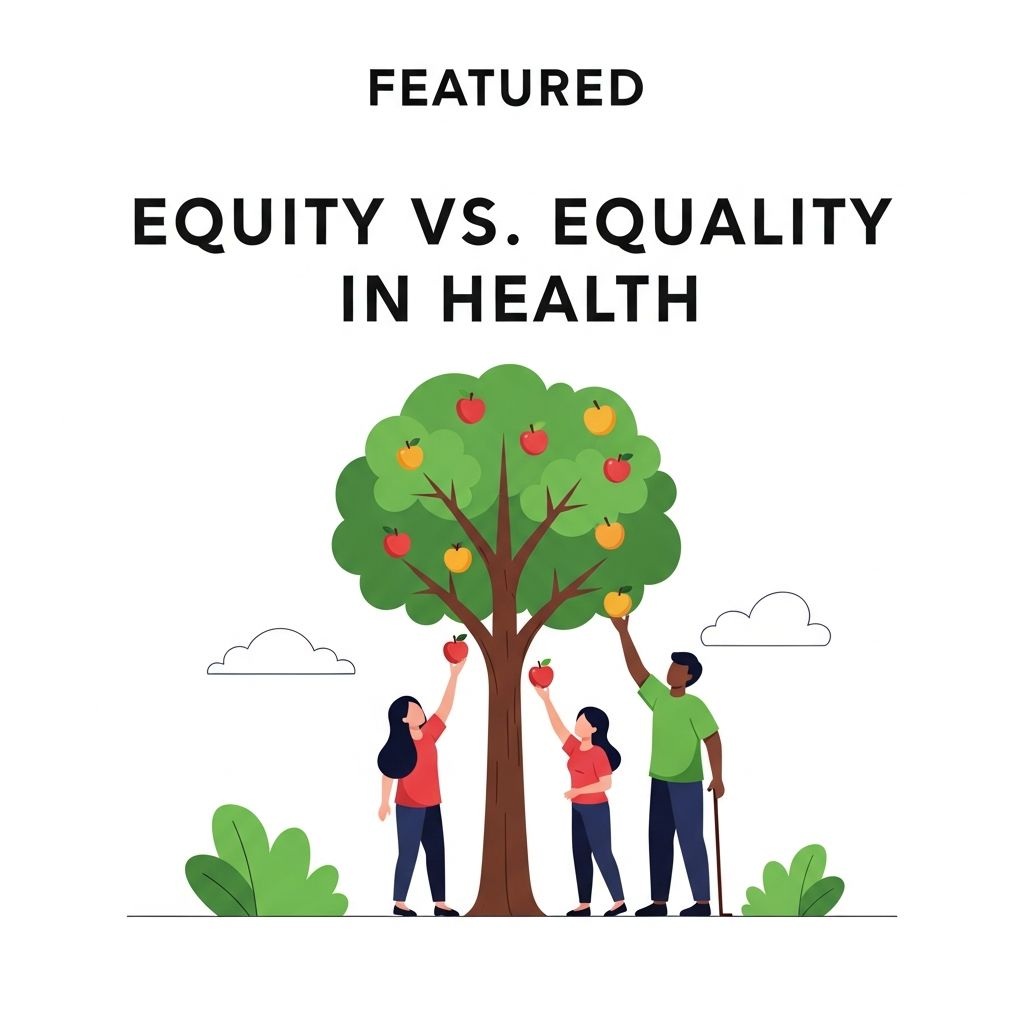
In healthcare, the concepts of
equity
andequality
are often confused, yet they represent fundamentally different approaches to achieving better health outcomes. Health equality provides the same resources and opportunities to everyone, assuming a level starting point. Health equity, however, recognizes diverse needs and circumstances, allocating resources to address specific barriers faced by marginalized groups, such as racial minorities, low-income individuals, and LGBTQ+ populations.What Is Health Equity?
Health equity is the absence of avoidable or remediable differences in health outcomes among groups of people, as defined by the World Health Organization (WHO). It goes beyond equal access by tackling systemic barriers like racism, poverty, and unequal resource distribution that create disparities.
The Centers for Disease Control and Prevention (CDC) describes health equity as ensuring everyone has the opportunity to be as healthy as possible, regardless of background. This requires proactive strategies that account for social determinants of health (SDoH), including economic stability, education, healthcare access, neighborhood environment, and social context.
In practice, equity means prioritizing resources for those who need them most. For instance, funding might be directed toward communities with higher rates of chronic diseases due to environmental factors, rather than distributed uniformly.
What Is Health Equality?
Health equality focuses on treating everyone the same by providing identical services, opportunities, and resources. A doctor might schedule the same screening tests for all patients at fixed intervals, irrespective of individual risk factors.
While equality promotes uniformity, it can perpetuate disparities if starting points differ. For example, offering the same health information pamphlet to all ignores varying literacy levels or language barriers.
Equity vs. Equality: Key Differences
The core distinction lies in outcomes: equality aims for sameness in input, while equity targets fairness in results. Equality assumes identical needs; equity acknowledges diverse circumstances shaped by historical and social factors.
| Aspect | Health Equality | Health Equity |
|---|---|---|
| Approach | Same resources for all | Resources based on need |
| Focus | Uniform treatment | Addressing barriers |
| Outcome Goal | Equal inputs | Fair outcomes |
| Example | One-size-fits-all screening | Tailored care for high-risk groups |
This table illustrates how equity adjusts for disparities, such as providing more support to underserved areas.
Health Disparities and Inequities
Health disparities are differences in health outcomes that are avoidable and unfair, often linked to SDoH. Unlike natural biological differences—such as pregnancy rates varying by age—these stem from systemic issues like discrimination and poor access.
- Black men face higher prostate cancer mortality due to delayed care and social inequalities, not biology.
- Transgender individuals report harassment (28%) and care denials (19%) in medical settings.
- Racial/ethnic minorities, people with disabilities, women, and LGBTQ+ groups experience the worst impacts.
These inequities infringe on fairness and human rights, per WHO standards.
Examples of Equity vs. Equality in Healthcare
Consider cervical cancer screening: Equality offers Pap smears to all with a cervix at the same intervals. Equity prioritizes higher-risk groups, like those in underserved areas, with targeted outreach.
In pain management, women often receive less treatment due to bias. Equality might standardize protocols; equity includes implicit bias training and campaigns addressing underdiagnosis.
Related Stories



During budget cuts, equality reduces hours equally across community centers, potentially harming high-need areas. Equity maintains services in vulnerable neighborhoods.
Why Equity Matters More Than Equality
Equality alone fails when barriers persist. For transgender care, equality removes overt discrimination but doesn’t equip providers with knowledge. Equity ensures education on trans-specific needs.
A modern U.S. framework defines health equity as pursuing fairness where all have access to resources for full health potential, irrespective of race, socioeconomic status, or geography.
Equity fosters justice by offsetting unequal resource allocation historically faced by underrepresented groups.
How to Achieve Health Equity
Public health strategies blend both approaches:
- Policy Level: Allocate funding by need, not equally.
- Education: Implicit bias training and culturally competent care.
- Community Engagement: Tailored campaigns in accessible locations.
- Data-Driven: Use metrics from CDC’s Healthy People initiative to measure disparities.
- Diversity: Promote inclusive teams and research methods.
Group exercises, like those from JustHealthAction, help differentiate concepts in practice.
Challenges in Implementing Equity
Resistance arises from misconceptions equating equity with favoritism. Historical analysis shows equity addresses root causes equality ignores.
Political and economic determinants complicate efforts, requiring intersectional approaches.
Frequently Asked Questions (FAQs)
What is the main difference between health equity and health equality?
Health equality gives everyone the same resources; health equity provides what each needs to achieve fair outcomes.
Can health equality resolve disparities?
Yes, for issues like unequal treatment, but equity is needed for deeper systemic barriers.
Who is most affected by health disparities?
Racial minorities, LGBTQ+ individuals, low-income groups, and those with disabilities.
How does WHO define health equity?
The absence of avoidable differences among population groups.
What role do social determinants play?
They drive inequities; equity targets these for fairness.
Conclusion
Achieving health for all demands shifting from equality to equity, ensuring justice through tailored interventions. By addressing disparities head-on, we build a fairer system.
References
- Health equity vs. health equality: Definitions, examples, and more — Medical News Today. 2023-10-12. https://www.medicalnewstoday.com/articles/health-equity-and-health-equality
- The Difference Between Health Equity and Equality — Johns Hopkins ACG. 2023-01-15. https://www.hopkinsacg.org/health-equity-equality-and-disparities/
- Equity vs. Equality: What’s the Difference? — George Washington University Online Public Health. 2024-05-20. https://onlinepublichealth.gwu.edu/resources/equity-vs-equality/
- Equity vs Equality: What’s the Difference? — San Diego Foundation. 2022-11-08. https://www.sdfoundation.org/news-events/sdf-news/equity-vs-equality-whats-the-difference/
- Defining health equity: A modern US perspective — PMC (NCBI). 2024-09-01. https://pmc.ncbi.nlm.nih.gov/articles/PMC11617406/
Similar Articles








Read full bio of medha deb