Erectile Dysfunction Treatments: Ultimate Options Guide
Comprehensive guide to proven ED treatments from lifestyle changes to advanced therapies for better sexual health.
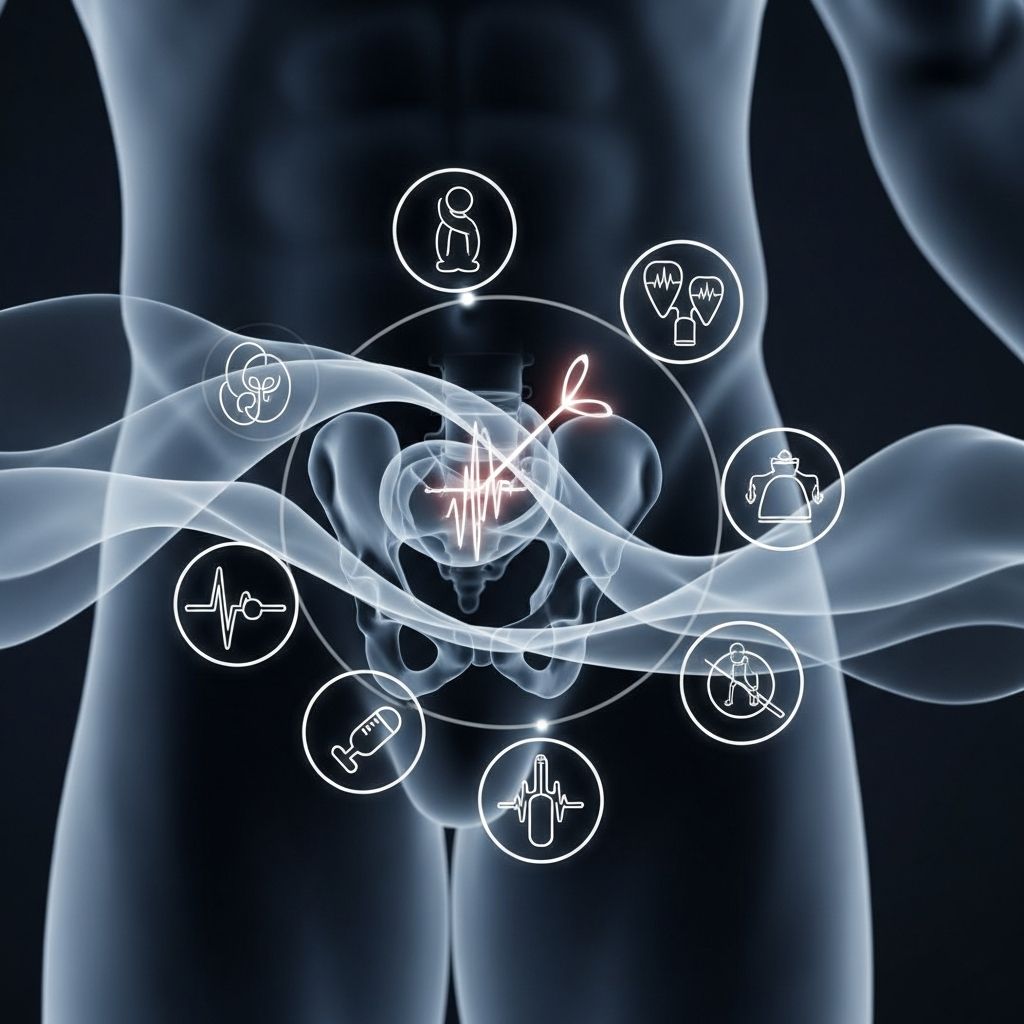
Erectile dysfunction (ED) affects millions of men worldwide, but effective treatments range from simple lifestyle adjustments to advanced medical interventions. First-line options like oral phosphodiesterase-5 (PDE-5) inhibitors provide relief for most patients, with success rates up to 70-80%.
What Is Erectile Dysfunction?
Erectile dysfunction is the persistent inability to achieve or maintain an erection sufficient for satisfactory sexual performance. It can stem from physical causes like vascular disease, diabetes, or hormonal imbalances, or psychological factors such as stress and anxiety. Prevalence increases with age, affecting over 50% of men over 40.
Common risk factors include cardiovascular disease, smoking, obesity, and medications. A thorough evaluation by a healthcare provider is essential to identify underlying causes and tailor treatment.
Lifestyle Changes for ED
Improving overall health through lifestyle modifications can enhance erectile function and reduce cardiovascular risks. These changes are recommended as initial steps for all patients.
- Increased physical activity: Regular aerobic exercise, such as 30-45 minutes of brisk walking daily, improves blood flow and endothelial function.
- Healthy diet: Adopt a Mediterranean diet rich in fruits, vegetables, whole grains, and healthy fats to manage weight and cholesterol.
- Quit smoking and limit alcohol: Smoking cessation improves vascular health within months; excessive alcohol contributes to ED.
- Weight management: Losing 5-10% of body weight can significantly boost erectile function in obese men.
- Control chronic conditions: Optimize diabetes, hypertension, and lipid levels through medication and monitoring.
Studies show these interventions can improve International Index of Erectile Function (IIEF) scores by 4-6 points in mild to moderate ED cases.
Oral Medications (PDE5 Inhibitors)
PDE-5 inhibitors are the cornerstone of ED therapy, working by enhancing nitric oxide effects to promote penile blood flow during sexual stimulation. They are effective in 60-70% of men and considered first-line treatment.
Four FDA-approved options exist with similar efficacy:
| Medication | Dosage | Onset | Duration | Notes |
|---|---|---|---|---|
| Sildenafil (Viagra) | 25-100 mg as needed | 30-60 min | 4-5 hours | Avoid high-fat meals. |
| Tadalafil (Cialis) | 5-20 mg as needed or 2.5-5 mg daily | 30 min | Up to 36 hours | Longest duration; daily option available. |
| Vardenafil (Levitra) | 5-20 mg as needed | 60 min | 4-5 hours | Effective post-meal. |
| Avanafil (Stendra) | 50-200 mg as needed | 15 min | 5-10 hours | Fastest onset. |
Side effects include headache, flushing, and nasal congestion; contraindicated with nitrates. Start with lowest effective dose.
Testosterone Replacement Therapy
Testosterone therapy is indicated for men with confirmed hypogonadism (low testosterone levels) and ED unresponsive to PDE5 inhibitors, or those with low libido. It does not benefit men with normal levels.
- Benefits: Improves libido and may enhance PDE5 inhibitor response.
- Forms: Gels, injections, patches.
- Risks: Prostate issues, erythrocytosis; requires monitoring PSA and hematocrit.
Use after failing initial therapies; not first-line for ED alone.
Injections and Intraurethral Therapy
For patients failing oral medications, second-line options include intracavernosal injections or intraurethral alprostadil. These directly induce vasodilation with success rates of 85-94%.
Related Stories



- Intracavernosal injections: Alprostadil (Caverject), papaverine/phentolamine (bi-mix), or TriMix (adds PGE1). Administered at base of penis; onset 5-20 min, duration 30-60 min.
- Intraurethral alprostadil (MUSE): Pellet inserted into urethra; less effective (30-60%) but needle-free.
Patient training is crucial; risks include priapism (prolonged erection) and fibrosis with overuse. Combined with PDE5 inhibitors boosts efficacy.
Vacuum Erection Devices
Vacuum devices create an erection by drawing blood into the penis via negative pressure, maintained by a constriction ring. Effective in 60-80% of users, suitable for all ED severities.
- Pros: Non-invasive, no systemic effects, reusable.
- Cons: Can cause pain, bruising; unnatural feel; ring limits intercourse to 30 min.
- Use: Ideal for PDE5 failures or surgery candidates.
Avoid in bleeding disorders or sickle cell disease.
Low-Intensity Shockwave Therapy (LiSWT)
LiSWT uses acoustic waves to promote angiogenesis and improve penile blood flow. Promising for mild-moderate vasculogenic ED, with 40-50% response at 6-12 months.
Not FDA-approved for ED; short-term improvements noted, but long-term data limited. Best for healthy patients without severe comorbidities.
Penile Implants (Prostheses)
Surgical implants are third-line for refractory ED, with 90-95% satisfaction rates. Two types:
| Type | Description | Pros | Cons |
|---|---|---|---|
| Inflatable (3-piece) | Cylinders in corpora, pump in scrotum, reservoir in abdomen. | Natural flaccid/erect states; most popular (80% of implants). | Mechanical failure risk (5-10% at 10 years). |
| Semirigid (malleable) | Bendable rods; always semi-rigid. | Simpler surgery; reliable. | Less concealable. |
Procedure outpatient; infection risk 1-3%. High success post-failure of other therapies.
Psychological and Relationship Therapy
Psychogenic ED or cases with anxiety/depression benefit from counseling. Cognitive behavioral therapy, sex therapy, or couples counseling addresses performance anxiety.
Treat coexisting mood disorders; bupropion may be preferable over ED-worsening antidepressants.
Emerging Treatments
Topical gels (e.g., alprostadil-based) and stem cell therapies are under investigation. Platelet-rich plasma (PRP) shows mixed results. Always pursue FDA-approved options first.
When to See a Doctor
Consult a urologist if ED persists >3 months, accompanies pain, or signals heart disease. Early intervention improves prognosis.
Frequently Asked Questions (FAQs)
What is the first treatment for ED?
Oral PDE5 inhibitors like sildenafil or tadalafil are first-line, effective for most men with proper use.
Can lifestyle changes cure ED?
They improve mild ED and enhance other treatments but rarely cure severe cases alone.
Are ED injections painful?
Mild discomfort common; technique improves with practice. Success outweighs pain for many.
How effective are penile implants?
Over 90% patient/partner satisfaction; last 10-20 years with proper care.
Does low testosterone cause ED?
It contributes in hypogonadal men; test levels before therapy.
Prognosis and Outlook
Most men respond to available therapies; psychogenic ED has excellent prognosis with counseling, while organic causes benefit from multimodal approaches. Nearly all can achieve satisfying erections.
References
- Erectile Dysfunction – StatPearls — NCBI Bookshelf / NIH. 2023-07-17. https://www.ncbi.nlm.nih.gov/books/NBK562253/
- Erectile Dysfunction — American Academy of Family Physicians (AAFP). 2016-11-15. https://www.aafp.org/pubs/afp/issues/2016/1115/p820.html
- Erectile Dysfunction (ED): Causes, Diagnosis & Treatment — Cleveland Clinic. 2023. https://my.clevelandclinic.org/health/diseases/10035-erectile-dysfunction
- Here Is the Latest on Erectile Dysfunction Treatment — South Carolina Department of Health (SCDHEC). 2024. https://ed.sc.gov/core/mura/news.html?id=here-is-the-latest-on-erectile-dysfunction-treatment-an-independent-clinical-review-for-patient-safe-6948b44aaa14d
Similar Articles








Read full bio of Sneha Tete