Eruptive Vellus Hair Cysts: What They Are, Causes & Treatment
Uncovering the causes, symptoms, diagnosis, and treatments for eruptive vellus hair cysts, rare benign skin papules.
Authoritative facts about eruptive vellus hair cysts: what they are, causes, clinical features, diagnosis, and treatment options.
Eruptive vellus hair cysts are uncommon benign skin lesions characterised by small papules containing
vellus hairs
. They most frequently appear on the central chest but can also involve other areas.What are eruptive vellus hair cysts?
Vellus hairs are fine, lightly pigmented hairs typically found on the face, trunk, and limbs, differing from coarser terminal hairs on the scalp, beard, axillae, and pubic regions.
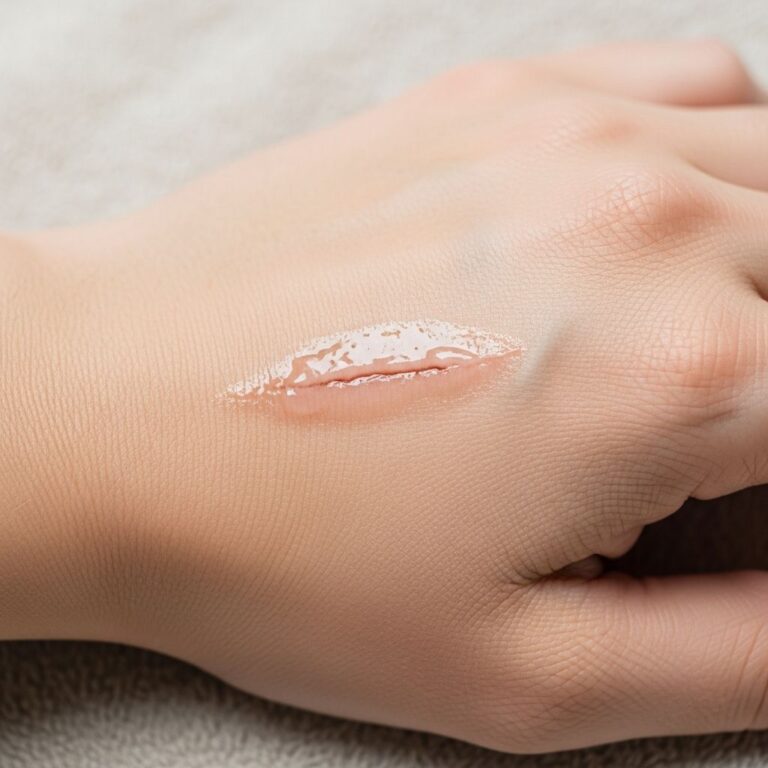
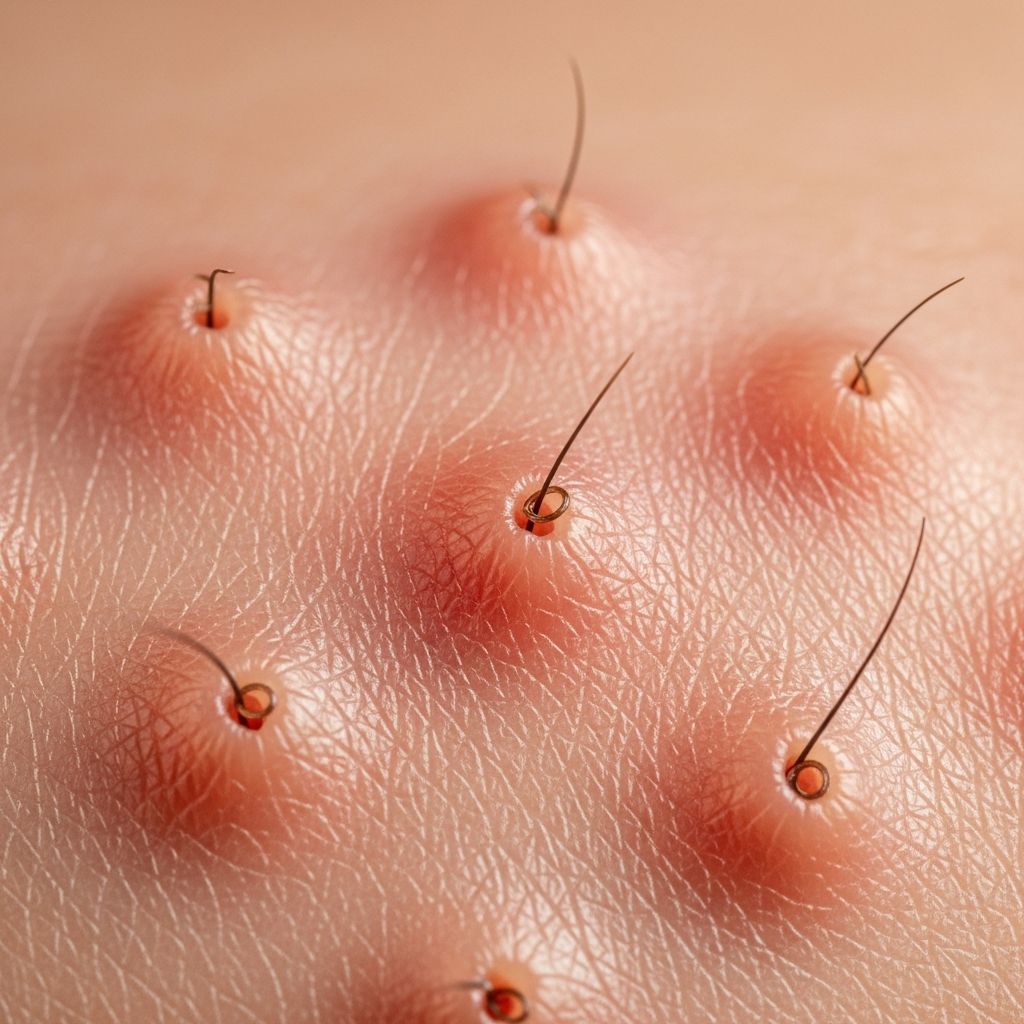
Eruptive vellus hair cysts manifest as clusters of tiny, dome-shaped papules, each 1–4 mm in diameter, due to blockage at the hair follicle’s infundibulum (the epidermal opening), leading to cystic dilatation and atrophy of the hair bulb.
These cysts are rare and usually asymptomatic, though they may cause cosmetic concerns. In about 25% of paediatric cases, they resolve spontaneously without intervention.
Demographics
Eruptive vellus hair cysts predominantly affect children and young adults, with sporadic cases emerging between ages 4–18 years.
- Most common in the paediatric population but can persist or arise in adulthood.
- Sporadic occurrence is typical; rare autosomal dominant inheritance reported.
- No strong gender predilection, though slightly more frequent in males in some series.
- Can appear in families alongside steatocystoma multiplex.
Causes
The precise aetiology remains unclear, but the condition stems from a developmental anomaly in folliculosebaceous units.
Key pathophysiological mechanisms include:
- Follicular occlusion at the infundibulum level, trapping vellus hairs and causing cyst formation.
- Subsequent cystic dilatation of the mid-dermal follicle with keratin accumulation.
- Hair bulb atrophy, leaving laminated keratin and vellus hair shafts within the cyst.
- Possible genetic factors, as familial cases suggest autosomal dominant transmission.
Unlike true sebaceous cysts, these lack sebaceous glands in the cyst wall. Inflammation may arise if vellus hairs contact the cyst lining, provoking granulomatous reactions.
Clinical features
Lesions erupt suddenly (‘eruptive’) as multiple discrete papules, often symmetrically distributed.
| Characteristic | Description |
|---|---|
| Size | 1–4 mm diameter, dome-shaped or umbilicated. |
| Colour | Skin-coloured, yellowish, brown, grey, blue, or erythematous. |
| Surface | Smooth, scaly, crusted, or with central pore/dimple. |
| Sites | Central chest (most common), abdomen, arms (flexor/extensor), legs, back, rarely face/neck. |
| Symptoms | Usually asymptomatic; occasional pruritus, tenderness if inflamed/infected. |
Inflammatory variants show redness, pain, or pus drainage. Numbers range from few to hundreds, worsening cosmetically over time if untreated.
Other conditions
Differential diagnosis is crucial due to overlapping appearances with commoner disorders.
- Steatocystoma multiplex: Similar chest papules but contain oily sebum; histologically distinct (sebaceous glands present).
- Milia: Smaller, pearly white epidermal cysts without hair.
- Acneiform eruptions/comedones: Inflammatory with blackheads; younger patients.
- Epidermoid cysts: Larger, solitary nodules on chest.
- Folliculitis/keratosis pilaris: Itchy, follicular-based with plugs.
- Molluscum contagiosum: Umbilicated but viral, pearly.
Related Stories



Rare associations include pachyonychia congenita or other genodermatoses, warranting systemic review.
Diagnosis
Diagnosis is primarily clinical, based on age, site, and morphology.
- Clinical inspection: Typical papules on chest/trunk in young patients.
- Dermoscopy: Reveals central vellus hairs or keratin.
- Cyst puncture: Express contents; microscopy shows vellus hairs in keratin debris.
- Skin biopsy (if uncertain): Confirms mid-dermal cyst lined by stratified squamous epithelium (2–5 cells thick) with granular layer, laminated keratin, and vellus hairs. No sebaceous elements; possible granulomatous inflammation.
Histopathology differentiates from mimics like steatocystoma (sebaceous lobules) or trichilemmal cysts.
Treatment
Many cases require no treatment, especially if asymptomatic or self-resolving.
Conservative measures:
- Reassurance for benign nature and spontaneous resolution potential (25% in children).
- Avoid picking/squeezing to prevent inflammation/scarring.
- Topical retinoids (e.g., tretinoin) to promote follicular turnover.
Physical interventions (for cosmetic concerns):
- Incision/extraction: Simple puncture to remove contents; risk of recurrence.
- Laser therapy: CO2, Er:YAG, or Nd:YAG ablate cysts effectively with good cosmesis.
- Electrodessication/curettage: Destroys cyst wall; suitable for small numbers.
- Cryotherapy: Freezing for superficial lesions.
Systemic options (recalcitrant/inflammatory):
- Retinoids (isotretinoin) for widespread cases; reduces cyst formation.
- Antibiotics if secondarily infected.
Treatment choice depends on lesion number, site, patient age, and preference. Recurrence is common post-minor procedures; lasers offer better long-term results.
Frequently asked questions (FAQs)
Q: Who gets eruptive vellus hair cysts?
Primarily children and adolescents aged 4–18 years, though adults can be affected. Familial cases are rare.
Q: Are eruptive vellus hair cysts painful?
Usually not; they are asymptomatic. Inflammation may cause tenderness or itch.
Q: Do eruptive vellus hair cysts go away on their own?
Yes, approximately 25% resolve spontaneously, especially in children.
Q: How is the diagnosis confirmed?
Clinical features suffice often; biopsy or cyst contents microscopy shows vellus hairs in keratin.
Q: What is the best treatment?
Observation for mild cases; lasers or retinoids for cosmetic/persistent lesions. Recurrence possible.
Q: Can they be prevented?
No known prevention; avoid trauma to skin.
References
- Eruptive Vellus Hair Cyst: Symptoms, Causes And Treatment — Medicover Hospitals. 2023. https://www.medicoverhospitals.in/diseases/eruptive-vellus-hair-cyst/
- Small, Asymptomatic Nodules on the Trunk — Clinical Advisor. 2023-10-01. https://www.clinicaladvisor.com/clinicalchallenges/small-asymptomatic-nodules-on-the-trunk/2/
- Eruptive vellus hair cyst — Wikipedia (primary sources referenced). 2024. https://en.wikipedia.org/wiki/Eruptive_vellus_hair_cyst
- Eruptive vellus hair cysts — DermNet NZ. 2024-06-01. https://dermnetnz.org/topics/eruptive-vellus-hair-cysts
- Eruptive vellus hair cysts — Primary Care Dermatology Society (PCDS). 2023. https://www.pcds.org.uk/clinical-guidance/eruptive-vellus-hair-cysts
Similar Articles








Read full bio of Sneha Tete