Erythema Infectiosum: Symptoms, Risks, Treatment Guide
Comprehensive guide to fifth disease: causes, symptoms, diagnosis, and management of parvovirus B19 infection.
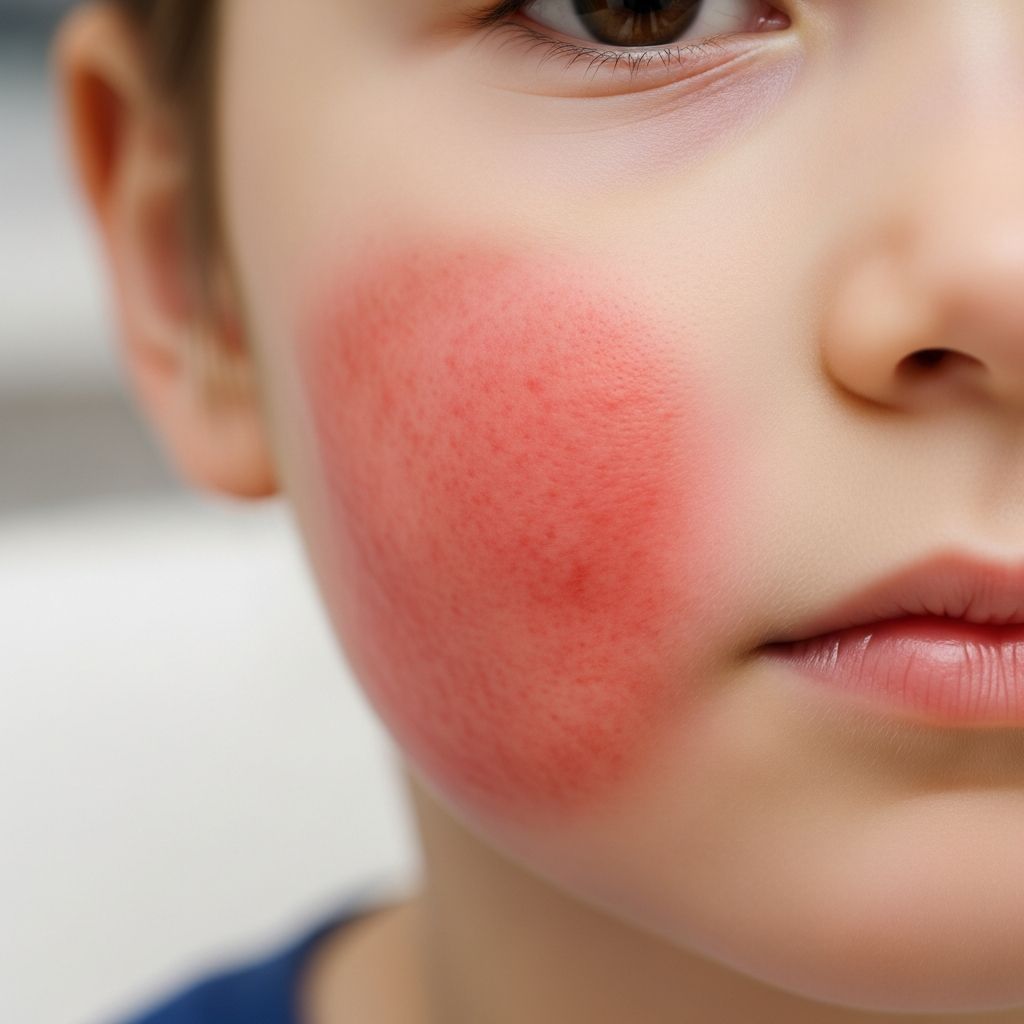
Erythema infectiosum, commonly known as fifth disease or slapped cheek syndrome, is a mild viral illness primarily affecting children, caused by human parvovirus B19. It is characterized by a distinctive bright red rash on the cheeks, followed by a lacy rash on the body, and typically resolves without complications in healthy individuals.
What is Erythema Infectiosum?
Erythema infectiosum earned its name as the ‘fifth disease’ in the early 1900s when childhood rash illnesses were numbered: first measles, second scarlet fever, third rubella, fourth Dukes disease (now disproven), and fifth this parvovirus condition. The disease is highly contagious during its early symptomatic phase but becomes non-contagious once the rash appears.
In children, it presents as a febrile illness with a pathognomonic facial erythema resembling slapped cheeks. Adults more commonly experience joint pains (arthropathy) rather than prominent rashes. The virus targets erythroid progenitor cells in bone marrow, leading to transient aplastic crisis in susceptible individuals.
Who gets Erythema Infectiosum?
Children aged 5-15 years are most commonly affected, with outbreaks occurring in schools and daycare centers during winter and spring. Approximately 50-80% of adults have serologic evidence of prior infection, conferring immunity.
High-risk groups include:
- Pregnant women (risk of fetal hydrops if non-immune)
- Individuals with hemolytic anemias (e.g., sickle cell disease, thalassemia)
- Immunocompromised patients (e.g., HIV, chemotherapy)
- Blood product recipients
Transmission occurs via respiratory droplets, with 20-50% secondary attack rates in households.
Causes
Human parvovirus B19 is a small, single-stranded DNA virus, the only parvovirus pathogenic to humans. It replicates primarily in erythroblasts, causing a temporary halt in red blood cell production.
The virus binds to the P antigen (globoside) on cell surfaces, explaining susceptibility patterns in P antigen-negative individuals who are naturally immune. Peak infectivity precedes rash onset by 7-10 days, with viremia detectable by PCR.
Transmission
Primary spread is through:
- Respiratory droplets from coughing/sneezing
- Close contact in households/schools
- Transplacental to fetus (30% risk if maternal infection in first/early second trimester)
- Rarely via blood products or vertical transmission
Incubation period: 4-21 days (average 16-17 days). Patients are most infectious before rash appearance; once rash develops, they are no longer contagious.
Clinical Features
Stages of Illness
- Prodrome (7-10 days post-exposure): Low-grade fever, malaise, headache, runny nose, sore throat, myalgia.
- Rash phase (2-3 weeks post-exposure):
- Bright red erythema on cheeks (‘slapped cheek’ appearance), sparing nasolabial folds.
- 1-4 days later: Lacy, reticular maculopapular rash on trunk, arms, legs; may itch mildly.
- Resolution: Rash fades in 5-10 days but may recur with heat, cold, sunlight, or stress for weeks.
Related Stories



Symptoms in Adults
Adults, especially women, often lack prominent rash but develop symmetric arthropathy affecting hands, wrists, knees, ankles (resembling rheumatoid arthritis). Joint symptoms last 1-3 weeks but can persist months in 10%.
| Feature | Children | Adults |
|---|---|---|
| Main Symptom | Slapped-cheek rash | Joint pain/swelling |
| Fever | Common, low-grade | Mild or absent |
| Rash Duration | 1-3 weeks | Often absent |
| Contagious Period | Pre-rash | Pre-symptom |
Complications
Most cases are self-limited, but complications occur in at-risk groups:
- Pregnancy: 5-10% fetal loss if infection <20 weeks; non-hydropic hydrops fetalis (fetal anemia, edema, pleural effusion).
- Hemolytic anemias: Transient aplastic crisis (severe anemia due to halted RBC production).
- Immunocompromised: Chronic pure red cell aplasia, persistent viremia.
- Myocarditis, encephalitis, hepatitis: Rare.
Diagnosis
Usually clinical based on characteristic rash in outbreaks. Confirm with:
- Serology: IgM (acute, 10-12 days post-infection, persists 2-3 months); IgG (lifelong immunity).
- PCR: Detects viral DNA in blood (sensitive for complications).
- CBC: Reticulocytopenia during aplastic crisis.
Differential: Rubella, measles, scarlet fever, drug eruptions, lupus.
Treatment
No specific antiviral; supportive care suffices for healthy patients.
- Symptom relief: Acetaminophen/ibuprofen for fever/pain; hydration, rest.
- Rash/pruritus: Oatmeal baths, calamine lotion, oral antihistamines, low-potency topical steroids.
- Arthropathy: NSAIDs (e.g., ibuprofen, naproxen); rarely short-course steroids.
- Complications: IVIG for chronic infection/aplastic crisis; transfusions for severe anemia.
Adults with persistent arthropathy may benefit from conservative measures like physiotherapy alongside NSAIDs.
Prevention
- Contact precautions during outbreaks: Hand hygiene, cover coughs.
- Exclude symptomatic children from school until fever-free (rash phase non-contagious).
- Pregnant women: Avoid exposure; test immunity if outbreak.
- No vaccine available.
Prognosis
Excellent in healthy children/adults: Full recovery in 1-3 weeks. Rash may recur transiently. Immunity lifelong post-infection.
Frequently Asked Questions
Q: Is erythema infectiosum contagious?
A: Yes, most contagious before the rash appears, via respiratory droplets. Non-contagious once rash develops.
Q: Can adults get fifth disease?
A: Yes, often with joint pains rather than rash; more common in women.
Q: What should pregnant women do?
A: Seek medical advice if exposed or symptomatic; ultrasound monitoring if infected.
Q: How long does the rash last?
A: Facial rash 5-10 days; body rash 1-3 weeks, with possible recurrences.
Q: Is there a vaccine or specific treatment?
A: No vaccine or antiviral; symptoms managed supportively.
References
- Clinical management of an adult with erythema infectiosum — NIH/PMC. 2019-05-24. https://pmc.ncbi.nlm.nih.gov/articles/PMC6493208/
- Fifth Disease: Symptoms, Stages, and Images — GoodRx. 2023-10-01. https://www.goodrx.com/health-topic/infections/fifth-disease-rash-causes-symptoms-stages-erythema-infectiosum
- About Parvovirus B19 — CDC. 2024-08-15. https://www.cdc.gov/parvovirus-b19/about/index.html
- Fifth Disease (Erythema Infectiosum) — Nationwide Children’s Hospital. 2023-01-01. https://www.nationwidechildrens.org/conditions/fifth-disease
- Fifth Disease (Erythema Infectiosum) Fact Sheet — Maryland Department of Health. 2024-01-01. https://health.maryland.gov/phpa/pages/fifth_disease.aspx
- Fifth Disease (Erythema Infectiosum): Symptoms, Causes & Treatment — Cleveland Clinic. 2024-06-20. https://my.clevelandclinic.org/health/diseases/15774-fifth-disease
Similar Articles








Read full bio of medha deb