Erythema Migrans: Clinical Features and Treatment
Understanding the bull's-eye rash of Lyme disease: recognition, pathophysiology, and evidence-based treatment strategies.
Erythema Migrans: The Hallmark Rash of Lyme Disease
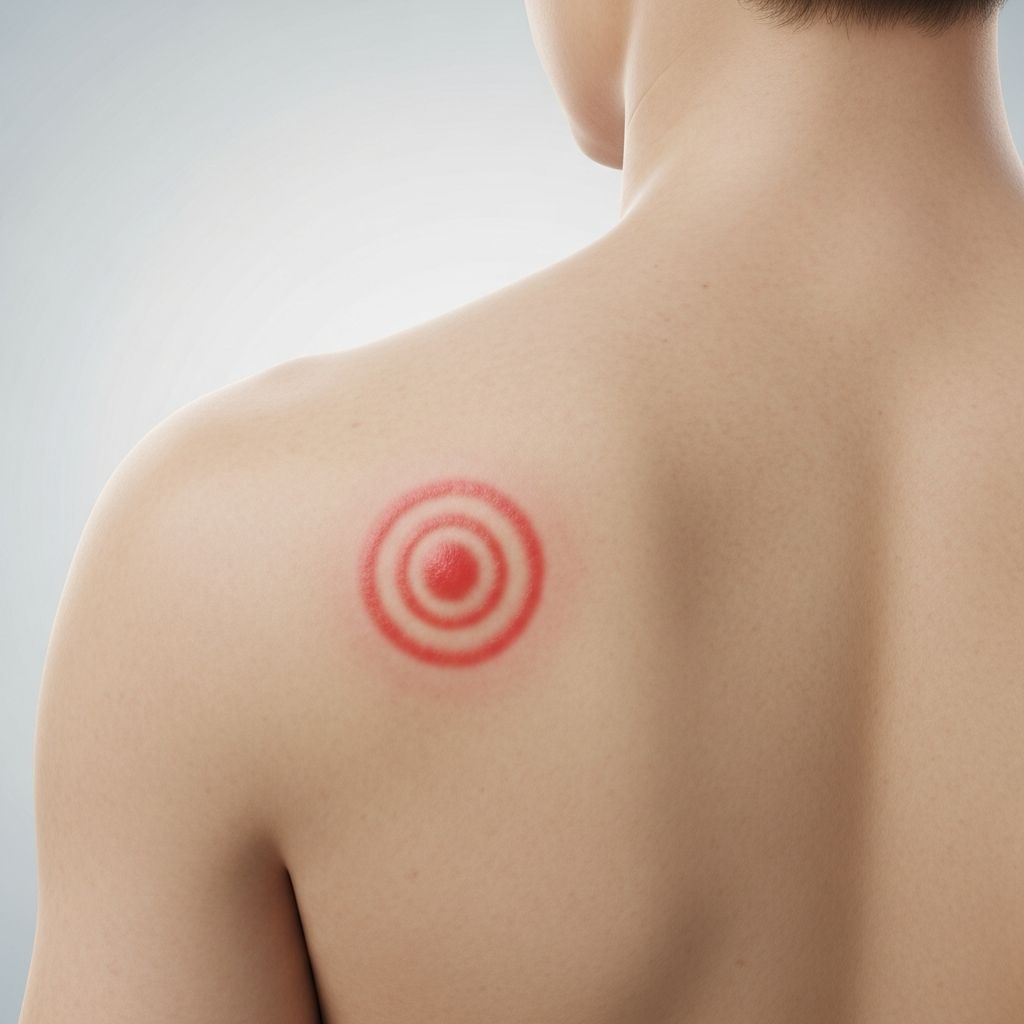
Erythema migrans (EM) is a characteristic circular or oval red rash that represents the most common early clinical manifestation of Lyme disease. This expanding skin lesion typically appears at the site of an infected tick bite and occurs in approximately 70% of patients with Lyme disease. The rash usually develops between 7 to 14 days following a tick bite infected with Borrelia burgdorferi bacteria, though it can appear anywhere from 1 to 28 days post-exposure. Early recognition and treatment of erythema migrans is critical for preventing progression to disseminated Lyme disease and late complications affecting the nervous system, joints, and cardiac tissue.
Clinical Presentation and Appearance
Erythema migrans typically manifests as a red, expanding rash that begins at the site of the tick bite. The lesion is characteristically uniform and may develop into a distinctive concentric ring pattern, often described as a “bull’s-eye” appearance due to central clearing surrounded by an expanding outer ring. However, it is important to note that the classic bull’s-eye pattern occurs in only approximately 20% of cases, and many patients present with simple, homogeneous erythematous patches without the characteristic rings.
The rash expands over several days and can reach considerable size, sometimes spanning many centimeters in diameter. The uniform nature of the lesion distinguishes it from other dermatologic conditions. The skin at the site may be warm to the touch due to vasodilation and increased blood flow associated with the inflammatory response.
Symptomatic Characteristics
One of the distinguishing features of erythema migrans is its variable symptomatic presentation. The rash may present in one of three ways:
- Asymptomatic (no associated pain or pruritus)
- Burning sensation at the rash site
- Mild itching
Unlike many other skin conditions, erythema migrans typically does not cause significant pain or intense itching, which can lead some patients to delay seeking medical evaluation. The rash itself is usually nonpruritic, though some patients report mild discomfort or a burning sensation.
Pathophysiology: The Immune Response to Infection
Erythema migrans does not result directly from bacterial toxins or virulence factors; rather, the rash represents the body’s immune response to Borrelia burgdorferi infection. When infected deer ticks transmit the bacteria through their bite, the immune system recognizes this threat and mounts an inflammatory response. Immune cells migrate to the site of infection and release inflammatory mediators including cytokines and chemokines.
This inflammatory cascade triggers several physiological changes:
- Vasodilation: Blood vessels dilate to increase blood flow to the affected area, causing redness and warmth
- Immune cell infiltration: Leukocytes and other immune cells accumulate in the dermis and epidermis
- Inflammatory mediator release: Cytokines and chemokines perpetuate the inflammatory response
- Systemic effects: The immune response often triggers systemic symptoms including fever, malaise, and myalgia
It is important to note that the bacteria themselves do not directly cause the rash or associated symptoms; rather, the body’s immune response to the bacterial presence is responsible for the clinical manifestations.
Associated Systemic Symptoms
Erythema migrans frequently accompanies systemic symptoms indicative of early Lyme disease infection. These manifestations reflect the systemic nature of the immune response and early bacterial dissemination. Common associated symptoms include:
Related Stories



- Fever (often low-grade)
- Chills and sweats
- Fatigue and malaise
- Myalgia (muscle pain)
- Arthralgia (joint pain)
- Headache
- Neck stiffness
- Swollen lymph nodes
- Sore throat
These flu-like symptoms typically occur concurrently with the rash onset and represent the acute phase of infection. Most patients experience only the features of early localized disease; however, approximately 20% of patients develop early disseminated disease characterized by multiple erythema migrans lesions at sites distant from the initial tick bite.
Diagnostic Approach
Clinical diagnosis of erythema migrans in endemic areas relies primarily on the characteristic appearance of the rash combined with epidemiologic history. The CDC recommends that patients presenting with one or more classic erythema migrans lesions in Lyme disease-endemic areas should be treated without awaiting further testing. This approach ensures early initiation of antimicrobial therapy and minimizes the risk of disease progression.
For atypical presentations or in patients with lesions that may not be classic erythema migrans, serologic testing may be warranted before treatment initiation. However, serologic testing during early infection may yield false-negative results because antibodies require time to develop; thus, clinical diagnosis based on characteristic morphology and history remains paramount.
Early Disseminated Lyme Disease
If untreated, erythema migrans can progress to early disseminated Lyme disease in approximately 20% of patients. During this phase, the bacteria spread beyond the skin through circulation and lymphatic channels, potentially seeding multiple body sites. This stage is characterized by multiple erythema migrans lesions appearing at sites distant from the original tick bite.
Even more concerning, untreated infection can progress to late Lyme disease manifestations, which may not become apparent for 6 to 12 months after the initial rash. These late complications include:
- Lyme arthritis (typically affecting large joints, particularly the knees)
- Lyme neuroborreliosis (nervous system involvement)
- Cardiac manifestations (conduction abnormalities, myocarditis)
This progression underscores the critical importance of recognizing and treating erythema migrans promptly.
Treatment of Erythema Migrans
Lyme disease is a bacterial infection and therefore responsive to antimicrobial therapy. Early antibiotic treatment of erythema migrans is highly effective, with patients treated appropriately in early stages typically recovering rapidly and completely.
Oral Antibiotic Regimens
Oral antibiotics are the first-line therapy for early-stage Lyme disease with erythema migrans. Treatment regimens vary by age and patient tolerance:
| Patient Population | First-Line Antibiotic | Dosage | Duration |
|---|---|---|---|
| Adults | Doxycycline | 100 mg orally twice daily | 10–14 days |
| Children (>8 years) | Doxycycline | 4.4 mg/kg per day divided into 2 doses (max 100 mg per dose) | 10–14 days |
| Children (<8 years), Pregnant/Breastfeeding Women | Amoxicillin OR Cefuroxime | Amoxicillin: 500 mg three times daily (children: 50 mg/kg/day in 3 divided doses, max 500 mg per dose) OR Cefuroxime: 500 mg twice daily (children: 30 mg/kg/day in 2 divided doses, max 500 mg per dose) | 14 days |
| Patients with Allergy to Above Antibiotics | Azithromycin | Dosing per clinical guidelines | 5–10 days |
Doxycycline is the preferred antibiotic for adult patients and children over 8 years old due to excellent efficacy and tissue penetration. Amoxicillin or cefuroxime are preferred alternatives for younger children and for pregnant or breastfeeding women, as doxycycline can cause tooth discoloration in developing dentition and may harm fetal development. Azithromycin is less effective than the first-line agents but may be used in patients with documented intolerance or allergy to beta-lactams and tetracyclines; however, patients treated with azithromycin require close monitoring to ensure symptom resolution.
Current evidence supports both 10- to 14-day and 14-day courses as effective, with shorter durations preferred when equally efficacious to minimize adverse effects and reduce antimicrobial resistance.
Intravenous Antibiotic Therapy
Intravenous (IV) antibiotics are reserved for patients with neurological manifestations of Lyme disease or other severe complications. When central nervous system involvement is documented, IV ceftriaxone or penicillin G may be administered for 14 to 28 days to achieve adequate cerebrospinal fluid penetration and eradicate infection.
Natural Course Without Treatment
Notably, erythema migrans may resolve spontaneously even without antibiotic therapy. However, the rash resolution does not indicate bacterial eradication. During the period of untreated infection, more than half of patients experience bacterial dissemination into the bloodstream or lymphatics, leading to secondary Lyme disease with involvement of the nervous system, heart, or joints. This may manifest months later as Lyme arthritis or neuroborreliosis, making early treatment essential for preventing long-term complications.
Symptomatic Management
Alongside antimicrobial therapy, symptomatic management supports patient comfort and recovery. For arthralgia and myalgia, treatment options include nonsteroidal anti-inflammatory drugs (NSAIDs), acetaminophen, heating pads, and physical therapy. Patients experiencing neurocognitive symptoms should have potentially contributory medications reviewed; benzodiazepines, anticholinergics, antihistamines, and opioids should be discontinued if possible.
Specialist referrals to rheumatology, neurology, physical rehabilitation, and psychiatry may be beneficial for patients with persistent or complex symptoms.
Jarisch-Herxheimer Reaction
Clinicians should monitor patients for the Jarisch-Herxheimer reaction when initiating antibiotic therapy. This cytokine-driven reaction occurs as spirochetes are killed and release endotoxins, causing transient worsening of symptoms during the first 24 hours of treatment. The reaction occurs in 5% to 15% of treated patients and typically resolves within 1 to 2 days. Treatment should not be interrupted if this reaction occurs; symptom management with acetaminophen and NSAIDs can provide relief during this brief period.
Prognosis and Recovery
The prognosis for erythema migrans is excellent when appropriate antibiotic treatment is initiated early. Patients treated with suitable antibiotics in the early stages typically recover rapidly and completely, with resolution of both the rash and systemic symptoms. Early diagnosis and proper treatment also significantly reduce the risk of progression to late Lyme disease and associated long-term complications.
Frequently Asked Questions
Q: What percentage of Lyme disease patients develop erythema migrans?
A: Erythema migrans occurs in approximately 70% of patients with Lyme disease. In the remaining 30%, infection may be asymptomatic or present with only systemic symptoms without visible rash.
Q: Is erythema migrans always a bull’s-eye pattern?
A: No. The classic bull’s-eye pattern with concentric rings occurs in only about 20% of erythema migrans cases. Many patients present with simple, uniform erythematous lesions without central clearing.
Q: How long after a tick bite does erythema migrans appear?
A: Erythema migrans typically appears 7 to 14 days after an infected tick bite, though it can develop anywhere from 1 to 28 days post-exposure.
Q: Is erythema migrans painful or itchy?
A: Erythema migrans is typically nonpruritic and painless. Some patients may experience mild burning or slight itching, but significant pain or intense itching is uncommon and should prompt consideration of alternative diagnoses.
Q: What is the difference between erythema migrans and erythema multiforme?
A: Erythema multiforme is a distinct skin condition caused by allergic reactions to medications or infections, often triggered by herpes simplex virus. It presents with red, raised spots that may resemble targets with purple or grey centers, whereas erythema migrans is an expanding, uniform, typically flat rash associated with Lyme disease.
Q: Can I get Lyme disease from dog ticks or wood ticks?
A: No. Borrelia burgdorferi is transmitted only by infected deer ticks (Ixodes species). Dog ticks and wood ticks do not transmit Lyme disease.
Q: What happens if erythema migrans is left untreated?
A: While the rash may resolve spontaneously, more than half of untreated patients experience bacterial dissemination into circulation or lymphatics. This can lead to secondary Lyme disease manifestations months later, including Lyme arthritis, neuroborreliosis, and cardiac involvement.
Q: How long does antibiotic treatment take to work?
A: Early antibiotic treatment typically results in rapid and complete recovery. Most patients show clinical improvement within days to a week of starting appropriate antibiotics, though complete rash resolution may take somewhat longer.
References
- What to Know About Erythema Migrans — WebMD. 2024. https://www.webmd.com/skin-problems-and-treatments/what-to-know-erythema-migrans
- Lyme Disease — StatPearls, National Center for Biotechnology Information (NCBI). 2025. https://www.ncbi.nlm.nih.gov/books/NBK431066/
- Clinical Treatment of Erythema Migrans Rash | Lyme Disease — Centers for Disease Control and Prevention (CDC). 2024. https://www.cdc.gov/lyme/hcp/clinical-care/erythema-migrans-rash.html
- Lyme Disease Signs and Symptoms — Johns Hopkins Lyme Disease Research Center. 2024. https://www.hopkinslyme.org/lyme-disease/lyme-disease-signs-symptoms/
- Lyme Disease Rashes — Centers for Disease Control and Prevention (CDC). 2024. https://www.cdc.gov/lyme/signs-symptoms/lyme-disease-rashes.html
- Lyme Disease: Causes, Rash, Symptoms & Treatment — Cleveland Clinic. 2024. https://my.clevelandclinic.org/health/diseases/11586-lyme-disease
- Lyme Disease — UF Health. 2024. https://ufhealth.org/conditions-and-treatments/lyme-disease
Similar Articles








Read full bio of medha deb