Erythema Multiforme: Causes, Symptoms & Treatment
Comprehensive guide to erythema multiforme: understanding causes, recognizing symptoms, and managing treatment options effectively.
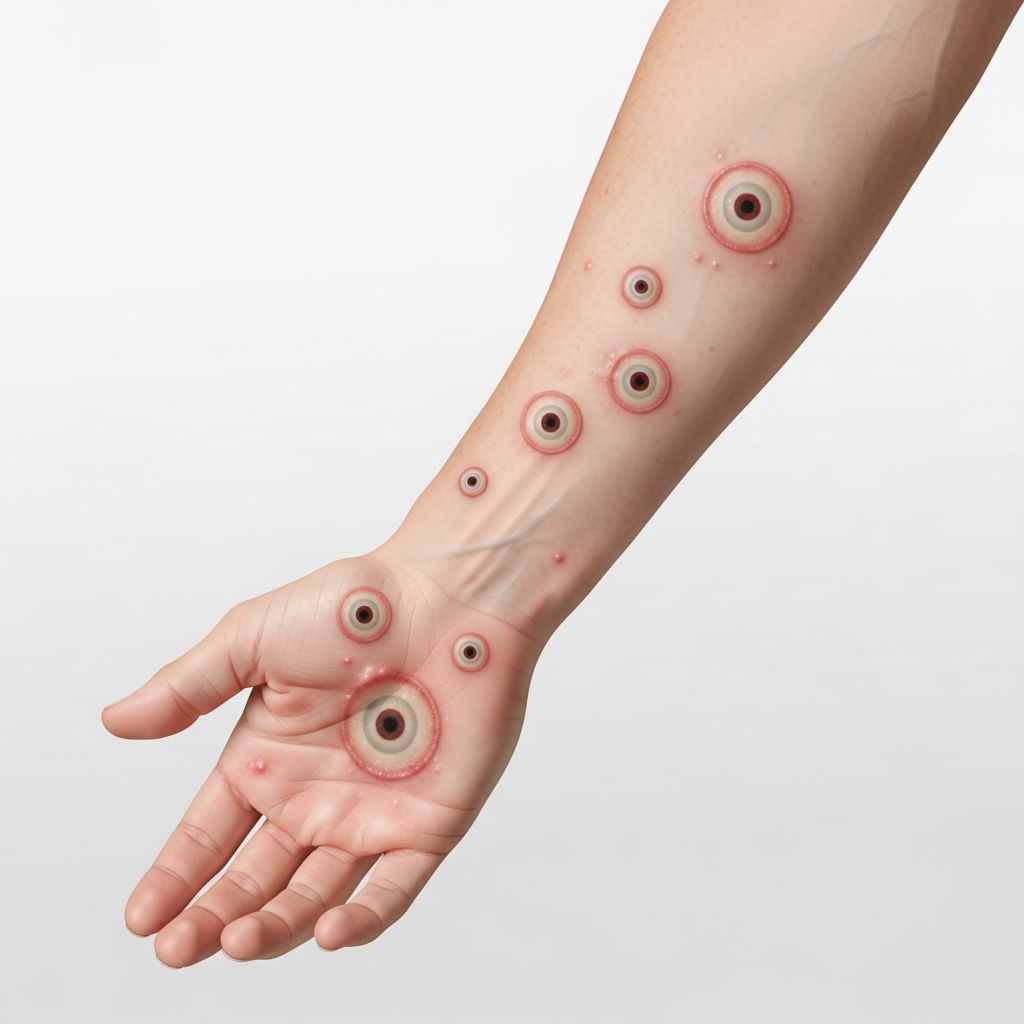
Erythema Multiforme: Overview
Erythema multiforme is a self-limited, immune-mediated skin condition characterized by distinctive target-like lesions that represent the body’s allergic reaction to infections, medications, or other triggering factors. The condition is generally considered the mildest of three related disorders, with Stevens-Johnson syndrome representing a more severe form and toxic epidermal necrolysis (TEN) being the most severe. Most cases of erythema multiforme resolve spontaneously within two to three weeks, though recurrence is possible, particularly in herpes simplex virus-associated cases.
Understanding the Causes
Erythema multiforme develops as a result of multiple etiological factors. The exact mechanism remains incompletely understood, but the condition appears to result from an allergic or immune-mediated response to identifiable triggers. Approximately 90% of cases are caused by infections, with herpes simplex virus (HSV) being the most commonly identified causative agent.
Infectious Triggers
Infections represent the primary cause of erythema multiforme in most patients:
- Herpes Simplex Virus (HSV): Both HSV-1 and HSV-2 are recognized causes, with HSV-1 being the most commonly identified etiology. This virus is responsible for cold sores and genital herpes and is the leading cause of recurrent erythema multiforme.
- Mycoplasma pneumoniae: This bacterium, which causes respiratory infections, is the second most common etiology, particularly in children. It has traditionally been listed as a trigger, though recent evidence suggests mucocutaneous manifestations associated with this infection may represent a separate entity called reactive infectious mucocutaneous eruption (RIME).
- Viral Infections: Additional viral agents including Epstein-Barr virus and hepatitis can trigger erythema multiforme.
- Other Bacterial Infections: Various bacterial pathogens can precipitate the condition beyond Mycoplasma pneumoniae.
Medication-Related Triggers
Medications account for approximately half of all erythema multiforme cases in some patient populations, though they cause fewer than 10% of cases overall. Common drug classes associated with erythema multiforme include:
- Nonsteroidal anti-inflammatory drugs (NSAIDs), particularly ibuprofen
- Antibiotic medications, including penicillin, sulfa-based antibiotics, and other antibiotics
- Anticonvulsant medications used to treat seizure disorders
- Anesthetics used during surgical procedures
Additional Triggering Factors
Beyond infections and medications, other factors may precipitate erythema multiforme:
- Vaccinations, including hepatitis B vaccine
- Autoimmune disorders
- Malignancy
- Radiation exposure
- Allergic contact dermatitis
- Sarcoidosis
- Menstruation-related factors
- Environmental allergens
Clinical Features and Symptoms
Erythema multiforme presents with characteristic clinical features that aid in diagnosis. The condition typically manifests as distinctive lesions that evolve over several days:
Characteristic Lesion Appearance
The hallmark finding of erythema multiforme is the target lesion or iris lesion, which consists of three distinct zones: a central area (often a blister, pustule, or necrotic center), a paler middle zone, and an outer erythematous ring. These target-like lesions are highly specific for erythema multiforme and aid in clinical diagnosis. Lesions typically measure 1-3 centimeters in diameter and may appear in crops over several days to weeks.
Distribution Pattern
Erythema multiforme commonly affects the following body areas:
- Extremities, particularly the dorsal surfaces of hands and feet
- Palms and soles
- Face and ears
- Lower abdomen and genitalia
- Mucous membranes (lips, oral mucosa, and genital areas) in more severe cases
Related Stories



Associated Symptoms
Patients with erythema multiforme may experience various systemic and local symptoms:
- Pruritus (itching) or burning sensation at lesion sites
- Pain, particularly if mucosal surfaces are affected
- Fever or malaise in some cases
- Oral ulceration and difficulty eating or drinking when mucous membranes are involved
- Potential dehydration from reduced oral intake due to mucosal involvement
- In severe cases, systemic involvement requiring hospitalization
Diagnosis and Differentiation
Accurate diagnosis of erythema multiforme is essential because the condition requires differentiation from related but more severe disorders. Clinical diagnosis typically relies on characteristic lesion morphology and distribution patterns, supplemented by patient history regarding recent infections or medication use.
Diagnostic Approach
- Clinical examination focusing on target lesion identification
- Detailed patient history regarding recent infections, fever, or respiratory symptoms
- Medication review to identify potential triggering agents
- Screening for herpes simplex virus history or current symptoms
- Laboratory testing when indicated, such as HSV polymerase chain reaction (PCR) or serologic testing
Differentiation from Stevens-Johnson Syndrome and TEN
Erythema multiforme must be distinguished from two more severe conditions:
| Condition | Severity Level | Key Distinguishing Features | Body Surface Area Involvement |
|---|---|---|---|
| Erythema Multiforme | Mild | Distinct target lesions; limited mucosal involvement; self-limited course | <10% |
| Stevens-Johnson Syndrome | Moderate-Severe | Atypical lesions; significant mucosal involvement; more systemic symptoms | 10-30% |
| Toxic Epidermal Necrolysis (TEN) | Most Severe | Widespread epidermal detachment; severe systemic involvement; high mortality risk | >30% |
Treatment Strategies
Treatment approaches for erythema multiforme differ depending on whether the patient presents with acute episodes or recurrent disease. The primary goal is to identify and eliminate the underlying trigger while managing symptoms until natural resolution occurs.
Acute Phase Management
The first and most crucial step in treating erythema multiforme is identifying and removing the underlying cause:
- Medication Discontinuation: If a medication is suspected as the trigger, it should be discontinued immediately and an alternative medication substituted if necessary.
- Infection Treatment: When infections are identified, appropriate antimicrobial therapy should be initiated. For Mycoplasma pneumoniae infection, antibiotics should be started without waiting for bacteriological confirmation if respiratory symptoms or radiological evidence is present.
- Herpes Simplex Treatment: If HSV infection is suspected, antiviral therapy with acyclovir or valacyclovir should be considered.
Symptomatic Management
Supportive care measures treat acute episodes by reducing the patient’s symptom burden while waiting for natural resolution, typically occurring within two weeks:
- Topical Treatments: Topical steroids or topical antihistamines can reduce local inflammation and itching.
- Antihistamines: Systemic antihistamines help manage pruritus and other allergic symptoms.
- Analgesics: Pain management medications address discomfort, particularly important for mucosal involvement.
- Cool Compresses: Local application of cool compresses provides symptomatic relief.
- Oral Care: For cases with oral involvement, antimicrobial mouthwashes and topical anesthetics improve comfort and reduce infection risk.
- Systemic Corticosteroids: In severe cases or when mucosal involvement leads to dehydration, systemic corticosteroid therapy may be considered.
Prevention of Recurrence
Herpes simplex virus is the most common cause of recurrent erythema multiforme. For patients experiencing frequent recurrences, prophylactic antiviral therapy is recommended:
Antiviral Prophylaxis Regimens
Long-term antiviral therapy should be offered to patients with recurrent HSV-associated erythema multiforme, with typical regimens including:
- Acyclovir 400 mg administered twice daily
- Valacyclovir (Valtrex) 500 mg twice daily
- Famciclovir 250-500 mg twice daily
These prophylactic regimens should be continued for at least 6 months, with clinical evidence supporting significant reduction in recurrences with continuous therapy. A placebo-controlled trial demonstrated that acyclovir prophylaxis reduced median recurrences from three episodes to zero over a six-month period.
Indications for Preventive Therapy
Prophylactic antiviral therapy is theoretically indicated for patients experiencing more than 5 erythema multiforme outbreaks annually, or fewer if the disease manifestations are severe.
Alternative Treatment Options
For patients who do not respond adequately to standard antiviral medications, alternative treatment options include immunosuppressives, antimalarial medications, and corticosteroids.
Prognosis and Contagiousness
Erythema multiforme carries a favorable prognosis for most patients. The condition is self-limiting with little to no ongoing complications in the majority of cases. However, recurrent or persistent disease requires additional treatment and management strategies.
Important note: Erythema multiforme itself is not contagious. The lesions, blisters, and rash cannot spread directly from person to person through contact. However, if the underlying trigger is infectious (such as herpes simplex virus or Mycoplasma pneumoniae), the infectious agent can spread to other individuals, though they may not develop erythema multiforme.
When to Seek Medical Care
Most cases of erythema multiforme can be managed as outpatients with supportive care. However, medical attention should be sought if:
- Lesions cover a large body surface area
- Significant mucosal involvement causes difficulty eating or drinking
- Signs of secondary infection develop
- Symptoms do not improve within two to three weeks
- The condition recurs frequently
- Systemic symptoms such as fever or malaise accompany skin lesions
Frequently Asked Questions
Q: What is the most common cause of erythema multiforme?
A: Herpes simplex virus (HSV), particularly HSV-1, is the most commonly identified cause of erythema multiforme in approximately 90% of cases caused by infections. Mycoplasma pneumoniae is the second most common cause, especially in children.
Q: How long does erythema multiforme typically last?
A: Most cases of erythema multiforme are self-limiting and resolve spontaneously within two to three weeks without treatment. The condition is characterized by a relatively short course compared to other dermatological conditions.
Q: Can erythema multiforme be prevented?
A: While erythema multiforme itself cannot be entirely prevented, recurrence can be reduced by identifying and avoiding triggering medications and by using prophylactic antiviral therapy in patients with recurrent HSV-associated erythema multiforme. Long-term acyclovir, valacyclovir, or famciclovir therapy can significantly reduce the frequency of recurrent episodes.
Q: Is erythema multiforme contagious?
A: No, erythema multiforme itself is not contagious, and the skin lesions cannot spread from person to person. However, the underlying infectious agent (if present) may be contagious to others, though they may not develop erythema multiforme.
Q: When should I stop a medication causing erythema multiforme?
A: If a medication is suspected as the trigger, it should be discontinued immediately and an alternative medication substituted if necessary. Always consult with your healthcare provider before stopping any medication, as abrupt discontinuation may pose other health risks.
Q: What is the difference between erythema multiforme and Stevens-Johnson syndrome?
A: Erythema multiforme is the mildest of three related conditions, characterized by distinct target lesions and limited mucosal involvement. Stevens-Johnson syndrome is more severe with atypical lesions and significant mucosal involvement affecting 10-30% of body surface area, while toxic epidermal necrolysis (TEN) is the most severe form.
Q: Do I need treatment for erythema multiforme?
A: Mild cases may resolve without treatment. However, treatment is recommended to manage symptoms, identify and eliminate triggers, and prevent recurrence. Most patients can be treated as outpatients with supportive care and topical or systemic medications as needed.
References
- Erythema Multiforme Treatment in Houston — Heights Skin. Accessed January 2026. https://www.heightsskin.com/erythema-multiforme
- Erythema Multiforme – Symptoms, Causes, Treatment — National Organization for Rare Disorders (NORD). Accessed January 2026. https://rarediseases.org/rare-diseases/erythema-multiforme/
- Erythema Multiforme — StatPearls, National Center for Biotechnology Information (NCBI). Accessed January 2026. https://www.ncbi.nlm.nih.gov/books/NBK470259/
- Erythema Multiforme — Nemours KidsHealth. Accessed January 2026. https://kidshealth.org/en/parents/erythema-multiforme.html
- Erythema Multiforme: Recognition and Management — American Family Physician. 2019-07-15. https://www.aafp.org/pubs/afp/issues/2019/0715/p82.html
- Erythema Multiforme — UMass Memorial Health. Accessed January 2026. https://www.ummhealth.org/health-library/erythema-multiforme
- Erythema multiforme — DermNet. Accessed January 2026. https://dermnetnz.org/topics/erythema-multiforme
Similar Articles








Read full bio of medha deb