Erythema Nodosum Pathology: Comprehensive Guide For Clinicians
Comprehensive pathology of erythema nodosum: from clinical features to histopathology and differential diagnosis.
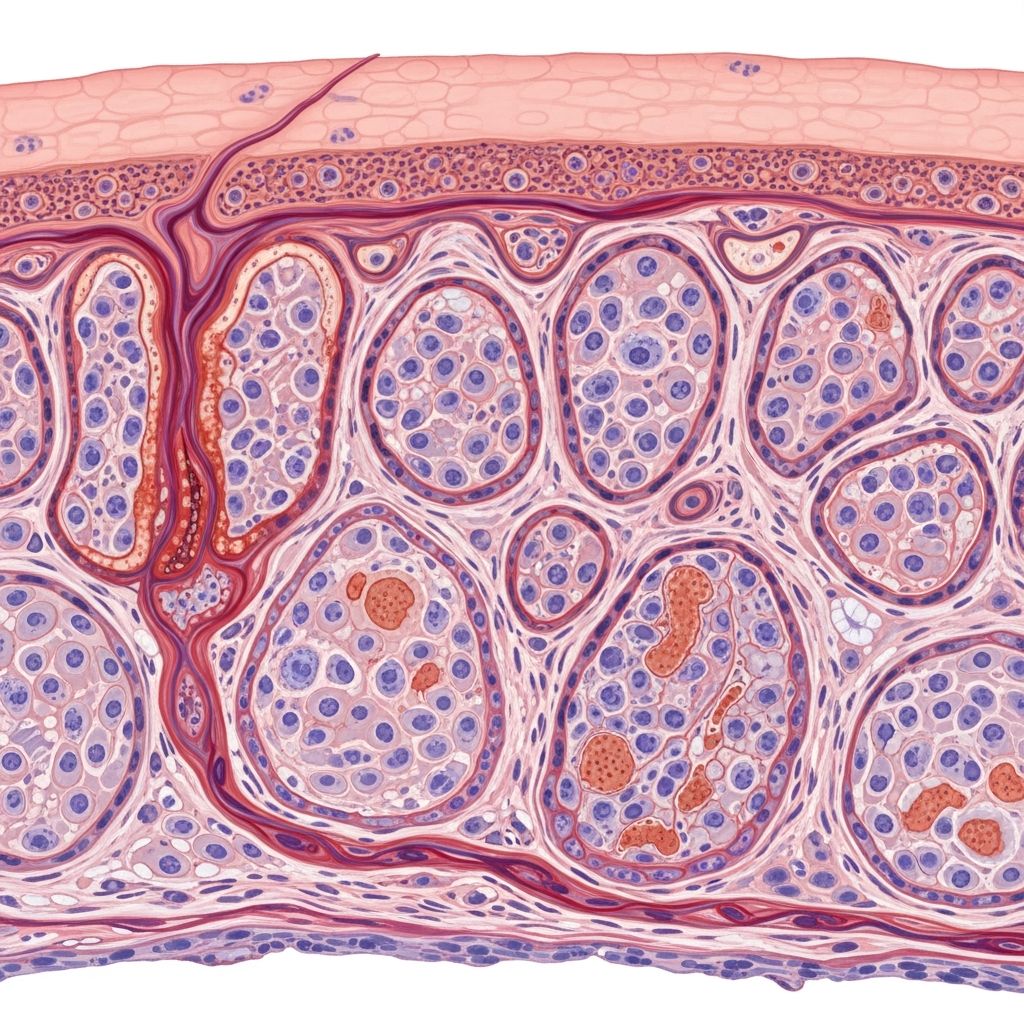
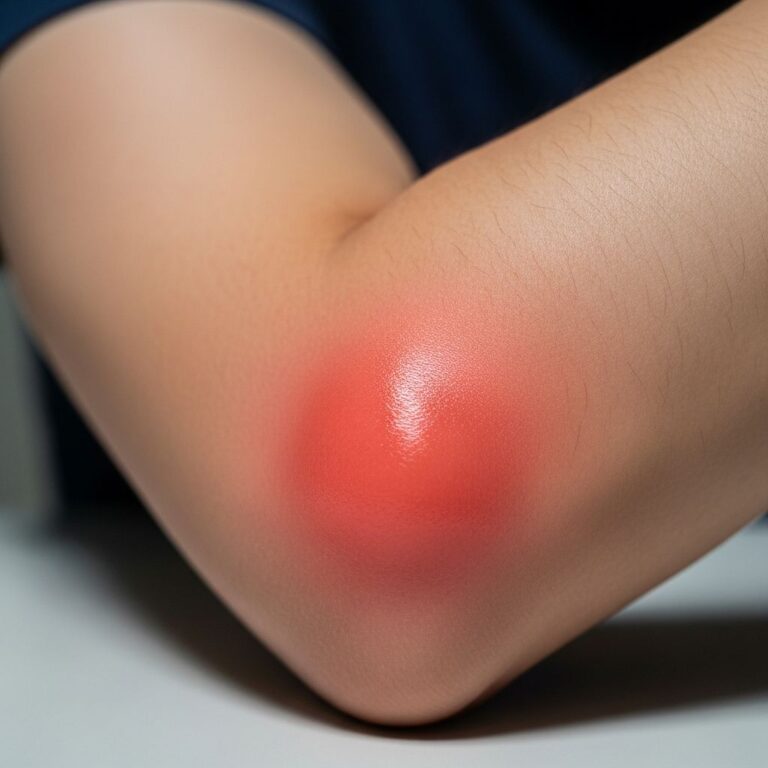
Erythema nodosum is the most common type of panniculitis. It consists of tender red nodules or plaques that typically appear on both shins. This condition represents a septal panniculitis without vasculitis, characterised by a predominantly lymphocytic inflammatory infiltrate of the fibrous septa of the subcutaneous fat.
What is erythema nodosum?
Erythema nodosum is an inflammatory disorder involving the subcutaneous fat, classified as a septal panniculitis. It manifests as tender, erythematous nodules primarily on the anterior lower legs. The lesions evolve through stages, starting as bright red, then becoming bruise-like, and resolving without scarring over 3–6 weeks. While often idiopathic, it may signal underlying infections, systemic diseases, or drug reactions, necessitating thorough investigation.
Pathogenesis of erythema nodosum
The precise pathogenesis remains incompletely understood but is regarded as a hypersensitivity reaction to diverse antigenic triggers. Proposed mechanisms include immune complex deposition in septal venules or a type IV delayed hypersensitivity response. Circulating immune complexes have been detected in early lesions, suggesting involvement of antigen-antibody-complement interactions leading to tissue injury.
Endothelial expression of adhesion molecules such as E-selectin, P-selectin, VCAM-1, and ICAM-1 facilitates leukocyte recruitment. Elevated cytokines including IL-6, IL-8, IL-12, IFN-γ, G-CSF, and MCP-1 promote neutrophil activation and infiltration. Acute-phase reactants are often increased, reflecting systemic inflammation.
In granulomatous contexts like sarcoidosis or tuberculosis, erythema nodosum may precede other manifestations, highlighting its role as a reactive pattern rather than a primary disease.
Clinical features of erythema nodosum
Lesions present acutely as bilateral, symmetric, tender erythematous nodules or plaques (1–6 cm) predominantly on the pretibial areas, extending to ankles, thighs, or arms. A prodrome of fever, malaise, arthralgia, or cough may occur 1–3 weeks prior.
Over 1–6 weeks, nodules evolve: bright red to purple, then yellow-brown or bluish-green, mimicking bruises (erythema contusiformis). Multiple stages coexist without ulceration, scarring, or atrophy. Recurrences affect up to 30% of cases.
- Symmetric distribution on lower extremities
- Tender to touch, warm, indurated
- Self-limited in most cases
- Associated symptoms: fever, joint pain, fatigue
Histopathology of erythema nodosum
Core features define erythema nodosum as a septal panniculitis without vasculitis. At the dermal-subcutaneous interface, widened septa show oedema, haemorrhage, and Miescher radial granulomas (small histiocytic collections around clefts in collagen).
Early lesions (<48 hours): Neutrophils dominate, spilling into fat lobules, with karyorrhexis and haemorrhage. Lymphocytes and eosinophils accompany.
Intermediate (3–7 days): Neutrophils lessen; lymphocytes, histiocytes, multinucleated giant cells emerge. Fibrosis begins in deep septa.
Late lesions (>10 days): Dense lymphocytic infiltrate, lipophages, haemosiderin, thickened septa with fibrosis. Fat lobules spared except peripherally.
| Stage | Key Features | Inflammatory Cells |
|---|---|---|
| Early | Oedematous septa, haemorrhage | Neutrophils >> lymphocytes, eosinophils |
| Intermediate | Miescher granulomas, giant cells | Lymphocytes, histiocytes, fewer neutrophils |
| Late | Fibrosis, haemosiderin | Lymphocytes predominant |
Related Stories



Uncommon variants include neutrophilic suppuration, vasculitis (small/medium vessel), or lobular involvement, but repeat biopsy often confirms classic septal pattern.
Differential diagnosis of erythema nodosum
Clinical mimics require biopsy for distinction:
- Nodular vasculitis: Lobular panniculitis with vasculitis, ulceration possible.
- Polyarteritis nodosa: Medium-vessel vasculitis, systemic involvement.
- Superficial thrombophlebitis: Cord-like lesions, thrombosis.
- Neutrophilic dermatoses (e.g., Sweet syndrome): Fever, neutrophilic infiltrate.
- Infections: TB, fungal; granulomas present.
Histologically, erythema nodosum spares vessels; vasculitis or lobular emphasis points elsewhere.
Causes of erythema nodosum
Idiopathic in ~50%; secondary triggers include:
| Category | Examples |
|---|---|
| Infections | Streptococcal (most common, esp. children), TB, Yersinia, Coccidioidomycosis |
| Drugs | Oral contraceptives, sulfonamides, minocycline |
| Systemic diseases | Sarcoidosis, IBD (Crohn, UC), Behçet disease |
| Other | Pregnancy, BCG vaccine |
Investigations for erythema nodosum
History and exam guide workup: throat swab, ASOT for strep; CXR, Quantiferon for TB; ACE for sarcoid; stool calprotectin for IBD. Risk-stratify by age, travel, exposures.
Management of erythema nodosum
Treat underlying cause if identified. Supportive: bed rest, leg elevation, NSAIDs. Severe/recurrent: potassium iodide, colchicine, or systemic steroids.
Frequently asked questions about erythema nodosum
What does erythema nodosum look like?
Tender red nodules on shins, evolving to bruise-like colours, resolving in weeks without scars.
Is erythema nodosum serious?
Usually self-limited, but investigate for underlying disease like infection or sarcoidosis.
How is erythema nodosum diagnosed?
Clinically with biopsy confirmation showing septal panniculitis.
Does erythema nodosum scar?
No, it heals without atrophy or ulceration.
What causes erythema nodosum?
Often idiopathic; strep infections, drugs, sarcoidosis common triggers.
References
- Erythema Nodosum: A Practical Approach and Diagnostic Algorithm — Cury JD et al. PMC. 2021-03-15. https://pmc.ncbi.nlm.nih.gov/articles/PMC7938036/
- Erythema Nodosum: A Sign of Systemic Disease — Requena L, Sánchez Yus E. AAFP. 2007-03-01. https://www.aafp.org/pubs/afp/issues/2007/0301/p695.html
- Histopathologic spectrum of erythema nodosum — PubMed. 2006-01-01. https://pubmed.ncbi.nlm.nih.gov/16441407/
- Erythema nodosum pathology video — Dermatology pathology resource. YouTube. Accessed 2026. https://www.youtube.com/watch?v=3xReAXydj0o
- A retrospective clinicopathological study of erythema nodosum — Wiley Online Library. 2024. https://onlinelibrary.wiley.com/doi/10.1111/1346-8138.17195
Similar Articles








Read full bio of medha deb