Erythema Palmare Hereditarium: Red Palms Explained
Understanding erythema palmare hereditarium: causes, symptoms, diagnosis, and management of inherited red palms.
Erythema Palmare Hereditarium: Understanding Red Palms
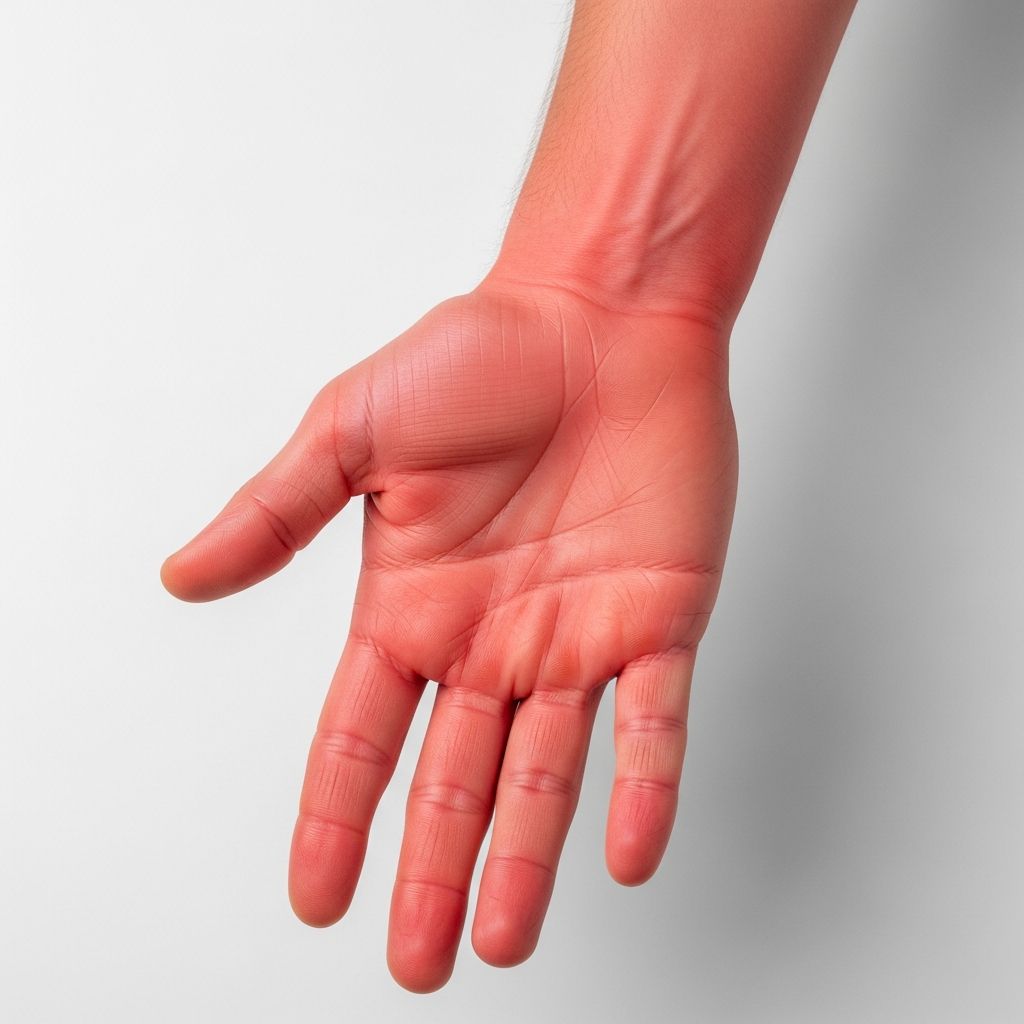
Erythema palmare hereditarium is a rare, benign, congenital genetic skin disorder characterized by permanent and asymptomatic erythema (redness) of the palmar and, less frequently, the solar (plantar) surfaces. Also known as Lane’s disease or red palms disease, this condition presents as sharply demarcated redness primarily affecting the thenar (thumb side) and hypothenar (pinky side) eminences, as well as the palmar aspect of the phalanges. The defining characteristic is the presence of scattered telangiectasia spots (dilated blood vessels) that do not cause any discomfort to the patient, including the absence of pain, itching, or burning sensations.
Clinical Presentation and Appearance
Individuals with erythema palmare hereditarium display distinctive clinical features that make the condition recognizable. The palmar skin appears bright red and sharply demarcated, typically ending abruptly at the wrist and at the sides of the hands. The redness is not uniform but rather concentrated in specific areas, particularly the thenar and hypothenar eminences and the palmar aspect of the phalanges.
An important clinical feature is that pressure applied to the palmar skin easily blanches the redness, causing it to temporarily turn white or pale red before returning to its characteristic bright red color. This blanching response indicates that the erythema results from dilated blood vessels in the subcutis (deeper skin layers) rather than from inflammation or other pathological processes.
The condition remains completely asymptomatic throughout the patient’s life. There is no associated scaling, inflammation, allergic reaction, hyperhidrosis (excessive sweating), or hyperkeratosis (thickened skin). Many patients may experience mild dryness on the palmar surfaces, but this does not require specific treatment beyond occasional use of moisturizing lotions.
Inheritance Pattern and Genetic Basis
Erythema palmare hereditarium is caused by genetic mutations, also known as pathogenic variants, that can be hereditary when parents pass them to their offspring. The condition follows an irregular dominant inheritance pattern, as proposed by dermatological research literature. However, the inheritance pattern is not entirely consistent, and spontaneous mutations have been documented in cases where no family history of the condition exists.
The penetrance and expression of the genetic mutation can vary among family members. Some individuals within the same family may display the condition prominently, while others may show minimal or no symptoms. Historical case reports describe families where multiple generations—including mothers, daughters, and sons—exhibited the characteristic red palms from birth or early childhood, maintaining the appearance throughout their lifespans.
Age of Onset and Lifelong Course
Erythema palmare hereditarium typically manifests at or shortly after birth, though cases of later onset during childhood or early adulthood have been documented in the medical literature. Once present, the condition remains permanent and unchanged throughout the patient’s life, independent of external factors such as physical activity, seasonal changes, or environmental exposures. The redness persists with consistent appearance and distribution, neither worsening nor improving over time.
The chronic and stable nature of erythema palmare hereditarium distinguishes it from other forms of palmar erythema that may be transient or associated with underlying systemic conditions. This distinction is clinically important, as it helps clinicians differentiate between primary (hereditary or pregnancy-related) and secondary (disease-associated) forms of palmar erythema.
Related Stories



Distinguishing Erythema Palmare Hereditarium from Other Conditions
Accurate diagnosis of erythema palmare hereditarium requires careful exclusion of secondary causes of palmar erythema. Secondary palmar erythema can result from various underlying medical conditions and should be investigated before confirming a diagnosis of the hereditary form.
Secondary causes to exclude include:
- Liver disease and hepatic cirrhosis
- Rheumatoid arthritis and other autoimmune conditions
- Thyroid disorders
- Diabetes mellitus
- Pregnancy-related changes
- Medications such as topiramate, albuterol, amiodarone, cholestyramine, and gemfibrozil
- Environmental factors including smoking, excessive alcohol consumption, and mercury poisoning
- Contact dermatitis from frequent hand sanitizer use
Hepatic pathology is particularly important to exclude, as liver dysfunction is one of the most common causes of secondary palmar erythema in adults. Laboratory examination with liver function tests should be performed to rule out hepatic disease when palmar erythema is first identified. Additionally, the patient’s medical history should be thoroughly reviewed to identify any systemic conditions, medications, or environmental exposures that might explain the erythema.
Unlike secondary palmar erythema caused by smoking or other environmental factors, erythema palmare hereditarium persists unchanged since birth regardless of such external influences. This distinguishing feature helps differentiate the hereditary condition from acquired palmar erythema symptomaticum.
Diagnostic Approach and Laboratory Investigations
The diagnosis of erythema palmare hereditarium is primarily clinical, based on the distinctive appearance of sharply demarcated erythema with telangiectasia on the palms, combined with the patient’s clinical history of asymptomatic presentation since birth or early childhood. A detailed family history should be obtained, as documentation of affected family members supports the diagnosis of the hereditary form.
While no specific laboratory tests diagnose erythema palmare hereditarium, certain investigations are performed to exclude secondary causes:
- Liver function tests to rule out hepatic disease
- Complete blood count to assess for systemic conditions
- Thyroid function tests if thyroid disease is suspected
- Comprehensive metabolic panel to evaluate for diabetes and other metabolic disorders
Dermatological examination typically reveals no alterations of the remaining palms beyond the characteristic erythema, no involvement of the hypothenar or thenar areas in some cases, and no erythema on the plantar surfaces or skin of other body areas. The absence of scaling, inflammation, or allergic reactions further supports the benign nature of the condition.
Pathophysiology: Understanding the Mechanism
Erythema palmare hereditarium results from dilatation of blood vessels in the subcutis (deeper layers of the dermis), without any signs of inflammation or other pathological changes. The genetic mutation underlying this condition likely affects vascular regulation or endothelial function, leading to chronic vasodilation in the palmar and occasionally plantar regions.
The sharply demarcated nature of the erythema and its consistent distribution pattern suggest that the genetic mutation may influence vascular development or maintenance in a region-specific manner. The telangiectasia observed on examination represents visible manifestations of these dilated capillaries and small blood vessels in the dermis.
The blanching response observed when pressure is applied to the affected areas confirms that the redness results from blood vessel engorgement rather than from increased melanin, inflammation, or other dermatological pathology. This finding is consistent with the vascular etiology of the condition.
Treatment and Management Considerations
Since erythema palmare hereditarium is a benign, asymptomatic skin condition without inflammation or associated systemic disease, there is no indication for specific therapeutic intervention directed at the erythema itself. No standard treatment or cure exists for the redness, nor is any required to maintain the patient’s health and well-being.
Management focuses on patient education and reassurance regarding the benign nature of the condition. Patients should be informed that:
- The condition is hereditary and not caused by infection, inflammation, or disease
- The erythema is permanent and will not resolve spontaneously
- No treatment can eliminate the redness
- The condition causes no symptoms and does not affect function or quality of life
- The condition does not predispose to any systemic disease
Patients who experience mild dryness on the palmar surfaces may benefit from regular use of moisturizing hand lotions, though this addresses comfort rather than the underlying condition. Palmoplantar hyperkeratosis, if present, may be managed with emollients or keratolytic agents, but such findings are typically absent in pure erythema palmare hereditarium.
Prognosis and Long-Term Outlook
The prognosis for individuals with erythema palmare hereditarium is excellent. The condition remains stable throughout the patient’s lifetime, with no tendency toward progression, spontaneous resolution, or development of complications. The erythema does not evolve into systemic disease, does not affect the patient’s overall health, and does not require medical intervention.
Patients with this condition can expect to maintain normal palmar function and experience no functional impairment. The primary concern for most patients is cosmetic, as the distinctive appearance of bright red palms may attract social attention. However, the absence of symptoms means that patients need not restrict their daily activities or occupational pursuits.
Clinical Significance and Differential Diagnosis
Recognition of erythema palmare hereditarium is clinically important because it prevents unnecessary investigations and treatments for what might be mistaken for secondary palmar erythema. When a patient presents with lifelong, asymptomatic palmar erythema with no personal or family history of systemic disease, and when laboratory investigations (particularly liver function tests) are normal, erythema palmare hereditarium should be considered.
The condition exemplifies the principle that not all skin manifestations indicate underlying pathology. The presence of bright red palms does not necessarily indicate a pathological process; it can simply represent a benign genetic variation affecting vascular development in the palms.
Frequently Asked Questions
Q: Is erythema palmare hereditarium contagious?
A: No, erythema palmare hereditarium is not contagious. It is a genetic, non-infectious skin condition that does not spread to other individuals through contact.
Q: Can erythema palmare hereditarium develop later in life?
A: While the condition typically presents at birth or early childhood, rare cases of later onset have been documented. However, once developed, the erythema persists permanently.
Q: Does erythema palmare hereditarium indicate liver disease?
A: No. While secondary palmar erythema can indicate liver disease, erythema palmare hereditarium is a benign hereditary condition unrelated to hepatic pathology. Liver function tests are normal in patients with this condition.
Q: Can the redness of erythema palmare hereditarium be removed surgically?
A: No surgical or dermatological treatment can permanently remove the erythema. Because the condition is benign and asymptomatic, invasive procedures are not warranted and not recommended.
Q: What is the inheritance risk for children of affected parents?
A: Erythema palmare hereditarium follows an irregular dominant inheritance pattern. Children of affected parents have increased risk, but the inheritance is not fully penetrant, meaning some family members may not express the condition.
Q: Does erythema palmare hereditarium worsen with age?
A: No. The condition remains stable and unchanged throughout the patient’s lifetime, neither improving nor deteriorating with age.
Q: Are there any symptoms associated with erythema palmare hereditarium?
A: By definition, erythema palmare hereditarium is completely asymptomatic. Patients experience no pain, itching, burning, scaling, or other discomfort associated with the red palms.
References
- Erythema palmare hereditarium — Orphanet. 2024. https://www.orpha.net/en/disease/detail/231031
- erythema palmare hereditarium — National Organization for Rare Disorders (NORD). 2024. https://rarediseases.org/mondo-disease/erythema-palmare-hereditarium/
- Erythema Palmare hereditarium (red palms): Lane’s disease — eScholarship, University of California. https://escholarship.org/uc/item/4d4881d1
- Erythema Palmare Hereditarium (‘Red Palms’, ‘Lane’s Disease’) — National Center for Biotechnology Information (NCBI), National Library of Medicine. 2014. https://pmc.ncbi.nlm.nih.gov/articles/PMC4255997/
- Erythema palmare hereditarium — Genetic and Rare Diseases Information Center (GARD), National Institute of Health. 2024. https://rarediseases.info.nih.gov/diseases/17157/erythema-palmare-hereditarium
- Palmar Erythema: Symptoms, Causes, Treatment, and More — Healthline Media. 2023. https://www.healthline.com/health/skin-disorders/palmar-erythema
Similar Articles








Read full bio of Sneha Tete