Erythrasma Images: 12 Photos With Wood’s Lamp Fluorescence
Clinical images and detailed insights into erythrasma, a common bacterial skin infection in skin folds.
Author: Dr Amanda Oakley, Dermatologist, Hamilton, New Zealand. Reviewed: Dr Janelle Jordaan, Dermatologist, Cape Town, South Africa. September 2021.
Synonym(s): Erythrasma (English); eritrasma (Spanish); eritrasma (Portuguese); érythrasma (French); Erythrasma (German); 紅癬 (Chinese); 紅糠疹 (Chinese); エリスラスマ (Japanese).
What is erythrasma?
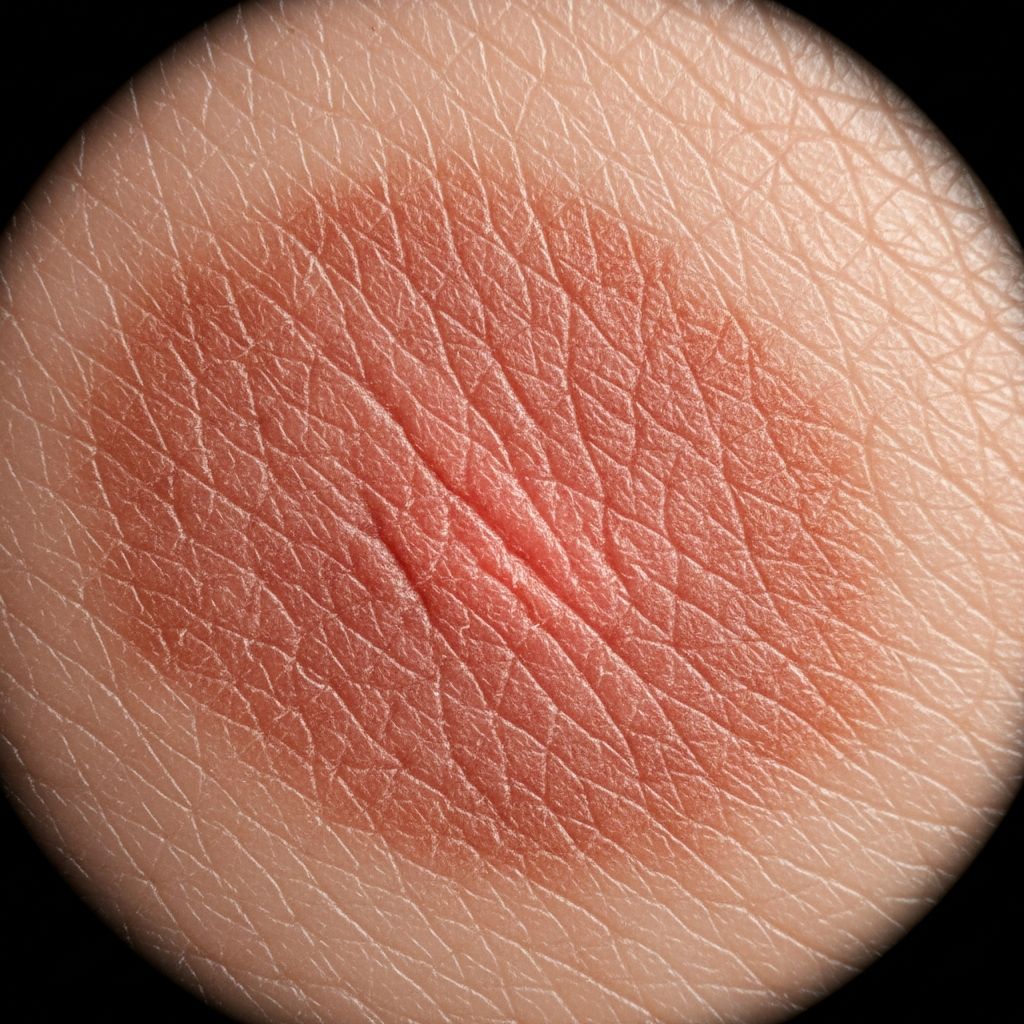
Erythrasma is a superficial chronic bacterial infection of skin folds caused by Corynebacterium minutissimum, a skin commensal that invades the stratum corneum. It presents as well-demarcated pink or brown patches with fine scaling, often in intertriginous areas like groin, axillae, and toe clefts. The infection thrives in moist, warm environments and is more prevalent in obese individuals, diabetics, and tropical climates.
Though usually asymptomatic, mild itching may occur. Diagnosis is confirmed by coral-red fluorescence under Wood’s lamp due to porphyrin production by the bacteria. Treatment involves topical or systemic antibiotics, with excellent prognosis if predisposing factors are addressed.
Types of erythrasma
Erythrasma is classified into three main types based on location and extent:
- Interdigital erythrasma: Most common on feet, affecting toe webs (especially 3rd/4th), causing scaling, fissuring, and maceration without significant symptoms.
- Intertriginous erythrasma: In body folds like groin, axillae, submammary, intergluteal, presenting as sharply demarcated patches mimicking tinea or intertrigo.
- Disciform (generalized) erythrasma: Rare, widespread plaques on trunk/limbs, often in tropical climates or diabetics, more common in women.
Who gets erythrasma?
Erythrasma affects adults more than children, with higher incidence in men for intertriginous forms and women for disciform. Risk factors include:
- Obesity and diabetes mellitus (impaired immunity and moisture retention)
- Warm, humid climates
- Occlusive clothing or excessive sweating
- Immunocompromise
- Age over 60
It is part of normal skin flora overgrowth, not contagious. Prevalence is higher in tropics, up to 10-20% in some populations.
Related conditions
Differential diagnoses include:
- Tinea corporis/cruris (fungal, KOH positive, no Wood fluorescence)
- Candida intertrigo (satellite lesions, yeast on microscopy)
- Intertrigo (inflammation without scaling)
- Pityriasis versicolor (hypopigmented, malassezia)
- Psoriasis (thicker plaques, Auspitz sign)
Erythrasma images
This gallery features clinical photographs of erythrasma across various presentations. Images demonstrate characteristic features: well-defined patches, fine scaling, and positive Wood’s lamp fluorescence (coral-red glow).
Groin and thigh
Brownish patches in inguinal folds with sharp borders and mild scaling, common in diabetics. Under Wood’s lamp, lesions fluoresce coral-red.
- Image 1: Bilateral groin involvement with superficial fissuring.
- Image 2: Unilateral thigh patch extending from groin, mimicking tinea cruris.
Axillae
Symmetrical pink-brown patches in armpits, often asymptomatic but with fine desquamation.
- Image 3: Right axilla showing well-demarcated plaque.
- Image 4: Wood’s lamp positive fluorescence in both axillae.
Toe clefts (interdigital)
White macerated skin between toes, especially 4th/5th clefts, frequently coexists with tinea pedis.
- Image 5: Scaling and fissuring in toe webs.
- Image 6: Fluorescence confirming bacterial etiology.
Submammary and intergluteal
Inframammary folds show reddish patches under breasts; intergluteal cleft affected in obese patients.
Related Stories



- Image 7: Bilateral submammary erythrasma.
- Image 8: Gluteal cleft involvement with postinflammatory hyperpigmentation.
Abdominal and generalized
Periumbilical or truncal plaques in disciform type, rare but diagnostic under Wood’s lamp.
- Image 9: Abdominal patches in diabetic patient.
- Image 10: Widespread truncal lesions fluorescing coral-red.
Other sites
Uncommon locations include umbilicus, thigh creases, and proximal limbs.
- Image 11: Periumbilical erythrasma.
- Image 12: Thigh fold with secondary lichenification.
Diagnosis of erythrasma
Clinical suspicion arises from appearance in flexures. Confirmatory tests:
- Wood’s lamp: Pathognomonic coral-red fluorescence (95% sensitive).
- Microscopy: Gram-positive rods (‘spaghetti and meatballs’ in 10% KOH).
- Culture: Rarely needed; grows on blood agar.
- Biopsy: Sparse bacteria in superficial corneum, no inflammation.
| Test | Findings in Erythrasma | Differential Utility |
|---|---|---|
| Wood’s Lamp | Coral-red glow | Negative in tinea, candida |
| KOH Prep | Gram+ rods, no hyphae | Hyphae in dermatophytes |
| Culture | C. minutissimum | Speciation rarely done |
Treatment of erythrasma
First-line: Topical antibiotics for localized disease.
- Clindamycin 1% lotion (twice daily, 2 weeks): Highly effective.
- Erythromycin 2% solution: Alternative.
- Mupirocin: For resistant cases.
Systemic for extensive/generalized:
- Erythromycin 250mg QID x 2 weeks or Clarithromycin 250mg BD x 7 days.
- Doxycycline or tetracycline for non-responders.
Adjuncts: Keep areas dry, weight loss, glycemic control. Recurrence common without addressing risks.
Complications
Rare in immunocompetent; in compromised patients: cellulitis, abscess, endocarditis, pyelonephritis. Secondary contact dermatitis or lichenification possible.
Prevention
- Dry skin folds thoroughly
- Wear breathable fabrics
- Manage diabetes/obesity
- Antiperspirants in axillae/groin
Frequently Asked Questions (FAQs)
Is erythrasma contagious?
No, caused by normal skin bacteria overgrowth, not person-to-person transmission.
Does erythrasma go away on its own?
Often self-limiting, but treatment speeds resolution and prevents spread.
How do I know if it’s erythrasma or a fungus?
Wood’s lamp fluorescence distinguishes; no fungal elements on KOH.
Can erythrasma affect children?
Rare; mostly adults, especially with risk factors.
What if treatment fails?
Check compliance, culture for resistance, rule out coinfections.
References
- Erythrasma – Primary Care Dermatology Society — PCDS. 2022-10-20. https://www.pcds.org.uk/clinical-guidance/erythrasma
- Erythrasma – Knowledge @ AMBOSS — AMBOSS. 2021-11-04. https://www.amboss.com/us/knowledge/erythrasma/
- Erythrasma | Health Encyclopedia — Florida Health Finder. n.d. https://quality.healthfinder.fl.gov/health-encyclopedia/HIE/1/001470
- Erythrasma – UF Health — University of Florida Health. n.d. https://ufhealth.org/conditions-and-treatments/erythrasma
- Erythrasma – StatPearls — NCBI Bookshelf. n.d. https://www.ncbi.nlm.nih.gov/books/NBK513352/
- Erythrasma – Merck Manual Professional — Merck & Co. n.d. https://www.merckmanuals.com/professional/dermatologic-disorders/bacterial-skin-infections/erythrasma
- Erythrasma – DermNet — DermNet NZ. n.d. https://dermnetnz.org/topics/erythrasma
Similar Articles








Read full bio of Sneha Tete