Erythrasma Pathology
Comprehensive pathology of erythrasma: bacterial skin infection in folds, diagnosis, and management strategies.
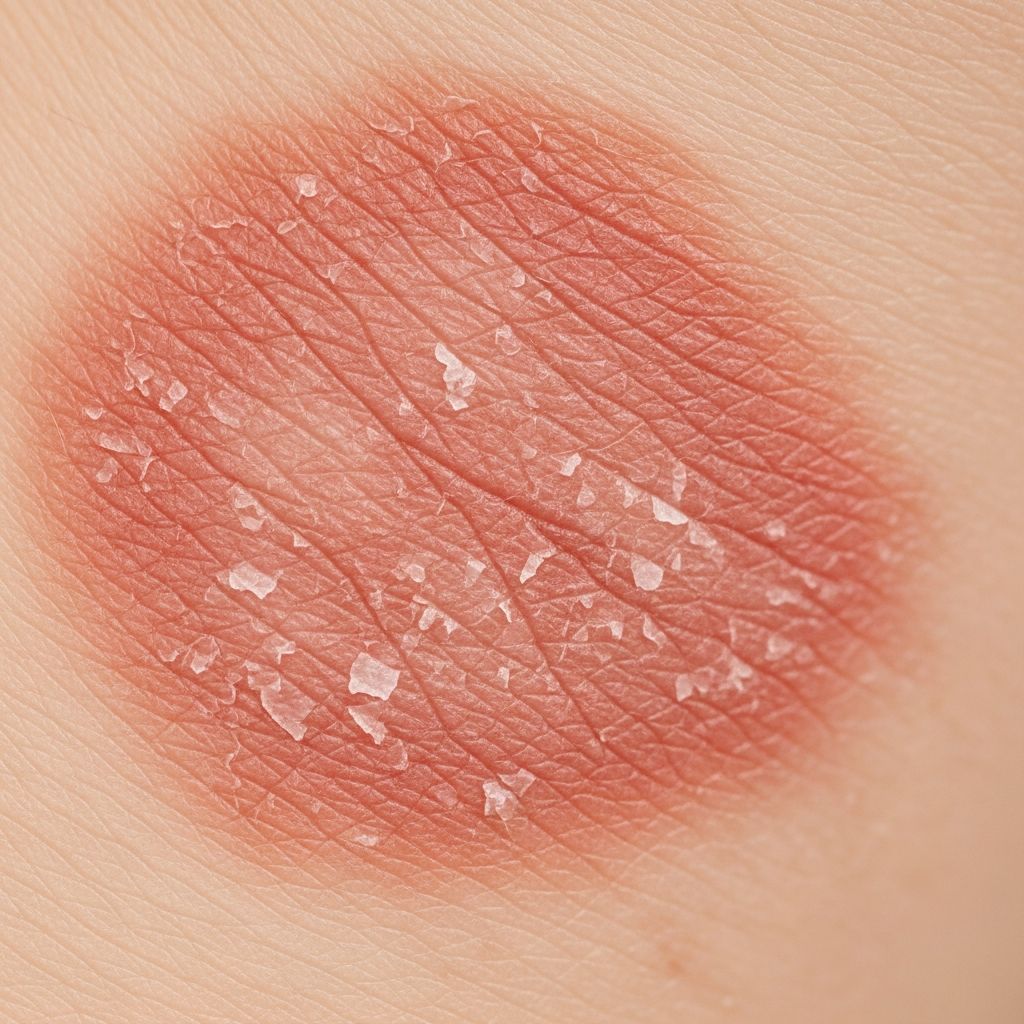
Erythrasma is a superficial chronic bacterial infection of the skin folds caused by Corynebacterium minutissimum, presenting as well-demarcated pink or brown patches with fine scaling.
Introduction
Erythrasma represents a common yet often underdiagnosed dermatological condition characterized by superficial infection in areas prone to moisture and friction. It primarily affects the intertriginous regions such as axillae, groin, and interdigital spaces, mimicking fungal infections but stemming from bacterial overgrowth. This infection arises when commensal corynebacteria proliferate in warm, occluded environments, leading to distinctive clinical and histopathological changes. Understanding its pathology is crucial for accurate differentiation from similar entities like tinea or candidiasis, enabling targeted therapy and prevention.
Demographics
Erythrasma exhibits distinct demographic patterns, occurring across all ages but predominantly in adults, with a higher prevalence in males for groin involvement and females for interdigital sites. It is more frequent in tropical and humid climates, where warmth and perspiration foster bacterial growth. Risk factors include obesity, diabetes mellitus (especially type 2), advanced age, hyperhidrosis, poor hygiene, and immunosuppression, as these promote skin maceration and bacterial colonization. Individuals with skin of color may present with hyperpigmented patches, complicating diagnosis. Prevalence is higher in overweight populations due to increased skin folds, and it is rarer in children. Diabetics face elevated risk, with generalized forms sometimes heralding undiagnosed disease.
Causes
The aetiological agent is Corynebacterium minutissimum, a gram-positive, non-spore-forming, aerobic actinomycete that resides as part of the normal skin flora. Pathogenesis involves overgrowth in moist, occluded areas, producing porphyrins responsible for the characteristic coral-red fluorescence under Wood’s lamp. Contributing factors include excessive sweating, occlusion from tight clothing, and underlying conditions like diabetes that impair skin barrier function. The bacteria thrive in intertriginous zones, leading to superficial corneocyte disruption without deeper invasion. Rarely, coinfections with fungi or other bacteria exacerbate the condition.
Clinical Features
Erythrasma manifests as sharply demarcated, erythematous to brownish patches with fine superficial scaling, superficial fissures, and a wrinkled “cigarette paper” appearance. Lesions are typically asymptomatic but may cause mild pruritus, burning, or a musty odor. Common sites include:
- Axillae (armpits)
- Groin and intergluteal cleft
- Interdigital spaces (especially 4th/5th toes)
- Inframammary folds
- Periumbilical area
- Submammary and abdominal folds in obese individuals
Three subtypes are recognized:
- Interdigital erythrasma: Maceration and fissuring between toes, often mimicking tinea pedis.
- Intertriginous erythrasma: In skin folds, prevalent in diabetics.
- Generalized (disciform) erythrasma: Rare, widespread plaques, associated with diabetes in tropical regions, more common in women.
On darker skin, lesions appear hypopigmented centrally with hyperpigmented borders. Chronicity leads to postinflammatory hyperpigmentation.
Complications
Most cases are self-limiting and benign, but untreated erythrasma can lead to secondary issues such as contact dermatitis from topical agents, lichenification from scratching, and postinflammatory pigmentation. Coinfections with dermatophytes, yeasts like Candida albicans, or other bacteria may occur, worsening symptoms. Rare systemic complications from corynebacteria include abscesses, cellulitis, granulomas, endocarditis, pyelonephritis, endophthalmitis, arteriovenous fistula infections, and meningitis, though these are exceptional and typically in immunocompromised hosts. In diabetics, it may signal poor glycemic control.
Diagnosis
Diagnosis relies on clinical morphology, supported by investigations:
- Wood’s lamp examination: Coral-red fluorescence due to bacterial porphyrins (specific but not entirely sensitive).
- Microscopy: Skin scrapings in 10-30% KOH show gram-positive rods; no hyphae distinguish from fungi.
- Culture: Confirms C. minutissimum on blood agar.
- Biopsy: Rarely needed; shows sparse superficial dermal lymphohistiocytic infiltrate, hyperkeratosis, and bacterial colonization of stratum corneum.
Differential diagnoses include tinea versicolor, inverse psoriasis, candidiasis, dermatophytosis, seborrheic dermatitis, and pityriasis rotunda. Table below summarizes key differentiators:
| Condition | Key Features | Wood’s Lamp |
|---|---|---|
| Erythrasma | Brown patches, scaling, folds | Coral-red |
| Tinea versicolor | Hyperpigmented, spores/hyphae | Yellow-green |
| Candidiasis | Erosions, satellite lesions | No fluorescence |
| Inverse psoriasis | Well-defined, no scaling | No fluorescence |
Treatment
Management is straightforward and effective:
- Topical antibiotics: Clindamycin 1% lotion or erythromycin 2% solution twice daily for 2 weeks (first-line).
- Systemic antibiotics: Erythromycin 250mg four times daily or tetracycline 500mg twice daily for 2 weeks for extensive cases.
- Adjuncts: Antibacterial soaps (e.g., chlorhexidine), drying powders, loose clothing.
- Advanced: Laser therapy for recalcitrant cases.
Resolution occurs within days to weeks; recurrence is common without addressing predisposing factors.
Prevention
Preventive measures target risk factors:
- Maintain skin dryness in folds with talc-free powders.
- Use breathable fabrics and avoid occlusive clothing.
- Daily hygiene with antibacterial soaps.
- Weight management and diabetes control.
- Treat hyperhidrosis if present.
Patient education on early recognition reduces chronicity.
Frequently Asked Questions (FAQs)
Q: Is erythrasma contagious?
A: No, it is caused by normal skin flora overgrowth, not person-to-person transmission.
Q: How long does treatment take?
A: Improvement in 3-7 days with topicals; full clearance in 1-2 weeks.
Q: Can erythrasma affect children?
A: Rare, primarily adults; uncommon in prepubertal children.
Q: Does it resolve without treatment?
A: Often self-limiting, but treatment speeds resolution and prevents complications.
Q: Is Wood’s lamp always positive?
A: Highly suggestive (coral-red glow), but false negatives occur; confirm with microscopy.
This comprehensive overview ensures clinicians and patients grasp erythrasma’s pathology, from microbial aetiology to management, promoting optimal outcomes. (Word count: 1678)
References
- Erythrasma – Dr. Steven Edwards FACPS — Steven Edwards. Accessed 2026. https://stevenedwards.com.au/erythrasma/
- Erythrasma: Causes, Symptoms, and Treatment — WebMD. Accessed 2026. https://www.webmd.com/skin-problems-and-treatments/what-is-erythrasma
- Erythrasma | Health Encyclopedia — FloridaHealthFinder (quality.healthfinder.fl.gov). Accessed 2026. https://quality.healthfinder.fl.gov/health-encyclopedia/HIE/1/001470
- Erythrasma – Skin Solutions Dermatology — Skin Solutions Dermatology. Accessed 2026. https://www.skinsolutionsderm.com/our-services/medical-dermatology/rash/erythrasma/
- Erythrasma – UF Health — UF Health. Accessed 2026. https://ufhealth.org/conditions-and-treatments/erythrasma
- Erythrasma – DermNet — DermNet NZ. Accessed 2026. https://dermnetnz.org/topics/erythrasma
- Erythrasma – Dermatology — Medbullets Step 2/3. Accessed 2026. https://step2.medbullets.com/dermatology/120049/erythrasma
Similar Articles


Read full bio of Sneha Tete