Erythritol Benefits And Risks: What You Need To Know In 2025
Discover the potential benefits of erythritol as a sugar substitute, alongside emerging risks for heart health and more.
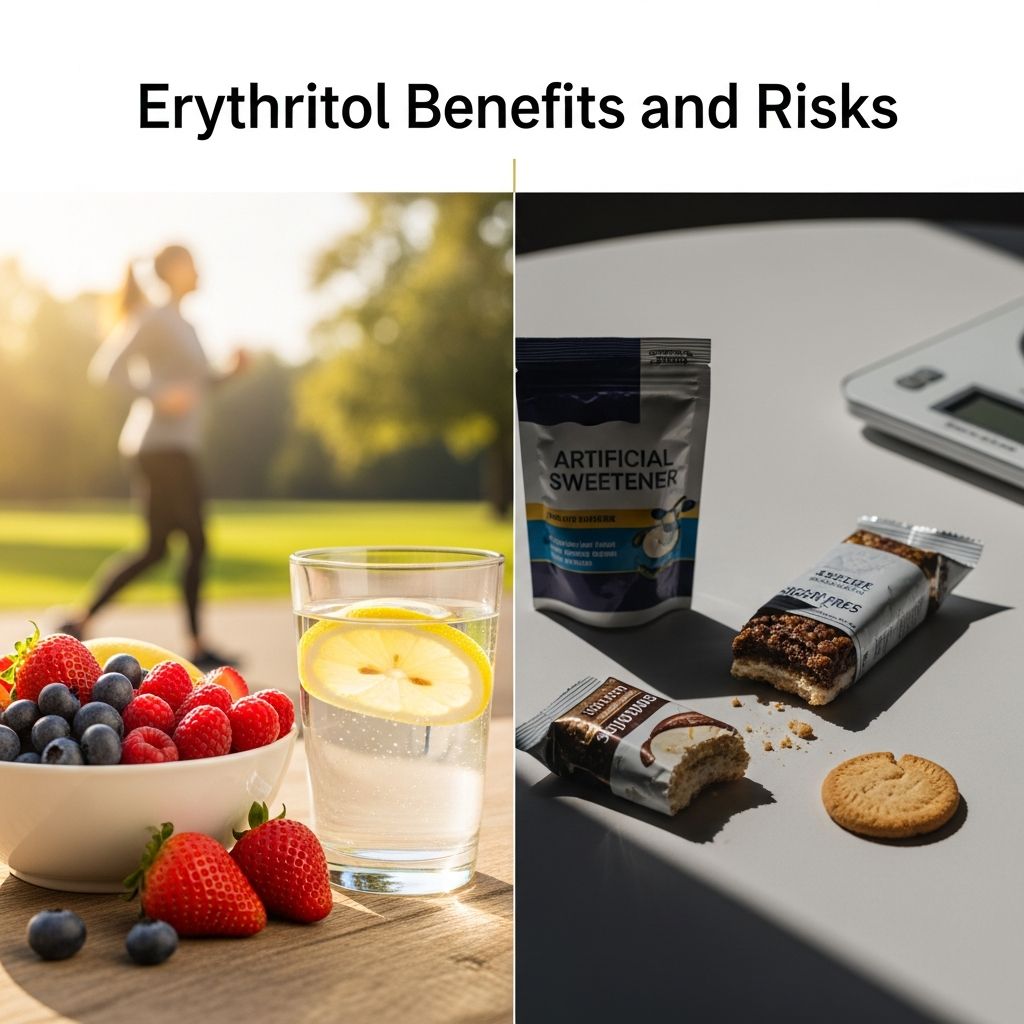
Erythritol is a
sugar alcohol
widely used as a low-calorie sweetener in sugar-free and keto-friendly products. Naturally occurring in small amounts in fruits like grapes and melons, it’s produced commercially via fermentation for use in foods and beverages. While promoted for itszero-calorie
appeal and minimal impact on blood sugar, recent research has raised concerns about potential cardiovascular risks.What Is Erythritol?
**Erythritol** (C4H10O4) is a polyol, or sugar alcohol, that tastes 60-70% as sweet as table sugar (sucrose) but provides only 0-0.2 calories per gram. Unlike other sugar alcohols like xylitol or maltitol, about 90% is absorbed in the small intestine and excreted unchanged in urine, minimizing digestive issues. The U.S. Food and Drug Administration (FDA) classifies it as “Generally Recognized as Safe” (GRAS), and it’s approved in over 60 countries. Daily intake averages 13 grams in the U.S., often from gum, candies, and diet sodas.
Unlike artificial sweeteners like aspartame, erythritol is derived from natural fermentation of glucose (from corn or wheat starch) using yeast like Moniliella pollinis. This makes it appealing for those seeking “natural” alternatives. However, the body can also endogenously produce erythritol from glucose, with levels varying genetically.
Potential Health Benefits of Erythritol
Erythritol gained popularity for replacing sugar in low-carb diets. Here’s a breakdown of its purported benefits:
- Low Calorie Content: At 0-0.2 kcal/g, erythritol supports weight management by reducing overall calorie intake without sacrificing sweetness.
- Blood Sugar Control: It has a
glycemic index of 0
, making it ideal for people with diabetes. Studies show no significant impact on blood glucose, insulin, cholesterol, or triglycerides. - Dental Health: Non-fermentable by oral bacteria, erythritol doesn’t promote tooth decay and may inhibit plaque formation, similar to xylitol.
- Antioxidant Potential: Early animal studies suggested benefits in diabetes models, including improved endothelial function after 4-week consumption.
These advantages stem from older research (pre-2020), positioning erythritol as a top choice for keto, diabetic, and weight-loss diets.
Recent Concerns: Cardiovascular Risks
Emerging studies challenge erythritol’s safety profile, particularly for heart health. A pivotal 2023 Cleveland Clinic study (n=4,000+ across U.S./Europe) found higher circulating erythritol levels independently predicted major adverse cardiovascular events (MACE)—heart attack, stroke, death—within 3 years. This held across subgroups, adjusted for traditional risk factors.
Mechanistic evidence shows erythritol enhances
platelet reactivity
andthrombosis
:- In vitro: Boosts platelet adhesion under shear stress and calcium release, promoting aggregation.
- In vivo (mice): Accelerates clot formation and reduces time to arterial occlusion in injury models.
- Human trial (n=8): A 30g dose (e.g., one keto ice cream pint) spiked plasma levels >1,000x baseline, sustained >2 days—exceeding thrombosis thresholds.
2025 University of Colorado research exposed brain endothelial cells to erythritol: It reduced nitric oxide (vasodilator), increased endothelin-1 (vasoconstrictor), blunted clot-busting t-PA, and elevated reactive oxygen species (ROS), potentially raising stroke risk. Similar findings from American Physiological Society confirm oxidative stress in brain/heart cells.
| Study | Key Finding | Source |
|---|---|---|
| Cleveland Clinic (2023) | Higher erythritol → 2x MACE risk | |
| Univ. Colorado (2025) | Impaired brain vessels, ↑ stroke risk | |
| Human PK (2023) | 30g dose: levels elevated 2+ days |
Digestive Tolerance and Side Effects
Erythritol excels here compared to other polyols. A 2007 study found no diarrhea, nausea, or bloating at 20-35g doses, unlike xylitol. This is because <10% reaches the colon for fermentation, avoiding osmotic diarrhea. The European Commission notes a laxative threshold higher than similar sugars (~0.5-1g/kg body weight), with U.S. averages well below.
Related Stories



However, sensitive individuals may experience gas or mild discomfort at high doses (>50g). Allergic reactions are rare.
Erythritol and Weight Management
Its near-zero calories make erythritol useful for calorie restriction. Older studies support substitution for sugar in weight-control diets without metabolic disruptions. Yet, newer data doesn’t address long-term body composition effects, as endogenous production varies. No evidence links it to weight gain, but over-reliance on sweetened products may hinder habit change.
Is Erythritol Safe for People With Diabetes?
Yes, per guidelines—**ADA** and
EFSA
endorse it for glycemic control. It doesn’t spike blood sugar/insulin, aiding diabetes management. However, cardiovascular risks warrant caution for those with existing heart disease, as MACE associations persist post-adjustment.How to Use Erythritol Safely
- Moderation: Limit to <30g/day to avoid postprandial spikes.
- Check labels: Common in “sugar-free” gum, chocolate, ice cream, beverages.
- Combine wisely: Pairs with stevia/monk fruit for full sweetness.
- Baking: 1:1 sugar substitute, but may crystallize—blend with monk fruit.
- High-risk groups (CVD, clotting disorders): Consult a doctor; monitor intake.
Whole foods remain best; use erythritol as a tool, not staple.
Alternatives to Erythritol
| Sweetener | Calories/g | GI | Pros | Cons |
|---|---|---|---|---|
| Stevia | 0 | 0 | Natural, no aftertaste in extracts | Bitter aftertaste possible |
| Monk Fruit | 0 | 0 | Antioxidant-rich | Expensive, less available |
| Allulose | 0.4 | 0 | Browns like sugar | Newer, pricier |
| Xylitol | 2.4 | 7 | Dental benefits | GI upset common |
Frequently Asked Questions (FAQs)
What is erythritol made from?
Erythritol is fermented from glucose (corn/wheat starch) using yeast. It’s also naturally in fruits.
Does erythritol raise blood sugar?
No, glycemic index is 0; safe for diabetes.
Is erythritol bad for your heart?
Recent studies link high levels to clotting/heart risks; moderation advised.
How much erythritol is too much?
<30g/day generally safe; spikes last days post-30g.
Can erythritol cause stomach problems?
Rarely; better tolerated than other sugar alcohols.
Is erythritol natural?
Occurs in nature but commercial versions are processed.
References
- Erythritol: What is it, nutrition, and benefits — Medical News Today. 2018-05-23 (updated). https://www.medicalnewstoday.com/articles/318392
- The artificial sweetener erythritol and cardiovascular event risk — PMC (Nature Medicine). 2023-02-27. https://pmc.ncbi.nlm.nih.gov/articles/PMC10334259/
- Common sugar substitute shown to impair brain cells, boost stroke risk — University of Colorado Boulder. 2025-07-14. https://www.colorado.edu/today/2025/07/14/common-sugar-substitute-shown-impair-brain-cells-boost-stroke-risk
- Don’t Panic — You Can Still Use Artificial Sweeteners — Orlando Health. 2023 (approx). https://www.orlandohealth.com/content-hub/dont-panic-you-can-still-use-artificial-sweeteners/
- Popular Sugar Substitute May Harm Brain and Heart Health — American Physiological Society. 2025-04-25. https://www.physiology.org/detail/news/2025/04/25/popular-sugar-substitute-may-harm-brain-and-heart-health
Similar Articles








Read full bio of medha deb