Erythromelalgia: Guide To Symptoms, Causes & Treatment
Rare condition causing episodes of burning pain, redness, and heat in extremities like feet and hands.
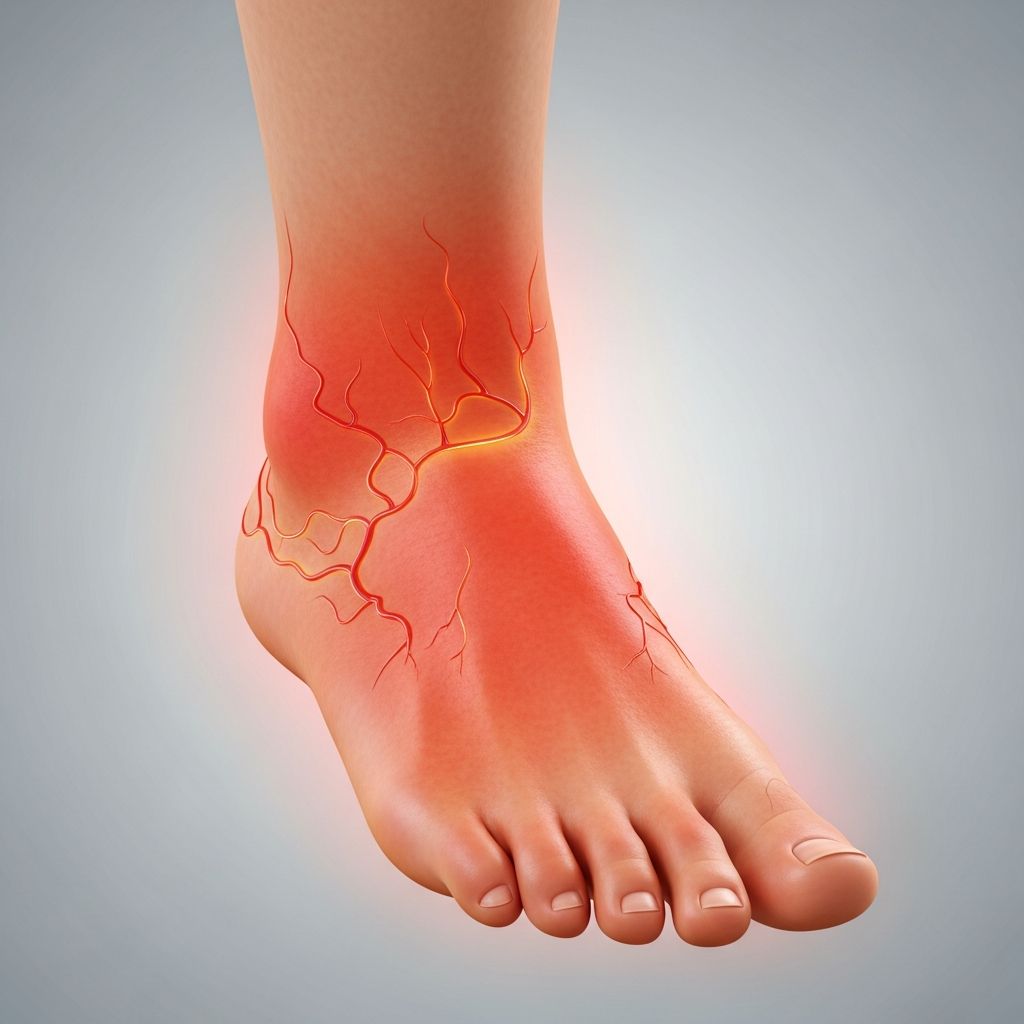
Erythromelalgia is a rare neurovascular disorder characterised by recurrent episodes of burning pain, redness and increased skin temperature, usually affecting the feet and hands.
What is erythromelalgia?
Erythromelalgia is also known as Mitchell’s disease, erythermalgia and acromelalgia. The name erythromelalgia comes from three Greek words meaning red (erythema), limb (melos) and pain.
The hallmark symptoms of erythromelalgia are pain, erythema (redness) and increased temperature of the extremities (predominantly feet and hands). The episodes of symptoms are intermittent and may last from minutes to days. Attacks are often triggered by warmth and relieved by cooling.
Primary erythromelalgia is a genetic disorder whereas secondary erythromelalgia arises from an underlying condition.
Who gets erythromelalgia (primary vs secondary)?
Primary erythromelalgia is rare, affecting approximately 0.25–2 per 100 000 people. It affects males and females equally and usually begins in middle adulthood, but can occur at any age.
Secondary erythromelalgia is more common than primary erythromelalgia. It occurs in association with myeloproliferative disorders such as polycythaemia vera and essential thrombocythaemia, and may be the presenting feature of these disorders.
- Polycythaemia vera and essential thrombocythaemia are associated with erythromelalgia in 60–90% of cases.
- Secondary erythromelalgia can also occur with other conditions such as hypertension, venous insufficiency and connective tissue diseases.
What causes erythromelalgia?
Primary erythromelalgia
Primary erythromelalgia is caused by gain-of-function mutations in the SCN9A gene, which encodes the α subunit of the voltage-gated sodium channel Nav1.7. These mutations result in hyperexcitability of peripheral sensory neurones.
Inherited cases are inherited in an autosomal dominant manner with variable penetrance and variable age of onset.
Secondary erythromelalgia
Secondary erythromelalgia is associated with:
- Myeloproliferative neoplasms (polycythaemia vera, essential thrombocythaemia)
- Other haematological disorders (leukaemia, thrombocythaemia)
- Autoimmune disorders (systemic lupus erythematosus, rheumatoid arthritis)
- Neurological disorders (multiple sclerosis)
- Endocrine disorders (diabetes mellitus)
- Cardiovascular disorders (hypertension, venous insufficiency)
- Infections (mycoplasma, HIV)
- Medications (calcium-channel blockers, nifedipine, verapamil)
The underlying mechanism is thought to involve microvascular arteriovenous shunting, platelet aggregation and release of vasoactive substances.
What are the clinical features of erythromelalgia?
Attacks typically consist of:
- Burning pain (may be severe)
- Erythema (redness)
- Increased skin temperature
- Oedema (swelling)
Feet are affected in 85–95% of cases, hands in 60–80%. Other sites include face, ears and knees.
Attacks are triggered by:
- Increase in body or skin temperature (warm weather, hot baths, exercise, standing)
- Pressure (tight shoes, gloves)
- Alcohol, spicy foods
- Stress
Relief is obtained by:
- Cooling (fan, cool water immersion, elevation)
Prolonged cooling can lead to skin damage (maceration, ulceration).
Clinical images
Images show erythematous and oedematous feet and hands during attacks.
How is erythromelalgia diagnosed?
Diagnosis is clinical, based on history and examination. The International Diagnostic Criteria require:
Related Stories



- Major criteria:
- (1) Burning pain, erythema and increased temperature in feet (or hands)
- (2) Relief with cooling
- (3) Onset before 20 years (primary) or after 20 years (secondary)
- Minor criteria:
- (1) Symmetrical involvement
- (2) Triggers: heat, exercise
Differential diagnosis includes:
| Condition | Distinguishing features |
|---|---|
| Complex regional pain syndrome | Unilateral, trauma history |
| Peripheral neuropathy | Sensory loss, paraesthesia |
| Raynaud phenomenon | Pallor, cyanosis, cold triggers |
| Chilblains | Cold exposure, chronic lesions |
| Small fibre neuropathy | Biopsy confirmation |
Investigations may include:
- Full blood count, ESR, electrophoresis to exclude myeloproliferative disorders
- Skin biopsy (rarely helpful)
- Genetic testing for SCN9A mutations in suspected primary cases
What is the treatment for erythromelalgia?
General measures
- Avoid triggers: keep cool, avoid heat, exercise in moderation, loose clothing/shoes, rest and elevate limbs
- Cooling: fans, cool (not ice-cold) water immersion; avoid prolonged immersion
- Mental health support: pain can cause anxiety/depression
Specific treatments
Primary erythromelalgia:
- Sodium channel blockers: mexiletine, carbamazepine
- Anticonvulsants: gabapentin, pregabalin
- Antidepressants: venlafaxine, amitriptyline
- Topical: lidocaine, capsaicin
Secondary erythromelalgia (myeloproliferative disorders):
- Aspirin (excellent response)
- Treat underlying disorder: hydroxyurea, anagrelide, interferon
Other options include calcium channel blockers, prostaglandins (misoprostol), SSRIs.
What is the outlook for erythromelalgia?
Primary erythromelalgia is lifelong but manageable. Secondary erythromelalgia may improve with treatment of underlying cause. Quality of life can be significantly impaired by pain.
Frequently asked questions
Is erythromelalgia life-threatening?
No, but severe pain impacts quality of life. Complications from cooling include skin damage.
Can erythromelalgia be cured?
No cure; management focuses on symptom control and trigger avoidance.
Does aspirin help erythromelalgia?
Yes, particularly in secondary cases linked to myeloproliferative disorders.
What triggers erythromelalgia flares?
Heat, exercise, alcohol, spicy food, stress, tight shoes.
How is erythromelalgia diagnosed?
Clinical diagnosis based on burning pain, redness, heat relieved by cooling.
References
- Erythromelalgia – StatPearls — NCBI Bookshelf. 2023-08-08. https://www.ncbi.nlm.nih.gov/books/NBK557787/
- Erythromelalgia – symptoms, causes and treatment — Healthdirect (Australian Government). 2024. https://www.healthdirect.gov.au/erythromelalgia
- Erythromelalgia — NORD (National Organization for Rare Disorders). 2023. https://rarediseases.org/rare-diseases/erythromelalgia/
- Erythromelalgia: Symptoms, Causes, Treatment — Cleveland Clinic. 2023-11-03. https://my.clevelandclinic.org/health/diseases/22752-erythromelalgia
- Erythromelalgia — NHS (UK National Health Service). 2020-10-20. https://www.nhs.uk/conditions/erythromelalgia/
Similar Articles








Read full bio of medha deb