Erythromycin: Uses, Dosage, Side Effects, And Precautions
Comprehensive guide to erythromycin: uses, dosage, side effects, and precautions for treating bacterial infections effectively.
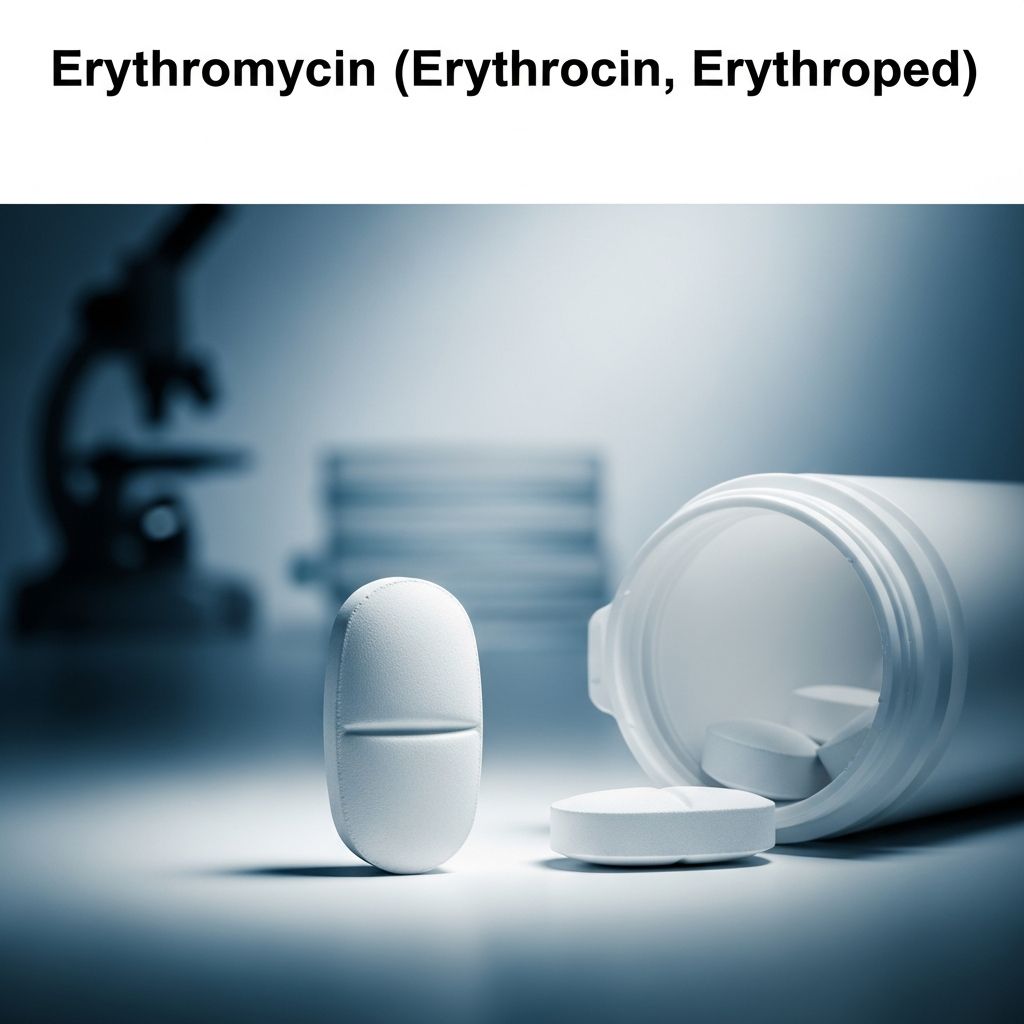
Erythromycin is a macrolide antibiotic effective against a wide range of bacterial infections. It is commonly prescribed under brand names like Erythrocin and Erythroped for conditions such as respiratory tract infections, skin infections, and sexually transmitted infections. This article provides detailed information on its uses, how to take it, possible side effects, and important precautions.
About Erythromycin
Erythromycin belongs to the macrolide class of antibiotics, which work by stopping bacterial growth rather than killing bacteria directly. It binds to the 50S subunit of the bacterial ribosome, inhibiting protein synthesis essential for bacterial replication. This bacteriostatic action targets gram-positive bacteria like streptococci and staphylococci, as well as some gram-negative pathogens, Mycoplasma, Chlamydia, and Legionella.
Unlike human cells, which use 40S and 60S ribosomal subunits, bacteria rely on the 50S subunit, making erythromycin selective for bacterial protein production without significantly affecting human cells. It is available in oral tablets, capsules, suspensions, and intravenous forms, with topical preparations for acne. Erythromycin has been a cornerstone treatment since the 1950s, particularly for patients allergic to penicillin.
Before Taking Erythromycin
Allergies
Do not take erythromycin if you are allergic to it or other macrolide antibiotics like azithromycin or clarithromycin. Inform your doctor of any history of allergic reactions, such as rash, swelling, or breathing difficulties.
Pregnancy and Breastfeeding
Erythromycin is generally considered safe during pregnancy (Category B) and is often used to prevent Group B streptococcal infection in newborns or treat chlamydial infections in pregnant women. It passes into breast milk in small amounts but is usually compatible with breastfeeding; monitor the infant for diarrhea or thrush. Consult your doctor for personalized advice.
Other Medical Problems
- Heart conditions: Avoid if you have prolonged QT interval (QTc >440 ms in males, >460 ms in females) due to risk of QT prolongation and arrhythmias.
- Liver disease: Use cautiously as clearance is reduced in cirrhosis, increasing toxicity risk.
- Myasthenia gravis: May worsen muscle weakness.
- Electrolyte imbalances: Low potassium or magnesium increases cardiac risks.
Medicines and Interactions
Erythromycin inhibits cytochrome P-450 enzymes (CYP3A4), raising levels of drugs like statins, warfarin, theophylline, and antiarrhythmics, potentially causing toxicity. It interacts with QT-prolonging drugs (e.g., amiodarone), increasing torsades de pointes risk. Avoid with pimozide, ergotamines, or colchicine. Always provide your doctor with a full medication list, including over-the-counter drugs and supplements.
How and When to Take Erythromycin
Dosage
Dosage varies by infection, age, and formulation. Typical adult doses for oral erythromycin are 250-500 mg every 6 hours or 400-800 mg of ethylsuccinate every 6-12 hours. For children, it’s 30-50 mg/kg/day divided into doses. Complete the full course to prevent resistance, even if symptoms improve.
Related Stories



| Condition | Adult Dose | Pediatric Dose |
|---|---|---|
| Respiratory infections | 250-500 mg QID | 40 mg/kg/day divided QID |
| Chlamydia | 500 mg QID x 7 days | 50 mg/kg/day divided QID x 14 days |
| Prophylaxis (rheumatic fever) | 250 mg BID | 250 mg BID |
How to Take It
- Take with a full glass of water to prevent esophageal irritation.
- With food or milk to reduce stomach upset, though this may slightly decrease absorption.
- Shake suspensions well; use measuring devices for accurate dosing.
- Space doses evenly; set reminders for 6-12 hourly regimens.
- For eye ointment, apply as directed post-delivery to prevent neonatal conjunctivitis.
Miss a dose? Take it as soon as remembered unless near the next dose; do not double up. If overdose occurs (severe nausea, vomiting), seek emergency care.
Side Effects of Erythromycin
Most side effects are gastrointestinal and mild, resolving after treatment. Serious effects are rare but require immediate medical attention.
Common Side Effects
- Nausea, vomiting, diarrhea, abdominal pain (affecting up to 25% of patients).
- Loss of appetite, heartburn.
These occur due to erythromycin’s motilin agonist effects, speeding gut motility.
Serious Side Effects
- Heart: QT prolongation, palpitations, fainting (monitor ECG in at-risk patients).
- Liver: Hepatitis, jaundice (more common with estolate form, especially in pregnancy).
- Intestine: Pseudomembranous colitis (Clostridium difficile-associated diarrhea).
- Allergic: Rash, swelling, anaphylaxis.
- Other: Hearing loss (high IV doses), pancreatitis.
Report persistent diarrhea, yellowing skin, irregular heartbeat, or severe pain promptly.
How to Cope with Side Effects
- Stomach upset: Take with food; try antacids (avoid within 2 hours if possible).
- Diarrhea: Stay hydrated; use probiotics if approved; seek help if bloody or severe.
- Nausea: Small frequent meals, ginger, or antiemetics as prescribed.
Resistance is rising; susceptibility testing is recommended.
Pregnancy and Breastfeeding
Safe in pregnancy for indicated uses like chlamydia or GBS prophylaxis. Stearate and ethylsuccinate forms preferred over estolate to avoid cholestatic jaundice. Small amounts in breast milk; watch for infant GI upset or candidiasis.
Other Precautions
- Finish the course to avoid resistance.
- Not for viral infections (colds, flu).
- Monitor liver function in long-term use.
- IV form for severe infections; switch to oral when possible.
What if I Forget a Dose or Overdose?
Forget: Take ASAP, skip if almost next dose. Overdose: Symptoms include severe GI distress; call poison control or go to ER.
Analgesics and Interactions
No direct analgesic effects. Key interactions noted earlier; review with pharmacist.
Frequently Asked Questions
Can I drink alcohol while taking erythromycin?
Moderate alcohol is usually fine but may worsen GI side effects. Avoid heavy drinking.
Is erythromycin a strong antibiotic?
It is effective for susceptible bacteria but resistance limits use; often first-line for penicillin-allergic patients.
How long does erythromycin take to work?
Improvement in 48-72 hours; complete full course.
Does erythromycin treat acne?
Yes, topical forms or oral for moderate acne.
Can children take erythromycin?
Yes, dosed by weight; common for whooping cough or ear infections.
References
- Erythromycin – StatPearls — Prashant Ahlawat; Isaac F. Su; Muhammad Usman. 2023-07-17. https://www.ncbi.nlm.nih.gov/books/NBK532249/
- Erythromycin: Uses, Interactions, Mechanism of Action — DrugBank Online. 2023-11-01. https://go.drugbank.com/drugs/DB00199
- Erythromycin (oral route) — Mayo Clinic. 2024-05-01. https://www.mayoclinic.org/drugs-supplements/erythromycin-oral-route/description/drg-20075495
- Erythromycin — MedlinePlus. 2023-09-15. https://medlineplus.gov/druginfo/meds/a682381.html
- Erythromycin (E-Mycin, Ery-Tab) — Davis’s Drug Guide. 2024-01-10. https://www.drugguide.com/ddo/view/Davis-Drug-Guide/110750/all/ERYTHROMYCIN
Similar Articles








Read full bio of Sneha Tete