Erythropoietic Protoporphyria: Diagnosis, Treatment, And Care
Rare genetic disorder causing painful sun-induced skin reactions without blisters, managed through avoidance and emerging therapies.
Erythropoietic protoporphyria (EPP) is a rare inherited metabolic disorder characterized by deficiency of the enzyme ferrochelatase (FECH), leading to accumulation of protoporphyrin IX in red blood cells, plasma, and sometimes the liver. This causes acute, non-blistering photosensitivity with severe pain upon visible light exposure, typically starting in early childhood.
What is Erythropoietic Protoporphyria?
EPP belongs to the group of porphyrias, disorders of heme biosynthesis. Heme, essential for hemoglobin, requires ferrochelatase to insert iron into protoporphyrin IX. In EPP, partial FECH deficiency results in protoporphyrin buildup, which is fluorescent and phototoxic under visible light (400-410 nm, Soret band). Unlike other porphyrias, EPP features no blisters but intense burning pain lasting days.
EPP affects 1 in 75,000-200,000 people, with equal male-female prevalence. A related condition, X-linked protoporphyria (XLP), arises from ALAS2 gain-of-function mutations, clinically identical but with higher zinc protoporphyrin.
Who gets Erythropoietic Protoporphyria (Epidemiology)?
EPP manifests in infancy or early childhood, often noticed during first sun exposure. Inheritance is autosomal recessive for EPP: one rare pathogenic FECH variant from one parent and a common low-expression variant (c.315–48T>C) from the other in >90% of cases. XLP is X-linked dominant with incomplete penetrance.
- Prevalence: Rare, ~1:100,000 in populations of Northern European descent.
- Age of onset: <2 years in most, symptoms lifelong.
- Risk factors: Family history, fair skin increases symptom severity.
Clinical Features of Erythropoietic Protoporphyria
Symptoms are triggered by visible light, not UVA/UVB like sunburn. Protoporphyrin in dermal capillaries absorbs light, generating reactive oxygen species (ROS) causing inflammation, pain without initial erythema or blisters.
Skin Signs
- Acute: Burning/itching within minutes of exposure, peaking 6-12 hours, lasting 2-7 days. Affects face, hands, arms.
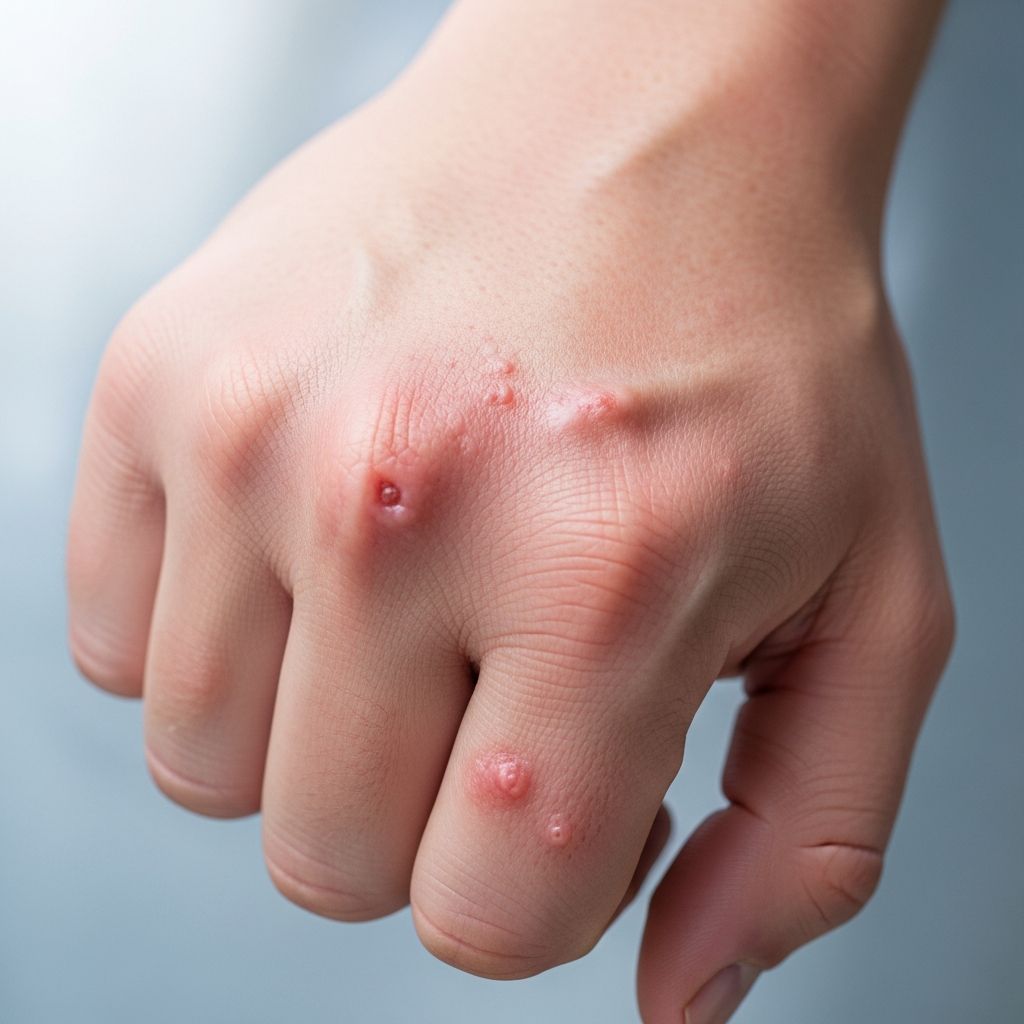
- Chronic: Thickened, waxy skin on knuckles, dorsum of hands; scarring, leathery texture; nail grooves; mimic photoaged skin.
Symptoms
| Phase | Symptoms | Duration |
|---|---|---|
| Immediate | Tingling, burning pain | Minutes post-exposure |
| Acute | Severe pain, edema, purpura | 24-48 hours |
| Resolution | Peeling, hyperpigmentation | Days to weeks |
Patients avoid outdoors, impacting quality of life profoundly.
Liver Complications
5-10% develop cholelithiasis (protoporphyrin gallstones); <5% protoporphyric hepatopathy, potentially fatal, requiring transplant. Risk factors: high protoporphyrin levels, iron deficiency.
Other Features
- Iron deficiency common (microcytic anemia).
- Vitamin D deficiency from sun avoidance.
- Psychosocial: Anxiety, depression from lifestyle restrictions.
Pathophysiology
Heme synthesis disruption: Reduced FECH activity prevents protoporphyrin IX to heme conversion, leading to its accumulation in erythrocytes (metal-free >85% in EPP, vs. 50-85% in XLP), plasma, liver. Light-activated protoporphyrin produces ROS, damaging endothelium, complement activation, mast cell degranulation, pain via nerve stimulation.
- Key enzyme: Ferrochelatase (FECH).
- Trigger: Visible light (blue spectrum).
- Liver risk: Insoluble protoporphyrin precipitates in bile/hepatocytes.
Related Stories



Diagnosis of Erythropoietic Protoporphyria
Suspect in childhood-onset non-blistering photosensitivity. Confirm biochemically; genetics supportive.
Investigations
- Erythrocyte Protoporphyrin: Elevated total (>80 µmol/L), predominantly metal-free (>80%). Differentiates from XLP (zinc protoporphyrin higher).
- Plasma Porphyrins: Elevated fluorescence peak at 635 nm.
- Genetic Testing: FECH biallelic variants (EPP); ALAS2 hemizygous (XLP males/carrier females).
- LFTs, CBC, Ferritin: Monitor liver, iron status.
- Urine porphyrins normal (distinguishes from cutaneous porphyrias).
Wood’s lamp: Red fluorescence of teeth (rare).
Differential Diagnieses
| Condition | Key Differences |
|---|---|
| Polymorphic Light Eruption | Blisters, UVA trigger, later onset. |
| Hydroa Vacciniforme | Vesicles, scars, rare. |
| Variegate Porphyria | Blisters, neurovisceral attacks, urine porphyrins. |
| Solar Urticaria | Hives immediate, antihistamine responsive. |
| XLP | Similar, but protoporphyrin ratio differs. |
Disease Severity Classification
No formal scale, but based on protoporphyrin levels, liver involvement, quality of life:
- Mild: Low levels, minimal avoidance needed.
- Moderate: Daily pain, lifestyle impact.
- Severe: High levels, liver disease, frequent ER visits.
Treatment of Erythropoietic Protoporphyria
No cure; focus on photoprotection, symptom relief, complication prevention.
Photoprotection
- Clothing: UPF 50+, gloves, hats.
- Sunscreens: Iron oxide, broad-spectrum (limited efficacy for visible light).
- Avoid 10am-4pm sun; indoor preference.
Medical Therapies
- Afamelanotide (Scenesse): FDA/EMA-approved α-MSH analog; increases melanin, eumelanin for photoprotection. Subcutaneous implant q60 days; reduces pain duration.
- Tafamidis: Emerging, reduces protoporphyrin.
- Iron Supplementation: If ferritin <20 ng/mL, lowers protoporphyrin.
- Analgesics: NSAIDs, opioids for flares; avoid triggers.
Liver Management
- Monitor LFTs, porphyrins q6-12 months.
- Cholestyramine: Bind intestinal protoporphyrin.
- Transplant for end-stage hepatopathy.
Supportive
- Vitamin D 2000-4000 IU daily.
- Low-fat diet? (controversial for gallstones).
- Counseling for psychosocial impact.
Photosensitivity Protection Advice
- Wear densely woven fabrics, test with light meter.
- Window film blocks visible light.
- Plan activities pre-dawn/dusk.
Investigations to Monitor Severity
- Annual: Erythrocyte/plasma porphyrins, LFTs, CBC, ferritin, PT.
- Escalate if ALT >5x ULN or rising porphyrins.
Prevention of Complications
- Liver: Routine monitoring, ursodiol if cholestasis.
- Gallstones: Ultrasound screening.
- Osteoporosis: DEXA, calcium/vit D.
Prognosis and Follow-Up
Excellent cutaneous prognosis with management; life expectancy normal barring liver failure (<5%). Multidisciplinary: dermatology, hematology, hepatology. Genetic counseling essential.
Guidelines
Evidence-based consensus: Diagnosis by erythrocyte PPIX fractionation; monitor per risk; afamelanotide first-line.
Emerging Therapies
- Givosiran (siRNA ALAS1, off-label).
- Gene therapy trials.
Frequently Asked Questions
Q: When do EPP symptoms start?
A: Typically in infancy upon first significant sun exposure, with lifelong persistence.
Q: Does EPP cause blisters?
A: No, unlike other porphyrias; pain without blisters is hallmark.
Q: Can EPP affect the liver?
A: Yes, 5-10% gallstones, <5% severe hepatopathy requiring transplant.
Q: Is there a cure for EPP?
A: No cure, but afamelanotide improves tolerance; photoprotection key.
Q: How is EPP inherited?
A: Autosomal recessive (FECH); XLP X-linked.
References
- Evidence Based Consensus Guidelines for Diagnosis and Management of Erythropoietic Protoporphyria — Balwani M et al. 2024. https://pmc.ncbi.nlm.nih.gov/articles/PMC10818013/
- Erythropoietic Protoporphyria: Diagnosis, Treatment and Care — Rupa Health. 2024. https://www.rupahealth.com/post/erythropoietic-protoporphyria-diagnosis-treatment-and-care
- Erythropoietic Protoporphyria (EPP) and X-Linked Protoporphyria (XLP) — American Porphyria Foundation. 2024. https://porphyriafoundation.org/for-patients/types-of-porphyria/epp-xlp/
- EPP/XLP — Canadian Porphyria Network. 2024. https://www.porphyria.org/epp-xlp
- Erythropoietic Protoporphyria — NORD. 2024. https://rarediseases.org/rare-diseases/erythropoietic-protoporphyria/
- Erythropoietic Protoporphyria and X-linked Protoporphyria — Merck Manual Professional. 2024. https://www.merckmanuals.com/professional/endocrine-and-metabolic-disorders/the-porphyrias/erythropoietic-protoporphyria-and-x-linked-protoporphyria
- Evidence-based consensus guidelines for the diagnosis and management — PubMed. 2022-09-01. https://pubmed.ncbi.nlm.nih.gov/36041558/
Similar Articles








Read full bio of Sneha Tete