Esophageal Atresia: Causes, Symptoms, Diagnosis & Treatment
Understanding esophageal atresia: A congenital condition affecting newborn feeding and breathing.
Understanding Esophageal Atresia
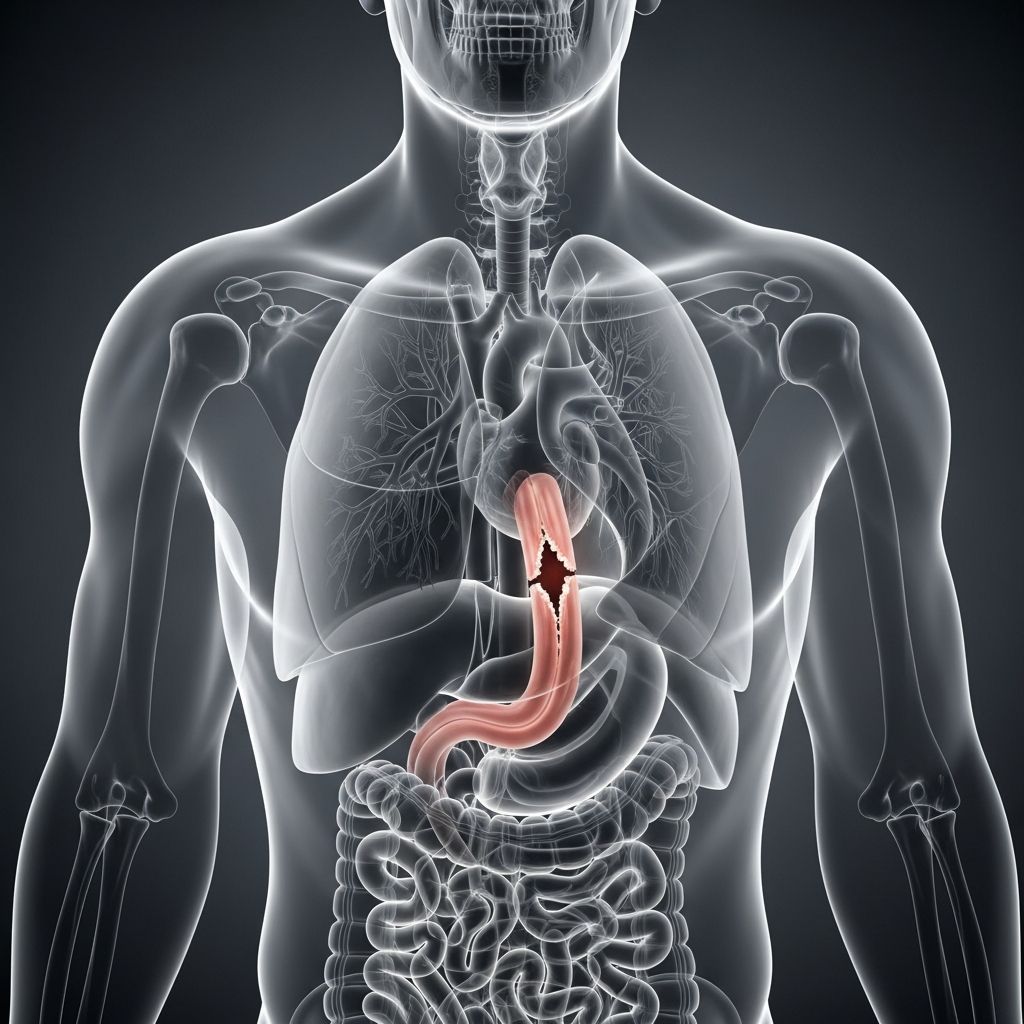
Esophageal atresia (EA) is a serious birth defect that affects how your baby’s esophagus, commonly known as the swallowing tube, develops during pregnancy. In this condition, the esophagus does not properly connect to the stomach, which means the baby cannot swallow food or liquids normally after birth. This congenital malformation occurs early in fetal development and requires immediate medical attention and surgical intervention. Esophageal atresia is a relatively common congenital condition, affecting approximately one in 2,500 live births.
The condition often occurs in conjunction with another abnormality called a tracheoesophageal fistula (TEF), where an abnormal connection forms between the esophagus and the trachea (windpipe). When both conditions are present together, they create a complex medical situation that requires specialized surgical expertise. Understanding this condition, its symptoms, and available treatment options is crucial for parents and healthcare providers to ensure the best possible outcomes for affected infants.
What is Esophageal Atresia?
Esophageal atresia is a birth defect in which the upper part of the esophagus (the tube that carries food from the mouth to the stomach) ends in a blind pouch and does not connect to the lower part of the esophagus. This means food and liquids cannot pass normally from the mouth to the stomach. The condition develops during the first few weeks of pregnancy when the fetus is developing, and it occurs before a baby is born.
In many cases, esophageal atresia occurs alongside a tracheoesophageal fistula, which is an abnormal connection between the esophagus and the trachea. This dual condition is abbreviated as EA/TEF. The presence of both conditions can complicate the clinical presentation and treatment approach, as both the feeding pathway and the airway are affected.
Recognizing the Symptoms: The “Three Cs”
Healthcare providers learn to recognize esophageal atresia by observing a distinctive pattern known as the “three Cs,” which help clinicians quickly identify affected newborns:
Choking: Babies with esophageal atresia often choke or gag during their first feeding attempts. Since the esophagus doesn’t connect properly to the stomach, any attempt to feed the baby results in choking as food cannot pass into the stomach.
Cyanosis: Cyanosis, characterized by a bluish discoloration of the skin and lips, may occur due to breathing difficulties. When a tracheoesophageal fistula is present, the abnormal connection between the esophagus and airway can interfere with normal breathing and oxygenation.
Coughing: Persistent coughing, especially during feeding attempts, is a common symptom. The coughing occurs because fluid intended for the esophagus may inadvertently enter the airway through the fistula or because the baby is having difficulty coordinating swallowing and breathing.
Additional Signs and Symptoms
Beyond the classic “three Cs,” several other symptoms may indicate esophageal atresia in a newborn:
Excessive drooling is often one of the first signs parents notice. Because the baby cannot swallow normally, saliva accumulates in the mouth and drips out. Respiratory distress may be present, manifested by rapid or labored breathing, retractions of the chest wall, or other signs of airway compromise. Abdominal distension, caused by air entering the stomach through the fistula, may be visible. Refusal to feed or difficulty with initial feeding attempts is typical, as the baby cannot safely ingest food or formula.
Related Stories



While many different esophageal disorders can cause swallowing difficulties in babies, most do not cause breathing difficulties. The simultaneous presence of both swallowing and breathing problems typically indicates esophageal atresia with a tracheoesophageal fistula, which is an important diagnostic clue for healthcare providers.
Causes and Risk Factors
The exact cause of esophageal atresia remains unclear, as it develops during early fetal development before birth. The condition results from abnormal development of the esophagus and potentially the trachea during the first weeks of pregnancy. Researchers believe that during normal development, the respiratory system and digestive system should separate completely, but in esophageal atresia, this separation does not occur properly.
Certain maternal and genetic factors may increase the risk of esophageal atresia. Advanced maternal age, gestational diabetes, and certain maternal medications have been associated with increased risk. Additionally, esophageal atresia can be part of genetic syndromes such as VACTERL association (vertebral anomalies, anal atresia, cardiac defects, tracheoesophageal fistula, renal anomalies, and limb abnormalities). Prenatal diagnosis through ultrasound screening, particularly when polyhydramnios (excessive amniotic fluid) is detected, can sometimes suggest the diagnosis before birth.
Diagnosis and Evaluation
Healthcare providers can confirm the diagnosis of esophageal atresia and determine its type through various diagnostic methods. X-ray imaging is the primary tool used to visualize the nature of the defect. During this imaging, a small catheter or tube is often passed through the baby’s mouth into the esophagus. If the tube cannot advance beyond a certain point and coils back on itself, this suggests esophageal atresia. X-rays will also reveal whether the baby has fluid in their lungs or air in their stomach, both of which can indicate the presence of a tracheoesophageal fistula.
After diagnosing esophageal atresia, healthcare providers conduct comprehensive screening for other congenital malformations that commonly occur alongside this condition. Since esophageal atresia is frequently part of the VACTERL association, babies are evaluated for cardiac defects, renal anomalies, spinal abnormalities, and other structural problems. Some of these associated conditions may require treatment before or alongside the repair of the esophageal atresia.
Specialized imaging studies such as esophagograms (barium swallow studies) or contrast studies may be performed to further characterize the anatomy. Bronchoscopy, a procedure in which a small camera is inserted into the windpipe, helps identify fistulas and determine the exact location and nature of any abnormal connections between the esophagus and trachea.
Immediate Management and Stabilization
Once esophageal atresia is suspected or diagnosed, immediate interventions are necessary to protect the baby’s airway and prevent aspiration. The baby is not fed by mouth, as this can result in choking or aspiration. Instead, intravenous (IV) fluids are started to provide necessary hydration and nutrition. If the baby is having difficulty breathing or maintaining adequate oxygen levels, breathing support such as supplemental oxygen or mechanical ventilation may be required.
A nasogastric tube may be placed to keep the upper pouch of the esophagus decompressed, preventing fluid from pooling and potentially entering the airway. Keeping the baby in a semi-upright position helps prevent aspiration and facilitates breathing. The baby is typically admitted to the Neonatal Intensive Care Unit (NICU), where specialized monitoring and care can be provided by experienced healthcare teams.
Surgical Treatment Options
The definitive treatment for esophageal atresia is surgical repair. The specific surgical approach depends on the type of esophageal atresia, the distance between the two ends of the esophagus, and whether a tracheoesophageal fistula is present. Minimally invasive thoracoscopic surgery has become increasingly common and offers significant advantages over traditional open-chest surgery.
In minimally invasive repair, surgeons make several small incisions (typically 3-5 mm) in the chest wall and use tiny instruments and a camera to visualize and repair the defect. This approach is less traumatic, results in less postoperative pain, allows for shorter hospital stays, and produces minimal scarring compared to traditional open surgery. The surgery involves disconnecting the esophagus from the trachea (if a fistula is present) and then reconnecting the upper and lower portions of the esophagus to each other, creating a functional channel for swallowing.
In some cases, particularly when the two ends of the esophagus are too far apart to be directly connected, staged procedures may be necessary. The surgeon might use techniques such as esophageal lengthening procedures or tissue expansion methods to gradually bring the esophageal segments closer together before final connection. Some babies with complex anatomy may require multiple surgeries over time as they grow and develop.
Recovery and Post-Operative Care
After surgical repair, the baby returns to the NICU for close monitoring and recovery. The healing process requires time, and the surgical team carefully monitors for any complications such as leakage from the esophageal repair site. X-ray studies may be performed to confirm that the repair is healing properly and that there are no leaks.
Initially, the baby continues to receive IV fluids and nutrition while the esophageal repair heals. A chest tube may remain in place to drain any fluid from around the repaired esophagus. Once imaging confirms that the incision has healed without leakage, the chest tube is removed and oral feedings are gradually introduced. In some cases, if the esophageal repair takes longer to heal or if a leak is detected, the chest tube remains in place and oral feedings are delayed. X-ray studies are repeated every several days until complete healing is confirmed.
Depending on the baby’s condition, a gastrostomy tube (G-tube) may be placed directly into the stomach to assist with feeding and nutrition. This provides a secure alternative route for nutrition while the esophageal repair continues to heal and oral feeding skills are developing. Before discharge, parents receive detailed instructions on feeding their baby, administering medications, recognizing signs of complications, and caring for any surgical incisions or feeding tubes.
Long-Term Outcomes and Complications
Many children with esophageal atresia go on to have good long-term outcomes, especially with modern surgical techniques and comprehensive follow-up care. However, some children may experience long-term challenges related to their condition and treatment. Esophageal strictures (narrowing) can develop as the surgical repair site heals, causing difficulty with swallowing. If suspected, special X-ray imaging called an esophagram can identify strictures, and surgical dilation under anesthesia may be necessary to stretch and widen the esophagus.
Children with esophageal atresia can also experience long-term respiratory difficulties and feeding problems. Acid reflux is common in the first year after surgery and requires careful management. Some children develop slower growth patterns and may benefit from ongoing nutritional support. Specialized programs that provide comprehensive follow-up care, including monitoring by pediatric surgeons, gastroenterologists, nutritionists, and pulmonologists, help optimize outcomes for children with esophageal atresia.
Specialized Care Programs
Leading pediatric medical centers have developed specialized programs dedicated to caring for children with esophageal atresia and other complex esophageal and airway conditions. These multidisciplinary programs bring together experts from various specialties including pediatric surgery, gastroenterology, pulmonology, otolaryngology (ENT), nutrition, and speech-language pathology. This coordinated approach ensures that all aspects of the child’s health are addressed comprehensively.
These specialized programs provide ongoing monitoring, arrange necessary testing, support the child’s feeding and nutrition, and help manage airway and respiratory health. Parents receive education and support throughout the child’s recovery and development. Follow-up care is typically provided in collaboration with the child’s primary care physician and other local healthcare providers.
Frequently Asked Questions
Q: Can esophageal atresia be detected before birth?
A: While esophageal atresia can sometimes be suspected prenatally through ultrasound findings such as excessive amniotic fluid (polyhydramnios) or absence of a normal stomach bubble, definitive diagnosis typically occurs after birth through X-ray imaging and physical examination. Prenatal detection allows parents and healthcare teams to prepare for specialized care immediately after delivery.
Q: What is the success rate for surgical repair of esophageal atresia?
A: Modern surgical techniques, particularly minimally invasive thoracoscopic repair, have excellent success rates for primary repair of esophageal atresia. Most babies survive the surgery and can eventually eat normally. However, long-term complications such as strictures or feeding difficulties may occur in some cases.
Q: How long does recovery typically take after surgery?
A: Recovery varies depending on the complexity of the case and any complications. Babies typically spend several weeks in the hospital while the esophageal repair heals and feeding skills develop. Complete healing and return to normal feeding may take weeks to months.
Q: Will my child be able to eat normally after repair?
A: Most children with repaired esophageal atresia can eventually eat normally and enjoy a regular diet. However, some may have persistent swallowing difficulties or require ongoing management of reflux or other esophageal issues. Specialized feeding and swallowing evaluations help optimize feeding outcomes.
Q: What should I watch for after my child is discharged from the hospital?
A: Parents should monitor for signs of respiratory infection, difficulty swallowing, recurrent vomiting, poor weight gain, or concerns related to feeding tubes or incisions. Any concerning symptoms should be reported promptly to the pediatrician or surgeon. Regular follow-up appointments are essential for ongoing monitoring and management.
Q: Are there other conditions associated with esophageal atresia that require treatment?
A: Yes, esophageal atresia can be part of the VACTERL association, which includes vertebral anomalies, anal atresia, cardiac defects, renal anomalies, and limb abnormalities. Healthcare providers screen for these associated conditions, and some may require treatment before or alongside esophageal atresia repair.
References
- Esophageal Atresia and Tracheoesophageal Fistula (EA/TEF) — Children’s Hospital of Philadelphia. 2024. https://www.chop.edu/conditions-diseases/esophageal-atresia-and-tracheoesophageal-fistula-eatef
- Esophageal Atresia: Causes, Symptoms, Diagnosis & Treatment — Cleveland Clinic. 2024. https://my.clevelandclinic.org/health/diseases/21178-esophageal-atresia
- Long-term esophageal and respiratory outcomes in children with esophageal atresia — National Center for Biotechnology Information. 2016. https://pmc.ncbi.nlm.nih.gov/articles/PMC5193060/
- Esophageal Atresia — UCSF Department of Surgery. 2024. https://surgery.ucsf.edu/condition/esophageal-atresia
- Case Study: Young Patient With Esophageal Atresia — Consult QD, Cleveland Clinic. 2024. https://consultqd.clevelandclinic.org/case-study-young-patient-with-esophageal-atresia
Similar Articles








Read full bio of medha deb