Esophageal Atresia: Understanding Symptoms, Diagnosis & Treatment
Complete guide to esophageal atresia: causes, symptoms, diagnosis, and surgical treatment options for newborns.
Esophageal Atresia: A Comprehensive Overview
Esophageal atresia (EA) is a rare congenital birth defect in which the esophagus—the muscular tube that normally connects the mouth to the stomach—does not develop properly during fetal life. In infants with this condition, the esophagus typically forms as two separate, disconnected segments rather than one continuous tube. This developmental abnormality prevents normal passage of food and fluids from the mouth to the stomach, requiring prompt medical intervention after birth. Understanding this condition is essential for parents, caregivers, and healthcare professionals involved in the care of affected newborns.
What Is Esophageal Atresia?
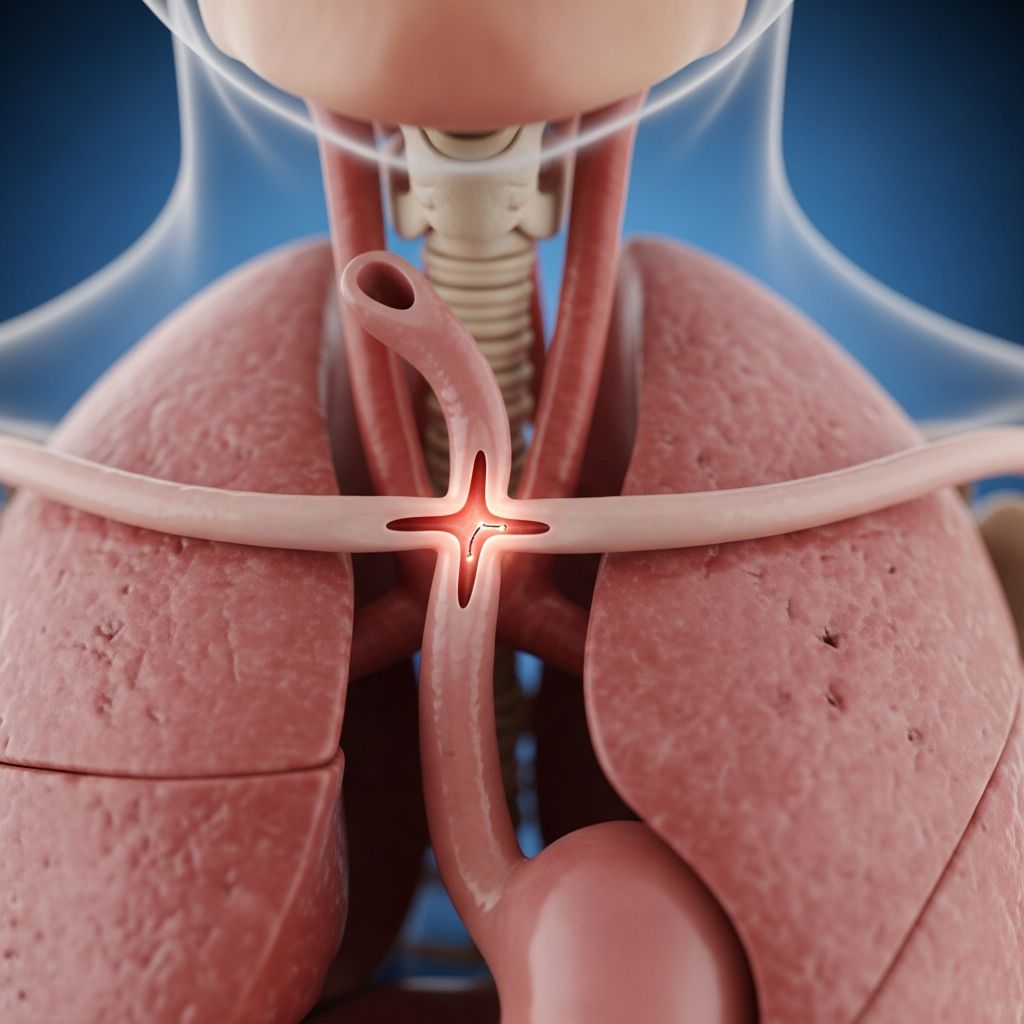
Esophageal atresia occurs when the esophagus fails to form as a single, continuous tube during fetal development. Instead, the esophagus separates into two distinct segments: an upper portion connected to the mouth and throat, and a lower portion connected to the stomach. Both segments typically end in blind pouches, meaning they are sealed off and do not connect to each other. This separation creates a gap between the two segments, which can range from relatively short to extremely long. Because these segments are not connected, food and other substances cannot pass normally from the mouth through to the stomach.
In approximately 90 percent of cases, esophageal atresia occurs alongside a tracheoesophageal fistula (TEF), which is an abnormal connection or opening between the esophagus and the trachea (windpipe). The trachea is the tube that carries air from the voice box to the lungs. When both conditions are present together, they create additional complications beyond the simple disconnection of the esophageal segments.
Embryological Development and Causes
During normal fetal development, the esophagus and trachea originate from a common structure called the foregut. Early in pregnancy, typically around the third to fifth week of gestation, these two structures should separate completely into distinct pathways. This separation occurs through a process involving complex interactions between different tissue types, specifically through epithelial-mesenchymal interactions. In esophageal atresia, this normal separation process fails or is incomplete, resulting in the abnormal development seen at birth.
The exact cause of esophageal atresia is not fully understood, though it appears to result from defective epithelial-mesenchymal interactions during early embryonic development. This means the tissues that should separate from one another either fail to do so properly or separate incompletely. The fistula tract in cases where TEF is present develops from a branch of the embryonic lung bud that fails to undergo proper branching due to these same developmental defects. Esophageal atresia can occur as an isolated birth defect, but it frequently appears as part of a broader constellation of congenital abnormalities.
Associated Conditions and Syndromes
Approximately 50 percent of infants with esophageal atresia have additional birth defects. One of the most common associated conditions is the VACTERL association, a syndrome characterized by multiple congenital abnormalities. The acronym VACTERL represents vertebral defects, anorectal malformations, cardiac defects, tracheoesophageal fistula, renal anomalies, and limb abnormalities. Individuals with VACTERL association typically have at least three of these six categories of defects.
Other conditions frequently found alongside esophageal atresia include congenital heart defects, which occur in at least half of affected babies, and tracheomalacia, a condition in which the cartilage of the trachea is abnormally soft and weak. Tracheomalacia causes the walls of the windpipe to be floppy rather than rigid, potentially leading to respiratory difficulties and, in severe cases, airway collapse. Additional associated anomalies may include imperforate anus, where the anal opening fails to develop properly, and various neurological and musculoskeletal system abnormalities.
Types of Esophageal Atresia and Tracheoesophageal Fistula
Esophageal atresia and tracheoesophageal fistula are classified into five anatomical types (A through E) based on the specific configuration and relationship of the separated esophageal segments:
Related Stories



Type A: Isolated Esophageal Atresia
Type A, also called pure esophageal atresia, occurs in approximately 8 percent of cases. In this type, no tracheoesophageal fistula is present. The esophagus is completely separated into two distinct segments, with both the upper and lower portions ending in blind pouches. There is no connection between the esophagus and the trachea, distinguishing this type from the others.
Type B: Upper Esophageal Fistula
Type B represents a rare form, occurring in approximately 2 percent of cases. In this configuration, the lower segment of the esophagus ends in a blind pouch, while the upper segment connects to the trachea through a tracheoesophageal fistula. This anatomical arrangement creates specific diagnostic and treatment considerations.
Type C: Lower Esophageal Fistula
Type C is the most common form of esophageal atresia with tracheoesophageal fistula, occurring in approximately 85 percent of individuals with these conditions. In this type, the upper segment of the esophagus ends in a blind pouch, while the lower segment connects to the trachea via a fistula. This configuration has important implications for how the condition presents clinically and how it is managed surgically.
Type D: Bilateral Fistulae
Type D is the rarest form, affecting less than 1 percent of cases. In this type, both the upper and lower segments of the esophagus connect to the trachea through separate fistulae. This creates a complex anatomical situation requiring specialized surgical planning.
Type E: H-Type Fistula
Type E represents an isolated tracheoesophageal fistula without associated esophageal atresia. In this variant, the esophagus is otherwise normally formed and connected, but an abnormal fistula tract connects the esophagus to the trachea, often in an H-shaped configuration.
Clinical Presentation and Symptoms
Infants with esophageal atresia typically present with characteristic symptoms within the first few hours to days after birth. Because the condition prevents normal swallowing and food passage, affected newborns display distinctive signs that alert healthcare providers to the diagnosis.
The most common symptoms include excessive drooling, which results from the accumulation of saliva in the upper esophageal pouch that cannot drain normally into the stomach. Affected infants also experience choking, coughing, and gagging, particularly when attempts are made to feed them. Respiratory distress and cyanosis (bluish discoloration of the skin) may occur, especially during feeding attempts, as material from the upper pouch may spill into the airway or gastric contents reflux into the lungs through the fistula.
Another hallmark sign is poor feeding or failure to feed normally. When a nasogastric tube (a feeding tube passed through the nose) is attempted, it will not proceed normally down the esophagus but instead will coil or stop approximately 10-12 centimeters from the mouth, where it encounters the blind pouch of the upper esophagus.
In cases where a tracheoesophageal fistula is present (Types B, C, D, and E), air travels from the trachea through the fistula into the distal esophagus and then into the stomach, causing gaseous distension. This creates additional respiratory symptoms and may manifest as abdominal distension. Recurrent respiratory infections may also develop due to aspiration of gastric contents through the fistula into the lungs.
Diagnosis and Diagnostic Imaging
Diagnosis of esophageal atresia typically begins with clinical suspicion based on the characteristic presentation of symptoms in a newborn. Several diagnostic methods are employed to confirm the diagnosis and determine the specific type of esophageal atresia present.
Nasogastric Tube Placement
The initial diagnostic maneuver often involves attempting to pass a nasogastric tube. In infants with esophageal atresia, the tube will not pass beyond the blind pouch of the upper esophagus, stopping at a depth of approximately 10-12 centimeters from the mouth. The tube may coil at the bottom of the obstructed esophagus. This failure to pass the tube is a key diagnostic finding that raises suspicion for esophageal atresia.
Chest and Abdominal X-rays
Plain radiographs of the chest and abdomen are essential in confirming the diagnosis. A chest X-ray can demonstrate the position of the nasogastric tube, showing whether it has stopped prematurely in the upper esophagus. Additionally, X-rays can reveal the presence or absence of gas in the stomach and intestines. The presence of gas in the abdomen is indicative of a tracheoesophageal fistula, as air enters the stomach through the abnormal connection with the trachea. Conversely, the absence of abdominal gas suggests isolated esophageal atresia without a fistula (Type A).
Contrast Studies
In some cases, contrast studies may be performed to better delineate the anatomy. However, these must be done cautiously to avoid aspiration of contrast material into the lungs.
Preoperative Management and Stabilization
Once esophageal atresia is suspected or confirmed, immediate measures are taken to stabilize the infant and prepare for surgical intervention. These preoperative steps are critical for ensuring the best possible outcomes.
A key component of preoperative management is continuous suction of the upper esophageal pouch to prevent aspiration of saliva and other secretions into the airway. This is accomplished by placing a small suction catheter into the upper pouch, which is kept on continuous or frequent intermittent suction. This measure significantly reduces the risk of respiratory compromise from aspiration.
The infant is kept nil per os (NPO), meaning nothing is given by mouth. Feeding is provided intravenously or through alternative routes such as a gastrostomy tube (in cases of long-gap EA where primary repair is delayed). The baby is positioned with the head elevated to minimize reflux of gastric contents through any fistula tract.
Evaluation for associated anomalies is performed, including echocardiography to assess for cardiac defects, abdominal ultrasound to evaluate the kidneys and other abdominal structures, and assessment of the spine and limbs for VACTERL-associated abnormalities. These evaluations help guide surgical planning and identify any conditions that might affect operative risk.
Surgical Treatment and Repair
Surgical repair is the definitive treatment for esophageal atresia. In most cases, primary repair—meaning direct reconnection of the upper and lower esophageal segments—is performed. The timing of surgery varies depending on the infant’s condition and associated anomalies, but it is typically performed within the first days of life when the baby is stable enough for surgery.
Primary Repair
During primary repair, the surgeon accesses the esophagus, typically through a right thoracotomy (an incision on the right side of the chest). The fistula tract, if present, is identified, divided, and closed. The upper and lower esophageal segments are then mobilized and connected together, restoring continuity of the esophageal tube. The connection is typically created using fine sutures, and the repair is reinforced with surrounding tissue.
Long-Gap Esophageal Atresia
In some cases, the gap between the upper and lower esophageal segments is too large to permit direct reconnection. This situation, known as long-gap esophageal atresia, requires a modified approach. In these cases, surgery is delayed to allow the continued growth and elongation of the esophageal segments, which may take several weeks to months. During this waiting period, nutrition is provided through a gastrostomy (a feeding tube inserted directly into the stomach through the abdominal wall). The upper esophageal pouch is managed with continuous suction to prevent aspiration. After adequate growth has occurred and the gap has narrowed sufficiently, a delayed primary repair is performed.
Alternative Approaches
In rare cases where primary repair cannot be accomplished even after waiting and growth, alternative surgical techniques such as esophageal replacement or colonic interposition may be considered. These procedures involve using other tissues to bridge the gap between the upper and lower esophageal segments.
Postoperative Complications and Long-Term Outcomes
While surgical repair of esophageal atresia has dramatically improved outcomes for affected infants, several complications can occur in the immediate postoperative period and long term.
Early Postoperative Complications
Anastomotic leak, where the surgical connection between the esophageal segments breaks down, is a potential serious complication that may require reoperation. Infection and sepsis can result from such leaks. Respiratory complications, including pneumonia and airway issues related to tracheomalacia, may occur. Recurrent fistula, where the fistula tract reforms, can develop in some cases.
Long-Term Complications
Esophageal dysmotility is a common long-term consequence of esophageal atresia repair. The repaired esophagus often has abnormal muscle contractions that affect the normal process of moving food from the mouth to the stomach. This dysmotility can result in swallowing difficulties and contributes to the development of gastroesophageal reflux disease (GERD), a very common finding in children who have undergone esophageal repair.
GERD occurs when stomach contents flow backward into the esophagus. This can cause heartburn, swallowing problems, recurrent chest infections, and vomiting. Over time, chronic GERD can lead to inflammation of the esophagus (esophagitis), Barrett’s esophagus (a precancerous change in esophageal lining), and respiratory complications such as asthma. Affected children often experience recurrent chest infections, particularly in the first few years after repair.
Tracheomalacia, if present, may cause noisy breathing, recurrent respiratory infections, and breathing difficulties that can persist into childhood and occasionally into adulthood.
Frequently Asked Questions
Q: What is the survival rate for babies with esophageal atresia?
A: With modern surgical techniques and neonatal intensive care, survival rates for esophageal atresia have improved significantly. Most infants without severe associated anomalies survive to discharge from the hospital and beyond. Long-term outcomes depend on the presence of associated defects and postoperative complications.
Q: Can esophageal atresia be detected before birth?
A: Prenatal diagnosis of esophageal atresia is possible through detailed fetal ultrasound or fetal MRI in some cases, particularly when polyhydramnios (excess amniotic fluid) is noted. However, many cases are not detected prenatally and are identified only after birth when the infant develops characteristic symptoms.
Q: How long is the recovery period after surgery?
A: The initial recovery period typically involves 1-2 weeks in the hospital with gradual advancement of feeding. However, long-term management and follow-up care continue for months to years as the esophagus heals and the infant grows.
Q: Will my child be able to eat normally after surgery?
A: Most children with repaired esophageal atresia can eventually eat normally by mouth. However, some may experience swallowing difficulties or feeding problems related to esophageal dysmotility and should be monitored closely. Dietary modifications may be necessary for some children.
Q: What follow-up care is needed after discharge?
A: Regular follow-up with pediatric surgery, gastroenterology, and other specialists is important. The child should be monitored for complications such as GERD, recurrent infections, and feeding difficulties. Regular growth and developmental assessments are also important.
References
- Esophageal Atresia — National Center for Biotechnology Information (NCBI), National Institutes of Health. 2024. https://www.ncbi.nlm.nih.gov/books/NBK560848/
- Esophageal Atresia and/or Tracheoesophageal Fistula — National Organization for Rare Disorders (NORD). 2024. https://rarediseases.org/rare-diseases/esophageal-atresia-andor-tracheoesophageal-fistula/
- Esophageal Atresia: Causes, Symptoms, Diagnosis & Treatment — Cleveland Clinic. 2024. https://my.clevelandclinic.org/health/diseases/21178-esophageal-atresia
- Esophageal Atresia — Yale Medicine. 2024. https://www.yalemedicine.org/conditions/tracheoesophageal-fistula-and-esophageal-atresia
- Esophageal Atresia — UCSF Department of Surgery. 2024. https://surgery.ucsf.edu/condition/esophageal-atresia
- Esophageal Atresia — MedlinePlus Medical Encyclopedia, U.S. National Library of Medicine. 2024. https://medlineplus.gov/ency/article/000961.htm
- Tracheoesophageal Fistula and Esophageal Atresia Overview — Northwestern Medicine. 2024. https://www.nm.org/conditions-and-care-areas/gastroenterology/tracheoesophageal-fistula
Similar Articles








Read full bio of medha deb