Esophageal Rings and Webs: Causes, Symptoms, and Treatment
Understand esophageal rings and webs: symptoms, diagnosis, and effective treatment options.
Understanding Esophageal Rings and Webs
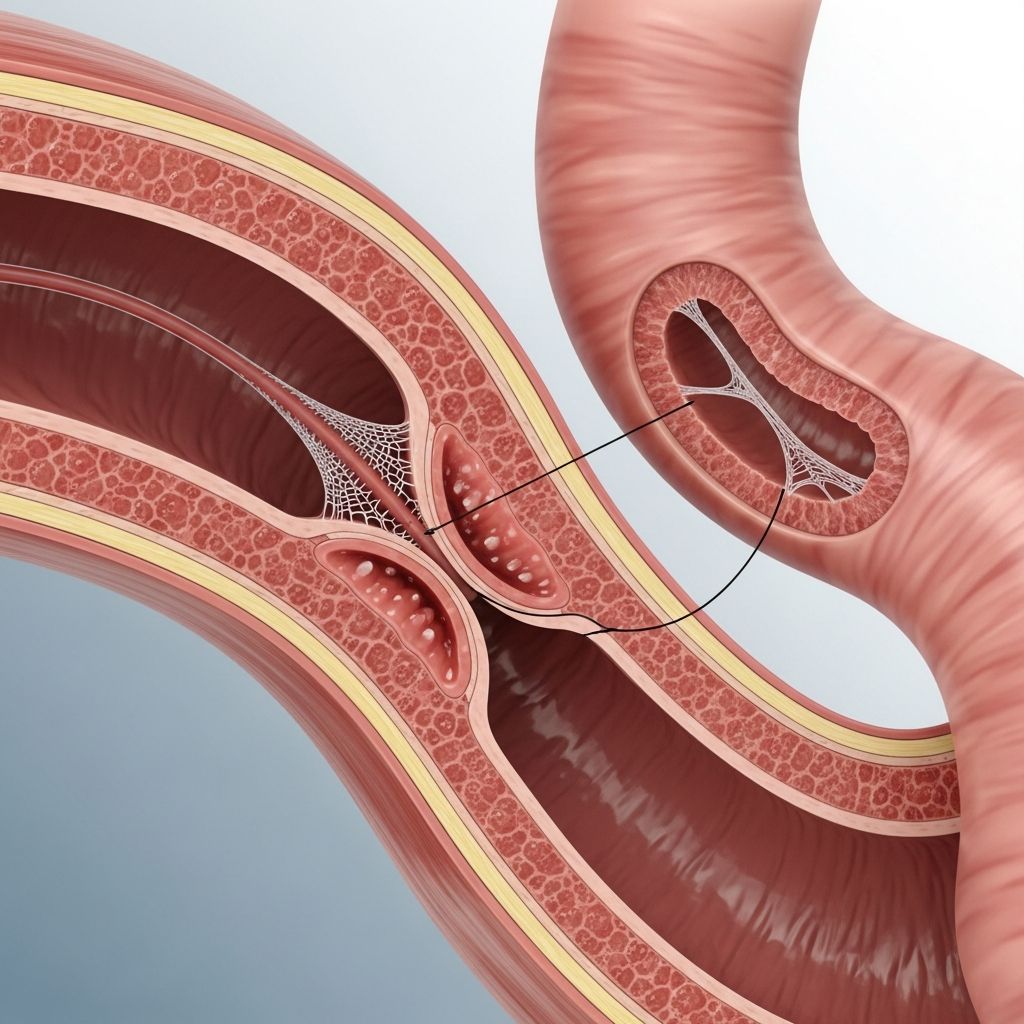
Esophageal rings and webs are membranous structures that create partial obstructions in the esophageal lumen, the passageway through which food travels from your mouth to your stomach. These thin folds of tissue can interfere with swallowing and cause various degrees of discomfort. While many people with these conditions experience no symptoms whatsoever, others may develop difficulty swallowing that can significantly impact their quality of life. Understanding the differences between these conditions, their underlying causes, and available treatment options is essential for anyone experiencing esophageal symptoms.
Both esophageal rings and webs are considered esophageal strictures—narrowed areas within the esophagus. However, they differ in their location, structure, and associated conditions. These lesions are thin membranous structures measuring approximately 2 to 5 millimeters in thickness, and they are short in length compared to other esophageal narrowings.
Key Differences Between Rings and Webs
Although esophageal rings and webs are often discussed together, they possess distinct characteristics that differentiate them clinically and anatomically.
Esophageal Webs
Esophageal webs are thin membranes that do not span the entire circumference of the esophagus. They typically occur in the proximal (upper) esophagus and are covered with squamous epithelium, the same type of tissue that lines the mouth and throat. Webs are usually asymptomatic and are often discovered incidentally during diagnostic procedures. However, when symptoms do occur, they typically present as intermittent difficulty swallowing solids. The classic association with webs is Plummer-Vinson syndrome, a condition characterized by iron-deficiency anemia, postcricoid dysphagia (difficulty swallowing in the region just below the throat), and the presence of upper esophageal webs.
Esophageal Rings
Esophageal rings are thin membranes that span the entire circumference of the esophagus, creating a complete or nearly complete band of tissue. They are typically located in the distal (lower) esophagus. The most common type of ring is the B ring, also known as a Schatzki ring, which is located precisely at the squamocolumnar junction—the boundary where the tissue changes from squamous epithelium to columnar epithelium. Schatzki rings are the most prevalent type of esophageal ring and can become symptomatic, particularly when the esophageal diameter narrows to less than 13 millimeters. Esophageal rings are commonly associated with hiatal hernias, where part of the stomach protrudes through the diaphragm into the chest cavity.
Understanding “Ringed” Esophagus
An important distinction exists between singular esophageal rings or webs and what clinicians refer to as a “ringed” esophagus. A ringed esophagus consists of multiple circumferential ring-like structures found throughout the esophagus, visible on either upper endoscopy or barium esophagram. This finding is the hallmark of eosinophilic esophagitis, a condition primarily affecting young males who present with dysphagia. Eosinophilic esophagitis involves the accumulation of eosinophils, a type of white blood cell, in the esophageal lining, leading to inflammation and the characteristic ringed appearance.
Causes and Associated Conditions
The exact etiology of esophageal rings and webs remains debated among gastroenterologists, though several contributing factors and associated conditions have been identified.
Causes of Esophageal Webs
While many esophageal webs are considered idiopathic (arising without a known cause), several associated diagnoses have been described in case reports. Gastroesophageal reflux disease (GERD) has been implicated as a potential etiology of upper esophageal webs. Additional structural lesions associated with webs include Zenker diverticulum (an outpouching of the posterior pharyngeal wall), heterotopic gastric mucosa (stomach tissue in abnormal locations), and laryngeal carcinoma. Cutaneous disorders have also been linked to esophageal web formation, including epidermolysis bullosa, pemphigus or pemphigoid vulgaris, and psoriasis. Plummer-Vinson syndrome represents a significant association, particularly in patients with chronic iron deficiency anemia.
Causes of Esophageal Rings
Esophageal rings are almost always associated with hiatal hernias, where the structural relationship between the ring and hernia suggests a direct pathophysiological connection. Additionally, esophageal rings correlate strongly with eosinophilic esophagitis, a condition characterized by eosinophil infiltration of the esophageal mucosa. Like webs, GERD has also been implicated in the development of Schatzki rings, suggesting that chronic acid exposure may contribute to ring formation in the distal esophagus.
Prevalence and Epidemiology
Because most esophageal webs and rings are asymptomatic, determining the true prevalence of these lesions is challenging. However, research indicates that esophageal webs and rings are each identified in approximately 5 to 15 percent of patients undergoing upper endoscopy specifically for dysphagia. This relatively high prevalence in symptomatic populations underscores the importance of considering these conditions in the differential diagnosis of swallowing difficulties. Studies suggest that lower esophageal rings could be more common than upper esophageal webs, though proper diagnostic technique is essential for identifying both lesions, particularly those located in the proximal esophagus.
Symptoms and Clinical Presentation
Most patients with esophageal rings and webs remain asymptomatic throughout their lives, with their condition discovered incidentally during diagnostic procedures performed for other reasons. When symptoms do develop, they typically present as intermittent dysphagia to solids—difficulty swallowing solid foods. Importantly, symptoms become apparent only when the luminal diameter in the region of the esophageal web or ring becomes less than 12 millimeters.
Plummer-Vinson Syndrome Presentation
In patients with Plummer-Vinson syndrome, dysphagia is painless and slowly evolving, typically beginning with difficulty swallowing solid foods. Over years, the condition may progress to include difficulty swallowing liquids. Dysphagia in Plummer-Vinson syndrome is generally graded as Grade I (occasional dysphagia when consuming solids) or Grade II (ability to swallow only semi-solid diet). The syndrome’s triad of iron-deficiency anemia, postcricoid dysphagia, and upper esophageal webs creates a distinctive clinical presentation that warrants investigation into underlying iron metabolism.
Progressive Nature of Symptoms
The dysphagia associated with esophageal webs and rings can worsen progressively if the underlying condition is not addressed. However, many patients experience only mild or occasional symptoms that do not significantly interfere with daily functioning. The episodic nature of symptoms in many patients reflects the varying degrees of esophageal narrowing and the types of foods consumed.
Diagnosis and Diagnostic Testing
Accurate diagnosis of esophageal rings and webs requires appropriate imaging and endoscopic evaluation, as proper technique is essential for identifying these lesions, particularly in the proximal esophagus.
Barium Swallow Studies
A barium swallow is particularly useful in delineating the cause of esophageal lumen obstruction. This radiographic examination can identify esophageal webs, rings, strictures, tumors, and extraesophageal compression. The barium swallow provides detailed imaging of the esophageal contours and can reveal characteristic findings associated with specific conditions. Esophageal webs appear as thin indentations that do not completely obstruct the esophageal lumen, while rings present as more circumferential narrowings.
Esophagogastroduodenoscopy (EGD)
Esophagogastroduodenoscopy is usually necessary for confirmation of the diagnosis. During EGD, esophageal webs appear as thin membranes that do not span the entire circumference of the esophagus, while esophageal rings appear as thin membranes spanning the entire circumferential surface. EGD offers several diagnostic advantages beyond simple visualization: it can identify other causes of dysphagia including strictures, polyps, and tumors; it allows biopsy of lesions when malignancy is suspected; and it can identify associated conditions such as eosinophilic esophagitis, hiatal hernia, and Zenker’s diverticulum. Additionally, it is common for esophageal webs to rupture during a diagnostic EGD, which may actually provide therapeutic benefit.
Treatment and Management Options
Treatment decisions should be individualized based on symptom severity and the degree of functional impairment. Importantly, a gastroenterologist should treat only patients in whom the radiographic or endoscopic finding of a ring or web is thought to be the cause—or at least one of the causes—of the patient’s symptoms. Treatment should be performed only when the potential benefits outweigh the risks of the therapy.
Endoscopic Esophageal Dilatation
The main initial treatment of symptomatic esophageal webs and rings is endoscopic esophageal dilatation. This procedure involves using specialized instruments to widen the esophagus in the area of the web or ring obstruction. The goal of treatment is relief of dysphagia and prevention of symptom recurrence. Endoscopic dilatation is considered both safe and effective for managing symptomatic lesions. It is worth noting that esophageal webs can rupture during a diagnostic EGD, and dilatation remains an option even on esophageal webs that have partially ruptured.
Management of Recurrence
A significant concern with endoscopic dilatation is that esophageal rings can become narrow again after the procedure, leading to symptom recurrence. To lower the risk of this happening, doctors often prescribe proton pump inhibitors (PPIs) after the dilatation procedure. PPIs reduce gastric acid production and may help prevent ring reformation by decreasing acid-related inflammation and stricture development. Repeat dilatation procedures may be necessary for patients experiencing recurrent narrowing.
Conservative Management
For asymptomatic patients, no treatment is necessary. Similarly, patients with mild symptoms that do not significantly impact quality of life may be managed conservatively with dietary modifications, such as eating smaller meals and chewing food thoroughly. Monitoring for symptom progression is appropriate in these cases.
Differential Diagnosis
The differential diagnosis for esophageal webs and rings is extensive and includes other important causes of dysphagia. History and evaluation by barium swallow and EGD can help identify these alternative conditions.
Achalasia presents with progressive dysphagia to both solids and liquids. The classic finding on barium swallow is distal dilatation of the esophagus with a characteristic “bird-beak” appearance at the gastroesophageal junction. This represents a failure of the lower esophageal sphincter to relax appropriately.
Esophageal strictures present with progressive dysphagia to solids. They appear longer than webs and rings on barium swallow and have tapered ends, distinguishing them from the thin membrane-like appearance of webs and rings.
Prognosis and Outlook
The outlook for people with esophageal webs and rings is generally very good. Most people do not experience any symptoms and never require treatment. When symptoms do appear, they can be treated successfully with endoscopic dilatation. The procedure is minimally invasive with low complication rates, and symptom relief is typically achieved promptly. With appropriate management, including PPI therapy to reduce recurrence risk, patients can expect significant improvement in their ability to swallow and their overall quality of life.
Frequently Asked Questions
Q: Are esophageal webs and rings life-threatening?
A: No, esophageal webs and rings are not life-threatening conditions. Most people with these conditions remain completely asymptomatic throughout their lives. Even when symptoms develop, they are manageable with appropriate treatment.
Q: Can esophageal webs and rings disappear on their own?
A: Esophageal webs and rings do not typically disappear without treatment. However, some webs may rupture spontaneously during swallowing or diagnostic procedures, which may provide symptom relief.
Q: How often does treatment need to be repeated?
A: The frequency of repeat treatment varies among individuals. Some patients may experience years between dilatation procedures, while others may require more frequent interventions. PPI therapy after dilatation can reduce the need for repeat procedures.
Q: Is there a way to prevent esophageal webs and rings?
A: Prevention strategies are limited, as the exact causes remain unclear. However, managing associated conditions like GERD with PPI therapy may help prevent the development or progression of these lesions, particularly Schatzki rings.
Q: Can diet affect symptoms of esophageal webs and rings?
A: Yes, dietary modifications can help manage symptoms. Eating smaller meals, chewing food thoroughly, consuming softer foods, and staying well-hydrated can reduce dysphagia symptoms in patients with esophageal webs and rings.
References
- Diagnosis and Management of Esophageal Rings and Webs — National Institutes of Health, National Center for Biotechnology Information. 2010. https://www.ncbi.nlm.nih.gov/pmc/articles/PMC3033540/
- Esophageal Webs and Rings — StatPearls, NCBI Bookshelf. 2024. https://www.ncbi.nlm.nih.gov/books/NBK539771/
- Esophageal Rings and Webs — DynaMed, EBSCO Health. 2024. https://www.dynamed.com/condition/esophageal-rings-and-webs
- Esophageal Webs: Symptoms, Causes & Treatment — Cleveland Clinic. 2024. https://my.clevelandclinic.org/health/diseases/esophageal-web
- Webs, Rings & Diverticula — MUSC Health, Division of Digestive Diseases and Nutrition. 2024. https://muschealth.org/medical-services/ddc/patients/digestive-diseases/esophagus/webs-rings-and-diverticula
Similar Articles








Read full bio of medha deb