Esophagitis: Causes, Symptoms, Types, and Treatment
Comprehensive guide to esophagitis: understanding types, symptoms, diagnosis, and effective treatment options.
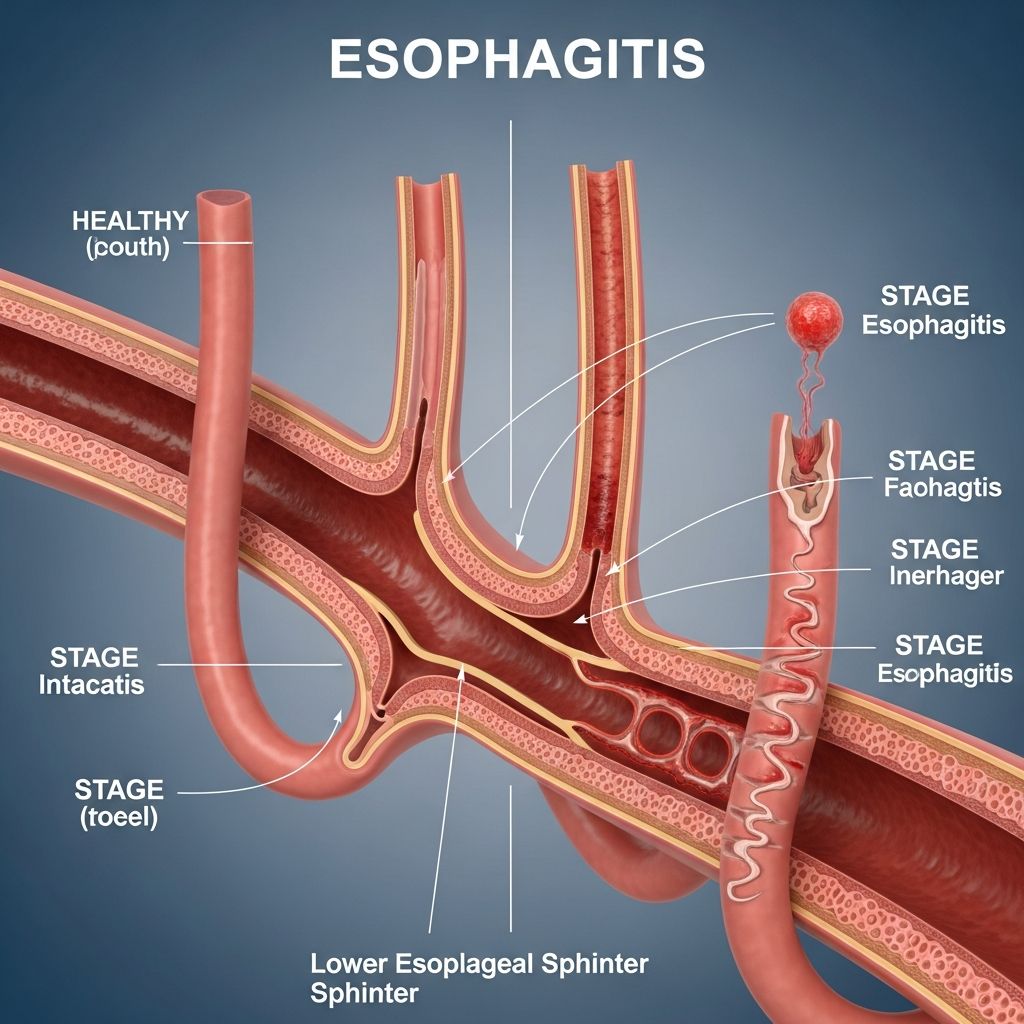
Esophagitis is a condition characterized by inflammation of the esophagus, the muscular tube that carries food from your throat to your stomach. This inflammation can result from various causes, ranging from acid reflux to infections and allergic reactions. Understanding the different types of esophagitis, recognizing symptoms early, and seeking appropriate treatment can significantly improve quality of life and prevent serious complications.
What Is Esophagitis?
The esophagus is a delicate organ with a sensitive lining that can become inflamed when exposed to irritants, allergens, or infectious agents. When this inflammation occurs, it causes a range of uncomfortable symptoms that can interfere with eating, drinking, and overall well-being. Esophagitis is not a single disease but rather a symptom of various underlying conditions that require different treatment approaches.
The incidence of esophagitis has been increasing over recent years, particularly eosinophilic esophagitis, which is gaining recognition as a distinct medical condition affecting patients across all age groups. Understanding whether your esophagitis is caused by acid reflux, infection, medication, or allergic reaction is crucial for determining the most effective treatment plan.
Types of Esophagitis
Several distinct types of esophagitis exist, each with different causes and treatment requirements. Identifying which type you have is essential for effective management.
Reflux Esophagitis (GERD-Related)
Reflux esophagitis, also called erosive esophagitis, is one of the most common forms of the condition. This type occurs when stomach acid repeatedly backs up into the esophagus, damaging its protective lining. Under normal circumstances, a muscular valve called the lower esophageal sphincter (LES) prevents stomach contents from flowing backward. However, when this valve becomes weakened or fails to close properly, gastroesophageal reflux disease (GERD) develops.
The acidic environment of stomach contents can severely damage the esophageal lining, especially with frequent or prolonged exposure. Risk factors for reflux esophagitis include obesity, pregnancy, smoking, alcohol consumption, and certain medications. This type of esophagitis can lead to complications such as strictures (narrowing of the esophagus) and Barrett’s esophagus if left untreated.
Eosinophilic Esophagitis
Eosinophilic esophagitis (EoE) is a chronic allergic and immune-mediated condition characterized by abnormal accumulation of eosinophils—white blood cells—in the esophageal lining. Unlike reflux esophagitis, EoE results from an allergic or immune response to food and environmental allergens rather than acid exposure. This condition has become increasingly recognized in recent years and affects people of all ages.
Eosinophilic esophagitis presents with symptoms similar to GERD but typically does not respond to standard acid-suppressing medications. The condition requires careful diagnosis through endoscopy and biopsy to confirm elevated eosinophil levels. Treatment often involves dietary modifications, topical steroids, and in some cases, biologic medications targeting specific immune pathways. Recent research has shown that the distribution pattern of eosinophils at diagnosis may help guide which treatment approach will be most effective for individual patients.
Related Stories



Infectious Esophagitis
Infectious esophagitis occurs when viruses, bacteria, or fungi invade the esophageal lining. This type is more common in individuals with compromised immune systems, such as those with HIV/AIDS, cancer, or those undergoing immunosuppressive therapy. The most common fungal cause is Candida albicans, a yeast naturally present in the mouth that can proliferate in immunocompromised patients.
Risk factors for infectious esophagitis include prolonged antibiotic or steroid use, uncontrolled diabetes, and severe immunosuppression. Herpes simplex virus can also cause esophageal infection, particularly in immunocompromised individuals. Bacterial infections, while less common, can occur and require specific antibiotic treatment.
Drug-Induced Esophagitis
Certain medications can damage the esophageal lining if they remain in contact with it too long or if taken improperly. Medications known to cause drug-induced esophagitis include NSAIDs, potassium chloride, antibiotics (particularly doxycycline and tetracycline), bisphosphonates, and some chemotherapy agents. The injury typically occurs when pills are taken with insufficient water or when patients lie down immediately after taking medication.
Symptoms of Esophagitis
Esophagitis presents with a range of symptoms that can vary in severity depending on the type and extent of inflammation. Recognizing these symptoms is important for seeking timely medical evaluation.
Common symptoms include:
- Difficult or painful swallowing (dysphagia or odynophagia)
- Sensation of food getting stuck in the throat or chest
- Chest pain or discomfort, particularly behind the breastbone
- Heartburn or acid reflux sensation
- Nausea or vomiting
- Abdominal pain or upper abdominal discomfort
- Loss of appetite
- Regurgitation of food or liquids
Symptoms can range from mild irritation to severe pain that significantly impacts eating and drinking. In some cases, patients may experience food impaction—where food becomes lodged in the esophagus—which requires immediate medical attention.
Diagnosis of Esophagitis
Accurate diagnosis is crucial for determining the appropriate treatment strategy. Your healthcare provider will begin with a thorough medical history and physical examination, followed by specific diagnostic tests.
Upper Endoscopy
Upper endoscopy is the primary diagnostic tool for esophagitis. During this procedure, a flexible tube with a camera (endoscope) is passed through your throat to allow direct visualization of the esophageal lining. This examination can reveal inflammation, erosions, strictures, and other abnormalities. It also allows physicians to obtain tissue samples for biopsy when needed.
Biopsy
During endoscopy, small tissue samples can be collected from the esophagus and examined under a microscope. Biopsy is essential for diagnosing eosinophilic esophagitis, as it confirms the presence of elevated eosinophils. Multiple biopsies from different esophageal regions are often taken because eosinophils may be unevenly distributed.
Upper GI Series (Barium Swallow)
In this radiographic procedure, you drink a barium solution that coats the esophageal lining, making it visible on X-rays. This test can identify structural abnormalities, strictures, and motility problems. While less invasive than endoscopy, it provides less detail and cannot obtain tissue samples.
Allergy Testing
For suspected eosinophilic esophagitis, allergy testing may include skin prick tests and blood tests to identify specific food and environmental allergens. This information helps guide dietary modification strategies and treatment planning.
Treatment Approaches
Treatment for esophagitis depends on the underlying cause and type of inflammation. A personalized approach often yields the best outcomes.
Reflux Esophagitis Treatment
For GERD-related esophagitis, treatment typically begins with lifestyle modifications and acid-suppressing medications. Over-the-counter antacids provide temporary relief, while prescription medications are more effective for long-term management.
Medications include:
- Proton pump inhibitors (PPIs): Omeprazole (Prilosec) and lansoprazole (Prevacid) reduce stomach acid production and allow the esophageal lining to heal
- H2-receptor antagonists: Medications that block acid secretion
- Antacids: Provide quick but temporary relief
Lifestyle modifications are equally important and include elevating the head of your bed, avoiding trigger foods (spicy, acidic, fatty foods), not eating within three hours of bedtime, and maintaining a healthy weight. For severe cases that don’t respond to medical management, surgical options include strengthening the lower esophageal sphincter or placing a ring of metal beads (LINX procedure) around the lower esophagus.
Eosinophilic Esophagitis Treatment
Treatment for eosinophilic esophagitis requires a multidisciplinary approach involving gastroenterologists, allergists, and nutritionists. The mainstays of treatment include dietary modifications and medications that suppress eosinophil-mediated inflammation.
Treatment options include:
- Topical steroids: Swallowed steroids like budesonide (Pulmicort) and fluticasone (Flovent) reduce esophageal inflammation with fewer systemic side effects than oral steroids
- Proton pump inhibitors: May provide some benefit, though they work through different mechanisms than in reflux esophagitis
- Monoclonal antibodies: Dupilumab (Dupixent) targets specific immune pathways involved in inflammation
- Elimination diets: Systematic removal and reintroduction of common allergens (milk, wheat, eggs, soy, peanuts, tree nuts, fish, shellfish) helps identify problematic foods
Recent research has demonstrated that specific patterns of eosinophil distribution at the time of diagnosis may help predict which treatments will be most effective, potentially reducing the need for repeated endoscopies and accelerating the path to disease remission.
Infectious Esophagitis Treatment
Treatment depends on the causative organism. Fungal infections are typically treated with antifungal medications, viral infections with antivirals, and bacterial infections with appropriate antibiotics. In immunocompromised patients, treating the underlying immune deficiency is also essential.
Drug-Induced Esophagitis Treatment
Management involves discontinuing the offending medication when possible or modifying how it is taken. Strategies include:
- Switching to liquid formulations of medications
- Taking medications with a full glass of water
- Remaining upright for at least 30 minutes after taking medication
- Spacing out medications to prevent accumulation in the esophagus
When to Seek Emergency Care
Seek immediate medical attention if you experience:
- Severe chest pain lasting more than a few minutes
- Chest pain with a history of heart disease
- Suspected food impaction with inability to swallow saliva
- Severe pain when swallowing
- Chest pain accompanied by shortness of breath
- Large volumes of vomit or difficulty breathing after vomiting
- Vomit containing blood or resembling coffee grounds
Frequently Asked Questions
Q: Is esophagitis permanent?
A: Esophagitis is usually not permanent if properly treated. Most cases of reflux and drug-induced esophagitis resolve with appropriate treatment. Eosinophilic esophagitis is chronic but manageable with ongoing treatment. Infectious esophagitis typically resolves once the infection is cleared.
Q: Can esophagitis be prevented?
A: Many cases can be prevented through lifestyle modifications. Avoid trigger foods, maintain a healthy weight, don’t smoke, limit alcohol, and take medications properly. For those with allergies, identifying and avoiding trigger foods helps prevent eosinophilic esophagitis.
Q: How long does esophagitis take to heal?
A: Healing time varies by cause and severity. Most cases of reflux esophagitis improve within weeks with proper medication. Drug-induced esophagitis typically resolves within days to weeks once the medication is stopped. Eosinophilic esophagitis requires ongoing management but symptoms often improve within weeks of starting appropriate treatment.
Q: Can I eat normally with esophagitis?
A: During acute inflammation, soft, cool foods are easier to tolerate. As the condition improves, you can gradually return to normal foods. Avoiding trigger foods is important, particularly in eosinophilic esophagitis where specific allergens must be identified and eliminated.
Q: Is esophagitis serious?
A: While usually manageable with treatment, untreated esophagitis can lead to complications including strictures, Barrett’s esophagus, and increased cancer risk. Severe infections in immunocompromised patients require prompt treatment. Early diagnosis and appropriate management prevent most serious complications.
References
- Adult Eosinophilic Esophagitis Program — Massachusetts General Hospital Department of Gastroenterology. 2025. https://www.massgeneral.org/medicine/gastroenterology/treatments-and-services/adult-eosinophilic-esophagitis
- Improving Treatment Solutions for Eosinophilic Esophagitis — Mass General Brigham. 2025. https://www.massgeneralbrigham.org/en/about/newsroom/articles/improving-treatment-solutions-for-eosinophilic-esophagitis
- Esophagitis: Causes, Symptoms, and Treatments — WebMD. 2024. https://www.webmd.com/digestive-disorders/esophagitis
- Gastroesophageal Reflux Disease (GERD) — National Institute of Diabetes and Digestive and Kidney Diseases (NIDDK). 2024. https://www.niddk.nih.gov/health-information/digestive-diseases/acid-reflux-gerd
Similar Articles








Read full bio of medha deb