Esophagus: Anatomy, Function & Common Conditions
Understanding your esophagus: structure, function, and how to recognize common digestive problems.
Understanding Your Esophagus: Anatomy and Function
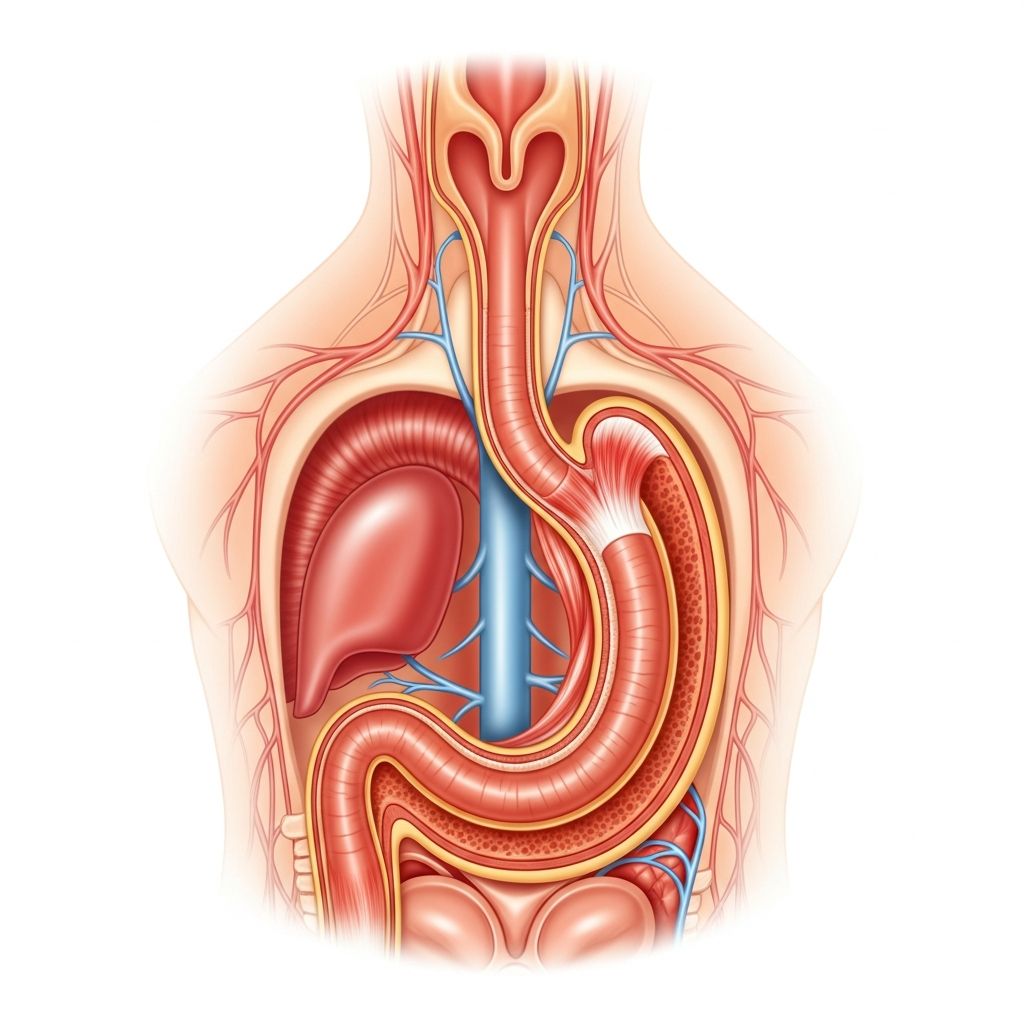
Your esophagus is a hollow, muscular tube that plays a critical role in your digestive system by transporting food and liquid from your throat to your stomach. This seemingly simple pathway is actually a sophisticated organ with complex anatomy and specialized functions that allow food to travel from your mouth to your digestive tract efficiently. The esophagus works continuously throughout the day, often without you even noticing, as it facilitates one of the most basic human functions: eating and swallowing.
What Is the Esophagus?
The esophagus is defined as a muscular tube that connects your throat to your stomach and functions as a vital component of your gastrointestinal system. Unlike other parts of your digestive tract, the esophagus does not produce digestive enzymes nor does it absorb nutrients. Instead, its primary role is purely mechanical—to move food and liquids downward through coordinated muscle contractions.
The average adult esophagus measures approximately 10 to 13 inches in length, with a diameter of about three-fourths of an inch at its narrowest point. Despite its relatively small size, the esophagus is remarkably efficient at its job, capable of transporting various types of food and beverages with precision and safety.
Location and Anatomical Relationships
The esophagus is strategically positioned in the center of your chest in an area called the mediastinum. It lies directly behind your windpipe (trachea) and in front of your spine, running through the thoracic cavity before piercing the diaphragm to connect with the stomach in the abdominopelvic cavity. This anatomical arrangement is important because it places the esophagus in close proximity to other vital structures, which is why certain conditions can affect multiple systems.
Understanding this location helps explain why chest discomfort and difficulty swallowing can sometimes be concerning and why healthcare providers need to carefully evaluate these symptoms to determine whether they originate from your esophagus, heart, or lungs.
Esophageal Structure: The Four Layers
The esophagus is composed of four distinct layers of tissue, each serving specific protective and functional purposes. From the innermost to outermost layer, these include:
Tunica Mucosa
The innermost layer that directly contacts food is the tunica mucosa, composed of specialized epithelial cells. This layer features stratified squamous epithelial tissue, which consists of flat, layered cells that provide protection from sharp or dangerous food items such as bones, excessively hot foods, or insufficiently chewed vegetables. This protective lining is essential for preventing injury to the esophagus from the various foods we consume.
Tunica Submucosa
Beneath the mucosal layer lies the tunica submucosa, a layer of loose connective tissue that contains blood vessels and nerves, including the important submucosa plexus. This layer provides vascularization and nerve supply to the esophagus, enabling sensory function and nutrient delivery.
Tunica Muscularis
The tunica muscularis consists of smooth muscle fibers arranged in circular and longitudinal patterns. These two layers of muscles work together to perform peristalsis—involuntary wave-like contractions that push food downward toward the stomach. The circular muscles constrict around the food bolus while the longitudinal muscles shorten, creating a coordinated squeezing action similar to pushing a tennis ball through a leg of pantyhose.
Related Stories



Tunica Serosa
The outermost layer, the tunica serosa, anchors the esophagus in the mesentery, providing structural support and stabilization.
The Sphincters: Gatekeepers of the Esophagus
The esophagus features two specialized ring-shaped muscles called sphincters that function as gatekeepers, controlling food passage and preventing backflow of stomach contents.
Upper Esophageal Sphincter (UES)
Located at the opening of your upper esophagus, the upper esophageal sphincter senses when food or liquid is approaching. When it receives the signal that swallowing is occurring, it relaxes and opens to allow food to enter the esophagus. When you’re not eating or swallowing, it remains closed. During swallowing, the epiglottis (a small muscular flap) closes to prevent food from entering your windpipe, while the uvula helps prevent liquid from passing upward into your nasal cavity.
Lower Esophageal Sphincter (LES)
At the junction between your esophagus and stomach sits the lower esophageal sphincter, another specialized muscle that opens when food arrives and closes afterward. This sphincter is critical for preventing stomach acid and digestive juices from refluxing back into the esophagus. When the LES fails to function properly, it can lead to significant gastrointestinal problems.
How the Esophagus Works: The Process of Swallowing
The process of moving food from your mouth to your stomach involves a coordinated sequence of events that demonstrate the sophisticated function of your esophagus.
When you swallow, food and liquid first move from your mouth to your throat (pharynx). The upper esophageal sphincter senses this incoming material and relaxes to allow it to enter the esophagus. Once inside, waves of muscular contractions called peristalsis propel the food downward. These contractions occur involuntarily and are coordinated in such a way that they always move the food in one direction—toward the stomach.
As the food bolus (the chewed mass of food) travels through your esophagus, glands produce mucus to lubricate it, facilitating smooth passage. The food passes through your diaphragm and reaches your lower esophagus, where the lower esophageal sphincter senses its arrival, relaxes, and allows it to pass into the stomach. Once the food enters the stomach, the lower esophageal sphincter closes to prevent any stomach contents from returning to the esophagus.
Esophagus vs. Trachea: Understanding the Difference
Both your trachea (windpipe) and esophagus are muscular tubes located within your neck, but they serve completely different functions and are part of different body systems. Your trachea is part of your respiratory system and transports air in and out of your lungs, while your esophagus is part of your digestive system and transports food and liquid from your throat to your stomach. This anatomical proximity explains why swallowing disorders can sometimes affect breathing, and why certain conditions need careful medical evaluation.
Common Esophageal Problems and Conditions
Acid Reflux and GERD
The most common problem affecting the esophagus is acid reflux, which occurs when the lower esophageal sphincter opens when it’s not supposed to. This allows stomach acid and digestive juices to flow backward from the stomach into the esophagus, causing inflammation and the characteristic burning sensation known as heartburn. When acid reflux occurs frequently or persistently, it is diagnosed as gastroesophageal reflux disease (GERD).
Heartburn, one of the most recognizable symptoms of esophageal problems, is a burning sensation typically felt in the middle of your chest. The severity of GERD symptoms is influenced by how far up the esophagus the reflux travels, with episodes that extend higher into the esophagus generally causing worse symptoms regardless of acid concentration.
Other Esophageal Conditions
Beyond acid reflux and GERD, other problems can affect your esophagus. Achalasia is a condition where the lower esophageal sphincter doesn’t relax properly, preventing food from passing into the stomach. Additionally, Barrett’s esophagus represents a change in the cellular structure of the esophagus lining, where normal stratified squamous cells are replaced by columnar epithelium similar to intestinal lining. This condition, typically resulting from chronic acid exposure, can increase the risk of esophageal cancer and requires careful monitoring.
When to Seek Medical Attention
You should consult with a healthcare provider if you experience any of the following symptoms:
– Frequent heartburn or chest burning sensations- Chronic acid reflux- Difficulty swallowing (dysphagia)- Persistent chest pain- Regurgitation of food or liquids- Sensation of food being stuck in your throat or chest- Unexplained weight loss- Hoarseness or chronic cough
These symptoms may indicate an esophageal condition that requires professional evaluation and treatment. Early diagnosis and management can prevent complications and improve your quality of life.
Diagnostic and Treatment Approaches
Healthcare providers have various tools and techniques to diagnose esophageal conditions. Endoscopy allows direct visualization of the esophageal lining, while pH monitoring can measure acid exposure over time. Manometry measures muscle contractions in the esophagus, and imaging studies provide structural information.
Treatment options vary depending on the specific condition but may include lifestyle modifications, medications to reduce acid production, surgical interventions to strengthen the lower esophageal sphincter, and advanced techniques like cryoablation for Barrett’s esophagus, which freezes and removes diseased cells to allow regeneration of healthy tissue.
Frequently Asked Questions
Q: How long does it take for food to travel through the esophagus?
A: Typically, food takes about 5 to 8 seconds to travel through the esophagus when swallowing while upright. The process may take slightly longer when lying down.
Q: Can the esophagus repair itself?
A: Yes, the esophagus has regenerative capability. However, chronic damage from acid reflux can lead to permanent changes in the tissue lining, as seen in Barrett’s esophagus.
Q: Is heartburn always a sign of GERD?
A: While heartburn is the most common symptom of GERD, occasional heartburn can occur without having GERD. GERD is diagnosed when acid reflux symptoms occur frequently or persistently.
Q: What should I do if I have persistent difficulty swallowing?
A: Persistent difficulty swallowing (dysphagia) should be evaluated by a healthcare provider, as it may indicate an esophageal obstruction, achalasia, or other serious conditions requiring treatment.
Q: Can lifestyle changes help with acid reflux?
A: Yes, lifestyle modifications such as avoiding trigger foods, eating smaller meals, not eating close to bedtime, and maintaining a healthy weight can significantly help manage acid reflux symptoms.
Q: Is esophageal cancer always fatal?
A: Esophageal cancer prognosis depends on the type, stage at diagnosis, and individual factors. Early detection and treatment improve outcomes significantly.
References
- Esophagus | Research Starters – Health and Medicine — EBSCO Research. 2024. https://www.ebsco.com/research-starters/health-and-medicine/esophagus
- Esophagus: Anatomy, Function & Conditions — Cleveland Clinic. 2024. https://my.clevelandclinic.org/health/body/21728-esophagus
- Barrett’s Esophagus: Symptoms, Causes, Treatments — Cleveland Clinic. 2024. https://my.clevelandclinic.org/health/diseases/14432-barretts-esophagus
- GERD: A Practical Approach — Cleveland Clinic Journal of Medicine. 2020. https://www.ccjm.org/content/87/4/223
- What Is the Digestive System? — Cleveland Clinic. 2024. https://my.clevelandclinic.org/health/body/7041-digestive-system
Similar Articles








Read full bio of Sneha Tete