ESR Test: Understanding Erythrocyte Sedimentation Rate
Complete guide to ESR tests: What they measure, how they work, and what results mean.
Understanding the Erythrocyte Sedimentation Rate (ESR) Test
The erythrocyte sedimentation rate, commonly referred to as the ESR or sed rate test, is a routine blood test that measures inflammation in your body. Erythrocytes are simply red blood cells, and the sedimentation rate refers to the speed at which these cells settle to the bottom of a test tube over a specific period of time. This test has been used in clinical practice for decades as a nonspecific indicator of inflammatory processes occurring within the body.
While the ESR test is valuable for detecting the presence of inflammation, it’s important to understand that it cannot identify the specific cause of that inflammation. Instead, healthcare providers use ESR results alongside other clinical examinations, laboratory tests, and patient symptoms to determine what underlying condition might be responsible for the inflammatory response. This comprehensive approach helps ensure accurate diagnosis and appropriate treatment planning.
What Does the ESR Test Measure?
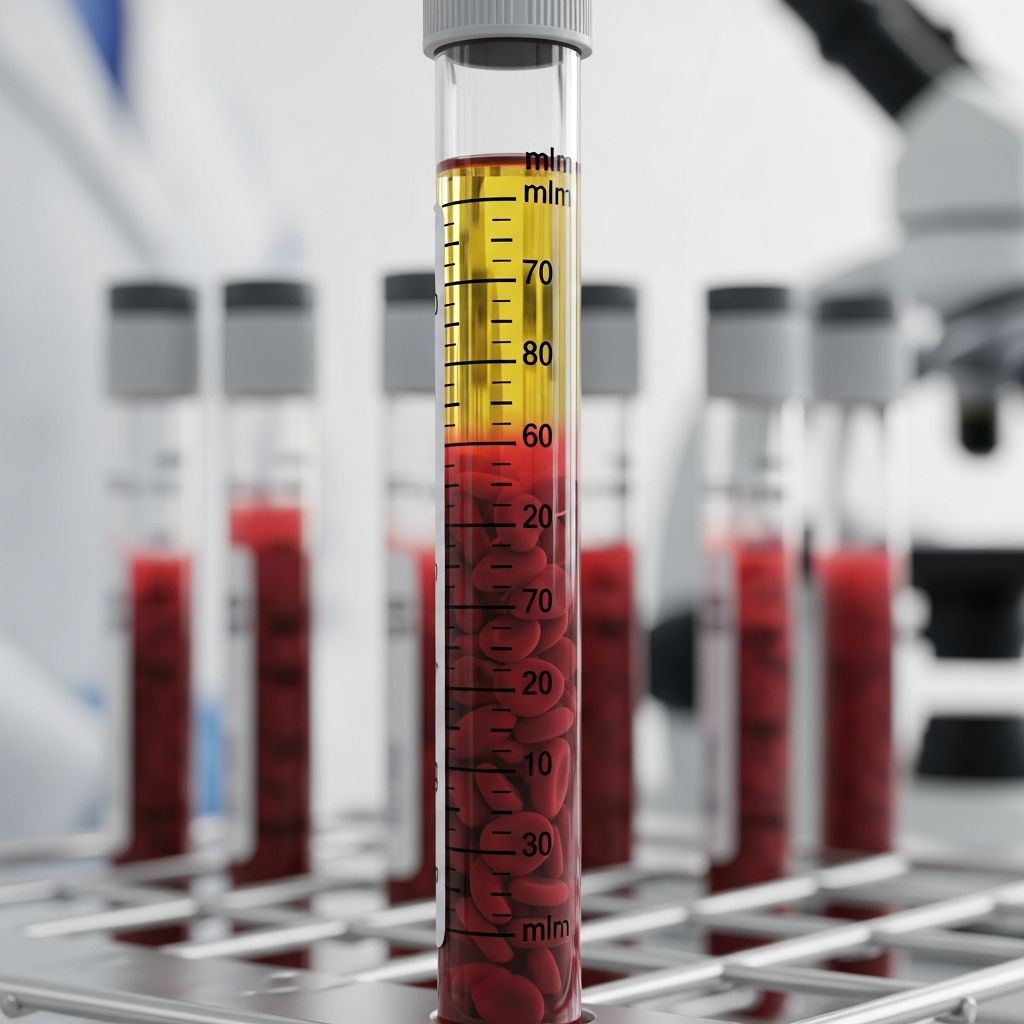
The ESR test specifically measures how quickly red blood cells sink through blood plasma in a tall, thin vertical tube over the course of one hour. Under normal circumstances, red blood cells settle slowly because they have a slight negative charge that causes them to repel each other. However, when inflammation is present in the body, certain proteins are released into the bloodstream that alter the electrical properties of red blood cells.
These inflammatory proteins cause red blood cells to stick together and form clumps. Because these clumps are significantly heavier than individual cells, they settle to the bottom of the test tube much more rapidly. The distance that the red blood cells fall, measured in millimeters per hour (mm/hr), directly correlates with the amount of inflammation present in the body. A faster sedimentation rate typically indicates a higher level of inflammatory activity.
How Is the ESR Test Performed?
The ESR test begins like most blood tests, with a simple blood draw from a vein in your arm using a needle. A trained healthcare professional collects the blood sample into a special tube containing an anticoagulant, which prevents the blood from clotting. This preparation is essential for accurate test results.
Once the blood sample is collected, it’s placed in a tall, thin vertical tube, often called a Westergren tube, which is the most commonly used method for measuring sedimentation rates. The tube is left standing undisturbed, and gravity causes the heavier red blood cell clumps to settle toward the bottom. After exactly one hour, a healthcare professional measures how far the top of the red blood cell layer has fallen from the starting point, recording the distance in millimeters per hour.
The entire process is straightforward and minimally invasive. Once the blood sample is drawn, the actual sedimentation measurement takes one hour, though results are typically available within a few hours to one business day, depending on laboratory processing times.
Related Stories



Normal ESR Ranges
Understanding what constitutes a normal ESR result is important for interpreting your test results. Normal ranges can vary slightly depending on the laboratory performing the test and the specific method used, but general guidelines have been well-established through clinical research.
For the Westergren method, which is the most widely used technique:
- Males: 0-15 millimeters per hour (mm/hr)
- Females: 0-20 millimeters per hour (mm/hr)
It’s worth noting that normal ESR ranges may be slightly higher in elderly individuals due to age-related changes in blood composition and inflammatory markers. Additionally, certain conditions such as anemia can affect ESR results, so your healthcare provider will interpret your results in the context of your overall health status and other test findings.
What Do Elevated ESR Results Indicate?
When your ESR test results show that red blood cells are settling faster than the normal range, it indicates the presence of inflammation in your body. However, this elevation is nonspecific, meaning it doesn’t pinpoint the exact cause of the inflammation. Instead, elevated ESR results suggest that further investigation is needed to identify the underlying condition.
Common conditions associated with elevated ESR include:
- Rheumatoid arthritis and other autoimmune diseases such as lupus and systemic vasculitis
- Inflammatory bowel disease and other gastrointestinal inflammatory conditions
- Infections, both acute and chronic
- Giant cell arteritis, which causes inflammation of the arteries
- Polymyalgia rheumatica, characterized by muscle pain and stiffness
- Kidney disease and certain kidney disorders
- Heart disease and cardiovascular inflammation
- Certain types of cancer, which can trigger inflammatory responses
- Graves’ disease and other thyroid disorders
The degree of elevation in ESR can provide additional clinical information. Very high ESR results, for example, may suggest more severe inflammation or specific conditions like active rheumatoid arthritis. Your healthcare provider will use the ESR result in conjunction with your symptoms and other diagnostic tests to narrow down the possibilities and reach an accurate diagnosis.
What Do Low ESR Results Mean?
While most clinical attention focuses on elevated ESR results, abnormally low results can also indicate specific health conditions. A low ESR means that red blood cells are settling more slowly than expected, which may indicate certain blood disorders or other health issues.
Conditions that may produce low ESR results include:
- Polycythemia, a condition characterized by an abnormally high number of red blood cells, which causes the blood to thicken
- Sickle cell disease (SCD), which affects red blood cell shape and function
- Leukocytosis, an abnormally high white blood cell count that can affect sedimentation rates
- Heart failure, which affects overall blood composition
- Certain kidney and liver problems that disrupt normal blood chemistry
ESR Testing Methods
While the Westergren method is the most common and widely used ESR testing technique, several other methods exist and may be used depending on laboratory capabilities and clinical circumstances.
Westergren Method: This is the gold standard for ESR measurement. Blood is mixed with an anticoagulant and placed in a Westergren-Katz tube, a specialized 200-millimeter tube. The sedimentation rate is measured precisely at the one-hour mark. This method is highly standardized and provides reliable, reproducible results.
Westergren Method Variations: Some laboratories use modified or automated versions of the Westergren method to improve accuracy and adapt the test to specific laboratory settings and equipment. These variations maintain the same basic principle while utilizing modern laboratory technology.
Wintrobe Method: This method uses a smaller tube than the Westergren method and is less sensitive to minor changes in sedimentation rate. While effective in certain diagnostic contexts, it is used less frequently than the Westergren method in modern clinical practice.
Clinical Applications of ESR Testing
ESR testing serves several important clinical functions in healthcare. One of its primary uses is monitoring disease activity in chronic inflammatory conditions. For patients with rheumatoid arthritis, for example, ESR serves as a marker of active inflammation and helps healthcare providers assess whether current treatment strategies are effectively managing the disease. Tracking ESR levels over time can help determine if treatment adjustments are necessary to prevent joint damage and manage symptoms more effectively.
ESR testing is also valuable for detecting new inflammatory processes and supporting the diagnostic process for various conditions. When combined with patient symptoms and other laboratory tests, an elevated ESR helps healthcare providers build a more complete clinical picture and narrow down diagnostic possibilities. The test is often used as an add-on test to complement other diagnostics when inflammation is suspected.
Preparation and What to Expect
Preparation for an ESR test is straightforward and requires minimal special instructions. For most patients, no fasting or dietary restrictions are necessary. You can eat and drink normally before your appointment. It’s helpful to wear loose-fitting clothing with easy access to your arms, making the blood draw process more comfortable.
Inform your healthcare provider about any medications you’re taking, as some medications may affect ESR results. During the blood draw, a healthcare professional will clean the area with an antiseptic, insert a needle into a vein, and collect a small blood sample into a tube. Most people experience only minimal discomfort during the procedure.
Understanding Your ESR Results
When your ESR results return, your healthcare provider will interpret them in the context of your complete health picture. A single ESR result is just one piece of diagnostic information. Your provider will consider your age, sex, symptoms, medical history, and results from other laboratory tests before making any conclusions about your health.
It’s important to remember that ESR cannot diagnose specific diseases on its own. Instead, it indicates whether inflammation is present and, in some cases, provides a rough estimate of how much inflammation exists. Your healthcare provider may order additional tests such as C-reactive protein (CRP), imaging studies, or disease-specific blood tests to identify the exact cause of your elevated ESR.
Factors That May Affect ESR Results
Several factors beyond disease processes can influence ESR results. Age is significant, with normal ESR ranges typically higher in older adults. Sex also affects results, which is why normal ranges differ between males and females. Pregnancy can temporarily elevate ESR due to increased plasma proteins. Anemia, kidney disease, and liver disease can all affect how red blood cells behave in the test tube. Additionally, certain medications and recent vaccinations may temporarily affect results.
Frequently Asked Questions About ESR Tests
Q: Is the ESR test painful?
A: The ESR test itself is not painful. You may feel minimal discomfort during the blood draw when the needle enters your arm, but the actual sedimentation measurement is completely painless as it occurs in a laboratory tube without any involvement of your body.
Q: How often should ESR testing be done?
A: The frequency of ESR testing depends on your specific condition and your healthcare provider’s recommendations. For monitoring chronic inflammatory conditions like rheumatoid arthritis, periodic testing may be ordered every few weeks to months. Your provider will determine the appropriate testing schedule based on your individual needs.
Q: Can ESR results be abnormal if I don’t have a serious illness?
A: Yes, ESR can be slightly elevated due to various temporary conditions including common infections, minor inflammatory responses, or other benign processes. This is why your healthcare provider always interprets ESR results alongside your symptoms and other clinical findings rather than relying on the ESR result alone.
Q: How quickly do ESR results come back?
A: Most ESR results are available within a few hours to one business day. Since the actual sedimentation measurement takes one hour, the main variable is laboratory processing time and how quickly results are reported to your healthcare provider.
Q: What’s the difference between ESR and CRP testing?
A: Both ESR and C-reactive protein (CRP) tests detect inflammation, but they work differently. CRP measures a specific protein produced during inflammation and responds more quickly to changes in inflammatory levels. ESR is a less specific but sometimes more comprehensive measure of inflammation over time. Providers often order both tests together for more complete information.
References
- Erythrocyte Sedimentation Rate (ESR) — MedlinePlus, National Library of Medicine. 2024. https://medlineplus.gov/lab-tests/erythrocyte-sedimentation-rate-esr/
- Sed rate (erythrocyte sedimentation rate) — Mayo Clinic. 2024. https://www.mayoclinic.org/tests-procedures/sed-rate/about/pac-20384797
- Erythrocyte Sedimentation Rate: Test, Ranges, Rate, and Chart — MedicineNet. 2024. https://www.medicinenet.com/sedimentation_rate/article.htm
- Sedimentation Rate, Westergren Reference Ranges — Cleveland Clinic Laboratories. 2024. https://clevelandcliniclabs.com/test/sedimentation-rate-westergren/
- Blood Tests: Types, Results & How They Work — Cleveland Clinic. 2024. https://my.clevelandclinic.org/health/diagnostics/24508-blood-tests
Similar Articles








Read full bio of Sneha Tete