Essential Kitchen Tools for Beginner Cooks
Equip your kitchen with must-have tools to make cooking simple, safe, and enjoyable for beginners.
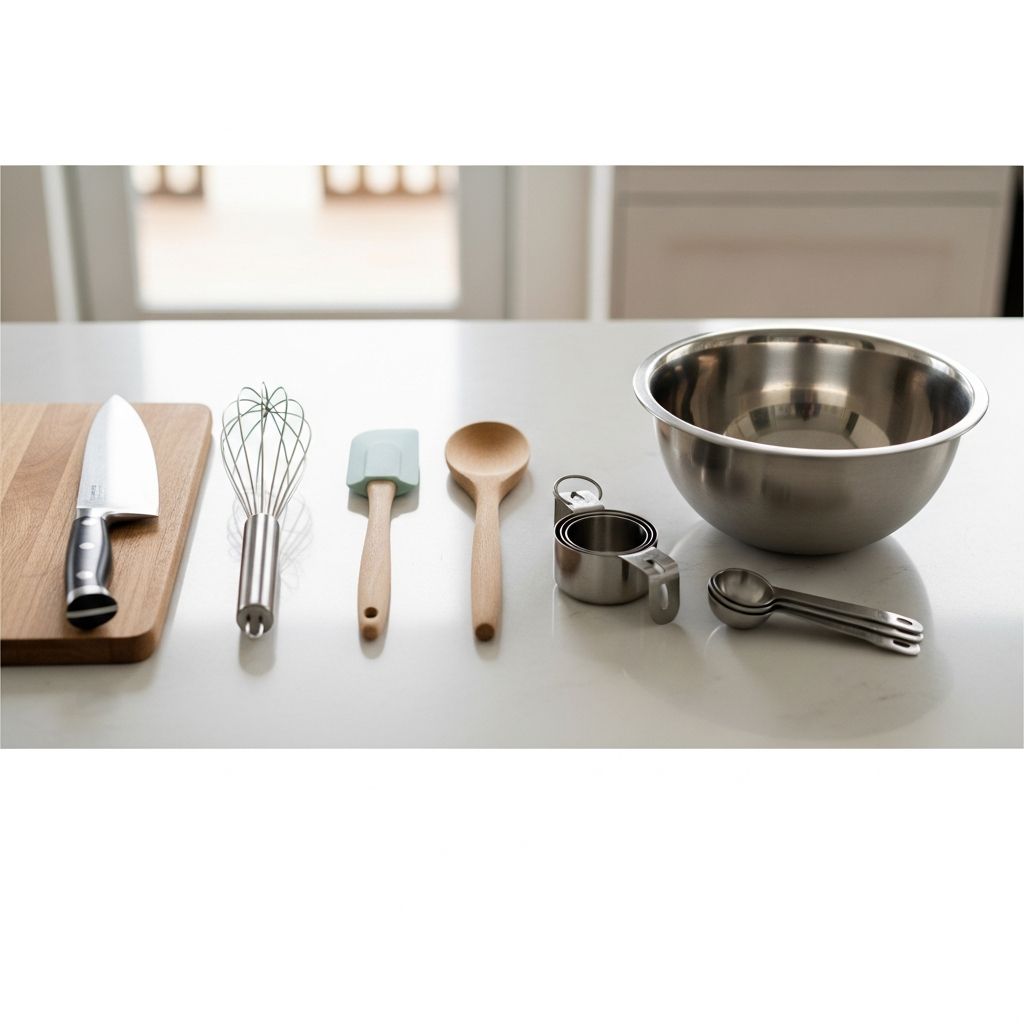
Setting up a kitchen as a beginner can feel overwhelming, but focusing on versatile, high-quality essentials makes cooking accessible and fun. These tools cover basic prep, cooking, baking, and serving, helping you master simple recipes while building skills for more complex dishes. Prioritize durable materials like stainless steel, silicone, and carbon steel for longevity and safety.
Cookware
Invest in a core set of pots and pans that handle everyday cooking. Start small to avoid clutter: a pair of sauté pans (8-inch small, 10-12-inch large), a 2-4 quart saucepan, a 4-6 quart soup pot, and a Dutch oven for versatile stovetop-to-oven use. Non-stick skillets excel for eggs and fish, while stainless steel or cast iron offers durability for searing meats and sauces.
- Non-Stick Skillet: Ideal for low-oil cooking like pancakes, eggs, and delicate proteins. Choose PFOA-free with a stay-cool handle.
- Saucepan: Perfect for sauces, grains, and small boils. A 2-quart size suffices for beginners.
- Stock Pot or Dutch Oven: Handles soups, stews, pasta, and braises. Dutch ovens transition seamlessly from stove to oven.
- Sheet Pans: Rimmed aluminum pans for roasting veggies, baking cookies, or sheet pan dinners. Indestructible and versatile.
These pieces form the foundation, allowing one-pot meals and even heating without hot spots.
Knives and Vegetable Peelers
Sharp knives are non-negotiable for safe, efficient prep. Avoid knife sets; buy individually for quality. Essentials include a 3-4 inch paring knife for peeling and detail work, an 8-inch chef’s or Santoku knife for chopping, and a serrated bread knife for loaves and tomatoes. Include kitchen shears for herbs and packages, a honing rod for maintenance, and a sharpener.
- Chef’s Knife: The workhorse for slicing, dicing, and mincing veggies, meats, and herbs.
- Paring Knife: Precise control for deveining shrimp, coring fruits, or small tasks.
- Serrated Knife: Slices bread, cakes, and juicy produce without squishing.
- Vegetable Peeler: Quickly removes skins from carrots, potatoes, and apples, minimizing waste.
A sturdy cutting board—one plastic for meats (dishwasher-safe) and one wood for produce—prevents slips and cross-contamination. Maintain knives by honing daily and sharpening every few months.
Utensils
Heat-resistant utensils keep you safe from splatters and high heat. Silicone and wooden options protect non-stick surfaces, while metal suits stainless steel.
- Heat-Resistant Spatula: Silicone for flipping, scraping, and folding without scratching pans. Essential for eggs and baked goods.
- Long Tongs: Grippy for turning meats, grabbing pasta, or serving salads. Silicone-tipped for non-stick.
- Whisks (Small and Large): Balloon whisks aerate eggs, creams, and vinaigrettes better than forks. Small for dressings, large for batters.
- Wooden Spoons and Slotted Spoon: Gentle stirring for sauces; slotted drains liquids from pasta or veggies.
- Fish Turner or Slotted Spatula: Thin and flexible for delicate fish, burgers, or pancakes.
Related Stories



Ladles serve soups precisely, rounding out this safe, versatile set.
Prep and Measuring Tools
Accurate prep ensures consistent results, especially in baking. Stainless steel tools are durable and nestable.
- Measuring Cups and Spoons: Dry cups (1/4 to 1 cup), liquid measures, and magnetic spoons for precision. Critical for recipes.
- Mixing Bowls: Nesting stainless steel set for prepping ingredients, marinating, or tossing salads.
- Colander or Strainer: Drains pasta, rinses produce, or dries greens. Stainless steel for sturdiness.
- Grater or Microplane/Zester: Shreds cheese, zest citrus, or grates ginger/garlic for fresh flavors.
- Meat Thermometer: Instant-read digital ensures safe internal temps for meats (e.g., 165°F chicken).
These tools streamline mise en place, reducing stress during cooking.
Small Appliances
Electrics save time without overwhelming a beginner’s counter. Focus on multi-use.
- Blender or Immersion Blender: Smoothies, soups, sauces; crushes ice effortlessly.
- Food Processor: Chops, shreds, purees for doughs and veggies.
- Toaster Oven: Crisps bread, reheats, bakes small batches.
- Stand Mixer or Hand Mixer: Whips cream, kneads dough for baking.
- Instant Pot or Rice Cooker: Pressure cooks, slow cooks, or steams grains.
Air fryers offer crispy results with less oil, ideal for beginners.
Other Handy Tools
These niche items elevate everyday cooking.
- Can Opener: Smooth-edge manual for safe, easy canned goods.
- Garlic Press: Mess-free minced garlic.
- Sieve/Fine Mesh Strainer: Sifts flour, strains broths, rinses grains.
Start with a budget kit: chef’s knife, non-stick skillet/saucepan, spatula/tongs/spoon, measuring set, cutting board/bowls, toaster oven.
Frequently Asked Questions (FAQs)
What are the absolute first kitchen tools for beginners?
A chef’s knife, cutting board, non-stick skillet, measuring cups/spoons, and tongs/spatula cover 80% of basic needs.
How do I maintain knives?
Hone daily with a rod, sharpen every 3-6 months, hand-wash, and store properly to avoid dulling.
Wooden or plastic cutting boards?
Plastic for meats (dishwasher-safe), wood for produce. Use separate to prevent cross-contamination.
Non-stick or stainless steel pans?
Non-stick for beginners/eggs; stainless for high-heat searing. Build skills to use both.
Do I need small appliances right away?
No—master basics first. Add a toaster oven or blender as needs grow.
Building Your Beginner Kitchen on a Budget
Prioritize multi-use tools: a good chef’s knife pays off fastest. Shop sales at reputable stores, read reviews for durability. Expect $200-400 for a solid starter kit. Practice with simple recipes like stir-fries, pasta, and sheet pan roasts to gain confidence. Safety first: use oven mitts, thermometer, and tongs to avoid burns.
| Category | Top Picks | Why Essential |
|---|---|---|
| Cookware | Non-stick skillet, saucepan, sheet pan | Versatile for daily meals |
| Knives | Chef’s, paring, serrated | Safe, efficient prep |
| Utensils | Tongs, spatula, whisk | Heat-safe handling |
| Prep | Measuring set, colander, grater | Accuracy and ease |
With these tools, you’ll cook healthier, tastier meals efficiently.
References
- Kitchen Must Haves: 32 Essential Tools for Home Cooks — Red Gold Tomatoes. 2023. https://www.redgoldtomatoes.com/tuttorosso/post/kitchen-must-haves-essential-tools-for-home-cooks
- The Essential Kitchen Tools List for Every Beginner Cook — Klaus Meyer Knife. 2024. https://www.klausmeyerknife.com/blogs/news/the-essential-kitchen-tools-list-for-every-beginner-cook
- 10 Essential Kitchen Tools for Beginner Cooks | Chef Julie Yoon — YouTube (Chef Julie Yoon). 2022-10-15. https://www.youtube.com/watch?v=A7K0sp382PU
- Essential Kitchen Tools for Beginner Cooks — Academy of Nutrition and Dietetics (eatright.org). 2023. https://www.eatright.org/food/food-preparation/kitchen-tools/essential-kitchen-tools-for-beginner-cooks
- Basic Essential Cooking Tools Every Kitchen Needs — Cook Smarts. 2024. https://www.cooksmarts.com/cooking-guides/create-a-functional-kitchen/20-must-have-kitchen-tools/
Similar Articles








Read full bio of Sneha Tete