Essential Ophthalmic Tools: Top Tips for Surgeons
Discover practical advice on selecting and using key ophthalmic instruments to enhance precision and outcomes in eye surgeries.
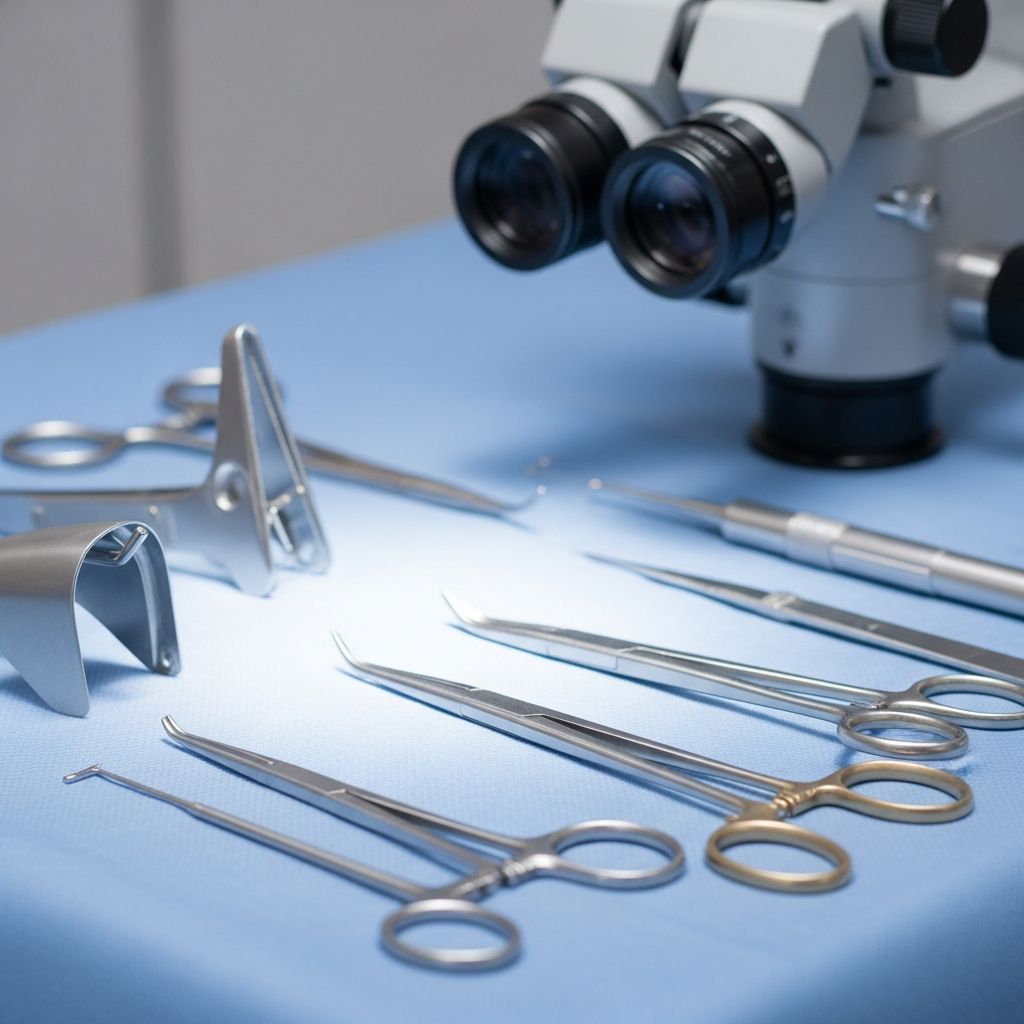
Ophthalmic surgery demands unparalleled precision due to the eye’s delicate structures. Surgeons rely on specialized instruments designed for minimal tissue trauma and maximum control. This article explores key tools like forceps, scissors, and needle holders, providing actionable advice on their selection and application across common procedures.
Understanding Forceps: The Foundation of Tissue Manipulation
Forceps serve as extensions of the surgeon’s fingers, enabling secure grasps on tissues, sutures, and implants. Their design varies to suit specific tasks, from non-toothed models for gentle handling to toothed versions for firmer grips.
- Non-toothed forceps: Ideal for tying sutures or holding delicate tissues without damage. Examples include Hoskins and Moorfields types, featuring platforms for suture management.
- Toothed forceps: Provide enhanced traction for muscles or tougher tissues. Castroviejo and Polack models offer fine teeth (0.12mm) for corneal work.
- Capsulorhexis forceps: Cross-action designs with formed shafts allow precise capsule tearing in cataract surgery, minimizing movement for micro-control.
Select forceps based on tip size and handle type. Round handles enable rotation for fine adjustments, while platforms aid in suture tying. Always inspect for sharpness to avoid slippage.
Scissors: Precision Cutting in Confined Spaces
Scissors in ophthalmology are engineered for clean cuts on iris, capsule, or sutures. Curved blades like Stevens tenotomy or Westcott models facilitate access in tight areas.
| Type | Primary Use | Key Features |
|---|---|---|
| Westcott | Tissue dissection | Straight or curved, 4-5/8″ length |
| Stevens Tenotomy | Muscle surgery | Curved, 4-1/2″ for tenotomy |
| Vanna’s | Capsule/iris cutting | Fine tips for 10-0 nylon sutures |
| Suture (Storz Stitch) | Suture trimming | 3-3/4″ angled utility |
Tip: Use micro-scissors for anterior segment work to reduce trauma. Spring-action models speed up repetitive cuts in trabeculectomy.
Needle Holders: Securing Sutures with Confidence
Needle holders lock jaws around needles, preventing slippage during suturing. Anatomy includes fine/micro jaws for corneal grafts and heavy-duty for strabismus.
- Fine/micro holders: For 10-0 sutures in cataract or glaucoma surgery.
- Standard holders: Versatile for most anterior procedures.
- Cross-action holders: Offer micro-control via pressure release.
Choose catch options to lock during passes. Titanium construction ensures durability and lightness.
Speculums and Retractors: Maintaining Surgical Access
Lid speculums keep eyelids retracted, crucial for clear visualization. Wire or screw types adjust tension to avoid corneal pressure.
Retractors like muscle hooks expose extraocular muscles. Barraquer or Desmarres models provide hemostasis in chalazion procedures.
Specialized Tools for Cataract and Glaucoma Procedures
Cataract Surgery Essentials
In extracapsular cataract extraction (ECCE), McPherson forceps hold IOL haptics, while capsulorhexis forceps ensure continuous tears. Vanna scissors cut capsules cleanly.
Glaucoma Interventions
Trabeculectomy requires conjunctival clamps (Khaw type) and fine scissors for iris tissue. Cross-action forceps aid in precise flap creation.
Care, Handling, and Maintenance Guidelines
Proper care extends instrument life. Clean immediately post-use with enzymatic solutions, avoiding abrasives. Sterilize via autoclave per manufacturer specs.[10]
- Inspect for damage before each case.
- Use protective racks for storage to prevent tip bends.
- Lubricate box locks sparingly with surgical-grade oil.
Related Stories



Follow guidelines from bodies like AAO for handling to maintain sharpness and sterility.[10]
Building Your Ideal Surgical Tray
A general ophthalmology tray includes forceps (Castroviejo 0.5mm), scissors (Westcott, Stevens), needle holders, hooks, retractors, and calipers.
Customize for subspecialties: Add phaco tips for anterior segment or vitrectomy tools for posterior.
Advanced Features in Modern Instruments
Titanium alloys reduce weight; cross-action mechanisms enhance control. Geuder systems integrate pumps for phacoemulsification efficiency.
Common Pitfalls and How to Avoid Them
- Wrong size selection: Match tip to tissue—0.3mm for finest work.
- Poor maintenance: Leads to dull edges; schedule regular sharpening.
- Inadequate sterilization: Risks infection; validate cycles.
FAQs
What are the best forceps for cataract surgery?
Cross-action capsulorhexis forceps with formed shafts provide optimal control for capsule tears.
How do I choose needle holders for corneal suturing?
Opt for fine/micro jaws with catch mechanisms to handle 10-0 sutures securely.
Why use titanium instruments?
They are lightweight, corrosion-resistant, and maintain sharpness longer.
What maintenance is required for scissors?
Clean, lubricate joints, and sharpen periodically to ensure clean cuts.[10]
Are there universal trays for ophthalmology?
Basic trays cover general needs, but customize for procedures like strabismus or DCR.
Training and Skill Development
Mastery comes from simulation labs and wet labs. Practice on models builds muscle memory for instrument handling.
Incorporate ergonomics: Proper grip reduces fatigue during long cases.
References
- Ophthalmic Surgical Instruments — John Weiss. 2021-06. https://ajlsa.com/wp-content/uploads/2021/06/JOHN-WEISS-2021.pdf
- Surgical Tray, General Ophthalmology — EyeRounds.org. N/A. https://eyerounds.org/tutorials/instruments/General/index.htm
- Ophthalmic surgical instruments — PubMed. 2008-06. https://pubmed.ncbi.nlm.nih.gov/18544328/
- Essential Ophthalmic Surgical Instruments — Scribd. N/A. https://www.scribd.com/doc/41181584/Ophthalmology-Instruments
- Ophthalmic Surgical Instruments Catalogue — Geuder AG. 2004. http://www.miss-ophth.com/uploads/6/1/3/1/6131303/geuder_instrument_catalogue.pdf
- A Comprehensive Guide to Ophthalmic Instruments — GWS Med. N/A. https://www.gwsmed.com/blogs/a-comprehensive-guide-to-ophthalmic-instruments-and-their-importance-in-eye-care
- Ophthalmic Instruments — Aesculap, Inc. N/A. https://www.aesculapusa.com/content/dam/aesculap-us/us/website/aesculap-inc/healthcareprofessionals/or-soultions/pdfs/general-surgical-instruments/ophthalmic-DOC1139-Rev%20A.pdf
Similar Articles








Read full bio of medha deb