Estramustine for Prostate Cancer (Estracyt)
Comprehensive guide to Estracyt (estramustine): usage, dosage, side effects, and management for advanced prostate cancer treatment.
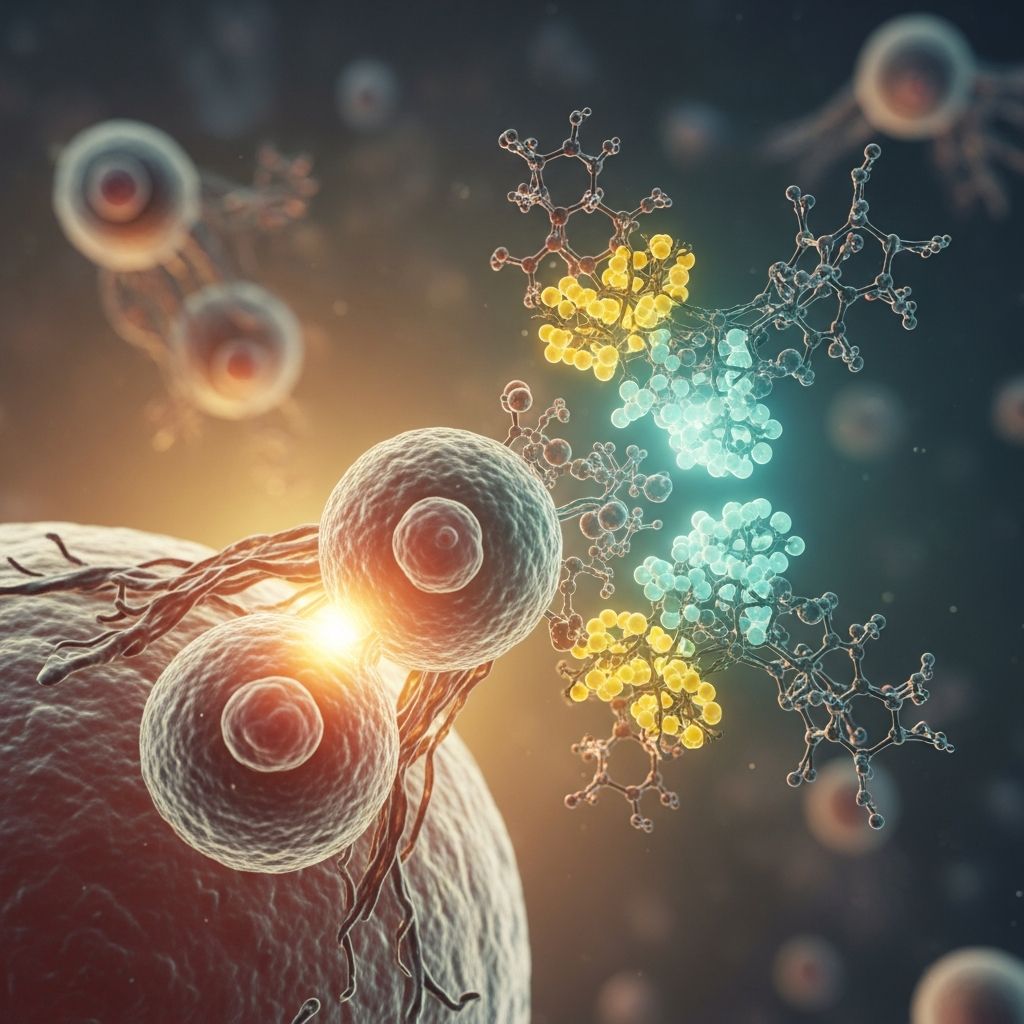
Estramustine (also called Estracyt®) is a specialized chemotherapy medication designed to combat advanced prostate cancer by halting cancer cell multiplication and lowering testosterone levels that fuel tumor growth.
About estramustine
| Type of medicine | An alkylating chemotherapy medicine |
|---|---|
| Used for | Treatment of advanced prostate cancer |
| Also called | Estracyt® |
| Available as | Capsules |
Prostate cancer originates in the prostate gland cells and stands as the most prevalent cancer among men in the UK. When it metastasizes to distant sites, it becomes advanced prostate cancer. Chemotherapy like estramustine is recommended for such cases.
Estramustine functions through a dual mechanism: it disrupts cancer cell division by targeting the microtubular network essential for cellular functions and incorporates estradiol to suppress testosterone production. Prostate cancer cells rely on testosterone for proliferation; reducing it slows tumor progression.
Chemically, estramustine phosphate (EMP) combines nitrogen mustard (chemotherapy) with estradiol (estrogen). It induces cytostatic effects including apoptosis, DNA synthesis interference, and reactive oxygen species generation, with notable selectivity for prostate tissue over healthy cells.
Clinical studies affirm its palliative role in metastatic or progressive prostate cancer, particularly hormone-refractory cases. For instance, in orchiectomized patients with stage D2 disease, EMP yielded partial responses in 20% of cases, with median progression-free survival of 24 weeks. Another trial compared 560 mg daily EMP to placebo post-orchiectomy, noting PSA reductions in nearly half of EMP patients, hinting at survival benefits in responders despite no overall superiority.
How to take estramustine
Your oncologist, experienced in cancer therapy, will prescribe estramustine. Adhere precisely to instructions. Initial dosing typically involves 4-6 capsules daily, spread out, adjustable up to 10 capsules (140-1,400 mg/day total), commonly 560-640 mg (280 mg twice daily).
- Timing: Divide doses into 3-4 administrations daily, based on 14 mg/kg body weight (e.g., one 140 mg capsule per 10 kg).
- Food restriction: Avoid food or milk for 1 hour before and 2 hours after each dose to optimize absorption, as dairy impairs uptake.
- Duration: Continue as directed; cycles may vary, e.g., 3-week on/off in some protocols.
- Missed dose: Take as soon as remembered unless near next dose; do not double up. Consult your doctor for uncertainties.
Monitoring includes regular blood tests for efficacy (PSA levels) and safety (liver function, blood counts).
Getting the most from your treatment
Maximize benefits while minimizing risks:
- Take exactly as prescribed; do not alter without advice.
- Maintain strict no-food/milk windows around doses.
- Attend all clinic appointments for PSA checks, blood tests, and scans.
- Use contraception: estramustine may harm sperm and is teratogenic; barrier methods advised during and post-treatment.
- Avoid pregnancy if partner is female; discuss fertility preservation pre-treatment.
- Store capsules at room temperature, away from moisture/heat.
Subjective improvements like pain relief or PSA drops may occur early; PSA decline after 1 month predicts better outcomes in some.
Related Stories



Side-effects
Common due to estrogenic and chemotherapeutic components. Most manageable; report severe symptoms immediately.
Common side effects
- Breast changes: Tenderness, enlargement (gynecomastia) – frequent with estrogens.
- Gastrointestinal: Nausea, diarrhea, vomiting – take antiemetics if needed.
- Fluid retention: Swelling in ankles/legs – elevate limbs, reduce salt.
- Impotence: Due to testosterone suppression.
- Fatigue, weight gain.
Serious side effects
- Blood clots: Leg pain/swelling, chest pain, breathlessness – seek emergency care (thrombophlebitis, embolism risk from estrogens).
- Heart issues: Worsening heart failure, palpitations.
- Liver problems: Jaundice, dark urine – requires dose halt.
- Bone pain flare: Initial increase post-androgen priming; may need temporary cessation.
- Allergic reactions: Rash, itching, swelling – rare but urgent.
Trials reported adverse events in most patients, but life-threatening ones uncommon.
| Side Effect | EMP Group | Placebo |
|---|---|---|
| Breast tenderness/gynecomastia | More frequent | Less |
| Diarrhea | More frequent | Less |
| PSA reduction >25% | 29/61 patients | 3/68 |
How to cope with side effects of estramustine
- Nausea/diarrhea: Small frequent meals, avoid spicy/fatty foods; meds like loperamide/ondansetron.
- Breast tenderness: Supportive bra, analgesics; rarely, dose reduction.
- Swelling: Compression stockings, diuretics if prescribed.
- Fatigue: Light exercise, balanced diet.
- Bone pain: Analgesics; inform doctor if worsening.
- Never ignore sudden unwellness – contact clinic/ER.
Cautions
Discuss with doctor if:
- History of clots, heart/liver disease, stroke, diabetes, migraines, epilepsy.
- Pregnancy/breastfeeding – contraindicated.
- Smoking – heightens clot risk.
Interactions
Estramustine interacts with:
- Calcium-rich foods/drinks: Dairy blocks absorption – adhere to timing.
- Anticoagulants, antidiabetics: Monitor closely.
- Other hormones/chemotherapies: Potential potentiation.
- Inducers/inhibitors of CYP enzymes may alter levels.
Other information
Pregnancy/breastfeeding: Unsafe; use contraception.
Driving/operating machinery: Safe unless dizzy/fatigued.
Travel: Carry meds, info; check import rules.
If unwell or symptoms worry you, contact doctor/clinic urgently.
Frequently Asked Questions (FAQs)
What is estramustine used for?
Estramustine treats advanced/metastatic prostate cancer palliatively by killing cancer cells and reducing testosterone.
How does estramustine work?
It combines chemotherapy (nitrogen mustard) disrupting microtubules and estrogen lowering testosterone, starving hormone-dependent cancers.
What is the usual dose?
Typically 560-640 mg/day (4-14 capsules) in divided doses; personalized by weight/specialist.
Are there dietary restrictions?
Yes, no food/milk 1 hour before, 2 hours after doses.
What are common side effects?
Breast tenderness, diarrhea, nausea, swelling, impotence.
Is estramustine better than placebo?
Mixed; no overall survival edge, but PSA responders may benefit.
References
- Estramustine phosphate (estracyt) following androgens in men with progressive stage D2 prostate cancer — PubMed. 1988-07-01. https://pubmed.ncbi.nlm.nih.gov/3409448/
- Estramustine Phosphate Versus Placebo as Second Line Treatment After Orchiectomy in Patients With Metastatic Prostate Cancer: Daproca Study 9002 — AUA Journals. 2000. https://www.auajournals.org/doi/10.1016/S0022-5347(01)65086-9
- Estramustine (Emcyt®) — Oncolink. N/A. https://www.oncolink.org/cancer-treatment/oncolink-rx/estramustine-emcyt-R
- Estramustine for prostate cancer – Estracyt — Patient.info. N/A. https://patient.info/medicine/estramustine-for-prostate-cancer-estracyt
- Estramustine phosphate — Wikipedia (references primary sources). N/A. https://en.wikipedia.org/wiki/Estramustine_phosphate
- Estramustine (oral route) — Mayo Clinic. N/A. https://www.mayoclinic.org/drugs-supplements/estramustine-oral-route/description/drg-20063721
Similar Articles








Read full bio of medha deb