Ethmoid Sinus: Anatomy, Function & Related Conditions
Understanding the ethmoid sinus: location, function, and common health conditions affecting this important nasal structure.
Understanding the Ethmoid Sinus
The ethmoid sinuses are a crucial part of your respiratory system that many people know little about until they experience problems. Located in the upper part of your nose between your eyes, these small air-filled cavities play an important role in keeping your nasal passages healthy and functioning properly. Understanding their anatomy, function, and potential health issues can help you maintain better nasal and respiratory health.
What Are the Ethmoid Sinuses?
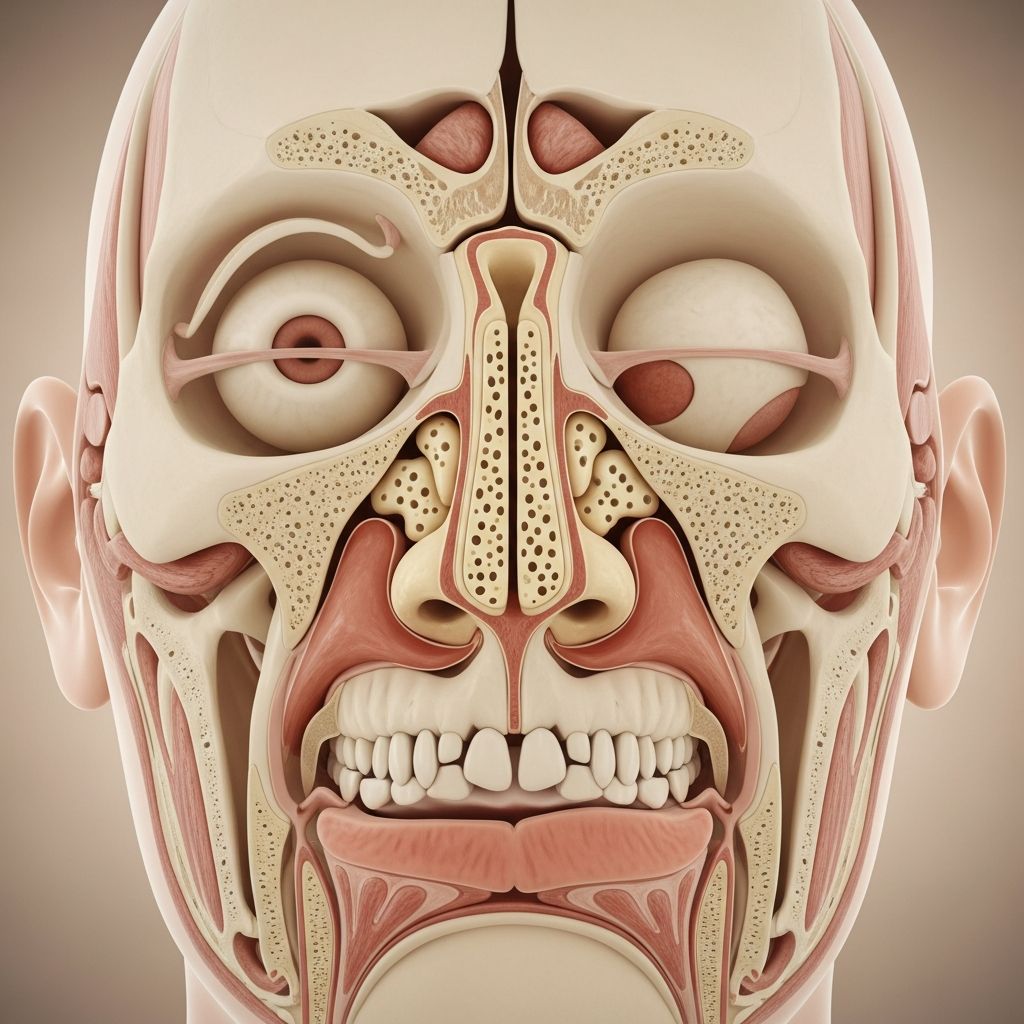
The ethmoid sinuses are a type of paranasal sinus, which refers to the hollow spaces in the bones surrounding your nose. Unlike the single frontal or sphenoid sinuses, you actually have multiple ethmoid sinuses on each side of your face. These sinuses are located within the spongy ethmoid bone, positioned between your eye sockets and nasal cavity. The ethmoid bone is a delicate, porous structure that contains between 3 to 18 thin-walled cavities, known collectively as the ethmoid labyrinth.
Because of their location so close to your eyes and brain, the ethmoid sinuses are particularly significant anatomically. The walls of these sinuses form much of the inner walls of your eye sockets, making their health relevant not just to your nose but to your entire face.
Anatomy and Location
Understanding where your ethmoid sinuses are located is essential for comprehending how they function and why certain conditions affecting them can have widespread effects. The ethmoid sinuses sit in a strategic location that connects multiple important structures in your head.
Precise Location
Your ethmoid sinuses are positioned in the upper-middle portion of your nasal cavity, nestled between your two eye sockets. They sit above the roof of your mouth and below the base of your brain. This central location means they’re involved in the drainage patterns of several other sinuses and nasal structures. The ethmoid sinuses connect to your nasal cavity through small openings that allow for proper drainage and airflow.
Structural Characteristics
The ethmoid bone itself is one of the most complex bones in your skull. It’s extremely thin and delicate, which is why it’s described as “spongy.” Within this bone are the multiple small cavities that make up your ethmoid sinuses. These cavities are separated by thin walls of bone and are lined with a special type of tissue called mucous membrane.
The structure of your ethmoid sinuses means they share walls with important surrounding structures. They’re bounded by your eye sockets on either side, your nasal cavity medially, and your brain above. This anatomical relationship is why infections or problems with the ethmoid sinuses can potentially affect these nearby structures if not properly treated.
The Function of Ethmoid Sinuses
While researchers continue to learn more about all the functions of the paranasal sinuses, several important roles have been well-established. Your ethmoid sinuses contribute significantly to your overall health and comfort.
Mucus Production and Drainage
One of the primary functions of your ethmoid sinuses is to produce mucus that helps keep your nasal passages healthy. The mucous membrane lining your ethmoid sinuses secretes a steady stream of mucus that drains into your nasal cavity. This mucus serves as a protective barrier, trapping dust, allergens, bacteria, and other particles that you inhale. By filtering these irritants, your ethmoid sinuses help prevent infections and keep your respiratory system functioning smoothly.
Related Stories



The drainage pathway from your ethmoid sinuses is particularly important. These sinuses drain through the ostiomeatal complex, a sophisticated drainage system that also handles drainage from your frontal and maxillary sinuses. When this drainage pathway becomes blocked, you become susceptible to inflammation and infection.
Air Filtration and Humidification
As air enters your nasal cavity, your ethmoid sinuses play a role in filtering and humidifying that air before it travels down to your lungs. The mucus produced by these sinuses helps warm and moisten the air you breathe, making it more comfortable for your respiratory system to process. This function is especially important in dry environments or during winter months when the air is naturally drier.
Skull Lightening
Because your ethmoid sinuses are air-filled rather than solid bone, they help reduce the weight of your skull. If these spaces were filled with solid bone instead of air, your head would be significantly heavier, which would strain your neck and upper spine. This lighter weight allows for better mobility and reduces stress on your cervical spine.
Voice Resonance
Your ethmoid sinuses, along with other paranasal sinuses, contribute to the resonance and quality of your voice. The air-filled cavities act as resonating chambers that influence how sound travels when you speak or sing. This is why people with severe sinus congestion often notice changes in their voice quality.
Related Paranasal Sinuses
Your ethmoid sinuses are part of a larger system of four paired paranasal sinuses. Understanding how they relate to the other sinuses can help you appreciate their role in your overall sinus health.
The Four Paranasal Sinuses
You have four types of paranasal sinuses, arranged in pairs on each side of your face:
- Frontal sinuses: Located in your forehead above your eyebrows
- Maxillary sinuses: Located in your cheekbones, the largest of all sinuses
- Ethmoid sinuses: Located between your eyes as discussed
- Sphenoid sinuses: Located deep in your skull behind your nasal cavity
All four of these sinus groups work together as an integrated system, producing and draining mucus to keep your nasal passages clear and healthy. Problems in one sinus group can often affect the others, particularly when drainage pathways become blocked.
Drainage Pathways and the Ostiomeatal Complex
The ostiomeatal complex is a critical anatomical area that deserves special attention because blockages here can lead to widespread sinus problems. This complex is essentially the “hub” where drainage from multiple sinuses converges before emptying into your nasal cavity.
Specifically, your frontal, ethmoid, and maxillary sinuses all drain through the ostiomeatal complex into the middle meatus, which is the space beneath the middle turbinate in your nasal cavity. When this drainage pathway is clear, mucus flows freely and your sinuses remain healthy. However, when inflammation, infection, or structural abnormalities block this area, mucus backs up in all three of these sinus groups, leading to congestion, discomfort, and potentially infection.
Common Conditions Affecting the Ethmoid Sinuses
Several conditions can affect your ethmoid sinuses, causing discomfort and potentially leading to more serious complications if left untreated.
Ethmoiditis
Ethmoiditis is inflammation of the ethmoid sinuses, typically caused by infection. This condition can develop after a viral upper respiratory infection or from bacterial infection. Symptoms include facial pain, particularly between and around the eyes, nasal congestion, and sometimes fever. Because of the ethmoid sinuses’ proximity to your eyes and brain, ethmoiditis requires proper medical evaluation and treatment.
Chronic Sinusitis
The ethmoid sinuses are frequently involved in chronic sinusitis, a condition where sinus inflammation persists for more than 12 weeks. Research shows that the ethmoid sinuses are abnormal in a significant percentage of chronic sinusitis cases. This chronic inflammation can result from prolonged infections, allergies, nasal polyps, or structural problems that impair drainage.
Sinus Infections
Because the ethmoid sinuses drain through the ostiomeatal complex along with other sinuses, infections often involve multiple sinus groups simultaneously. An ethmoid sinus infection can spread to adjacent sinuses or, in rare cases, to nearby structures like the eye socket or brain if not properly treated.
Nasal Polyps
The ethmoid sinuses are a common location for nasal polyps to develop. These benign growths can obstruct drainage and contribute to chronic inflammation and recurrent infections.
Diagnostic Imaging of the Ethmoid Sinuses
When doctors suspect problems with your ethmoid sinuses, they often use computed tomography (CT) scanning to get a detailed view of these structures. CT imaging is particularly useful for evaluating the ethmoid complex because it can show the intricate anatomy in detail.
When obtaining CT images of the ethmoid sinuses, doctors typically use both axial and coronal views. Axial cuts display the entire ethmoid complex along the horizontal plane, providing good visualization of the sinuses themselves. Coronal views show the sinuses from front to back and are particularly helpful for visualizing the ostiomeatal complex and planning surgical approaches if needed.
If a patient isn’t improving with appropriate medical treatment, more detailed imaging of the ostiomeatal complex may be obtained to give surgeons comprehensive anatomical information before any potential surgical intervention.
Treatment Approaches
Treatment for ethmoid sinus problems depends on the underlying cause and severity. Acute infections may be treated with antibiotics, decongestants, and saline irrigation. Chronic sinusitis often requires longer-term management strategies, which may include extended courses of antibiotics, topical steroid sprays, nasal irrigation, and in some cases, endoscopic sinus surgery to improve drainage.
Prevention strategies include maintaining good nasal hygiene, managing allergies, staying hydrated, and avoiding irritants that can inflame the nasal passages.
Frequently Asked Questions About Ethmoid Sinuses
Q: Where exactly are the ethmoid sinuses located?
A: The ethmoid sinuses are located in the upper part of your nose, between your eyes, within the spongy ethmoid bone. They sit above the roof of your mouth and contain between 3 to 18 small air-filled cavities.
Q: What is the ostiomeatal complex and why is it important?
A: The ostiomeatal complex is the drainage pathway where your frontal, ethmoid, and maxillary sinuses converge before emptying into your nasal cavity. Blockages in this area can lead to inflammation and infection in all three sinus groups.
Q: What are the symptoms of ethmoiditis?
A: Symptoms of ethmoiditis include facial pain between and around the eyes, nasal congestion, postnasal drip, reduced sense of smell, and sometimes fever. Pain may worsen when bending over or pressing on the inner corner of your eye.
Q: How do doctors diagnose ethmoid sinus problems?
A: Doctors typically diagnose ethmoid sinus problems through physical examination and CT imaging. CT scans can show the detailed anatomy of the ethmoid sinuses and identify inflammation, infection, or structural abnormalities.
Q: Can ethmoid sinus infections spread to other areas?
A: Yes, if left untreated, ethmoid sinus infections can potentially spread to nearby structures including your eye sockets or, in rare cases, your brain. This is why proper medical evaluation and treatment are important.
Q: What is the difference between acute and chronic ethmoid sinusitis?
A: Acute ethmoiditis develops suddenly, typically following a viral infection, and usually resolves within a few weeks with treatment. Chronic ethmoiditis persists for more than 12 weeks and may require longer-term management strategies.
Q: Are there ways to prevent ethmoid sinus problems?
A: Yes, you can reduce your risk by maintaining good nasal hygiene with saline irrigation, managing allergies, staying hydrated, avoiding smoking and air pollutants, and seeking prompt treatment for upper respiratory infections.
References
- Ethmoid Sinus — National Cancer Institute, National Institutes of Health. 2024. https://www.cancer.gov/publications/dictionaries/cancer-terms/def/ethmoid-sinus
- Paranasal Sinuses: Anatomy, Function & Types — Cleveland Clinic. 2024. https://my.clevelandclinic.org/health/body/paranasal-sinuses
- Ethmoidal Sinus – Anatomy — Britannica. 2024. https://www.britannica.com/science/ethmoidal-sinus
- Changing Diagnostic and Treatment Strategies for Chronic Sinusitis — Cleveland Clinic Journal of Medicine, Vol. 63, No. 7. 1996. https://www.ccjm.org/content/ccjom/63/7/396.full.pdf
- Nose: Anatomy, Function & Related Conditions — Cleveland Clinic. 2024. https://my.clevelandclinic.org/health/body/21778-nose
Similar Articles








Read full bio of medha deb