Etonogestrel Contraceptive Implant (Nexplanon)
Comprehensive guide to Nexplanon: the effective, long-acting reversible contraceptive implant for up to 3 years of pregnancy prevention.
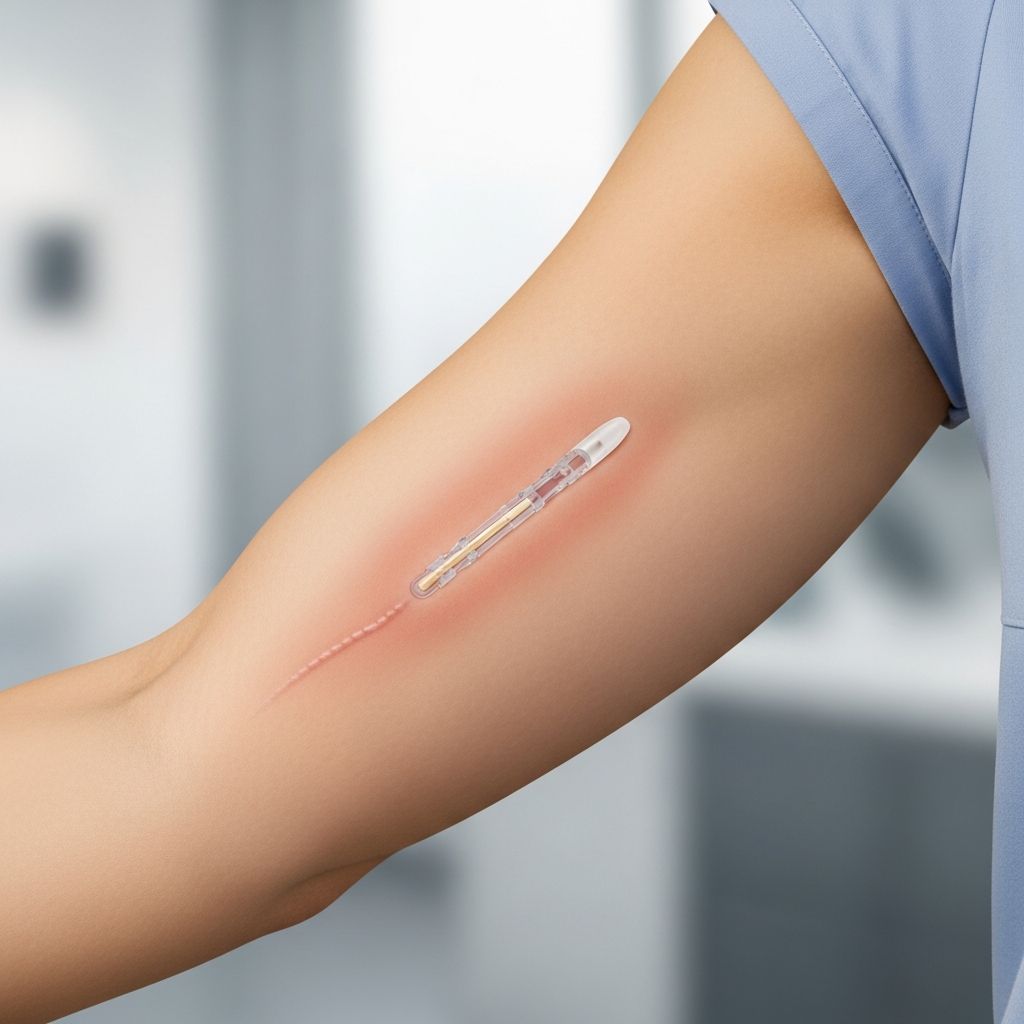
The etonogestrel contraceptive implant, commonly known as Nexplanon, is a highly effective, long-acting reversible contraceptive (LARC) method designed to prevent pregnancy for up to three years. This small, flexible rod is inserted under the skin of the upper arm by a trained healthcare provider, releasing a steady dose of the progestin hormone etonogestrel to inhibit ovulation and alter cervical mucus.
About Nexplanon
Nexplanon is a progestin-only implant measuring approximately 4 cm in length and 2 mm in diameter, about the size of a matchstick. It is radiopaque, making it visible on X-rays for easier location if needed. Inserted into the inner side of the non-dominant upper arm, it provides continuous pregnancy prevention without daily user action, distinguishing it from pills, patches, or rings.
Unlike combined hormonal contraceptives, Nexplanon relies solely on etonogestrel, reducing risks associated with estrogen. It is suitable for women seeking reliable birth control who may forget daily dosing or prefer low-maintenance options. The implant must be removed by the end of the third year, though it can be replaced immediately for continued protection.
How Nexplanon Works
Nexplanon prevents pregnancy through multiple mechanisms. Primarily, it suppresses ovulation by inhibiting the release of eggs from the ovaries. It also thickens cervical mucus, creating a barrier that impedes sperm from reaching the egg, and thins the uterine lining, making implantation less likely.
- Ovulation suppression: The continuous low-dose hormone release prevents the mid-cycle luteinizing hormone (LH) surge necessary for egg release.
- Cervical mucus changes: Mucus becomes thick and hostile to sperm penetration.
- Endometrial effects: Alters the uterine lining to deter fertilized egg attachment.
These actions combined make Nexplanon over 99% effective, with fewer than 1 pregnancy per 100 women using it for one year. This rivals sterilization and surpasses methods like pills (91% typical use) or condoms (82% typical use).
Effectiveness
Nexplanon is one of the most effective reversible contraceptives available, outperforming user-dependent methods due to its ‘set-it-and-forget-it’ design. Clinical data confirm its reliability regardless of body weight or other factors common to pill failure.
| Method | Pregnancies per 100 Women (1 Year) |
|---|---|
| Implants (Nexplanon) | <1 |
| Injections/IUDs/Sterilization | <1 |
| Pills/Patch/Ring | 7-9 (typical) |
| Condoms | 13-18 (typical) |
| Withdrawal | 20-22 (typical) |
| No method | 85 |
Factors like correct insertion timing ensure optimal efficacy; deviations require backup contraception for 7 days.
Before Taking Nexplanon
Prior to insertion, rule out pregnancy via test or history. Discuss medical history, including breast cancer, liver disease, or unexplained vaginal bleeding, as these may contraindicate use. Nexplanon does not protect against HIV/STIs; use condoms additionally.
- Inform your provider of current medications, as some (e.g., certain antibiotics) may affect efficacy.
- Timing matters: Insert on days 1-5 of menstrual cycle if no recent hormones; adjust for switches from other methods.
Related Stories



How to Use Nexplanon (Insertion)
Insertion is a quick outpatient procedure under local anesthesia. A trained provider cleans the arm, numbs the site, and uses an applicator to place the implant subdermally in the inner upper arm groove. Patients may feel minor pain (5.2% in studies), bruising, or swelling.
- Locate insertion site (inner, non-dominant arm).
- Administer local anesthetic.
- Insert trocar with implant; withdraw needle.
- Palpate to confirm position; apply pressure bandage.
Feel for the implant post-procedure; it should be palpable. Backup methods aren’t needed if timed correctly.
Important Information to Know About Side Effects
Common side effects include changes in menstrual bleeding (absent, prolonged, or irregular periods in up to 24% of users), headaches, vaginitis, weight gain, acne, breast pain, and abdominal pain. Most resolve over time.
Serious risks (rare):
- Insertion/removal complications: Pain, infection, scarring, implant migration, or breakage.
- Menstrual irregularities: May persist; discuss management options.
- Ectopic pregnancy: Possible if failure occurs (progestin-only methods increase proportion).
- Thrombotic events: Unknown isolated risk; monitor for chest pain, leg swelling.
- Ovarian cysts: Benign, usually resolve.
Report severe pain, signs of infection, or mood changes promptly.
Who Can Use It / Who Cannot Use It
Suitable for: Most women post-puberty, including postpartum (non-breastfeeding: 21-28 days; breastfeeding: after 4 weeks), after abortion, or switching methods.
Contraindicated if: Pregnant, current breast cancer, severe liver disease, progestin-sensitive cancers, undiagnosed bleeding, or ischemic heart disease.
Pregnancy, Breastfeeding, and Fertility
If pregnancy occurs (rare), rule out ectopic. Fertility returns quickly post-removal, often within a week. Nexplanon is safe for breastfeeding after 4 weeks postpartum; minimal hormone transfer to milk.
Other Important Information
Monitor implant location annually. It doesn’t increase STI risk but offers no protection. Drug interactions (e.g., rifampin) may reduce efficacy; use backups. Weight gain averages 2.6 lbs over 2 years.
Removing Nexplanon
Removal occurs under local anesthesia at any time up to year 3. A small incision exposes the implant, which is pulled out with forceps. Fertility resumes rapidly; start another method immediately if avoiding pregnancy.
Complications: Difficult location (0.6%), breakage, or embedding. Providers must be trained.
Frequently Asked Questions (FAQs)
Q: How effective is Nexplanon?
A: Over 99% effective; fewer than 1 pregnancy per 100 women per year.
Q: Does it hurt to insert or remove?
A: Mild discomfort possible; local anesthesia minimizes pain. Insertion takes minutes.
Q: Will it affect my periods?
A: Yes, many experience irregular or absent bleeding; this is normal.
Q: Can I get pregnant right after removal?
A: Yes, as early as 1 week; use backup if needed.
Q: Is it safe for breastfeeding?
A: Yes, after 4 weeks postpartum.
Q: What if I gain weight?
A: Efficacy unchanged; average gain is modest.
References
- NEXPLANON Official Site — Organon. Accessed 2026. https://www.nexplanon.com
- NEXPLANON (etonogestrel implant) Label — U.S. Food and Drug Administration. 2015-08-01. https://www.accessdata.fda.gov/drugsatfda_docs/label/2015/021529s011lbl.pdf
- What Is NEXPLANON? — Organon. Accessed 2026. https://www.nexplanon.com/what-is-nexplanon/
- Etonogestrel (intradermal route) — Mayo Clinic. Accessed 2026. https://www.mayoclinic.org/drugs-supplements/etonogestrel-intradermal-route/description/drg-20069037
- Etonogestrel Contraceptive Implant — Cleveland Clinic. Accessed 2026. https://my.clevelandclinic.org/health/drugs/18407-etonogestrel-implant
- About NEXPLANON — Organon Pro. Accessed 2026. https://organonpro.com/en-us/product/nexplanon/about-nexplanon/
Similar Articles








Read full bio of Sneha Tete