Eustachian Tube Dysfunction: Symptoms, Causes & Treatment
Complete guide to understanding Eustachian tube dysfunction symptoms, causes, and effective treatment options.
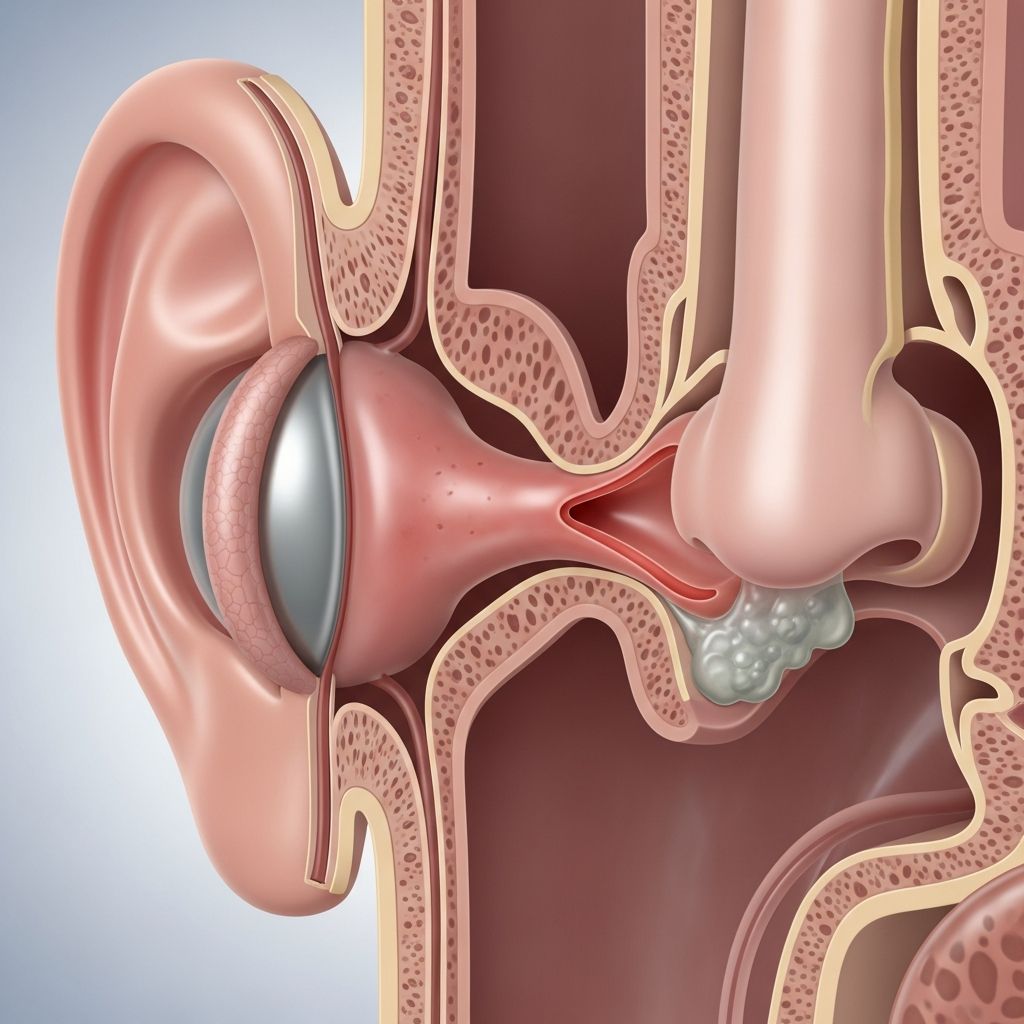
The Eustachian tube is a small channel that connects the middle ear to the back of the nose and throat. This tube plays a crucial role in maintaining proper air pressure in the middle ear and allowing fluid to drain from the ear. When the Eustachian tube is not functioning properly, a condition known as Eustachian tube dysfunction (ETD) can develop. This common condition affects people of all ages and can range from mild to severe.
Understanding Eustachian Tube Dysfunction
Eustachian tube dysfunction occurs when the Eustachian tube becomes blocked or fails to open and close properly. This blockage prevents normal air pressure from being maintained in the middle ear and interferes with the drainage of fluids. The result is a buildup of pressure and fluid in the middle ear space, leading to various uncomfortable symptoms. While many cases resolve on their own within a few weeks, some individuals experience persistent symptoms that require medical intervention.
Symptoms of Eustachian Tube Dysfunction
The symptoms associated with Eustachian tube dysfunction can vary widely from person to person. Some individuals experience mild symptoms that are barely noticeable, while others suffer from more severe manifestations that significantly impact their daily life.
Common Symptoms Include:
- A feeling of fullness or pressure in the affected ear or ears
- Muffled or dulled hearing
- Ear pain or discomfort
- Popping or clicking sounds in the ear
- A sensation of fluid in the ear
- Difficulty with balance or vertigo
- Ringing or buzzing in the ear (tinnitus)
- Difficulty with air pressure changes, particularly during airplane travel
Ear pain caused by Eustachian tube dysfunction typically results from the eardrum becoming tense and stretching due to pressure changes. While this pain may come and go, Eustachian tube dysfunction rarely causes constant or severe ear pain. If you experience persistent severe ear pain, it may indicate a different underlying condition, and you should consult a healthcare professional.
It is important to note that while tinnitus can occur alongside muffled hearing in cases of Eustachian tube dysfunction, the condition itself does not typically cause tinnitus independently. However, the combination of symptoms should be evaluated by a medical professional to ensure proper diagnosis and treatment.
Causes of Eustachian Tube Dysfunction
Understanding the underlying cause of Eustachian tube dysfunction is essential for effective treatment. Multiple factors can contribute to the development of this condition, and identifying the specific cause allows healthcare providers to recommend the most appropriate therapeutic approach.
Primary Causes:
Common Cold and Respiratory Infections
The most prevalent cause of Eustachian tube dysfunction is the common cold or other upper respiratory tract infections. During these infections, the lining of the Eustachian tube becomes inflamed and swollen. Additionally, the blocked nose and thick mucus that develop during a cold can physically obstruct the Eustachian tube, preventing it from functioning normally. In most cases, symptoms resolve naturally as the infection clears.
Related Stories



Nasal and Sinus Conditions
Chronic sinus infections and persistent nasal congestion can contribute to Eustachian tube dysfunction. Nasal swelling related to bacterial sinus infection may block the tube, while the inflammation associated with these conditions can prevent normal tube function. Treatment of the underlying sinus or nasal condition often helps resolve Eustachian tube symptoms.
Allergies
Allergic conditions affecting the nose, such as persistent rhinitis and hay fever, can trigger symptoms lasting several months. Allergies cause extra mucus production and inflammation in and around the Eustachian tube. Identifying and avoiding specific allergens that trigger symptoms can help reduce the severity of Eustachian tube dysfunction in allergic individuals.
Altitude and Pressure Changes
Rapid changes in altitude or environmental pressure can temporarily affect Eustachian tube function. Airplane travel, driving at high elevations, and scuba diving can all trigger Eustachian tube dysfunction symptoms. The tube typically adapts to these pressure changes naturally, though some individuals may experience more pronounced symptoms.
Smoking
Tobacco smoke damages the tiny hair-like structures (cilia) that line the Eustachian tube, interfering with their ability to move and help clear the tube. Additionally, smoking can cause tissues at the back of the nose and throat, including the adenoids, to enlarge and block the Eustachian tube. Individuals with chronic Eustachian tube dysfunction who smoke should consider smoking cessation as part of their treatment strategy.
Other Blockages
Any obstruction of the Eustachian tube can result in muffled hearing and pressure sensations. In children, enlarged adenoids are a common cause of blockage. Rarely, tumors behind the eardrum or in the nasopharynx can produce symptoms similar to Eustachian tube dysfunction, though these are uncommon and typically accompanied by other symptoms such as headache, hoarse voice, or chronic nasal obstruction.
Gastroesophageal Reflux Disease (GERD)
Chronic acid reflux can contribute to Eustachian tube dysfunction. When stomach acid backs up into the throat, it may cause inflammation affecting the Eustachian tube and surrounding tissues. Managing acid reflux through dietary changes, medications, or lifestyle modifications may help improve Eustachian tube symptoms.
Diagnosis of Eustachian Tube Dysfunction
Healthcare providers typically diagnose Eustachian tube dysfunction through a combination of patient history, physical examination, and sometimes specialized testing. Because symptoms can be subtle or variable, diagnosis may occasionally be challenging.
Your doctor will ask about your symptoms, their duration, and any triggering factors. A physical examination may include otoscopy, during which the healthcare provider uses an otoscope to visualize the eardrum. In some cases, tympanometry or audiometry may be performed to assess middle ear function and hearing levels. Imaging studies are rarely necessary unless complications are suspected.
Treatment Options for Eustachian Tube Dysfunction
Treatment approaches for Eustachian tube dysfunction range from simple self-care measures to more sophisticated medical and surgical interventions. The appropriate treatment depends on the severity of symptoms, their duration, and the underlying cause.
Self-Care and Home Remedies
For many individuals, especially those with mild or recent-onset symptoms, simple self-care measures are effective in managing Eustachian tube dysfunction.
- Pressure equalization techniques: Swallowing, yawning, and chewing gum can help open the Eustachian tube and equalize pressure in the middle ear.
- The Valsalva maneuver: Taking a deep breath, pinching your nostrils closed, and gently blowing with your mouth shut can help force air into the Eustachian tube and relieve pressure sensations.
- Saline nasal spray: Using saline spray can help reduce nasal congestion and promote drainage.
- Heat application: Warm compresses applied to the ear may provide comfort and help reduce inflammation.
- Sleep position: Keeping the affected ear elevated while sleeping may facilitate fluid drainage.
For infants and young children unable to perform these maneuvers, encouraging swallowing through feeding or pacifier use can stimulate the same pressure-equalizing effect.
Medical Treatment
When self-care measures prove insufficient, or if symptoms persist beyond two weeks, medical intervention may be necessary.
Decongestants
Decongestants work by reducing swelling of the Eustachian tube lining and promoting drainage. These medications can provide temporary relief, though they should not be used for extended periods without medical supervision.
Antihistamines
Antihistamines are particularly helpful when allergies contribute to Eustachian tube dysfunction. These medications reduce the allergic response and associated inflammation and mucus production.
Steroid Nasal Sprays
Intranasal steroid sprays are recommended when allergies or chronic inflammation is suspected. These medications reduce inflammation in the nasal passages and the Eustachian tube lining. Steroid sprays require consistent daily use for several days to achieve full effectiveness, as their onset of action is gradual. Studies suggest that steroid nasal sprays help approximately 50% of patients with Eustachian tube dysfunction secondary to allergies.
Antibiotics
Antibiotics may be prescribed if bacterial infection is contributing to inflammation and Eustachian tube obstruction. However, antibiotics are not effective for viral infections or simple pressure imbalances.
Surgical and Procedural Interventions
For chronic Eustachian tube dysfunction that does not respond to medical management, several surgical options are available. The primary goal of surgical treatment is to bypass the Eustachian tube or re-establish ventilation of the middle ear, restoring hearing and relieving pressure sensations.
Balloon Dilation
Balloon dilation (eustachian tuboplasty) is a minimally invasive procedure that has become increasingly popular. A tiny catheter with a small balloon is inserted through the nose into the Eustachian tube. The balloon is then inflated with saline solution and left in place for several minutes to stretch and widen the tube. This procedure was approved for routine use in the United Kingdom’s National Health Service in December 2019 and represents an important advancement in non-invasive ETD treatment.
Myringotomy
Myringotomy involves making a small incision in the eardrum to allow fluid in the middle ear to drain. This provides the Eustachian tube lining time to shrink while the eardrum heals, which typically occurs within one to three days. This procedure is particularly useful when fluid accumulation is significant.
Pressure Equalization Tubes
Pressure equalization (PE) tubes, also called ventilation tubes or tympanostomy tubes, are small tubes inserted through the eardrum. These tubes allow air to reach the middle ear space, maintaining proper pressure and facilitating fluid drainage. They are particularly beneficial for chronic cases or when recurrent middle ear infections develop.
Treatment of Underlying Conditions
Surgical treatment of nasal obstruction or in-office treatment of sinusitis may be considered when these conditions contribute to Eustachian tube dysfunction. Addressing the root cause often resolves or significantly improves Eustachian tube symptoms.
When Complications Develop
While most cases of Eustachian tube dysfunction resolve without complications, prolonged blockage can lead to more serious conditions. Long-term obstruction of the Eustachian tube results in accumulation of fluid in the middle ear space, a condition called serous otitis media, which further increases pressure and causes hearing loss. If bacteria contaminate this fluid, acute otitis media (middle ear infection) can develop, requiring prompt medical treatment.
Prognosis and Recovery
Most people with Eustachian tube dysfunction experience symptom improvement within a few weeks, particularly when the condition is triggered by acute viral infections. Symptoms typically resolve on their own as the underlying cause is addressed and inflammation subsides. However, individuals with chronic or recurrent symptoms may require ongoing management and periodic medical evaluation to prevent complications.
Frequently Asked Questions
Q: How long does Eustachian tube dysfunction typically last?
A: Most cases resolve within a few weeks, particularly when associated with a common cold. However, chronic cases related to allergies or other persistent conditions may last for months or longer without appropriate treatment.
Q: Can Eustachian tube dysfunction cause permanent hearing loss?
A: While temporary hearing loss is common with Eustachian tube dysfunction, permanent damage is rare. However, prolonged fluid accumulation in the middle ear can potentially lead to permanent hearing loss if left untreated, making early intervention important.
Q: Is Eustachian tube dysfunction contagious?
A: The condition itself is not contagious. However, the underlying causes, such as common colds and respiratory infections, are contagious.
Q: Should I avoid air travel if I have Eustachian tube dysfunction?
A: While air travel can exacerbate symptoms, most people with mild Eustachian tube dysfunction can fly safely. Using decongestants before flight, practicing pressure equalization techniques, and chewing gum during takeoff and landing may help minimize discomfort.
Q: What is the difference between Eustachian tube dysfunction and middle ear infection?
A: Eustachian tube dysfunction is a mechanical problem where the tube becomes blocked or fails to function properly. A middle ear infection (otitis media) occurs when bacteria or viruses infect the fluid in the middle ear space, often as a complication of untreated Eustachian tube dysfunction.
Q: Are there any natural remedies for Eustachian tube dysfunction?
A: Natural approaches include the Valsalva maneuver, nasal saline irrigation, staying hydrated to thin secretions, and avoiding irritants like cigarette smoke. However, persistent symptoms should be evaluated by a healthcare provider.
References
- Eustachian Tube Dysfunction: Symptoms, Causes, and Treatment — Patient.info. 2024. https://patient.info/ears-nose-throat-mouth/earache-ear-pain/eustachian-tube-dysfunction
- Eustachian Tube Dysfunction — Stanford Medicine, Department of Otolaryngology-Head and Neck Surgery. 2024. https://med.stanford.edu/ohns/OHNS-healthcare/earinstitute/conditions-we-treat/eustachian-tube-dysfunction.html
- Interventions for Adult Eustachian Tube Dysfunction — National Center for Biotechnology Information (NCBI), National Library of Medicine. 2024. https://www.ncbi.nlm.nih.gov/books/NBK262265/
- Eustachian Tube Dysfunction Treatment — Family Doctor, American Academy of Family Physicians. 2024. https://familydoctor.org/condition/eustachian-tube-dysfunction/
- Eustachian Tube Dysfunction — Brigham and Women’s Hospital, Department of Surgery, Otolaryngology. 2024. https://www.brighamandwomens.org/surgery/otolaryngology/ear/eustachian-tube-dysfunction
- Eustachian Tube Dysfunction: Diagnosis and Treatment — ENT and Allergy Associates of San Diego. 2024. https://www.ent-sd.com/ent-medical-treatments-san-diego/ears-hearing/eustachian-tube-dysfunction/
Similar Articles








Read full bio of medha deb